LEADER 04011nam a22005175i 4500
001 811857
003 TR_AnAIT
005 20260131004359
007 cr nn 008mamaa
008 121227s1966 ne | s |||| 0|eng d
020 |a9789401536202|9978-94-015-3620-2
024 7 |a10.1007/978-94-015-3620-2|2doi
041 |aeng
049 |aTürk Tarih Kurumu Kütüphanesi
050 4|aH1-970.9
072 7|aJ|2bicssc
072 7|aJHB|2bicssc
072 7|aSOC000000|2bisacsh
072 7|aJ|2thema
072 7|aJHB|2thema
082 04|a300|223
090 |aDK/13115
100 1 |aVan der Veur, Paul W.|eauthor.|4aut|4http://id.loc.gov/vocabulary/relators/aut
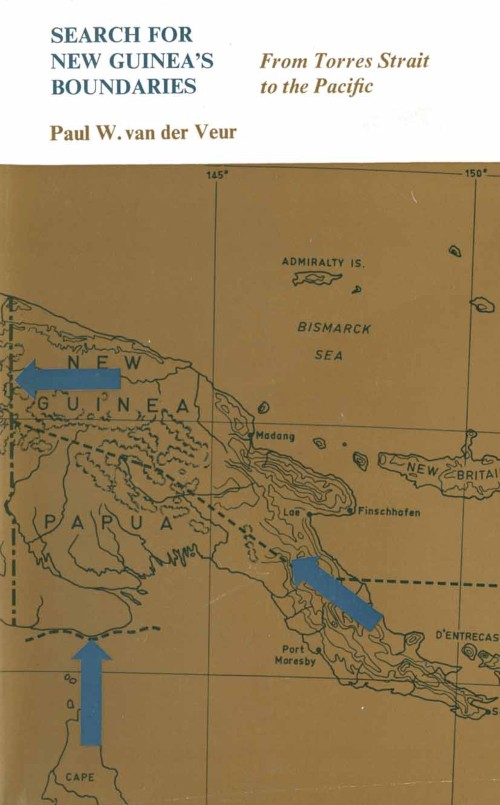
245 10|aSearch for New Guinea's Boundaries|h[electronic resource] :|bFrom Torres Strait to the Pacific /|cby Paul W. Van der Veur.
250 |a1st ed. 1966.
264 1|aDordrecht :|bSpringer Netherlands :|bImprint: Springer,|c1966.
300 |aXII, 176 p.|bonline resource.
336 |atext|btxt|2rdacontent
337 |acomputer|bc|2rdamedia
338 |aonline resource|bcr|2rdacarrier
347 |atext file|bPDF|2rda
505 0 |a1 Introduction -- 2 New Guinea Annexations -- 3 Papua Irredenta -- 4 The Former Anglo-German Boundary -- 5 The Irian Boundary -- 6 Epilogue -- Appendixes -- I Some Notes on Administrative Nomenclature -- II The Spelling of Place Names -- III Sources used in the Compilation of the Maps -- References.
520 |aThe paucity of published material on the borders of New Guinea and the international significance of the Irian boundary led me to bring together the information I had gathered over the past few years. Ideally, a book of this kind should cover the subject in its total historical and geographical context. The aim of this work is more modest: it intends merely to throw some light on the birth and development of New Guinea's boundaries. With this purpose in mind, after an introductory chapter attention is given to the historical events leading up to the parti tion of New Guinea among three European powers. In subsequent chapters the development of the boundaries between the various parts of the island is discussed. It is realized that this approach may tend to convey the impression that each particular border is in some way unique. This, however, is not intended and it is hoped that the reader will recognize some of the common underlying themes and problems which are given attention in the introductory and concluding chapters. It was intended originally to present in a brief appendix those docu ments which define the borders. It soon appeared desirable to include also the unpublished records of more recent border conferences and relevant correspondence leading up to the actual treaties, exchange of notes, Orders in Council, or (as the case might be) lack of action.
532 8 |aAccessibility summary: This PDF is not accessible. It is based on scanned pages and does not support features such as screen reader compatibility or described non-text content (images, graphs etc). However, it likely supports searchable and selectable text based on OCR (Optical Character Recognition). Users with accessibility needs may not be able to use this content effectively. Please contact us at accessibilitysupport@springernature.com if you require assistance or an alternative format.
532 8 |aInaccessible, or known limited accessibility
532 8 |aNo reading system accessibility options actively disabled
532 8 |aPublisher contact for further accessibility information: accessibilitysupport@springernature.com
650 0|aSocial sciences.
650 14|aSociety.
710 2 |aSpringerLink (Online service)
773 0 |tSpringer Nature eBook
776 08|iPrinted edition:|z9789401523714
776 08|iPrinted edition:|z9789401536219
856 40|uhttps://doi.org/10.1007/978-94-015-3620-2
912 |aZDB-2-SHU
912 |aZDB-2-SXS
912 |aZDB-2-BAE
950 |aHumanities, Social Sciences and Law (SpringerNature-11648)
950 |aSocial Sciences (R0) (SpringerNature-43726)