

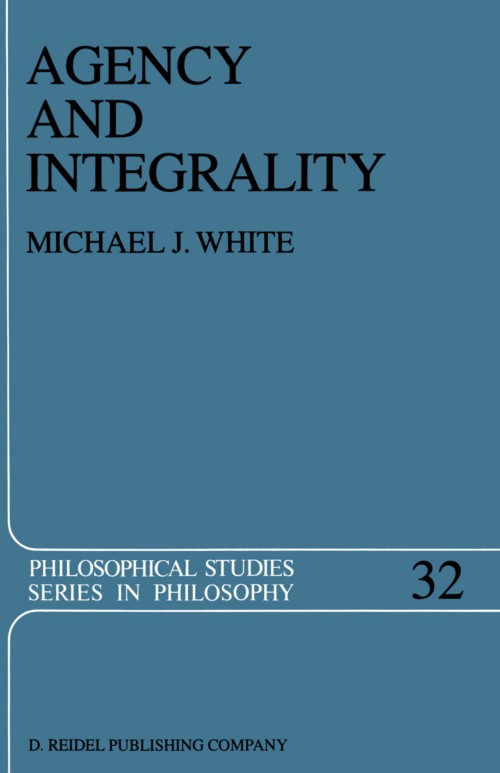
Agency and Integrality [electronic resource] : Philosophical Themes in the Ancient Discussions of Determinism and Responsibility / by Michael J. White.
Erişim Adresi
ISBN
9789400953390
Dil Kodu
İngilizce
Yer Numarası
DK/13161
Yazar
Basım Bildirimi
1st ed. 1985.
Yayın Bilgisi
Dordrecht : Springer Netherlands : Imprint: Springer, 1985.
Fiziksel Niteleme
296 p. online resource.
Dizi
Philosophical Studies Series, 2542-8349 ; 32
İçindekiler Notu
One: Introduction: The Immortal Chimpanzee at its Typewriter -- A. Plenitude and the Temporal-Frequency Model of the Modalities -- B. Plenitude and Atomist Cosmology? -- C. Summary and Conclusion -- Notes -- Two: The Legacy of Aristotle -- A. Pitfalls -- B. Three Types of Necessity -- C. Aristotle’s Fundamental Modal Principle -- D. Absolute Necessity and the Ultimate Mover -- E. Aristotle and Determinism -- F. The Energeia-Kin?sis Distinction and Aristotelian Determinism -- G. Summary and Conclusion -- Notes -- Three: Diodorean Fatalism -- A. Diodorus the Megarian? -- B. Diodorus’Denial of Motion -- C. Diodorus’ Account of the Alethic Modalities and His Fatalism -- D. The Master Argument and Diodorean Fatalism -- E. Summary and Conclusion -- Notes -- Four: Chrysippus’ Compatibilism -- A. The Avoidance of Necessity and Retention of Fate -- B. “Obscure Causes” and Chrysippus’ Compatibilism -- C. “What Is Up to Us” and Fate -- D. Chrysippean and Spinozistic Reconciliationism -- E. Summary and Conclusion -- Notes -- Five: Peripatetic Polemics -- A. Stoic and Peripatetic Conceptions of Heimarmen? -- B. Causal/Temporal Sequences: Stoic and Peripatetic Conceptions -- C. A Fronte Conditional Necessity -- D. A Tergo Conditional Necessity -- E. Summary and Conclusion -- Notes -- Six: Cosmic Cycles, Time, and Determinism -- A. Two Versions of Cosmic Cycles -- B. Cosmic Cycles and the Temporal-Frequency Model of the Modalities -- C. Cosmic Cycles and the Actuality of the Future -- D. Summary and Conclusion -- Notes -- Seven: Plotinus and Human Autonomy -- A. Book III of the Nicomachean Ethics and its Aftermath -- B. A Stoic Metaphysical Move -- C. Moral Responsibility and Aristotle’s Predicament -- D. Plotinus and Ennead 3 -- E. Plotinus and Ennead 6 -- F. The Constative and Performative Views ofResponsibility-Attribution -- G. Summary and Conclusion -- Notes -- Eight: Philosophical Postscript -- A. The Temporal-Frequency Model of the Alethic Modalities -- B. Responsibility and Determinism -- Notes -- Notes -- Index Locorum -- Index of Names.
Özet, vb.
It is not very surprising that it was no less true in antiquity than it is today that adult human beings are held to be responsible for most of their actions. Indeed, virtually all cultures in all historical periods seem to have had some conception of human agency which, in the absence of certain responsibility-defeating conditions, entails such responsibility. Few philosophers have had the temerity to maintain that this entailment is trivial because such responsibility-defeating conditions are always present. Another not very surprising fact is that ancient thinkers tended to ascribe integrality to "what is" (to on). That is, they typically regarded "what is" as a cosmos or whole with distinguishable parts that fit together in some coherent or cohesive manner, rather than either as a "unity" with no parts or as a collection containing members (ta onta or "things that are") standing in no "natural" relations to one another. 1 The philoso phical problem of determinism and responsibility may, I think, best be characterized as follows: it is the problem of preserving the phenomenon of human agency (which would seem to require a certain separateness of individual human beings from the rest of the cosmos) when one sets about the philosophical or scientific task of explaining the integrality of "what is" by means of the development of a theory of causation or explanation ( concepts that came to be lumped together by the Greeks under the term "aitia") .
Konu
Philosophy, Modern.
Early Modern Philosophy.
Early Modern Philosophy.
Kurum Adı
Eseri Alıntıla
Referansları kullanmadan önce gözden geçirmeniz ve varsa gerekli düzeltmeleri yapmanız önerilir.
Dijital Kaynak
MARC Görünümü
LEADER 06064nam a22005295i 4500
001 811903
003 TR_AnAIT
005 20260131004201
007 cr nn 008mamaa
008 121227s1985 ne | s |||| 0|eng d
020 |a9789400953390|9978-94-009-5339-0
024 7 |a10.1007/978-94-009-5339-0|2doi
041 |aeng
049 |aTürk Tarih Kurumu Kütüphanesi
050 4|aB800.2-804
072 7|aHPCD|2bicssc
072 7|aPHI016000|2bisacsh
072 7|aQDH|2thema
082 04|a190.903|223
090 |aDK/13161
100 1 |aWhite, Michael J.|eauthor.|4aut|4http://id.loc.gov/vocabulary/relators/aut
245 10|aAgency and Integrality|h[electronic resource] :|bPhilosophical Themes in the Ancient Discussions of Determinism and Responsibility /|cby Michael J. White.
250 |a1st ed. 1985.
264 1|aDordrecht :|bSpringer Netherlands :|bImprint: Springer,|c1985.
300 |a296 p.|bonline resource.
336 |atext|btxt|2rdacontent
337 |acomputer|bc|2rdamedia
338 |aonline resource|bcr|2rdacarrier
347 |atext file|bPDF|2rda
490 1 |aPhilosophical Studies Series,|x2542-8349 ;|v32
505 0 |aOne: Introduction: The Immortal Chimpanzee at its Typewriter -- A. Plenitude and the Temporal-Frequency Model of the Modalities -- B. Plenitude and Atomist Cosmology? -- C. Summary and Conclusion -- Notes -- Two: The Legacy of Aristotle -- A. Pitfalls -- B. Three Types of Necessity -- C. Aristotle’s Fundamental Modal Principle -- D. Absolute Necessity and the Ultimate Mover -- E. Aristotle and Determinism -- F. The Energeia-Kin?sis Distinction and Aristotelian Determinism -- G. Summary and Conclusion -- Notes -- Three: Diodorean Fatalism -- A. Diodorus the Megarian? -- B. Diodorus’Denial of Motion -- C. Diodorus’ Account of the Alethic Modalities and His Fatalism -- D. The Master Argument and Diodorean Fatalism -- E. Summary and Conclusion -- Notes -- Four: Chrysippus’ Compatibilism -- A. The Avoidance of Necessity and Retention of Fate -- B. “Obscure Causes” and Chrysippus’ Compatibilism -- C. “What Is Up to Us” and Fate -- D. Chrysippean and Spinozistic Reconciliationism -- E. Summary and Conclusion -- Notes -- Five: Peripatetic Polemics -- A. Stoic and Peripatetic Conceptions of Heimarmen? -- B. Causal/Temporal Sequences: Stoic and Peripatetic Conceptions -- C. A Fronte Conditional Necessity -- D. A Tergo Conditional Necessity -- E. Summary and Conclusion -- Notes -- Six: Cosmic Cycles, Time, and Determinism -- A. Two Versions of Cosmic Cycles -- B. Cosmic Cycles and the Temporal-Frequency Model of the Modalities -- C. Cosmic Cycles and the Actuality of the Future -- D. Summary and Conclusion -- Notes -- Seven: Plotinus and Human Autonomy -- A. Book III of the Nicomachean Ethics and its Aftermath -- B. A Stoic Metaphysical Move -- C. Moral Responsibility and Aristotle’s Predicament -- D. Plotinus and Ennead 3 -- E. Plotinus and Ennead 6 -- F. The Constative and Performative Views ofResponsibility-Attribution -- G. Summary and Conclusion -- Notes -- Eight: Philosophical Postscript -- A. The Temporal-Frequency Model of the Alethic Modalities -- B. Responsibility and Determinism -- Notes -- Notes -- Index Locorum -- Index of Names.
520 |aIt is not very surprising that it was no less true in antiquity than it is today that adult human beings are held to be responsible for most of their actions. Indeed, virtually all cultures in all historical periods seem to have had some conception of human agency which, in the absence of certain responsibility-defeating conditions, entails such responsibility. Few philosophers have had the temerity to maintain that this entailment is trivial because such responsibility-defeating conditions are always present. Another not very surprising fact is that ancient thinkers tended to ascribe integrality to "what is" (to on). That is, they typically regarded "what is" as a cosmos or whole with distinguishable parts that fit together in some coherent or cohesive manner, rather than either as a "unity" with no parts or as a collection containing members (ta onta or "things that are") standing in no "natural" relations to one another. 1 The philoso phical problem of determinism and responsibility may, I think, best be characterized as follows: it is the problem of preserving the phenomenon of human agency (which would seem to require a certain separateness of individual human beings from the rest of the cosmos) when one sets about the philosophical or scientific task of explaining the integrality of "what is" by means of the development of a theory of causation or explanation ( concepts that came to be lumped together by the Greeks under the term "aitia") .
532 8 |aAccessibility summary: This PDF is not accessible. It is based on scanned pages and does not support features such as screen reader compatibility or described non-text content (images, graphs etc). However, it likely supports searchable and selectable text based on OCR (Optical Character Recognition). Users with accessibility needs may not be able to use this content effectively. Please contact us at accessibilitysupport@springernature.com if you require assistance or an alternative format.
532 8 |aInaccessible, or known limited accessibility
532 8 |aNo reading system accessibility options actively disabled
532 8 |aPublisher contact for further accessibility information: accessibilitysupport@springernature.com
650 0|aPhilosophy, Modern.
650 14|aEarly Modern Philosophy.
710 2 |aSpringerLink (Online service)
773 0 |tSpringer Nature eBook
776 08|iPrinted edition:|z9789027719683
776 08|iPrinted edition:|z9789400953406
776 08|iPrinted edition:|z9789401088572
830 0|aPhilosophical Studies Series,|x2542-8349 ;|v32
856 40|uhttps://doi.org/10.1007/978-94-009-5339-0
912 |aZDB-2-SHU
912 |aZDB-2-SXPR
912 |aZDB-2-BAE
950 |aHumanities, Social Sciences and Law (SpringerNature-11648)
950 |aPhilosophy and Religion (R0) (SpringerNature-43725)
001 811903
003 TR_AnAIT
005 20260131004201
007 cr nn 008mamaa
008 121227s1985 ne | s |||| 0|eng d
020 |a9789400953390|9978-94-009-5339-0
024 7 |a10.1007/978-94-009-5339-0|2doi
041 |aeng
049 |aTürk Tarih Kurumu Kütüphanesi
050 4|aB800.2-804
072 7|aHPCD|2bicssc
072 7|aPHI016000|2bisacsh
072 7|aQDH|2thema
082 04|a190.903|223
090 |aDK/13161
100 1 |aWhite, Michael J.|eauthor.|4aut|4http://id.loc.gov/vocabulary/relators/aut
245 10|aAgency and Integrality|h[electronic resource] :|bPhilosophical Themes in the Ancient Discussions of Determinism and Responsibility /|cby Michael J. White.
250 |a1st ed. 1985.
264 1|aDordrecht :|bSpringer Netherlands :|bImprint: Springer,|c1985.
300 |a296 p.|bonline resource.
336 |atext|btxt|2rdacontent
337 |acomputer|bc|2rdamedia
338 |aonline resource|bcr|2rdacarrier
347 |atext file|bPDF|2rda
490 1 |aPhilosophical Studies Series,|x2542-8349 ;|v32
505 0 |aOne: Introduction: The Immortal Chimpanzee at its Typewriter -- A. Plenitude and the Temporal-Frequency Model of the Modalities -- B. Plenitude and Atomist Cosmology? -- C. Summary and Conclusion -- Notes -- Two: The Legacy of Aristotle -- A. Pitfalls -- B. Three Types of Necessity -- C. Aristotle’s Fundamental Modal Principle -- D. Absolute Necessity and the Ultimate Mover -- E. Aristotle and Determinism -- F. The Energeia-Kin?sis Distinction and Aristotelian Determinism -- G. Summary and Conclusion -- Notes -- Three: Diodorean Fatalism -- A. Diodorus the Megarian? -- B. Diodorus’Denial of Motion -- C. Diodorus’ Account of the Alethic Modalities and His Fatalism -- D. The Master Argument and Diodorean Fatalism -- E. Summary and Conclusion -- Notes -- Four: Chrysippus’ Compatibilism -- A. The Avoidance of Necessity and Retention of Fate -- B. “Obscure Causes” and Chrysippus’ Compatibilism -- C. “What Is Up to Us” and Fate -- D. Chrysippean and Spinozistic Reconciliationism -- E. Summary and Conclusion -- Notes -- Five: Peripatetic Polemics -- A. Stoic and Peripatetic Conceptions of Heimarmen? -- B. Causal/Temporal Sequences: Stoic and Peripatetic Conceptions -- C. A Fronte Conditional Necessity -- D. A Tergo Conditional Necessity -- E. Summary and Conclusion -- Notes -- Six: Cosmic Cycles, Time, and Determinism -- A. Two Versions of Cosmic Cycles -- B. Cosmic Cycles and the Temporal-Frequency Model of the Modalities -- C. Cosmic Cycles and the Actuality of the Future -- D. Summary and Conclusion -- Notes -- Seven: Plotinus and Human Autonomy -- A. Book III of the Nicomachean Ethics and its Aftermath -- B. A Stoic Metaphysical Move -- C. Moral Responsibility and Aristotle’s Predicament -- D. Plotinus and Ennead 3 -- E. Plotinus and Ennead 6 -- F. The Constative and Performative Views ofResponsibility-Attribution -- G. Summary and Conclusion -- Notes -- Eight: Philosophical Postscript -- A. The Temporal-Frequency Model of the Alethic Modalities -- B. Responsibility and Determinism -- Notes -- Notes -- Index Locorum -- Index of Names.
520 |aIt is not very surprising that it was no less true in antiquity than it is today that adult human beings are held to be responsible for most of their actions. Indeed, virtually all cultures in all historical periods seem to have had some conception of human agency which, in the absence of certain responsibility-defeating conditions, entails such responsibility. Few philosophers have had the temerity to maintain that this entailment is trivial because such responsibility-defeating conditions are always present. Another not very surprising fact is that ancient thinkers tended to ascribe integrality to "what is" (to on). That is, they typically regarded "what is" as a cosmos or whole with distinguishable parts that fit together in some coherent or cohesive manner, rather than either as a "unity" with no parts or as a collection containing members (ta onta or "things that are") standing in no "natural" relations to one another. 1 The philoso phical problem of determinism and responsibility may, I think, best be characterized as follows: it is the problem of preserving the phenomenon of human agency (which would seem to require a certain separateness of individual human beings from the rest of the cosmos) when one sets about the philosophical or scientific task of explaining the integrality of "what is" by means of the development of a theory of causation or explanation ( concepts that came to be lumped together by the Greeks under the term "aitia") .
532 8 |aAccessibility summary: This PDF is not accessible. It is based on scanned pages and does not support features such as screen reader compatibility or described non-text content (images, graphs etc). However, it likely supports searchable and selectable text based on OCR (Optical Character Recognition). Users with accessibility needs may not be able to use this content effectively. Please contact us at accessibilitysupport@springernature.com if you require assistance or an alternative format.
532 8 |aInaccessible, or known limited accessibility
532 8 |aNo reading system accessibility options actively disabled
532 8 |aPublisher contact for further accessibility information: accessibilitysupport@springernature.com
650 0|aPhilosophy, Modern.
650 14|aEarly Modern Philosophy.
710 2 |aSpringerLink (Online service)
773 0 |tSpringer Nature eBook
776 08|iPrinted edition:|z9789027719683
776 08|iPrinted edition:|z9789400953406
776 08|iPrinted edition:|z9789401088572
830 0|aPhilosophical Studies Series,|x2542-8349 ;|v32
856 40|uhttps://doi.org/10.1007/978-94-009-5339-0
912 |aZDB-2-SHU
912 |aZDB-2-SXPR
912 |aZDB-2-BAE
950 |aHumanities, Social Sciences and Law (SpringerNature-11648)
950 |aPhilosophy and Religion (R0) (SpringerNature-43725)
Materyaller
Depodan talep edilen materyal sadece kütüphane içerisinde kullanılmaktadır.
Materyal dışarıya ödünç verilmemektedir.
Materyal dışarıya ödünç verilmemektedir.
