LEADER 04298nam a22005055i 4500
001 811925
003 TR_AnAIT
005 20260131004125
007 cr nn 008mamaa
008 130625s1983 xxu| s |||| 0|eng d
020 |a9781489927873|9978-1-4899-2787-3
024 7 |a10.1007/978-1-4899-2787-3|2doi
041 |aeng
049 |aTürk Tarih Kurumu Kütüphanesi
050 4|aHV6001-7220.5
072 7|aJKV|2bicssc
072 7|aSOC004000|2bisacsh
072 7|aJKV|2thema
082 04|a364|223
090 |aDK/13183
100 1 |aVan den Haag, Ernest.|eauthor.|4aut|4http://id.loc.gov/vocabulary/relators/aut
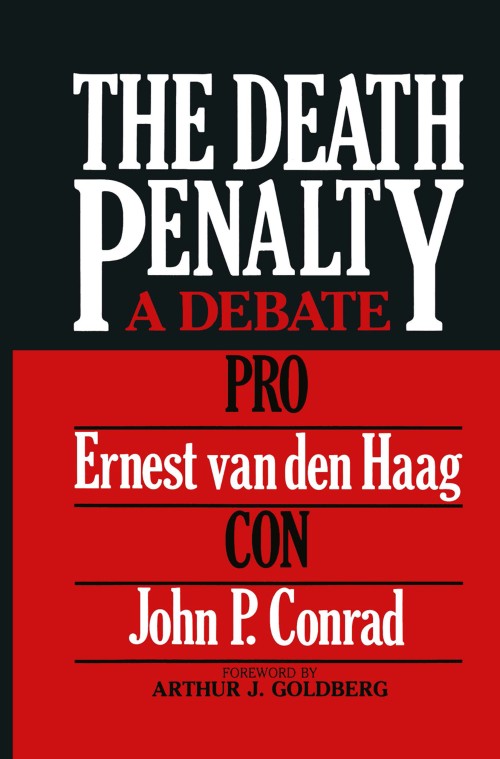
245 14|aThe Death Penalty|h[electronic resource] :|bA Debate /|cby Ernest Van den Haag, John Phillips Conrad.
250 |a1st ed. 1983.
264 1|aNew York, NY :|bSpringer US :|bImprint: Springer,|c1983.
300 |aXIV, 305 p.|bonline resource.
336 |atext|btxt|2rdacontent
337 |acomputer|bc|2rdamedia
338 |aonline resource|bcr|2rdacarrier
347 |atext file|bPDF|2rda
505 0 |aIntroduction: Before the Killing Stopped -- Introduction: Death but Not Torture -- 1. The Retributivist’s Case against Capital Punishment -- 2. The Purpose of Punishment -- 3. The Deterrent Effect of the Death Penalty -- 4. More on the Deterrent Effect of the Death Penalty -- 5. Does Deterrence Need Capital Punishment? -- 6. Deterrence, the Death Penalty, and the Data -- 7. The Constitutional Question -- 8. Discrimination and Justice -- 9. Justice and Equality -- 10. Special Cases -- 11. Popular Arguments -- 12. Crimes of Passion -- 13. Death, Rehabilitation, the Bible, and Human Dignity -- 14. The Symbolic Meaning of the Death Penalty -- 15. The Abolitionist Rests -- 16. The Advocate Advocates.
520 |aFrom 1965 until 1980, there was a virtual moratorium on executions for capital offenses in the United States. This was due primarily to protracted legal proceedings challenging the death penalty on constitutional grounds. After much Sturm und Drang, the Supreme Court of the United States, by a divided vote, finally decided that "the death penalty does not invariably violate the Cruel and Unusual Punishment Clause of the Eighth Amendment." The Court's decisions, however, do not moot the controversy about the death penalty or render this excellent book irrelevant. The ball is now in the court of the Legislature and the Executive. Leg islatures, federal and state, can impose or abolish the death penalty, within the guidelines prescribed by the Supreme Court. A Chief Executive can commute a death sentence. And even the Supreme Court can change its mind, as it has done on many occasions and did, with respect to various aspects of the death penalty itself, durlog the moratorium period. Also, the people can change their minds. Some time ago, a majority, according to reliable polls, favored abolition. Today, a substantial majority favors imposition of the death penalty. The pendulum can swing again, as it has done in the past.
532 8 |aAccessibility summary: This PDF is not accessible. It is based on scanned pages and does not support features such as screen reader compatibility or described non-text content (images, graphs etc). However, it likely supports searchable and selectable text based on OCR (Optical Character Recognition). Users with accessibility needs may not be able to use this content effectively. Please contact us at accessibilitysupport@springernature.com if you require assistance or an alternative format.
532 8 |aInaccessible, or known limited accessibility
532 8 |aNo reading system accessibility options actively disabled
532 8 |aPublisher contact for further accessibility information: accessibilitysupport@springernature.com
650 0|aCriminology.
650 14|aCriminology.
700 1 |aConrad, John Phillips.|eauthor.|4aut|4http://id.loc.gov/vocabulary/relators/aut
710 2 |aSpringerLink (Online service)
773 0 |tSpringer Nature eBook
776 08|iPrinted edition:|z9780306414169
776 08|iPrinted edition:|z9781489927880
856 40|uhttps://doi.org/10.1007/978-1-4899-2787-3
912 |aZDB-2-SHU
912 |aZDB-2-SXLC
912 |aZDB-2-BAE
950 |aHumanities, Social Sciences and Law (SpringerNature-11648)
950 |aLaw and Criminology (R0) (SpringerNature-43727)