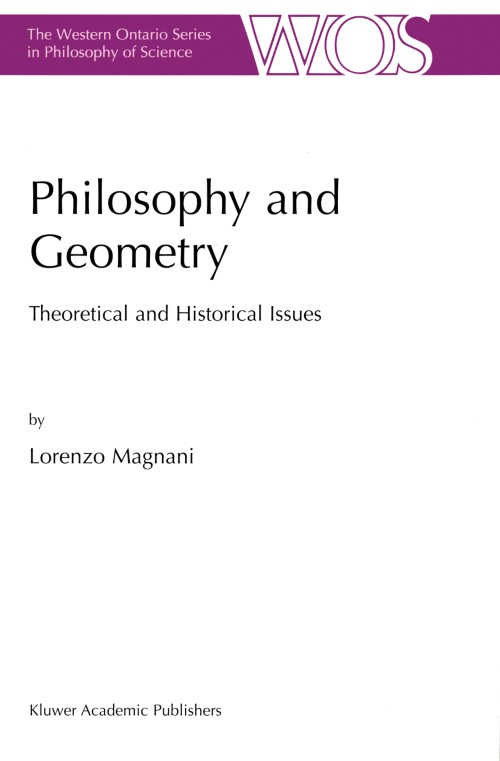
Philosophy and Geometry [electronic resource] : Theoretical and Historical Issues / by L. Magnani.
Erişim Adresi
ISBN
9789401096225
Dil Kodu
İngilizce
Yer Numarası
DK/13196
Yazar
Basım Bildirimi
1st ed. 2001.
Yayın Bilgisi
Dordrecht : Springer Netherlands : Imprint: Springer, 2001.
Fiziksel Niteleme
XX, 256 p. online resource.
Dizi
The Western Ontario Series in Philosophy of Science, A Series of Books in Philosophy of Science, Methodology, Epistemology, Logic, History of Science, and Related Fields, 2215-1974 ; 66
İçindekiler Notu
1 At the Origins of Geometrical Knowledge -- 1. Conceptual space, mental spatial models, latent geometry -- 2. Figures, symbols, and the Greek origins of geometry -- 3. The ritual origin of geometry -- 2 Geometry: the Model of Knowledge -- 1. Sensibility -- 2. Imagination -- 3. Understanding -- 4. Pure apprehension and geometry -- 5. Empirical apprehension and empirical schematism -- 6. Geometrical schemata and constructions: models of philosophy -- 7. Space as the object of geometry -- 3 Constructions, Logic, Categories -- 1. Space and logic -- 2. Intuition, construction, and the logic of singular terms -- 3. Pure and applied geometry -- 4. Why is geometry synthetic? -- 5. Categories and Axioms of Intuition -- 6. Mathematical schematism -- 4 The ???????? in Ancient Geometrical Knowledge -- 1. Geometry, drawing, and writing -- 2. Mathematical objects -- 3. Geometrical reasoning -- 4. The science that studies shapes: geometry -- 5. “History of geometry” and “elements” of geometry -- 5 Geometry and Convention -- 1. Crude facts, relations, conventions -- 2. Pure and applied geometry -- 3. Sensible, geometric, and physical space -- 4. Geometrical intuition -- 5. Geometrical apriorism and empiricism -- 6. The genesis of geometry -- 7. The interchangeability of geometries -- 8. Withdrawing conventions -- 9. Withdrawing principles of coordination -- 6 Geometry, Problem Solving, Abduction -- 1. Geometrical constructions and problem solving -- 2. Model-based and manipulative abduction -- 3. Geometrical construction is a kind of manipulative abduction -- 4. Diagrams, abduction, and deductive reasoning -- 7 Geometry and Cognition -- 1. Geometry of visibles, protogeometry, manipulations -- 2. At the origins of geometrical knowledge II -- 3. Non-conceptual and spatial abilities -- 4. Computational geometricalconstructions -- 5. Spatial imagery -- 6. Logical models of diagrammatic reasoning -- References -- Author Index.
Özet, vb.
Philosophers have studied geometry since ancient times. Geometrical knowledge has often played the role of a laboratory for the philosopher's conceptual experiments dedicated to the ideation of powerful theories of knowledge. Lorenzo Magnani's new book Philosophy and Geometry illustrates the rich intrigue of this fascinating story of human knowledge, providing a new analysis of the ideas of many scholars (including Plato, Proclus, Kant, and Poincaré), and discussing conventionalist and neopositivist perspectives and the problem of the origins of geometry. The book also ties together the concerns of philosophers of science and cognitive scientists, showing, for example, the connections between geometrical reasoning and cognition as well as the results of recent logical and computational models of geometrical reasoning. All the topics are dealt with using a novel combination of both historical and contemporary perspectives. Philosophy and Geometry is a valuable contribution to the renaissance of research in the field.
Konu
Science __ Philosophy.
History.
Geometry.
Philosophy of Science.
History.
Geometry.
History.
Geometry.
Philosophy of Science.
History.
Geometry.
Kurum Adı

Eseri Alıntıla
Referansları kullanmadan önce gözden geçirmeniz ve varsa gerekli düzeltmeleri yapmanız önerilir.
Dijital Kaynak
MARC Görünümü
LEADER 05828nam a22005895i 4500
001 811938
003 TR_AnAIT
005 20260131004101
007 cr nn 008mamaa
008 121227s2001 ne | s |||| 0|eng d
020 |a9789401096225|9978-94-010-9622-5
024 7 |a10.1007/978-94-010-9622-5|2doi
041 |aeng
049 |aTürk Tarih Kurumu Kütüphanesi
050 4|aQ174-175.3
050 4|aB67
072 7|aPDA|2bicssc
072 7|aSCI075000|2bisacsh
072 7|aPDA|2thema
082 04|a501|223
090 |aDK/13196
100 1 |aMagnani, L.|eauthor.|4aut|4http://id.loc.gov/vocabulary/relators/aut
245 10|aPhilosophy and Geometry|h[electronic resource] :|bTheoretical and Historical Issues /|cby L. Magnani.
250 |a1st ed. 2001.
264 1|aDordrecht :|bSpringer Netherlands :|bImprint: Springer,|c2001.
300 |aXX, 256 p.|bonline resource.
336 |atext|btxt|2rdacontent
337 |acomputer|bc|2rdamedia
338 |aonline resource|bcr|2rdacarrier
347 |atext file|bPDF|2rda
490 1 |aThe Western Ontario Series in Philosophy of Science, A Series of Books in Philosophy of Science, Methodology, Epistemology, Logic, History of Science, and Related Fields,|x2215-1974 ;|v66
505 0 |a1 At the Origins of Geometrical Knowledge -- 1. Conceptual space, mental spatial models, latent geometry -- 2. Figures, symbols, and the Greek origins of geometry -- 3. The ritual origin of geometry -- 2 Geometry: the Model of Knowledge -- 1. Sensibility -- 2. Imagination -- 3. Understanding -- 4. Pure apprehension and geometry -- 5. Empirical apprehension and empirical schematism -- 6. Geometrical schemata and constructions: models of philosophy -- 7. Space as the object of geometry -- 3 Constructions, Logic, Categories -- 1. Space and logic -- 2. Intuition, construction, and the logic of singular terms -- 3. Pure and applied geometry -- 4. Why is geometry synthetic? -- 5. Categories and Axioms of Intuition -- 6. Mathematical schematism -- 4 The ???????? in Ancient Geometrical Knowledge -- 1. Geometry, drawing, and writing -- 2. Mathematical objects -- 3. Geometrical reasoning -- 4. The science that studies shapes: geometry -- 5. “History of geometry” and “elements” of geometry -- 5 Geometry and Convention -- 1. Crude facts, relations, conventions -- 2. Pure and applied geometry -- 3. Sensible, geometric, and physical space -- 4. Geometrical intuition -- 5. Geometrical apriorism and empiricism -- 6. The genesis of geometry -- 7. The interchangeability of geometries -- 8. Withdrawing conventions -- 9. Withdrawing principles of coordination -- 6 Geometry, Problem Solving, Abduction -- 1. Geometrical constructions and problem solving -- 2. Model-based and manipulative abduction -- 3. Geometrical construction is a kind of manipulative abduction -- 4. Diagrams, abduction, and deductive reasoning -- 7 Geometry and Cognition -- 1. Geometry of visibles, protogeometry, manipulations -- 2. At the origins of geometrical knowledge II -- 3. Non-conceptual and spatial abilities -- 4. Computational geometricalconstructions -- 5. Spatial imagery -- 6. Logical models of diagrammatic reasoning -- References -- Author Index.
520 |aPhilosophers have studied geometry since ancient times. Geometrical knowledge has often played the role of a laboratory for the philosopher's conceptual experiments dedicated to the ideation of powerful theories of knowledge. Lorenzo Magnani's new book Philosophy and Geometry illustrates the rich intrigue of this fascinating story of human knowledge, providing a new analysis of the ideas of many scholars (including Plato, Proclus, Kant, and Poincaré), and discussing conventionalist and neopositivist perspectives and the problem of the origins of geometry. The book also ties together the concerns of philosophers of science and cognitive scientists, showing, for example, the connections between geometrical reasoning and cognition as well as the results of recent logical and computational models of geometrical reasoning. All the topics are dealt with using a novel combination of both historical and contemporary perspectives. Philosophy and Geometry is a valuable contribution to the renaissance of research in the field.
532 8 |aAccessibility summary: This PDF is not accessible. It is based on scanned pages and does not support features such as screen reader compatibility or described non-text content (images, graphs etc). However, it likely supports searchable and selectable text based on OCR (Optical Character Recognition). Users with accessibility needs may not be able to use this content effectively. Please contact us at accessibilitysupport@springernature.com if you require assistance or an alternative format.
532 8 |aInaccessible, or known limited accessibility
532 8 |aNo reading system accessibility options actively disabled
532 8 |aPublisher contact for further accessibility information: accessibilitysupport@springernature.com
650 0|aScience|xPhilosophy.
650 0|aHistory.
650 0|aGeometry.
650 14|aPhilosophy of Science.
650 24|aHistory.
650 24|aGeometry.
710 2 |aSpringerLink (Online service)
773 0 |tSpringer Nature eBook
776 08|iPrinted edition:|z9780792369332
776 08|iPrinted edition:|z9781402002410
776 08|iPrinted edition:|z9789401096232
830 0|aThe Western Ontario Series in Philosophy of Science, A Series of Books in Philosophy of Science, Methodology, Epistemology, Logic, History of Science, and Related Fields,|x2215-1974 ;|v66
856 40|uhttps://doi.org/10.1007/978-94-010-9622-5
912 |aZDB-2-SHU
912 |aZDB-2-SXPR
912 |aZDB-2-BAE
950 |aHumanities, Social Sciences and Law (SpringerNature-11648)
950 |aPhilosophy and Religion (R0) (SpringerNature-43725)
001 811938
003 TR_AnAIT
005 20260131004101
007 cr nn 008mamaa
008 121227s2001 ne | s |||| 0|eng d
020 |a9789401096225|9978-94-010-9622-5
024 7 |a10.1007/978-94-010-9622-5|2doi
041 |aeng
049 |aTürk Tarih Kurumu Kütüphanesi
050 4|aQ174-175.3
050 4|aB67
072 7|aPDA|2bicssc
072 7|aSCI075000|2bisacsh
072 7|aPDA|2thema
082 04|a501|223
090 |aDK/13196
100 1 |aMagnani, L.|eauthor.|4aut|4http://id.loc.gov/vocabulary/relators/aut
245 10|aPhilosophy and Geometry|h[electronic resource] :|bTheoretical and Historical Issues /|cby L. Magnani.
250 |a1st ed. 2001.
264 1|aDordrecht :|bSpringer Netherlands :|bImprint: Springer,|c2001.
300 |aXX, 256 p.|bonline resource.
336 |atext|btxt|2rdacontent
337 |acomputer|bc|2rdamedia
338 |aonline resource|bcr|2rdacarrier
347 |atext file|bPDF|2rda
490 1 |aThe Western Ontario Series in Philosophy of Science, A Series of Books in Philosophy of Science, Methodology, Epistemology, Logic, History of Science, and Related Fields,|x2215-1974 ;|v66
505 0 |a1 At the Origins of Geometrical Knowledge -- 1. Conceptual space, mental spatial models, latent geometry -- 2. Figures, symbols, and the Greek origins of geometry -- 3. The ritual origin of geometry -- 2 Geometry: the Model of Knowledge -- 1. Sensibility -- 2. Imagination -- 3. Understanding -- 4. Pure apprehension and geometry -- 5. Empirical apprehension and empirical schematism -- 6. Geometrical schemata and constructions: models of philosophy -- 7. Space as the object of geometry -- 3 Constructions, Logic, Categories -- 1. Space and logic -- 2. Intuition, construction, and the logic of singular terms -- 3. Pure and applied geometry -- 4. Why is geometry synthetic? -- 5. Categories and Axioms of Intuition -- 6. Mathematical schematism -- 4 The ???????? in Ancient Geometrical Knowledge -- 1. Geometry, drawing, and writing -- 2. Mathematical objects -- 3. Geometrical reasoning -- 4. The science that studies shapes: geometry -- 5. “History of geometry” and “elements” of geometry -- 5 Geometry and Convention -- 1. Crude facts, relations, conventions -- 2. Pure and applied geometry -- 3. Sensible, geometric, and physical space -- 4. Geometrical intuition -- 5. Geometrical apriorism and empiricism -- 6. The genesis of geometry -- 7. The interchangeability of geometries -- 8. Withdrawing conventions -- 9. Withdrawing principles of coordination -- 6 Geometry, Problem Solving, Abduction -- 1. Geometrical constructions and problem solving -- 2. Model-based and manipulative abduction -- 3. Geometrical construction is a kind of manipulative abduction -- 4. Diagrams, abduction, and deductive reasoning -- 7 Geometry and Cognition -- 1. Geometry of visibles, protogeometry, manipulations -- 2. At the origins of geometrical knowledge II -- 3. Non-conceptual and spatial abilities -- 4. Computational geometricalconstructions -- 5. Spatial imagery -- 6. Logical models of diagrammatic reasoning -- References -- Author Index.
520 |aPhilosophers have studied geometry since ancient times. Geometrical knowledge has often played the role of a laboratory for the philosopher's conceptual experiments dedicated to the ideation of powerful theories of knowledge. Lorenzo Magnani's new book Philosophy and Geometry illustrates the rich intrigue of this fascinating story of human knowledge, providing a new analysis of the ideas of many scholars (including Plato, Proclus, Kant, and Poincaré), and discussing conventionalist and neopositivist perspectives and the problem of the origins of geometry. The book also ties together the concerns of philosophers of science and cognitive scientists, showing, for example, the connections between geometrical reasoning and cognition as well as the results of recent logical and computational models of geometrical reasoning. All the topics are dealt with using a novel combination of both historical and contemporary perspectives. Philosophy and Geometry is a valuable contribution to the renaissance of research in the field.
532 8 |aAccessibility summary: This PDF is not accessible. It is based on scanned pages and does not support features such as screen reader compatibility or described non-text content (images, graphs etc). However, it likely supports searchable and selectable text based on OCR (Optical Character Recognition). Users with accessibility needs may not be able to use this content effectively. Please contact us at accessibilitysupport@springernature.com if you require assistance or an alternative format.
532 8 |aInaccessible, or known limited accessibility
532 8 |aNo reading system accessibility options actively disabled
532 8 |aPublisher contact for further accessibility information: accessibilitysupport@springernature.com
650 0|aScience|xPhilosophy.
650 0|aHistory.
650 0|aGeometry.
650 14|aPhilosophy of Science.
650 24|aHistory.
650 24|aGeometry.
710 2 |aSpringerLink (Online service)
773 0 |tSpringer Nature eBook
776 08|iPrinted edition:|z9780792369332
776 08|iPrinted edition:|z9781402002410
776 08|iPrinted edition:|z9789401096232
830 0|aThe Western Ontario Series in Philosophy of Science, A Series of Books in Philosophy of Science, Methodology, Epistemology, Logic, History of Science, and Related Fields,|x2215-1974 ;|v66
856 40|uhttps://doi.org/10.1007/978-94-010-9622-5
912 |aZDB-2-SHU
912 |aZDB-2-SXPR
912 |aZDB-2-BAE
950 |aHumanities, Social Sciences and Law (SpringerNature-11648)
950 |aPhilosophy and Religion (R0) (SpringerNature-43725)
Materyaller
Depodan talep edilen materyal sadece kütüphane içerisinde kullanılmaktadır.
Materyal dışarıya ödünç verilmemektedir.
