LEADER 04267nam a22005295i 4500
001 812046
003 TR_AnAIT
005 20260131003655
007 cr nn 008mamaa
008 130608s1992 xxu| s |||| 0|eng d
020 |a9781489911797|9978-1-4899-1179-7
024 7 |a10.1007/978-1-4899-1179-7|2doi
041 |aeng
049 |aTürk Tarih Kurumu Kütüphanesi
050 4|aCC1-960
072 7|aHD|2bicssc
072 7|aSOC003000|2bisacsh
072 7|aNK|2thema
082 04|a930.1|223
090 |aDK/13303
100 1 |aSkibo, James M.|eauthor.|4aut|4http://id.loc.gov/vocabulary/relators/aut
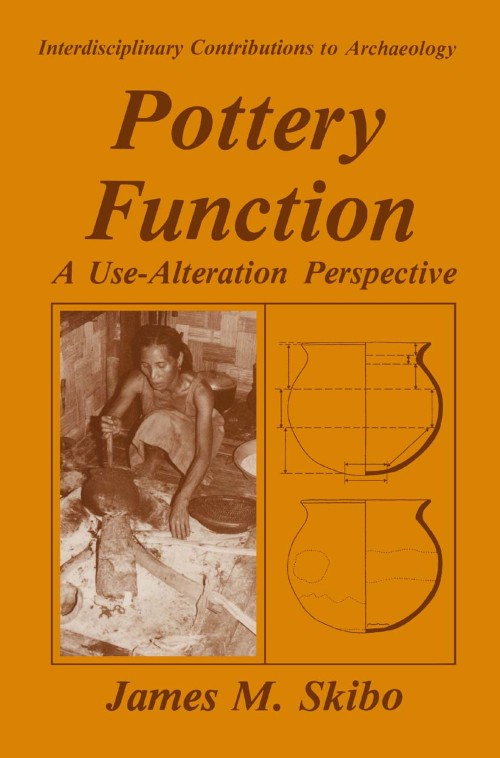
245 10|aPottery Function|h[electronic resource] :|bA Use-Alteration Perspective /|cby James M. Skibo.
250 |a1st ed. 1992.
264 1|aNew York, NY :|bSpringer US :|bImprint: Springer,|c1992.
300 |aXVI, 206 p.|bonline resource.
336 |atext|btxt|2rdacontent
337 |acomputer|bc|2rdamedia
338 |aonline resource|bcr|2rdacarrier
347 |atext file|bPDF|2rda
490 1 |aInterdisciplinary Contributions to Archaeology,|x2730-6984
505 0 |a1 • Introduction -- 2 • Ethnoarchaeology and Experimental Archaeology Defined -- 3 • Pottery Use Alteration -- 4 • The Pottery Use-Alteration Study -- 5 • Use Alteration: Absorbed Residues -- 6 • Use Alteration: Surface Attrition -- 7 • Use Alteration: Carbon Deposition -- 8 • Concluding Comments -- Appendix A • Data Collection Forms -- Appendix B • Fatty Acid Identification -- References.
520 |aThere are many ways to study pots or the sherds of pots. In this book James Skibo has focused on the surface wear and tear found on the resin-coated, low-fired cooking pots of the Kalinga people in north western Luzon. This detailed analysis is part of a much larger evalua tion of Kalinga pottery production and use by the staff members and students at the University of Arizona that has been underway since 1972. Here he has analyzed the variants among the possible residual clues on pots that have endured the stresses of having been used for cooking meat and vegetables or rice; standing on supports in the hearth fire; wall scrapings while distributing the food; being transported to the water source for thorough washing and scrubbing; followed by storage until needed again-a repetitive pattern of use. This well-controlled study made use of new pots provided for cooking purposes to one Kalinga household, as well as those pots carefully observed in other households-- 189 pots in all. Such an ethnoarchaeological approach is not unlike follOwing the course of the firing of a kiln-load of pots in other cultures, and then purchasing the entire product of this firing for analysis. Other important aspects of this Kalinga study are the chemical analysis of extracts from the ware to deduce the nature of the food cooked in them, and the experimental study of soot deposited on cooking vessels when they are in use.
532 8 |aAccessibility summary: This PDF is not accessible. It is based on scanned pages and does not support features such as screen reader compatibility or described non-text content (images, graphs etc). However, it likely supports searchable and selectable text based on OCR (Optical Character Recognition). Users with accessibility needs may not be able to use this content effectively. Please contact us at accessibilitysupport@springernature.com if you require assistance or an alternative format.
532 8 |aInaccessible, or known limited accessibility
532 8 |aNo reading system accessibility options actively disabled
532 8 |aPublisher contact for further accessibility information: accessibilitysupport@springernature.com
650 0|aArchaeology.
650 14|aArchaeology.
710 2 |aSpringerLink (Online service)
773 0 |tSpringer Nature eBook
776 08|iPrinted edition:|z9780306441592
776 08|iPrinted edition:|z9781489911803
776 08|iPrinted edition:|z9781489911810
830 0|aInterdisciplinary Contributions to Archaeology,|x2730-6984
856 40|uhttps://doi.org/10.1007/978-1-4899-1179-7
912 |aZDB-2-SHU
912 |aZDB-2-SXS
912 |aZDB-2-BAE
950 |aHumanities, Social Sciences and Law (SpringerNature-11648)
950 |aSocial Sciences (R0) (SpringerNature-43726)