

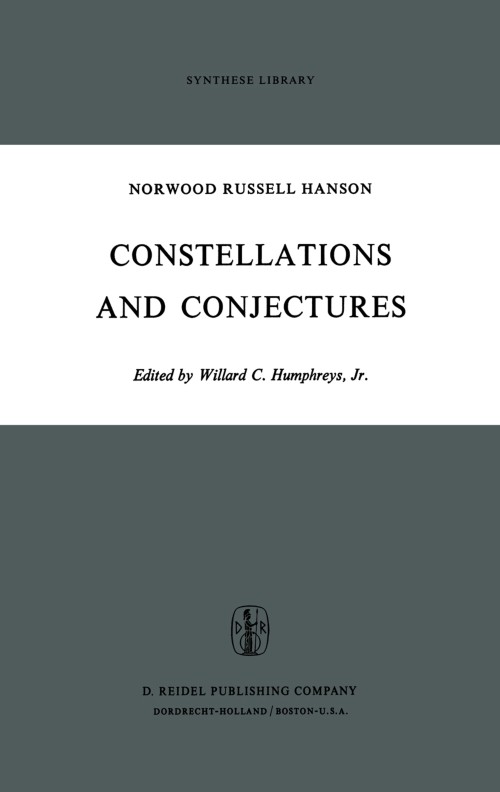
Constellations and Conjectures [electronic resource] / by N.R. Hanson ; edited by Willard C. Humphreys Jr.
Erişim Adresi
ISBN
9789401024983
Dil Kodu
İngilizce
Yer Numarası
DK/13336
Yazar
Basım Bildirimi
1st ed. 1973.
Yayın Bilgisi
Dordrecht : Springer Netherlands : Imprint: Springer, 1973.
Fiziksel Niteleme
X, 285 p. online resource.
Dizi
Synthese Library, Studies in Epistemology, Logic, Methodology, and Philosophy of Science, 2542-8292 ; 48
İçindekiler Notu
Book One - Part I -- Cosmological Explanation, B.C. -- The Conceptual Content of Book One, Part I -- The Historical Content of Book One, Part I -- Plato -- Eudoxos and ‘Plato’s Problem’ -- Aristotle -- Book One - Part II -- Ptolemy and Prediction -- Pre-Ptolemaic Anticipations -- Three Dimensional Variations of Ptolemy’s Technique -- Book Two - Part I -- The Medieval Rediscovery of Ptolemy’s Tool Box -- ‘The Ptolemaic System’ -- Supplementary Material for Book Two, Section A -- Book Two - Part II -- Copernicus’ Systematic Astronomy -- Further Aspects of Copernican Astronomy in Contrast to All that had Gone Before -- Supplement to Section on Copernican Theory -- Book Three - Part I -- Kepler and the ‘Clean’ Idea -- Supplementary Material for Book Three, Part I.
Özet, vb.
An occurrence is explained by being related to prior events through known laws. Other intellectual activities may also constitute explanation - but this much certainly does. Ideally, an explained occurrence (0) could have been predicted in a connected way - by extrapolation from prior events (e) via the same laws (L). Schematically, 1 Explanation: 0 -Lt, 2, 3-(e e e )'-AI t 2 3 01 Prediction: (e e e )I-L , 2, 3_ +.11 t 2 3 t Thus Mars' backward loop in late summer, 1956, is explained by showing how this follows from (e ) its mean distance from sun and earth, (e ) its t 2 mean period of revolution, (e ) its past positions relative to earth, etc. 3 - by way of the laws of Celestial Mechanics (including (Lt) Kepler's Laws and Galileo's, (L2) Newton's, and (L3) those of Laplace and Lagrange. Moreover, this loop (0) could have been predicted from such events (e -e ) via the laws of Celestial Mechanics. t 3 This is an ideal situation. It crystallized late in the history of planetary theory.The Greeks found explanations for heavenly motions: the back ward loops were explained to their satisfaction. But they could not predict these motions, not in terms of Attic explanatory cosmologies.
Konu
Science __ Philosophy.
Philosophy of Science.
Philosophy of Science.
Diğer Yazarlar
Kurum Adı
Eseri Alıntıla
Referansları kullanmadan önce gözden geçirmeniz ve varsa gerekli düzeltmeleri yapmanız önerilir.
Dijital Kaynak
MARC Görünümü
LEADER 04679nam a22005535i 4500
001 812079
003 TR_AnAIT
005 20260131003409
007 cr nn 008mamaa
008 121227s1973 ne | s |||| 0|eng d
020 |a9789401024983|9978-94-010-2498-3
024 7 |a10.1007/978-94-010-2498-3|2doi
041 |aeng
049 |aTürk Tarih Kurumu Kütüphanesi
050 4|aQ174-175.3
050 4|aB67
072 7|aPDA|2bicssc
072 7|aSCI075000|2bisacsh
072 7|aPDA|2thema
082 04|a501|223
090 |aDK/13336
100 1 |aHanson, N.R.|eauthor.|4aut|4http://id.loc.gov/vocabulary/relators/aut
245 10|aConstellations and Conjectures|h[electronic resource] /|cby N.R. Hanson ; edited by Willard C. Humphreys Jr.
250 |a1st ed. 1973.
264 1|aDordrecht :|bSpringer Netherlands :|bImprint: Springer,|c1973.
300 |aX, 285 p.|bonline resource.
336 |atext|btxt|2rdacontent
337 |acomputer|bc|2rdamedia
338 |aonline resource|bcr|2rdacarrier
347 |atext file|bPDF|2rda
490 1 |aSynthese Library, Studies in Epistemology, Logic, Methodology, and Philosophy of Science,|x2542-8292 ;|v48
505 0 |aBook One - Part I -- Cosmological Explanation, B.C. -- The Conceptual Content of Book One, Part I -- The Historical Content of Book One, Part I -- Plato -- Eudoxos and ‘Plato’s Problem’ -- Aristotle -- Book One - Part II -- Ptolemy and Prediction -- Pre-Ptolemaic Anticipations -- Three Dimensional Variations of Ptolemy’s Technique -- Book Two - Part I -- The Medieval Rediscovery of Ptolemy’s Tool Box -- ‘The Ptolemaic System’ -- Supplementary Material for Book Two, Section A -- Book Two - Part II -- Copernicus’ Systematic Astronomy -- Further Aspects of Copernican Astronomy in Contrast to All that had Gone Before -- Supplement to Section on Copernican Theory -- Book Three - Part I -- Kepler and the ‘Clean’ Idea -- Supplementary Material for Book Three, Part I.
520 |aAn occurrence is explained by being related to prior events through known laws. Other intellectual activities may also constitute explanation - but this much certainly does. Ideally, an explained occurrence (0) could have been predicted in a connected way - by extrapolation from prior events (e) via the same laws (L). Schematically, 1 Explanation: 0 -Lt, 2, 3-(e e e )'-AI t 2 3 01 Prediction: (e e e )I-L , 2, 3_ +.11 t 2 3 t Thus Mars' backward loop in late summer, 1956, is explained by showing how this follows from (e ) its mean distance from sun and earth, (e ) its t 2 mean period of revolution, (e ) its past positions relative to earth, etc. 3 - by way of the laws of Celestial Mechanics (including (Lt) Kepler's Laws and Galileo's, (L2) Newton's, and (L3) those of Laplace and Lagrange. Moreover, this loop (0) could have been predicted from such events (e -e ) via the laws of Celestial Mechanics. t 3 This is an ideal situation. It crystallized late in the history of planetary theory.The Greeks found explanations for heavenly motions: the back ward loops were explained to their satisfaction. But they could not predict these motions, not in terms of Attic explanatory cosmologies.
532 8 |aAccessibility summary: This PDF is not accessible. It is based on scanned pages and does not support features such as screen reader compatibility or described non-text content (images, graphs etc). However, it likely supports searchable and selectable text based on OCR (Optical Character Recognition). Users with accessibility needs may not be able to use this content effectively. Please contact us at accessibilitysupport@springernature.com if you require assistance or an alternative format.
532 8 |aInaccessible, or known limited accessibility
532 8 |aNo reading system accessibility options actively disabled
532 8 |aPublisher contact for further accessibility information: accessibilitysupport@springernature.com
650 0|aScience|xPhilosophy.
650 14|aPhilosophy of Science.
700 1 |aHumphreys Jr., Willard C.|eeditor.|4edt|4http://id.loc.gov/vocabulary/relators/edt
710 2 |aSpringerLink (Online service)
773 0 |tSpringer Nature eBook
776 08|iPrinted edition:|z9789027701923
776 08|iPrinted edition:|z9789401024990
776 08|iPrinted edition:|z9789401025003
830 0|aSynthese Library, Studies in Epistemology, Logic, Methodology, and Philosophy of Science,|x2542-8292 ;|v48
856 40|uhttps://doi.org/10.1007/978-94-010-2498-3
912 |aZDB-2-SHU
912 |aZDB-2-SXPR
912 |aZDB-2-BAE
950 |aHumanities, Social Sciences and Law (SpringerNature-11648)
950 |aPhilosophy and Religion (R0) (SpringerNature-43725)
001 812079
003 TR_AnAIT
005 20260131003409
007 cr nn 008mamaa
008 121227s1973 ne | s |||| 0|eng d
020 |a9789401024983|9978-94-010-2498-3
024 7 |a10.1007/978-94-010-2498-3|2doi
041 |aeng
049 |aTürk Tarih Kurumu Kütüphanesi
050 4|aQ174-175.3
050 4|aB67
072 7|aPDA|2bicssc
072 7|aSCI075000|2bisacsh
072 7|aPDA|2thema
082 04|a501|223
090 |aDK/13336
100 1 |aHanson, N.R.|eauthor.|4aut|4http://id.loc.gov/vocabulary/relators/aut
245 10|aConstellations and Conjectures|h[electronic resource] /|cby N.R. Hanson ; edited by Willard C. Humphreys Jr.
250 |a1st ed. 1973.
264 1|aDordrecht :|bSpringer Netherlands :|bImprint: Springer,|c1973.
300 |aX, 285 p.|bonline resource.
336 |atext|btxt|2rdacontent
337 |acomputer|bc|2rdamedia
338 |aonline resource|bcr|2rdacarrier
347 |atext file|bPDF|2rda
490 1 |aSynthese Library, Studies in Epistemology, Logic, Methodology, and Philosophy of Science,|x2542-8292 ;|v48
505 0 |aBook One - Part I -- Cosmological Explanation, B.C. -- The Conceptual Content of Book One, Part I -- The Historical Content of Book One, Part I -- Plato -- Eudoxos and ‘Plato’s Problem’ -- Aristotle -- Book One - Part II -- Ptolemy and Prediction -- Pre-Ptolemaic Anticipations -- Three Dimensional Variations of Ptolemy’s Technique -- Book Two - Part I -- The Medieval Rediscovery of Ptolemy’s Tool Box -- ‘The Ptolemaic System’ -- Supplementary Material for Book Two, Section A -- Book Two - Part II -- Copernicus’ Systematic Astronomy -- Further Aspects of Copernican Astronomy in Contrast to All that had Gone Before -- Supplement to Section on Copernican Theory -- Book Three - Part I -- Kepler and the ‘Clean’ Idea -- Supplementary Material for Book Three, Part I.
520 |aAn occurrence is explained by being related to prior events through known laws. Other intellectual activities may also constitute explanation - but this much certainly does. Ideally, an explained occurrence (0) could have been predicted in a connected way - by extrapolation from prior events (e) via the same laws (L). Schematically, 1 Explanation: 0 -Lt, 2, 3-(e e e )'-AI t 2 3 01 Prediction: (e e e )I-L , 2, 3_ +.11 t 2 3 t Thus Mars' backward loop in late summer, 1956, is explained by showing how this follows from (e ) its mean distance from sun and earth, (e ) its t 2 mean period of revolution, (e ) its past positions relative to earth, etc. 3 - by way of the laws of Celestial Mechanics (including (Lt) Kepler's Laws and Galileo's, (L2) Newton's, and (L3) those of Laplace and Lagrange. Moreover, this loop (0) could have been predicted from such events (e -e ) via the laws of Celestial Mechanics. t 3 This is an ideal situation. It crystallized late in the history of planetary theory.The Greeks found explanations for heavenly motions: the back ward loops were explained to their satisfaction. But they could not predict these motions, not in terms of Attic explanatory cosmologies.
532 8 |aAccessibility summary: This PDF is not accessible. It is based on scanned pages and does not support features such as screen reader compatibility or described non-text content (images, graphs etc). However, it likely supports searchable and selectable text based on OCR (Optical Character Recognition). Users with accessibility needs may not be able to use this content effectively. Please contact us at accessibilitysupport@springernature.com if you require assistance or an alternative format.
532 8 |aInaccessible, or known limited accessibility
532 8 |aNo reading system accessibility options actively disabled
532 8 |aPublisher contact for further accessibility information: accessibilitysupport@springernature.com
650 0|aScience|xPhilosophy.
650 14|aPhilosophy of Science.
700 1 |aHumphreys Jr., Willard C.|eeditor.|4edt|4http://id.loc.gov/vocabulary/relators/edt
710 2 |aSpringerLink (Online service)
773 0 |tSpringer Nature eBook
776 08|iPrinted edition:|z9789027701923
776 08|iPrinted edition:|z9789401024990
776 08|iPrinted edition:|z9789401025003
830 0|aSynthese Library, Studies in Epistemology, Logic, Methodology, and Philosophy of Science,|x2542-8292 ;|v48
856 40|uhttps://doi.org/10.1007/978-94-010-2498-3
912 |aZDB-2-SHU
912 |aZDB-2-SXPR
912 |aZDB-2-BAE
950 |aHumanities, Social Sciences and Law (SpringerNature-11648)
950 |aPhilosophy and Religion (R0) (SpringerNature-43725)
Materyaller
Depodan talep edilen materyal sadece kütüphane içerisinde kullanılmaktadır.
Materyal dışarıya ödünç verilmemektedir.
Materyal dışarıya ödünç verilmemektedir.
