LEADER 03988nam a22004215i 4500
001 812087
003 TR_AnAIT
005 20260131003208
007 cr nn 008mamaa
008 120324s2012 ne | s |||| 0|eng d
020 |a9789460916991|9978-94-6091-699-1
024 7 |a10.1007/978-94-6091-699-1|2doi
041 |aeng
049 |aTürk Tarih Kurumu Kütüphanesi
050 4|aL1-991
072 7|aJN|2bicssc
072 7|aEDU000000|2bisacsh
072 7|aJN|2thema
082 04|a370|223
090 |aDK/13344
100 1 |aWatkins, Megan.|eauthor.|4aut|4http://id.loc.gov/vocabulary/relators/aut
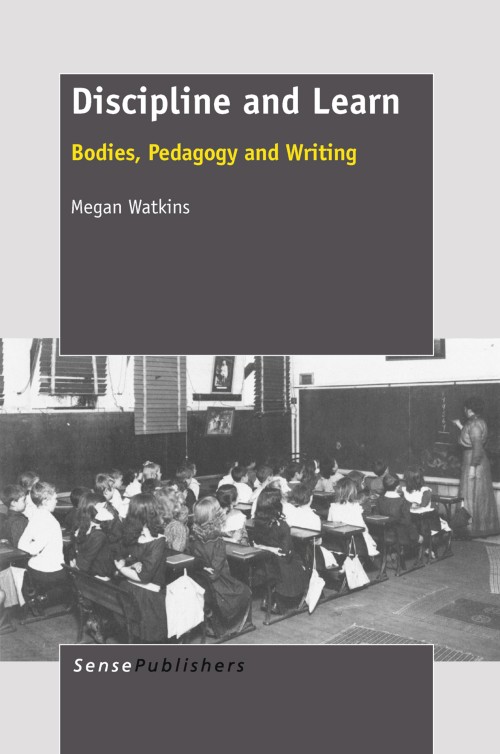
245 10|aDiscipline and Learn|h[electronic resource] /|cby Megan Watkins.
250 |a1st ed. 2012.
264 1|aRotterdam :|bSensePublishers :|bImprint: SensePublishers,|c2012.
300 |aX, 229 p.|bonline resource.
336 |atext|btxt|2rdacontent
337 |acomputer|bc|2rdamedia
338 |aonline resource|bcr|2rdacarrier
347 |atext file|bPDF|2rda
520 |aDiscipline and Learn: Bodies, Pedagogy and Writing explores how discipline is typically construed as a form of subjection in contemporary educational thought and in critical and cultural theory more broadly. It provides a critique of this emphasis on the repressive aspects of discipline highlighting its enabling potential and role in the development of dispositions to learning. The book engages with the work of a range of theorists: Foucault, Bourdieu, Merleau-Ponty, Mauss and Spinoza and considers their usefulness in theorizing embodiment and learning in the teaching of writing in the early years of school. Emphasis, however, is placed on the work of Bourdieu and his notion of habitus melding theory and practice in an ethnography of contemporary classrooms. This text is invaluable reading for students and academics across the social sciences and humanities interested in questions of embodiment, affect and their relation to learning. This is the most thought-provoking book to be published on pedagogy in a long, long time. Conceptually elegant and empirically rich, it undercuts conventional wisdom and potentially rearranges how we think about teaching, learning and writing. It argues that students’ bodies not just their minds matter in learning, explaining how, in practice, the desire to learn is a mindful bodily disposition. And it shows how, through an enabling form of discipline, teachers can produce a scholarly habitus in all students, including the educationally disadvantaged and defiant. Jane Kenway, Professor of Education, Monash University Discipline and Learn: Bodies, Pedagogy and Writing an excellent book which makes an important contribution to our understanding of both pedagogy and the body and which is sure to spark debate in both fields. It is careful and judicious in its approach but still manages to be provocative and original. Nick Crossley, Professor of Sociology, University of Manchester.
532 8 |aAccessibility summary: This PDF eBook is produced by a third-party. We have requested that the file be made accessible and compliant with the European Accessibility Act (EAA). However, we have not been able to fully verify its compliance with recognized accessibility standards (such as PDF/UA or WCAG). For detailed accessibility information, please refer to the original publisher’s website. If you require an accessible version of this content, please contact accessibilitysupport@springernature.com. We are committed to improving accessibility and will work with the publisher to meet your needs wherever possible.
532 8 |aPublisher contact for further accessibility information: accessibilitysupport@springernature.com
650 0|aEducation.
650 14|aEducation.
710 2 |aSpringerLink (Online service)
773 0 |tSpringer Nature eBook
856 40|uhttps://doi.org/10.1007/978-94-6091-699-1
912 |aZDB-2-SHU
912 |aZDB-2-SXED
950 |aHumanities, Social Sciences and Law (SpringerNature-11648)
950 |aEducation (R0) (SpringerNature-43721)