LEADER 04323nam a22005775i 4500
001 812180
003 TR_AnAIT
005 20260131001456
007 cr nn 008mamaa
008 130930s1992 ne | s |||| 0|eng d
020 |a9789401126205|9978-94-011-2620-5
024 7 |a10.1007/978-94-011-2620-5|2doi
041 |aeng
049 |aTürk Tarih Kurumu Kütüphanesi
050 4|aQ174-175.3
050 4|aB67
072 7|aPDA|2bicssc
072 7|aSCI075000|2bisacsh
072 7|aPDA|2thema
082 04|a501|223
090 |aDK/13435
100 1 |aPitt, Joseph C.|eauthor.|4aut|4http://id.loc.gov/vocabulary/relators/aut
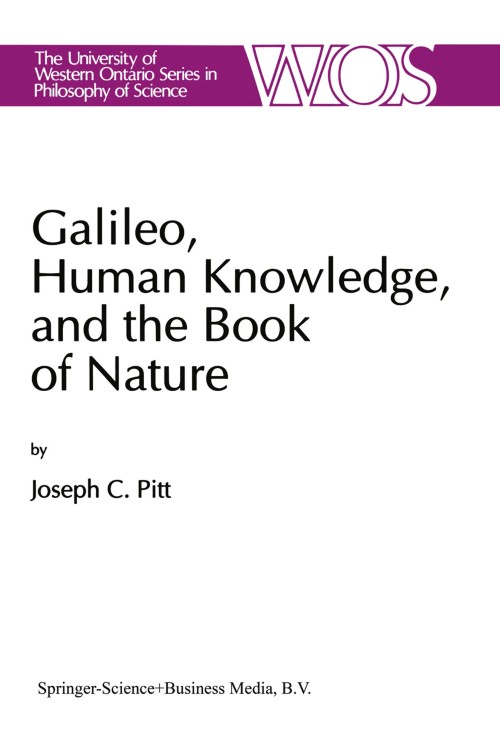
245 10|aGalileo, Human Knowledge, and the Book of Nature|h[electronic resource] :|bMethod Replaces Metaphysics /|cby Joseph C. Pitt.
250 |a1st ed. 1992.
264 1|aDordrecht :|bSpringer Netherlands :|bImprint: Springer,|c1992.
300 |aXVI, 201 p.|bonline resource.
336 |atext|btxt|2rdacontent
337 |acomputer|bc|2rdamedia
338 |aonline resource|bcr|2rdacarrier
347 |atext file|bPDF|2rda
490 1 |aThe Western Ontario Series in Philosophy of Science, A Series of Books in Philosophy of Science, Methodology, Epistemology, Logic, History of Science, and Related Fields,|x2215-1974 ;|v50
520 |aGalileo is revered as one of the founders of modern science primarily because of such discoveries as the law of falling bodies and the moons of Jupiter. In addition to his scientific achievements, Professor Pitt argues that Galileo deserves increased attention for his contributions to the methodology of the new science and that his method retains its value even today. In a detailed analysis of Galileo's mature works, Pitt reconstructs crucial features of Galileo's epistemology. He shows how Galileo's methodological insights grow out of an appreciation of the limits of human knowledge and he brings fresh insight to our concept of Galileo's methodology and its implications for contemporary debates. Working from Galileo's insistence on the contrast between the number of things that can be known and the limited abilities of human knowers, Pitt shows how Galileo's common sense approach to rationality permits the development of a robust scientific method. At the same time, Pitt argues that we should correct our picture of Galileo, the culture hero. Instead of seeing him as a martyr to the cause of truth, Galileo is best understood as a man of his times who was responding to a variety of social pressures during a period of intellectual and political turmoil. This book will be of interest to philosophers and to historians and sociologists of science as well as to a general readership interested in the scientific revolution.
532 8 |aAccessibility summary: This PDF is not accessible. It is based on scanned pages and does not support features such as screen reader compatibility or described non-text content (images, graphs etc). However, it likely supports searchable and selectable text based on OCR (Optical Character Recognition). Users with accessibility needs may not be able to use this content effectively. Please contact us at accessibilitysupport@springernature.com if you require assistance or an alternative format.
532 8 |aInaccessible, or known limited accessibility
532 8 |aNo reading system accessibility options actively disabled
532 8 |aPublisher contact for further accessibility information: accessibilitysupport@springernature.com
650 0|aScience|xPhilosophy.
650 0|aHistory.
650 0|aPhilosophy, Modern.
650 14|aPhilosophy of Science.
650 24|aHistory.
650 24|aEarly Modern Philosophy.
710 2 |aSpringerLink (Online service)
773 0 |tSpringer Nature eBook
776 08|iPrinted edition:|z9780792315100
776 08|iPrinted edition:|z9789401126212
776 08|iPrinted edition:|z9789401051583
830 0|aThe Western Ontario Series in Philosophy of Science, A Series of Books in Philosophy of Science, Methodology, Epistemology, Logic, History of Science, and Related Fields,|x2215-1974 ;|v50
856 40|uhttps://doi.org/10.1007/978-94-011-2620-5
912 |aZDB-2-SHU
912 |aZDB-2-SXPR
912 |aZDB-2-BAE
950 |aHumanities, Social Sciences and Law (SpringerNature-11648)
950 |aPhilosophy and Religion (R0) (SpringerNature-43725)