LEADER 04471nam a22005895i 4500
001 812191
003 TR_AnAIT
005 20260131001431
007 cr nn 008mamaa
008 121227s1981 ne | s |||| 0|eng d
020 |a9789400985223|9978-94-009-8522-3
024 7 |a10.1007/978-94-009-8522-3|2doi
041 |aeng
049 |aTürk Tarih Kurumu Kütüphanesi
050 4|aQ174-175.3
050 4|aB67
072 7|aPDA|2bicssc
072 7|aSCI075000|2bisacsh
072 7|aPDA|2thema
082 04|a501|223
090 |aDK/13446
100 1 |aKaelin, E.F.|eauthor.|4aut|4http://id.loc.gov/vocabulary/relators/aut
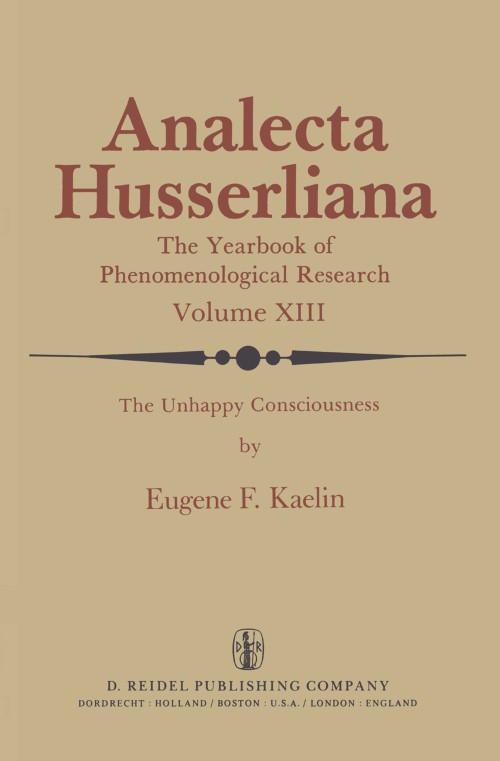
245 14|aThe Unhappy Consciousness|h[electronic resource] :|bThe Poetic Plight of Samuel Beckett An Inquiry at the Intersection of Phenomenology and Literature /|cby E.F. Kaelin.
250 |a1st ed. 1981.
264 1|aDordrecht :|bSpringer Netherlands :|bImprint: Springer,|c1981.
300 |aXXVI, 326 p.|bonline resource.
336 |atext|btxt|2rdacontent
337 |acomputer|bc|2rdamedia
338 |aonline resource|bcr|2rdacarrier
347 |atext file|bPDF|2rda
490 1 |aAnalecta Husserliana, The Yearbook of Phenomenological Research,|x2542-8330 ;|v13
505 0 |aI Introduction The Babel of Criticism -- I -- II In The Beginning, The Word -- III Apprenticeship in Sorcery -- IV The Gift of Tongues -- V Through Streets Wide and Narrow -- VI “I was my Father and I was my Son” -- VII Voices in the Mud -- II -- VIII Creating a Scene -- IX Voices, in English, on the Air -- X English Voices for the Stage -- XI The Limits of Theater -- XII Soul made Light, and Sound -- XIII Sound, Sense and Sound -- XIV Closure -- References.
520 |aIn the wake of so many other keys to the treasure, whoever undertakes still another book of criticism on the novels and drama of Samuel Beckett must assume the grave burden of justifying the attempt, especially for him who like one of John Barth's recent fictional characterizations of himself, believes that the key to the treasure is the treasure itself. No one will ever have the privilege of the last word on these texts, since any words other than the author's own found therein must be referred back to the text themselves for cautious verification. Indeed, the words the author has used to create the oeuvre stand by virtue of their own creativeness, or fail in their pretense, and need no critical comment to be appreciated for what they have achieved or have failed to achieve. In criticism there is no privileged point of view - not even the author's own. He has consulted his knowledge and experience to make the work, and whoever would criticize his efforts would seem to owe him the indulgence of doing the same. If communication is mediated through the works, the author and his readers respond in recipro cal fashion to the expressiveness of their contexts. For the philosopher of art, the challenge is extremely tempting - on a manifold count.
532 8 |aAccessibility summary: This PDF is not accessible. It is based on scanned pages and does not support features such as screen reader compatibility or described non-text content (images, graphs etc). However, it likely supports searchable and selectable text based on OCR (Optical Character Recognition). Users with accessibility needs may not be able to use this content effectively. Please contact us at accessibilitysupport@springernature.com if you require assistance or an alternative format.
532 8 |aInaccessible, or known limited accessibility
532 8 |aNo reading system accessibility options actively disabled
532 8 |aPublisher contact for further accessibility information: accessibilitysupport@springernature.com
650 0|aScience|xPhilosophy.
650 0|aLanguage and languages|xStyle.
650 0|aPhenomenology .
650 14|aPhilosophy of Science.
650 24|aStylistics.
650 24|aPhenomenology.
710 2 |aSpringerLink (Online service)
773 0 |tSpringer Nature eBook
776 08|iPrinted edition:|z9789027713131
776 08|iPrinted edition:|z9789400985230
776 08|iPrinted edition:|z9789400985247
830 0|aAnalecta Husserliana, The Yearbook of Phenomenological Research,|x2542-8330 ;|v13
856 40|uhttps://doi.org/10.1007/978-94-009-8522-3
912 |aZDB-2-SHU
912 |aZDB-2-SXPR
912 |aZDB-2-BAE
950 |aHumanities, Social Sciences and Law (SpringerNature-11648)
950 |aPhilosophy and Religion (R0) (SpringerNature-43725)