

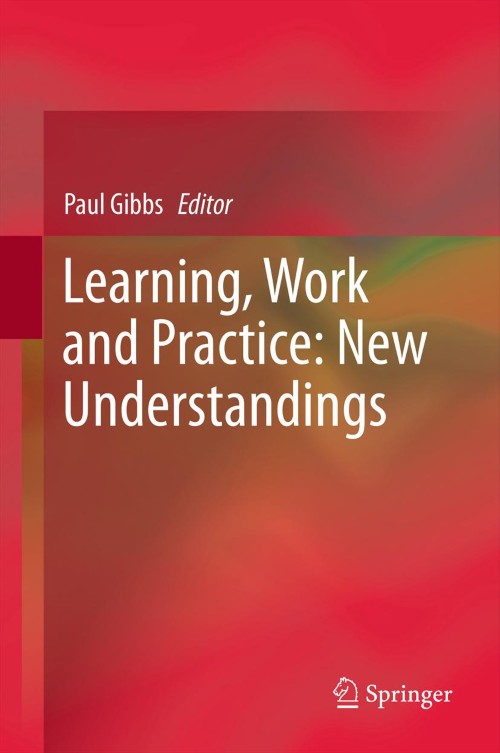
Learning, Work and Practice: New Understandings [electronic resource] / edited by Paul Gibbs.
Erişim Adresi
ISBN
9789400747593
Dil Kodu
İngilizce
Yer Numarası
DK/13466
Basım Bildirimi
1st ed. 2013.
Yayın Bilgisi
Dordrecht : Springer Netherlands : Imprint: Springer, 2013.
Fiziksel Niteleme
VIII, 224 p. online resource.
İçindekiler Notu
Introduction- Thinking about work in work based learning, Paul Gibbs -- Section one -- The Workplace as a Site of Learning. Reflections on the Conceptual Relationship between Workplace and Learning, Christopher Winch -- Practice as a key idea in understanding work-based learning, Paul Hager -- The role of on-the-job and off-the-job provision in vocational education and training, Gerald Lum -- Tacit Knowledge and the Labor Process, Theodore Lewis -- Workplace Identity, Transition and the Role of Learning, Geoff Hinchcliffe -- Ontological Distinctiveness and the Emergence of Purposes, David Beckett -- Section two -- Aristotelian Gnoseology and Work-Based Learning, Marianna Papastephanou -- Working our way through murky coordinates: Philosophy in support of truth processes, Kent den Heyer -- Deconstructing practice: exploring the temporal play of know-how and being in the workplace, Kevin J. Flint -- An epistemology of the hand: Putting pragmatism to work, Svend Brinkmann, Lene Tanggaard -- Neo-Pragmatism, meaning and learning in the workplace, Paul Gibbs -- Section three -- Foucault and work-based Research Ethics: Revisiting some issues, Michalinos Zembylas -- Communitarian Ethics and Work-based Education: Some African Perspectives, Thaddeus Metz -- Islamic Perspectives on Work-Based Learning, Mesut Akdere, Jackleen M. Salem, S. Mahdy Amine.
Özet, vb.
This book’s original contribution to a crowded literature on work and learning will attract strong international interest. Its focus on the philosophy of learning at work brings a fresh perspective on a topic normally viewed through psychological, anthropological and sociological eyes. It assembles a host of internationally recognized scholars who reflect on the various philosophies of work-based learning. Full of distinctive and original contributions that provide perceptive insights into the subject, the work will be a practical support to teachers, trainers and researchers at the same time as it gives readers a clear philosophical grounding in learning at work. It is, however, not simply a book about philosophy, but a gazetteer of approaches to education in work that will sustain and inspire those who provide, engage in, and support the learning of new knowledge and skills in the workplace. With adaptability to new employment opportunities so vital to existing workers, the authors stand behind continued provision of work-based learning in the face of tightening economic constraints.
Konu
Professional education.
Vocational education.
Education __ Philosophy.
Professional and Vocational Education.
Philosophy of Education.
Vocational education.
Education __ Philosophy.
Professional and Vocational Education.
Philosophy of Education.
Diğer Yazarlar
Kurum Adı
Eseri Alıntıla
Referansları kullanmadan önce gözden geçirmeniz ve varsa gerekli düzeltmeleri yapmanız önerilir.
Dijital Kaynak
MARC Görünümü
LEADER 04152nam a22004935i 4500
001 812211
003 TR_AnAIT
005 20260131001314
007 cr nn 008mamaa
008 120814s2013 ne | s |||| 0|eng d
020 |a9789400747593|9978-94-007-4759-3
024 7 |a10.1007/978-94-007-4759-3|2doi
041 |aeng
049 |aTürk Tarih Kurumu Kütüphanesi
050 4|aLC1051-1072
050 4|aLC1041-1048
072 7|aJNRV|2bicssc
072 7|aEDU046000|2bisacsh
072 7|aJNRV|2thema
082 04|a370.113|223
090 |aDK/13466
245 10|aLearning, Work and Practice: New Understandings|h[electronic resource] /|cedited by Paul Gibbs.
250 |a1st ed. 2013.
264 1|aDordrecht :|bSpringer Netherlands :|bImprint: Springer,|c2013.
300 |aVIII, 224 p.|bonline resource.
336 |atext|btxt|2rdacontent
337 |acomputer|bc|2rdamedia
338 |aonline resource|bcr|2rdacarrier
347 |atext file|bPDF|2rda
505 0 |aIntroduction- Thinking about work in work based learning, Paul Gibbs -- Section one -- The Workplace as a Site of Learning. Reflections on the Conceptual Relationship between Workplace and Learning, Christopher Winch -- Practice as a key idea in understanding work-based learning, Paul Hager -- The role of on-the-job and off-the-job provision in vocational education and training, Gerald Lum -- Tacit Knowledge and the Labor Process, Theodore Lewis -- Workplace Identity, Transition and the Role of Learning, Geoff Hinchcliffe -- Ontological Distinctiveness and the Emergence of Purposes, David Beckett -- Section two -- Aristotelian Gnoseology and Work-Based Learning, Marianna Papastephanou -- Working our way through murky coordinates: Philosophy in support of truth processes, Kent den Heyer -- Deconstructing practice: exploring the temporal play of know-how and being in the workplace, Kevin J. Flint -- An epistemology of the hand: Putting pragmatism to work, Svend Brinkmann, Lene Tanggaard -- Neo-Pragmatism, meaning and learning in the workplace, Paul Gibbs -- Section three -- Foucault and work-based Research Ethics: Revisiting some issues, Michalinos Zembylas -- Communitarian Ethics and Work-based Education: Some African Perspectives, Thaddeus Metz -- Islamic Perspectives on Work-Based Learning, Mesut Akdere, Jackleen M. Salem, S. Mahdy Amine.
520 |aThis book’s original contribution to a crowded literature on work and learning will attract strong international interest. Its focus on the philosophy of learning at work brings a fresh perspective on a topic normally viewed through psychological, anthropological and sociological eyes. It assembles a host of internationally recognized scholars who reflect on the various philosophies of work-based learning. Full of distinctive and original contributions that provide perceptive insights into the subject, the work will be a practical support to teachers, trainers and researchers at the same time as it gives readers a clear philosophical grounding in learning at work. It is, however, not simply a book about philosophy, but a gazetteer of approaches to education in work that will sustain and inspire those who provide, engage in, and support the learning of new knowledge and skills in the workplace. With adaptability to new employment opportunities so vital to existing workers, the authors stand behind continued provision of work-based learning in the face of tightening economic constraints.
650 0|aProfessional education.
650 0|aVocational education.
650 0|aEducation|xPhilosophy.
650 14|aProfessional and Vocational Education.
650 24|aPhilosophy of Education.
700 1 |aGibbs, Paul.|eeditor.|4edt|4http://id.loc.gov/vocabulary/relators/edt
710 2 |aSpringerLink (Online service)
773 0 |tSpringer Nature eBook
776 08|iPrinted edition:|z9789400747586
776 08|iPrinted edition:|z9789400747609
776 08|iPrinted edition:|z9789401783224
856 40|uhttps://doi.org/10.1007/978-94-007-4759-3
912 |aZDB-2-SHU
912 |aZDB-2-SXED
950 |aHumanities, Social Sciences and Law (SpringerNature-11648)
950 |aEducation (R0) (SpringerNature-43721)
001 812211
003 TR_AnAIT
005 20260131001314
007 cr nn 008mamaa
008 120814s2013 ne | s |||| 0|eng d
020 |a9789400747593|9978-94-007-4759-3
024 7 |a10.1007/978-94-007-4759-3|2doi
041 |aeng
049 |aTürk Tarih Kurumu Kütüphanesi
050 4|aLC1051-1072
050 4|aLC1041-1048
072 7|aJNRV|2bicssc
072 7|aEDU046000|2bisacsh
072 7|aJNRV|2thema
082 04|a370.113|223
090 |aDK/13466
245 10|aLearning, Work and Practice: New Understandings|h[electronic resource] /|cedited by Paul Gibbs.
250 |a1st ed. 2013.
264 1|aDordrecht :|bSpringer Netherlands :|bImprint: Springer,|c2013.
300 |aVIII, 224 p.|bonline resource.
336 |atext|btxt|2rdacontent
337 |acomputer|bc|2rdamedia
338 |aonline resource|bcr|2rdacarrier
347 |atext file|bPDF|2rda
505 0 |aIntroduction- Thinking about work in work based learning, Paul Gibbs -- Section one -- The Workplace as a Site of Learning. Reflections on the Conceptual Relationship between Workplace and Learning, Christopher Winch -- Practice as a key idea in understanding work-based learning, Paul Hager -- The role of on-the-job and off-the-job provision in vocational education and training, Gerald Lum -- Tacit Knowledge and the Labor Process, Theodore Lewis -- Workplace Identity, Transition and the Role of Learning, Geoff Hinchcliffe -- Ontological Distinctiveness and the Emergence of Purposes, David Beckett -- Section two -- Aristotelian Gnoseology and Work-Based Learning, Marianna Papastephanou -- Working our way through murky coordinates: Philosophy in support of truth processes, Kent den Heyer -- Deconstructing practice: exploring the temporal play of know-how and being in the workplace, Kevin J. Flint -- An epistemology of the hand: Putting pragmatism to work, Svend Brinkmann, Lene Tanggaard -- Neo-Pragmatism, meaning and learning in the workplace, Paul Gibbs -- Section three -- Foucault and work-based Research Ethics: Revisiting some issues, Michalinos Zembylas -- Communitarian Ethics and Work-based Education: Some African Perspectives, Thaddeus Metz -- Islamic Perspectives on Work-Based Learning, Mesut Akdere, Jackleen M. Salem, S. Mahdy Amine.
520 |aThis book’s original contribution to a crowded literature on work and learning will attract strong international interest. Its focus on the philosophy of learning at work brings a fresh perspective on a topic normally viewed through psychological, anthropological and sociological eyes. It assembles a host of internationally recognized scholars who reflect on the various philosophies of work-based learning. Full of distinctive and original contributions that provide perceptive insights into the subject, the work will be a practical support to teachers, trainers and researchers at the same time as it gives readers a clear philosophical grounding in learning at work. It is, however, not simply a book about philosophy, but a gazetteer of approaches to education in work that will sustain and inspire those who provide, engage in, and support the learning of new knowledge and skills in the workplace. With adaptability to new employment opportunities so vital to existing workers, the authors stand behind continued provision of work-based learning in the face of tightening economic constraints.
650 0|aProfessional education.
650 0|aVocational education.
650 0|aEducation|xPhilosophy.
650 14|aProfessional and Vocational Education.
650 24|aPhilosophy of Education.
700 1 |aGibbs, Paul.|eeditor.|4edt|4http://id.loc.gov/vocabulary/relators/edt
710 2 |aSpringerLink (Online service)
773 0 |tSpringer Nature eBook
776 08|iPrinted edition:|z9789400747586
776 08|iPrinted edition:|z9789400747609
776 08|iPrinted edition:|z9789401783224
856 40|uhttps://doi.org/10.1007/978-94-007-4759-3
912 |aZDB-2-SHU
912 |aZDB-2-SXED
950 |aHumanities, Social Sciences and Law (SpringerNature-11648)
950 |aEducation (R0) (SpringerNature-43721)
Materyaller
Depodan talep edilen materyal sadece kütüphane içerisinde kullanılmaktadır.
Materyal dışarıya ödünç verilmemektedir.
Materyal dışarıya ödünç verilmemektedir.
