

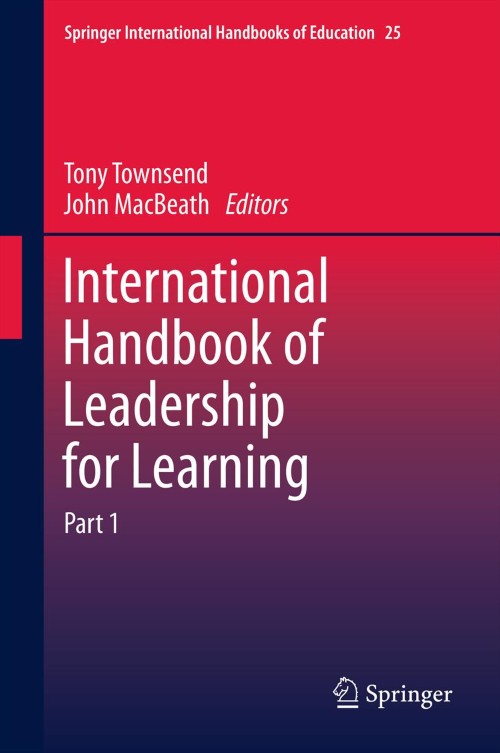
International Handbook of Leadership for Learning [electronic resource] / edited by Tony Townsend, John MacBeath.
Erişim Adresi
ISBN
9789400713505
Dil Kodu
İngilizce
Yer Numarası
DK/13691
Basım Bildirimi
1st ed. 2011.
Yayın Bilgisi
Dordrecht : Springer Netherlands : Imprint: Springer, 2011.
Fiziksel Niteleme
XV, 1357 p. online resource.
Dizi
Springer International Handbooks of Education, 2197-196X ; 25
İçindekiler Notu
PART ONE -- Preface -- SECTION 1: MAJOR THEMES IN LEADERSHIP FOR LEARNING: AN INTERNATIONAL PERSPECTIVE -- SECTION 2: THEORETICAL AND CONTEXTUAL FRAMEWORKS FOR LEADERSHIP FOR LEARNING -- SECTION 3: SYSTEM AND POLICY ISSUES ON LEADERSHIP FOR LEARNING -- SECTION 4: EDUCATING SCHOOL LEADERS FOR LEADERSHIP FOR LEARNING -- SECTION 5: IMPLEMENTING LEADERSHIP FOR LEARNING: THE ROLE OF THE SCHOOL LEADER -- SECTION 6: CHANGING HEARTS AND MINDS: BUILDING LEADERSHIP FOR LEARNING IN CURRENT SCHOOL LEADERS -- PART TWO -- SECTION 7: SPREADING THE TASK: INCLUDING OTHERS IN LEADERSHIP FOR LEARNING -- SECTION 8: FROM PEOPLE LEARNING TO ORGANISATIONAL LEARNING: BUILDING CAPACITY -- SECTION 9: RESPONDING TO DIVERSITY: DIFFERENT WAYS OF MOVING TOWARDS LEADERSHIP FOR LEARNING -- AFTERWORD -- Author Index -- Subject Index.
Özet, vb.
The International Handbook of Leadership for Learning brings together chapters by distinguished authors from thirty-one countries in nine different regions of the world. The handbook contains nine sections that provide regional overviews; a consideration of theoretical and contextual aspects; system and policy approaches that promote leadership for learning with a focus on educating school leaders for learning and the role of the leader in supporting learning. It also considers the challenge of educating current leaders for this new perspective, and how leaders themselves can develop leadership for learning in others and in their organisations, especially in diverse contexts and situations. The final chapter considers what we now know about leadership for learning and looks at ways this might be further improved in the future. The book provides the reader with an understanding of the rich contextual nature of learning in schools and the role of school leaders and leadership development in promoting this. It concludes that the preposition ‘for’ between the two readily known and understood terms of ‘leadership’ and ‘learning’ changes everything as it foregrounds learning and complexifies, rather than simplifies, what that word may mean. Whereas common terms such as ‘instructional leadership’ reduce learning to ‘outcomes’, leadership for learning embraces a much wider, developmental view of learning.
Konu
International education .
Comparative education.
School management and organization.
School administration.
Learning, Psychology of.
Education and state.
International and Comparative Education.
Organization and Leadership.
Instructional Psychology.
Educational Policy and Politics.
Comparative education.
School management and organization.
School administration.
Learning, Psychology of.
Education and state.
International and Comparative Education.
Organization and Leadership.
Instructional Psychology.
Educational Policy and Politics.
Diğer Yazarlar
Kurum Adı
Eseri Alıntıla
Referansları kullanmadan önce gözden geçirmeniz ve varsa gerekli düzeltmeleri yapmanız önerilir.
Dijital Kaynak
MARC Görünümü
LEADER 04454nam a22006015i 4500
001 812441
003 TR_AnAIT
005 20260130234812
007 cr nn 008mamaa
008 110708s2011 ne | s |||| 0|eng d
020 |a9789400713505|9978-94-007-1350-5
024 7 |a10.1007/978-94-007-1350-5|2doi
041 |aeng
049 |aTürk Tarih Kurumu Kütüphanesi
050 4|aLB43
050 4|aLC1090
072 7|aJN|2bicssc
072 7|aEDU043000|2bisacsh
072 7|aJND|2thema
082 04|a370.116|223
082 04|a370.9|223
090 |aDK/13691
245 10|aInternational Handbook of Leadership for Learning|h[electronic resource] /|cedited by Tony Townsend, John MacBeath.
250 |a1st ed. 2011.
264 1|aDordrecht :|bSpringer Netherlands :|bImprint: Springer,|c2011.
300 |aXV, 1357 p.|bonline resource.
336 |atext|btxt|2rdacontent
337 |acomputer|bc|2rdamedia
338 |aonline resource|bcr|2rdacarrier
347 |atext file|bPDF|2rda
490 1 |aSpringer International Handbooks of Education,|x2197-196X ;|v25
505 0 |aPART ONE -- Preface -- SECTION 1: MAJOR THEMES IN LEADERSHIP FOR LEARNING: AN INTERNATIONAL PERSPECTIVE -- SECTION 2: THEORETICAL AND CONTEXTUAL FRAMEWORKS FOR LEADERSHIP FOR LEARNING -- SECTION 3: SYSTEM AND POLICY ISSUES ON LEADERSHIP FOR LEARNING -- SECTION 4: EDUCATING SCHOOL LEADERS FOR LEADERSHIP FOR LEARNING -- SECTION 5: IMPLEMENTING LEADERSHIP FOR LEARNING: THE ROLE OF THE SCHOOL LEADER -- SECTION 6: CHANGING HEARTS AND MINDS: BUILDING LEADERSHIP FOR LEARNING IN CURRENT SCHOOL LEADERS -- PART TWO -- SECTION 7: SPREADING THE TASK: INCLUDING OTHERS IN LEADERSHIP FOR LEARNING -- SECTION 8: FROM PEOPLE LEARNING TO ORGANISATIONAL LEARNING: BUILDING CAPACITY -- SECTION 9: RESPONDING TO DIVERSITY: DIFFERENT WAYS OF MOVING TOWARDS LEADERSHIP FOR LEARNING -- AFTERWORD -- Author Index -- Subject Index.
520 |aThe International Handbook of Leadership for Learning brings together chapters by distinguished authors from thirty-one countries in nine different regions of the world. The handbook contains nine sections that provide regional overviews; a consideration of theoretical and contextual aspects; system and policy approaches that promote leadership for learning with a focus on educating school leaders for learning and the role of the leader in supporting learning. It also considers the challenge of educating current leaders for this new perspective, and how leaders themselves can develop leadership for learning in others and in their organisations, especially in diverse contexts and situations. The final chapter considers what we now know about leadership for learning and looks at ways this might be further improved in the future. The book provides the reader with an understanding of the rich contextual nature of learning in schools and the role of school leaders and leadership development in promoting this. It concludes that the preposition ‘for’ between the two readily known and understood terms of ‘leadership’ and ‘learning’ changes everything as it foregrounds learning and complexifies, rather than simplifies, what that word may mean. Whereas common terms such as ‘instructional leadership’ reduce learning to ‘outcomes’, leadership for learning embraces a much wider, developmental view of learning.
650 0|aInternational education .
650 0|aComparative education.
650 0|aSchool management and organization.
650 0|aSchool administration.
650 0|aLearning, Psychology of.
650 0|aEducation and state.
650 14|aInternational and Comparative Education.
650 24|aOrganization and Leadership.
650 24|aInstructional Psychology.
650 24|aEducational Policy and Politics.
700 1 |aTownsend, Tony.|eeditor.|4edt|4http://id.loc.gov/vocabulary/relators/edt
700 1 |aMacBeath, John.|eeditor.|4edt|4http://id.loc.gov/vocabulary/relators/edt
710 2 |aSpringerLink (Online service)
773 0 |tSpringer Nature eBook
776 08|iPrinted edition:|z9789400713499
776 08|iPrinted edition:|z9789400713512
776 08|iPrinted edition:|z9789401778671
830 0|aSpringer International Handbooks of Education,|x2197-196X ;|v25
856 40|uhttps://doi.org/10.1007/978-94-007-1350-5
912 |aZDB-2-SHU
912 |aZDB-2-SXED
950 |aHumanities, Social Sciences and Law (SpringerNature-11648)
950 |aEducation (R0) (SpringerNature-43721)
001 812441
003 TR_AnAIT
005 20260130234812
007 cr nn 008mamaa
008 110708s2011 ne | s |||| 0|eng d
020 |a9789400713505|9978-94-007-1350-5
024 7 |a10.1007/978-94-007-1350-5|2doi
041 |aeng
049 |aTürk Tarih Kurumu Kütüphanesi
050 4|aLB43
050 4|aLC1090
072 7|aJN|2bicssc
072 7|aEDU043000|2bisacsh
072 7|aJND|2thema
082 04|a370.116|223
082 04|a370.9|223
090 |aDK/13691
245 10|aInternational Handbook of Leadership for Learning|h[electronic resource] /|cedited by Tony Townsend, John MacBeath.
250 |a1st ed. 2011.
264 1|aDordrecht :|bSpringer Netherlands :|bImprint: Springer,|c2011.
300 |aXV, 1357 p.|bonline resource.
336 |atext|btxt|2rdacontent
337 |acomputer|bc|2rdamedia
338 |aonline resource|bcr|2rdacarrier
347 |atext file|bPDF|2rda
490 1 |aSpringer International Handbooks of Education,|x2197-196X ;|v25
505 0 |aPART ONE -- Preface -- SECTION 1: MAJOR THEMES IN LEADERSHIP FOR LEARNING: AN INTERNATIONAL PERSPECTIVE -- SECTION 2: THEORETICAL AND CONTEXTUAL FRAMEWORKS FOR LEADERSHIP FOR LEARNING -- SECTION 3: SYSTEM AND POLICY ISSUES ON LEADERSHIP FOR LEARNING -- SECTION 4: EDUCATING SCHOOL LEADERS FOR LEADERSHIP FOR LEARNING -- SECTION 5: IMPLEMENTING LEADERSHIP FOR LEARNING: THE ROLE OF THE SCHOOL LEADER -- SECTION 6: CHANGING HEARTS AND MINDS: BUILDING LEADERSHIP FOR LEARNING IN CURRENT SCHOOL LEADERS -- PART TWO -- SECTION 7: SPREADING THE TASK: INCLUDING OTHERS IN LEADERSHIP FOR LEARNING -- SECTION 8: FROM PEOPLE LEARNING TO ORGANISATIONAL LEARNING: BUILDING CAPACITY -- SECTION 9: RESPONDING TO DIVERSITY: DIFFERENT WAYS OF MOVING TOWARDS LEADERSHIP FOR LEARNING -- AFTERWORD -- Author Index -- Subject Index.
520 |aThe International Handbook of Leadership for Learning brings together chapters by distinguished authors from thirty-one countries in nine different regions of the world. The handbook contains nine sections that provide regional overviews; a consideration of theoretical and contextual aspects; system and policy approaches that promote leadership for learning with a focus on educating school leaders for learning and the role of the leader in supporting learning. It also considers the challenge of educating current leaders for this new perspective, and how leaders themselves can develop leadership for learning in others and in their organisations, especially in diverse contexts and situations. The final chapter considers what we now know about leadership for learning and looks at ways this might be further improved in the future. The book provides the reader with an understanding of the rich contextual nature of learning in schools and the role of school leaders and leadership development in promoting this. It concludes that the preposition ‘for’ between the two readily known and understood terms of ‘leadership’ and ‘learning’ changes everything as it foregrounds learning and complexifies, rather than simplifies, what that word may mean. Whereas common terms such as ‘instructional leadership’ reduce learning to ‘outcomes’, leadership for learning embraces a much wider, developmental view of learning.
650 0|aInternational education .
650 0|aComparative education.
650 0|aSchool management and organization.
650 0|aSchool administration.
650 0|aLearning, Psychology of.
650 0|aEducation and state.
650 14|aInternational and Comparative Education.
650 24|aOrganization and Leadership.
650 24|aInstructional Psychology.
650 24|aEducational Policy and Politics.
700 1 |aTownsend, Tony.|eeditor.|4edt|4http://id.loc.gov/vocabulary/relators/edt
700 1 |aMacBeath, John.|eeditor.|4edt|4http://id.loc.gov/vocabulary/relators/edt
710 2 |aSpringerLink (Online service)
773 0 |tSpringer Nature eBook
776 08|iPrinted edition:|z9789400713499
776 08|iPrinted edition:|z9789400713512
776 08|iPrinted edition:|z9789401778671
830 0|aSpringer International Handbooks of Education,|x2197-196X ;|v25
856 40|uhttps://doi.org/10.1007/978-94-007-1350-5
912 |aZDB-2-SHU
912 |aZDB-2-SXED
950 |aHumanities, Social Sciences and Law (SpringerNature-11648)
950 |aEducation (R0) (SpringerNature-43721)
Materyaller
Depodan talep edilen materyal sadece kütüphane içerisinde kullanılmaktadır.
Materyal dışarıya ödünç verilmemektedir.
Materyal dışarıya ödünç verilmemektedir.
