

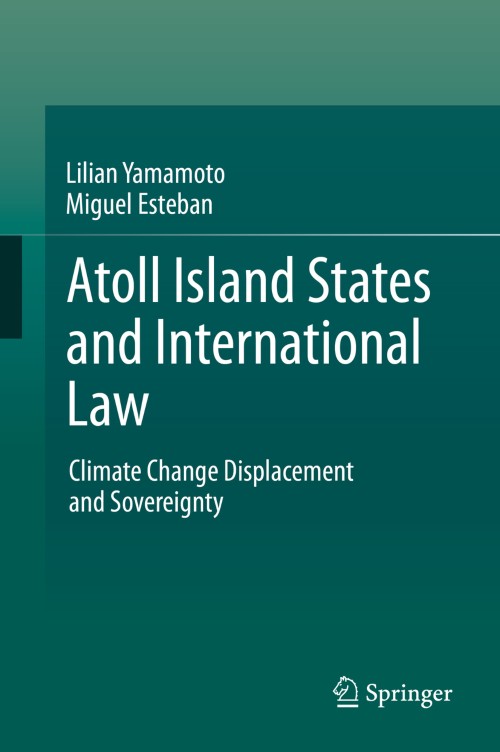
Atoll Island States and International Law [electronic resource] : Climate Change Displacement and Sovereignty / by Lilian Yamamoto, Miguel Esteban.
Erişim Adresi
ISBN
9783642381867
Dil Kodu
İngilizce
Yer Numarası
DK/13727
Yazar
Basım Bildirimi
1st ed. 2014.
Yayın Bilgisi
Berlin, Heidelberg : Springer Berlin Heidelberg : Imprint: Springer, 2014.
Fiziksel Niteleme
XVI, 307 p. 49 illus., 47 illus. in color. online resource.
İçindekiler Notu
Chapter 1: Geography, Economy and Environment of Low-lying Island States -- Chapter 2: Climate Change and its Effects on Low-lying Island States -- Chapter 3: Climate Change Negotiations and AOSIS -- Chapter 4: Low-lying Island Future Scenarios, Adaptation Strategies and their Implication under UNCLOS -- Chapter 5: Alternative Solutions to Preserve the Sovereignty of Atoll Island States -- Chapter 6: climate Change Displacement in Atoll Island States -- Concluding Remarks.
Özet, vb.
Atoll Island States exist on top of what is perceived to be one of the planet's most vulnerable ecosystems: atolls. It has been predicted that an increase in the pace of sea level rise brought about by increasing greenhouse gas concentrations in the atmosphere will cause them to disappear, forcing their inhabitants to migrate. The present book represents a multidisciplinary legal and engineering perspective on this problem, challenging some common misconceptions regarding atolls and their vulnerability to sea-level rise. Coral islands have survived past changes in sea levels, and it is the survival of coral reefs what will be crucial for their continued existence. These islands are important for their inhabitants as they represent not only their ancestral agricultural lands and heritage, but also a source of revenue through the exploitation of the maritime areas associated with them. However, even if faced with extreme climate change, it could theoretically be possible for the richer Atoll Island States to engineer ways to prevent their main islands from disappearing, though sadly not all will have the required financial resources to do so. As islands become progressively uninhabitable their residents will be forced to settle in foreign lands, and could become stateless if the Atoll Island State ceases to be recognized as a sovereign country. However, rather than tackling this problem by entering into lengthy negotiations over new treaties, more practical solutions, encompassing bilateral negotiations or the possibility of acquiring small new territories, should be explored. This would make it possible for Atoll Island States in the future to keep some sort of international sovereign personality, which could benefit the descendents of its present day inhabitants.
Konu
International law.
Climatology.
Oceanography.
Human rights.
Environment.
Environmental law, International.
Public International Law.
Climate Sciences.
Ocean Sciences.
Human Rights.
Environmental Sciences.
International Environmental Law.
Climatology.
Oceanography.
Human rights.
Environment.
Environmental law, International.
Public International Law.
Climate Sciences.
Ocean Sciences.
Human Rights.
Environmental Sciences.
International Environmental Law.
Diğer Yazarlar
Kurum Adı
Eseri Alıntıla
Referansları kullanmadan önce gözden geçirmeniz ve varsa gerekli düzeltmeleri yapmanız önerilir.
Dijital Kaynak
MARC Görünümü
LEADER 04336nam a22005775i 4500
001 812477
003 TR_AnAIT
005 20260130234532
007 cr nn 008mamaa
008 131025s2014 gw | s |||| 0|eng d
020 |a9783642381867|9978-3-642-38186-7
024 7 |a10.1007/978-3-642-38186-7|2doi
041 |aeng
049 |aTürk Tarih Kurumu Kütüphanesi
050 4|aKZ
072 7|aLBB|2bicssc
072 7|aLAW051000|2bisacsh
072 7|aLBB|2thema
082 04|a341|223
090 |aDK/13727
100 1 |aYamamoto, Lilian.|eauthor.|4aut|4http://id.loc.gov/vocabulary/relators/aut
245 10|aAtoll Island States and International Law|h[electronic resource] :|bClimate Change Displacement and Sovereignty /|cby Lilian Yamamoto, Miguel Esteban.
250 |a1st ed. 2014.
264 1|aBerlin, Heidelberg :|bSpringer Berlin Heidelberg :|bImprint: Springer,|c2014.
300 |aXVI, 307 p. 49 illus., 47 illus. in color.|bonline resource.
336 |atext|btxt|2rdacontent
337 |acomputer|bc|2rdamedia
338 |aonline resource|bcr|2rdacarrier
347 |atext file|bPDF|2rda
505 0 |aChapter 1: Geography, Economy and Environment of Low-lying Island States -- Chapter 2: Climate Change and its Effects on Low-lying Island States -- Chapter 3: Climate Change Negotiations and AOSIS -- Chapter 4: Low-lying Island Future Scenarios, Adaptation Strategies and their Implication under UNCLOS -- Chapter 5: Alternative Solutions to Preserve the Sovereignty of Atoll Island States -- Chapter 6: climate Change Displacement in Atoll Island States -- Concluding Remarks.
520 |aAtoll Island States exist on top of what is perceived to be one of the planet's most vulnerable ecosystems: atolls. It has been predicted that an increase in the pace of sea level rise brought about by increasing greenhouse gas concentrations in the atmosphere will cause them to disappear, forcing their inhabitants to migrate. The present book represents a multidisciplinary legal and engineering perspective on this problem, challenging some common misconceptions regarding atolls and their vulnerability to sea-level rise. Coral islands have survived past changes in sea levels, and it is the survival of coral reefs what will be crucial for their continued existence. These islands are important for their inhabitants as they represent not only their ancestral agricultural lands and heritage, but also a source of revenue through the exploitation of the maritime areas associated with them. However, even if faced with extreme climate change, it could theoretically be possible for the richer Atoll Island States to engineer ways to prevent their main islands from disappearing, though sadly not all will have the required financial resources to do so. As islands become progressively uninhabitable their residents will be forced to settle in foreign lands, and could become stateless if the Atoll Island State ceases to be recognized as a sovereign country. However, rather than tackling this problem by entering into lengthy negotiations over new treaties, more practical solutions, encompassing bilateral negotiations or the possibility of acquiring small new territories, should be explored. This would make it possible for Atoll Island States in the future to keep some sort of international sovereign personality, which could benefit the descendents of its present day inhabitants.
650 0|aInternational law.
650 0|aClimatology.
650 0|aOceanography.
650 0|aHuman rights.
650 0|aEnvironment.
650 0|aEnvironmental law, International.
650 14|aPublic International Law.
650 24|aClimate Sciences.
650 24|aOcean Sciences.
650 24|aHuman Rights.
650 24|aEnvironmental Sciences.
650 24|aInternational Environmental Law.
700 1 |aEsteban, Miguel.|eauthor.|4aut|4http://id.loc.gov/vocabulary/relators/aut
710 2 |aSpringerLink (Online service)
773 0 |tSpringer Nature eBook
776 08|iPrinted edition:|z9783642381850
776 08|iPrinted edition:|z9783642381874
776 08|iPrinted edition:|z9783662524169
856 40|uhttps://doi.org/10.1007/978-3-642-38186-7
912 |aZDB-2-SHU
912 |aZDB-2-SXLC
950 |aHumanities, Social Sciences and Law (SpringerNature-11648)
950 |aLaw and Criminology (R0) (SpringerNature-43727)
001 812477
003 TR_AnAIT
005 20260130234532
007 cr nn 008mamaa
008 131025s2014 gw | s |||| 0|eng d
020 |a9783642381867|9978-3-642-38186-7
024 7 |a10.1007/978-3-642-38186-7|2doi
041 |aeng
049 |aTürk Tarih Kurumu Kütüphanesi
050 4|aKZ
072 7|aLBB|2bicssc
072 7|aLAW051000|2bisacsh
072 7|aLBB|2thema
082 04|a341|223
090 |aDK/13727
100 1 |aYamamoto, Lilian.|eauthor.|4aut|4http://id.loc.gov/vocabulary/relators/aut
245 10|aAtoll Island States and International Law|h[electronic resource] :|bClimate Change Displacement and Sovereignty /|cby Lilian Yamamoto, Miguel Esteban.
250 |a1st ed. 2014.
264 1|aBerlin, Heidelberg :|bSpringer Berlin Heidelberg :|bImprint: Springer,|c2014.
300 |aXVI, 307 p. 49 illus., 47 illus. in color.|bonline resource.
336 |atext|btxt|2rdacontent
337 |acomputer|bc|2rdamedia
338 |aonline resource|bcr|2rdacarrier
347 |atext file|bPDF|2rda
505 0 |aChapter 1: Geography, Economy and Environment of Low-lying Island States -- Chapter 2: Climate Change and its Effects on Low-lying Island States -- Chapter 3: Climate Change Negotiations and AOSIS -- Chapter 4: Low-lying Island Future Scenarios, Adaptation Strategies and their Implication under UNCLOS -- Chapter 5: Alternative Solutions to Preserve the Sovereignty of Atoll Island States -- Chapter 6: climate Change Displacement in Atoll Island States -- Concluding Remarks.
520 |aAtoll Island States exist on top of what is perceived to be one of the planet's most vulnerable ecosystems: atolls. It has been predicted that an increase in the pace of sea level rise brought about by increasing greenhouse gas concentrations in the atmosphere will cause them to disappear, forcing their inhabitants to migrate. The present book represents a multidisciplinary legal and engineering perspective on this problem, challenging some common misconceptions regarding atolls and their vulnerability to sea-level rise. Coral islands have survived past changes in sea levels, and it is the survival of coral reefs what will be crucial for their continued existence. These islands are important for their inhabitants as they represent not only their ancestral agricultural lands and heritage, but also a source of revenue through the exploitation of the maritime areas associated with them. However, even if faced with extreme climate change, it could theoretically be possible for the richer Atoll Island States to engineer ways to prevent their main islands from disappearing, though sadly not all will have the required financial resources to do so. As islands become progressively uninhabitable their residents will be forced to settle in foreign lands, and could become stateless if the Atoll Island State ceases to be recognized as a sovereign country. However, rather than tackling this problem by entering into lengthy negotiations over new treaties, more practical solutions, encompassing bilateral negotiations or the possibility of acquiring small new territories, should be explored. This would make it possible for Atoll Island States in the future to keep some sort of international sovereign personality, which could benefit the descendents of its present day inhabitants.
650 0|aInternational law.
650 0|aClimatology.
650 0|aOceanography.
650 0|aHuman rights.
650 0|aEnvironment.
650 0|aEnvironmental law, International.
650 14|aPublic International Law.
650 24|aClimate Sciences.
650 24|aOcean Sciences.
650 24|aHuman Rights.
650 24|aEnvironmental Sciences.
650 24|aInternational Environmental Law.
700 1 |aEsteban, Miguel.|eauthor.|4aut|4http://id.loc.gov/vocabulary/relators/aut
710 2 |aSpringerLink (Online service)
773 0 |tSpringer Nature eBook
776 08|iPrinted edition:|z9783642381850
776 08|iPrinted edition:|z9783642381874
776 08|iPrinted edition:|z9783662524169
856 40|uhttps://doi.org/10.1007/978-3-642-38186-7
912 |aZDB-2-SHU
912 |aZDB-2-SXLC
950 |aHumanities, Social Sciences and Law (SpringerNature-11648)
950 |aLaw and Criminology (R0) (SpringerNature-43727)
Materyaller
Depodan talep edilen materyal sadece kütüphane içerisinde kullanılmaktadır.
Materyal dışarıya ödünç verilmemektedir.
Materyal dışarıya ödünç verilmemektedir.
