

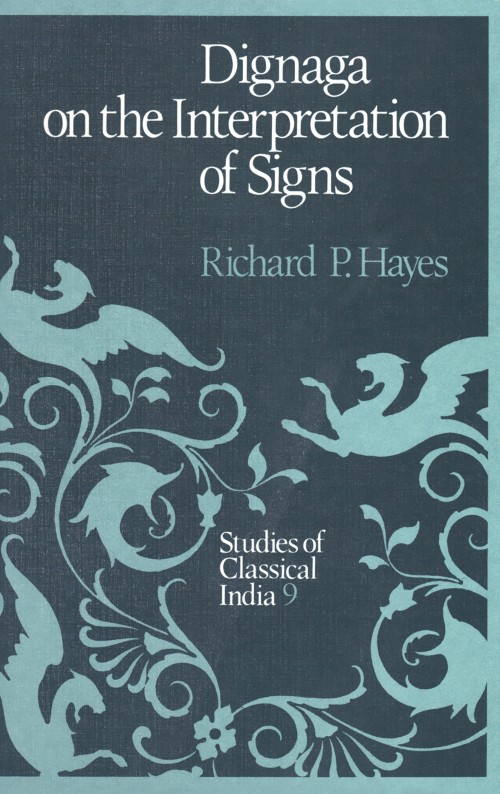
Dignaga on the Interpretation of Signs [electronic resource] / by R.P. Hayes.
Erişim Adresi
ISBN
9789400928992
Dil Kodu
İngilizce
Yer Numarası
DK/13729
Yazar
Basım Bildirimi
1st ed. 1988.
Yayın Bilgisi
Dordrecht : Springer Netherlands : Imprint: Springer, 1988.
Fiziksel Niteleme
XV, 365 p. online resource.
Dizi
Studies of Classical India ; 9
İçindekiler Notu
1: Preliminaries -- 1.1 The central issues -- 1.2 The contributions of previous scholars -- 1.3 The argument of this book -- Notes -- 2: Rational Skepticism in Pre-Di?n?gan Buddhism -- 2.1 The foundation of skepticism in the Nik?yas -- 2.2 The influence of N?g?rjuna -- Notes -- 3: Nominalism in Pre-Di?n?gan Buddhism -- 3.1 The ?gama literature and Milindapañha -- 3.2 Nominalism in N?g?rjuna -- 3.3 Nominalism in Vasubandhu -- Notes -- 4: Di?n?ga’s Theory of Knowledge -- 4.1 Hetucakranir?aya -- 4.2 The Pram??asamuccaya -- 4.3 The skepticism implicit in Di?n?ga’s epistemology -- Notes -- 5: Di?n?ga’s nominalism -- 5.1 The ?lambanapar?k?? -- 5.2 The context of the discussion of nominalism in the Pram??asamuccaya -- Notes -- Translations Introduction to translation -- The history of the Pram??asamuccaya in Tibet -- 6: Pram??asamuccaya II “On reasoning” -- 6.1 Inference differentiated from sensation -- 6.2 The three characteristics of legitimate evidence -- 6.3 Property-bearer as the subject of inference -- 6.4 On restricted and errant properties -- 6.5 Non-symmetry of restriction and pervasion -- Notes -- 7: Pram??asamuccaya V: On the nature of signs in language -- 7.1 On the question of what verbal symbols make known -- 7.2 On the relationships between symbols that express preclusion -- 7.3 On the unreality of universals outside thought -- 7.4 On the question of what linguistic symbols preclude -- Notes -- 8: Conclusions -- Appendix A: Glossary of Sanskrit Terms -- Appendix B: Tibetan-Sanskrit Lexicon -- Selected Bibliography -- Subject and Author Index.
Özet, vb.
Buddhist philosophy in India in the early sixth century C. E. took an important tum away from the traditional methods of explaining and systematizing the teachings in Siitra literature that were attributed to the Buddha. The new direction in which several Indian Buddhist philosophers began to move was that of following reasoning to its natural conclusions, regardless whether the conclusions conflicted with traditional teachings. The central figure in this new movement was DiIinaga, a native of South India who found his way to the centre of Buddhist education at Nalanda, studied the treatises that were learned by the Buddhist intellectuals of his day, and eventually wrote works of his own that formed the core of a distinctly new school of Buddhist thought. Inasmuch as virtually every Indian philosopher after the sixth century had either to reject Dirinaga's methods or build upon the foundations provided by his investigations into logic, epistemology and language, his influence on the evolution of Indian philosophy was considerable, and indeed some familiarity with Dirinaga's arguments and conclusions is indispensable for anyone who wishes to understand the historical development of Indian thought. Moreover, since the approach to Buddhism that grew out of Dirinaga's meditations on language and the limits of knowledge dominated the minds of many of the scholars who took Buddhism to Tibet, some familiarity with Dirinaga is also essential to those who wish to understand the intellectual infrastructure of Tibetan Buddhist philosophy and practice.
Konu
Philosophy, Modern.
Philosophical Traditions.
Philosophical Traditions.
Kurum Adı
Eseri Alıntıla
Referansları kullanmadan önce gözden geçirmeniz ve varsa gerekli düzeltmeleri yapmanız önerilir.
Dijital Kaynak
MARC Görünümü
LEADER 05545nam a22005295i 4500
001 812479
003 TR_AnAIT
005 20260130234517
007 cr nn 008mamaa
008 121227s1988 ne | s |||| 0|eng d
020 |a9789400928992|9978-94-009-2899-2
024 7 |a10.1007/978-94-009-2899-2|2doi
041 |aeng
049 |aTürk Tarih Kurumu Kütüphanesi
050 4|aB790-5802
072 7|aHP|2bicssc
072 7|aPHI031000|2bisacsh
072 7|aQDH|2thema
082 04|a140|223
090 |aDK/13729
100 1 |aHayes, R.P.|eauthor.|4aut|4http://id.loc.gov/vocabulary/relators/aut
245 10|aDignaga on the Interpretation of Signs|h[electronic resource] /|cby R.P. Hayes.
250 |a1st ed. 1988.
264 1|aDordrecht :|bSpringer Netherlands :|bImprint: Springer,|c1988.
300 |aXV, 365 p.|bonline resource.
336 |atext|btxt|2rdacontent
337 |acomputer|bc|2rdamedia
338 |aonline resource|bcr|2rdacarrier
347 |atext file|bPDF|2rda
490 1 |aStudies of Classical India ;|v9
505 0 |a1: Preliminaries -- 1.1 The central issues -- 1.2 The contributions of previous scholars -- 1.3 The argument of this book -- Notes -- 2: Rational Skepticism in Pre-Di?n?gan Buddhism -- 2.1 The foundation of skepticism in the Nik?yas -- 2.2 The influence of N?g?rjuna -- Notes -- 3: Nominalism in Pre-Di?n?gan Buddhism -- 3.1 The ?gama literature and Milindapañha -- 3.2 Nominalism in N?g?rjuna -- 3.3 Nominalism in Vasubandhu -- Notes -- 4: Di?n?ga’s Theory of Knowledge -- 4.1 Hetucakranir?aya -- 4.2 The Pram??asamuccaya -- 4.3 The skepticism implicit in Di?n?ga’s epistemology -- Notes -- 5: Di?n?ga’s nominalism -- 5.1 The ?lambanapar?k?? -- 5.2 The context of the discussion of nominalism in the Pram??asamuccaya -- Notes -- Translations Introduction to translation -- The history of the Pram??asamuccaya in Tibet -- 6: Pram??asamuccaya II “On reasoning” -- 6.1 Inference differentiated from sensation -- 6.2 The three characteristics of legitimate evidence -- 6.3 Property-bearer as the subject of inference -- 6.4 On restricted and errant properties -- 6.5 Non-symmetry of restriction and pervasion -- Notes -- 7: Pram??asamuccaya V: On the nature of signs in language -- 7.1 On the question of what verbal symbols make known -- 7.2 On the relationships between symbols that express preclusion -- 7.3 On the unreality of universals outside thought -- 7.4 On the question of what linguistic symbols preclude -- Notes -- 8: Conclusions -- Appendix A: Glossary of Sanskrit Terms -- Appendix B: Tibetan-Sanskrit Lexicon -- Selected Bibliography -- Subject and Author Index.
520 |aBuddhist philosophy in India in the early sixth century C. E. took an important tum away from the traditional methods of explaining and systematizing the teachings in Siitra literature that were attributed to the Buddha. The new direction in which several Indian Buddhist philosophers began to move was that of following reasoning to its natural conclusions, regardless whether the conclusions conflicted with traditional teachings. The central figure in this new movement was DiIinaga, a native of South India who found his way to the centre of Buddhist education at Nalanda, studied the treatises that were learned by the Buddhist intellectuals of his day, and eventually wrote works of his own that formed the core of a distinctly new school of Buddhist thought. Inasmuch as virtually every Indian philosopher after the sixth century had either to reject Dirinaga's methods or build upon the foundations provided by his investigations into logic, epistemology and language, his influence on the evolution of Indian philosophy was considerable, and indeed some familiarity with Dirinaga's arguments and conclusions is indispensable for anyone who wishes to understand the historical development of Indian thought. Moreover, since the approach to Buddhism that grew out of Dirinaga's meditations on language and the limits of knowledge dominated the minds of many of the scholars who took Buddhism to Tibet, some familiarity with Dirinaga is also essential to those who wish to understand the intellectual infrastructure of Tibetan Buddhist philosophy and practice.
532 8 |aAccessibility summary: This PDF is not accessible. It is based on scanned pages and does not support features such as screen reader compatibility or described non-text content (images, graphs etc). However, it likely supports searchable and selectable text based on OCR (Optical Character Recognition). Users with accessibility needs may not be able to use this content effectively. Please contact us at accessibilitysupport@springernature.com if you require assistance or an alternative format.
532 8 |aInaccessible, or known limited accessibility
532 8 |aNo reading system accessibility options actively disabled
532 8 |aPublisher contact for further accessibility information: accessibilitysupport@springernature.com
650 0|aPhilosophy, Modern.
650 14|aPhilosophical Traditions.
710 2 |aSpringerLink (Online service)
773 0 |tSpringer Nature eBook
776 08|iPrinted edition:|z9789027726674
776 08|iPrinted edition:|z9789400929005
776 08|iPrinted edition:|z9789401078061
830 0|aStudies of Classical India ;|v9
856 40|uhttps://doi.org/10.1007/978-94-009-2899-2
912 |aZDB-2-SHU
912 |aZDB-2-SXPR
912 |aZDB-2-BAE
950 |aHumanities, Social Sciences and Law (SpringerNature-11648)
950 |aPhilosophy and Religion (R0) (SpringerNature-43725)
001 812479
003 TR_AnAIT
005 20260130234517
007 cr nn 008mamaa
008 121227s1988 ne | s |||| 0|eng d
020 |a9789400928992|9978-94-009-2899-2
024 7 |a10.1007/978-94-009-2899-2|2doi
041 |aeng
049 |aTürk Tarih Kurumu Kütüphanesi
050 4|aB790-5802
072 7|aHP|2bicssc
072 7|aPHI031000|2bisacsh
072 7|aQDH|2thema
082 04|a140|223
090 |aDK/13729
100 1 |aHayes, R.P.|eauthor.|4aut|4http://id.loc.gov/vocabulary/relators/aut
245 10|aDignaga on the Interpretation of Signs|h[electronic resource] /|cby R.P. Hayes.
250 |a1st ed. 1988.
264 1|aDordrecht :|bSpringer Netherlands :|bImprint: Springer,|c1988.
300 |aXV, 365 p.|bonline resource.
336 |atext|btxt|2rdacontent
337 |acomputer|bc|2rdamedia
338 |aonline resource|bcr|2rdacarrier
347 |atext file|bPDF|2rda
490 1 |aStudies of Classical India ;|v9
505 0 |a1: Preliminaries -- 1.1 The central issues -- 1.2 The contributions of previous scholars -- 1.3 The argument of this book -- Notes -- 2: Rational Skepticism in Pre-Di?n?gan Buddhism -- 2.1 The foundation of skepticism in the Nik?yas -- 2.2 The influence of N?g?rjuna -- Notes -- 3: Nominalism in Pre-Di?n?gan Buddhism -- 3.1 The ?gama literature and Milindapañha -- 3.2 Nominalism in N?g?rjuna -- 3.3 Nominalism in Vasubandhu -- Notes -- 4: Di?n?ga’s Theory of Knowledge -- 4.1 Hetucakranir?aya -- 4.2 The Pram??asamuccaya -- 4.3 The skepticism implicit in Di?n?ga’s epistemology -- Notes -- 5: Di?n?ga’s nominalism -- 5.1 The ?lambanapar?k?? -- 5.2 The context of the discussion of nominalism in the Pram??asamuccaya -- Notes -- Translations Introduction to translation -- The history of the Pram??asamuccaya in Tibet -- 6: Pram??asamuccaya II “On reasoning” -- 6.1 Inference differentiated from sensation -- 6.2 The three characteristics of legitimate evidence -- 6.3 Property-bearer as the subject of inference -- 6.4 On restricted and errant properties -- 6.5 Non-symmetry of restriction and pervasion -- Notes -- 7: Pram??asamuccaya V: On the nature of signs in language -- 7.1 On the question of what verbal symbols make known -- 7.2 On the relationships between symbols that express preclusion -- 7.3 On the unreality of universals outside thought -- 7.4 On the question of what linguistic symbols preclude -- Notes -- 8: Conclusions -- Appendix A: Glossary of Sanskrit Terms -- Appendix B: Tibetan-Sanskrit Lexicon -- Selected Bibliography -- Subject and Author Index.
520 |aBuddhist philosophy in India in the early sixth century C. E. took an important tum away from the traditional methods of explaining and systematizing the teachings in Siitra literature that were attributed to the Buddha. The new direction in which several Indian Buddhist philosophers began to move was that of following reasoning to its natural conclusions, regardless whether the conclusions conflicted with traditional teachings. The central figure in this new movement was DiIinaga, a native of South India who found his way to the centre of Buddhist education at Nalanda, studied the treatises that were learned by the Buddhist intellectuals of his day, and eventually wrote works of his own that formed the core of a distinctly new school of Buddhist thought. Inasmuch as virtually every Indian philosopher after the sixth century had either to reject Dirinaga's methods or build upon the foundations provided by his investigations into logic, epistemology and language, his influence on the evolution of Indian philosophy was considerable, and indeed some familiarity with Dirinaga's arguments and conclusions is indispensable for anyone who wishes to understand the historical development of Indian thought. Moreover, since the approach to Buddhism that grew out of Dirinaga's meditations on language and the limits of knowledge dominated the minds of many of the scholars who took Buddhism to Tibet, some familiarity with Dirinaga is also essential to those who wish to understand the intellectual infrastructure of Tibetan Buddhist philosophy and practice.
532 8 |aAccessibility summary: This PDF is not accessible. It is based on scanned pages and does not support features such as screen reader compatibility or described non-text content (images, graphs etc). However, it likely supports searchable and selectable text based on OCR (Optical Character Recognition). Users with accessibility needs may not be able to use this content effectively. Please contact us at accessibilitysupport@springernature.com if you require assistance or an alternative format.
532 8 |aInaccessible, or known limited accessibility
532 8 |aNo reading system accessibility options actively disabled
532 8 |aPublisher contact for further accessibility information: accessibilitysupport@springernature.com
650 0|aPhilosophy, Modern.
650 14|aPhilosophical Traditions.
710 2 |aSpringerLink (Online service)
773 0 |tSpringer Nature eBook
776 08|iPrinted edition:|z9789027726674
776 08|iPrinted edition:|z9789400929005
776 08|iPrinted edition:|z9789401078061
830 0|aStudies of Classical India ;|v9
856 40|uhttps://doi.org/10.1007/978-94-009-2899-2
912 |aZDB-2-SHU
912 |aZDB-2-SXPR
912 |aZDB-2-BAE
950 |aHumanities, Social Sciences and Law (SpringerNature-11648)
950 |aPhilosophy and Religion (R0) (SpringerNature-43725)
Materyaller
Depodan talep edilen materyal sadece kütüphane içerisinde kullanılmaktadır.
Materyal dışarıya ödünç verilmemektedir.
Materyal dışarıya ödünç verilmemektedir.
