

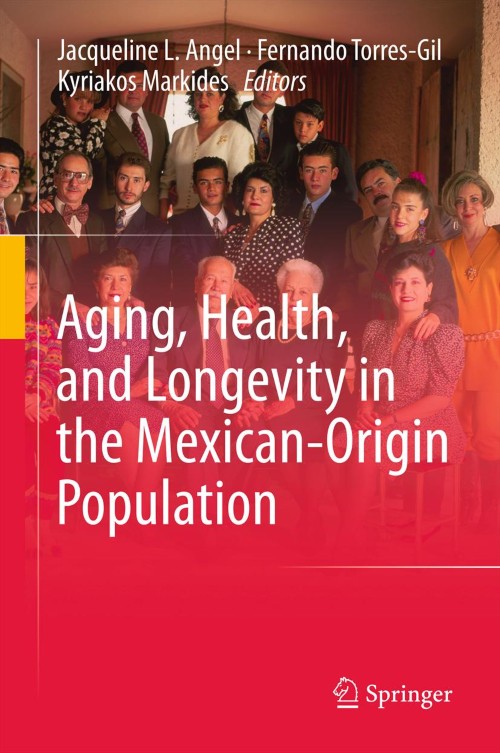
Aging, Health, and Longevity in the Mexican-Origin Population [electronic resource] / edited by Jacqueline L. Angel, Fernando Torres-Gil, Kyriakos Markides.
Erişim Adresi
ISBN
9781461418672
Dil Kodu
İngilizce
Yer Numarası
DK/13739
Basım Bildirimi
1st ed. 2012.
Yayın Bilgisi
New York, NY : Springer New York : Imprint: Springer, 2012.
Fiziksel Niteleme
XXVIII, 348 p. online resource.
İçindekiler Notu
Preface and Acknowledgement.-About the Authors .-Forewords 1. Introduction.-Section 1- Latino Aging: Risks of Disability and Chronic Illness -- 2. Overview .-3. Does the “Healthy Immigrant Effect” Extend to Cognitive Aging?.-4. Lifetime Socioeconomic Position and Functional Decline in Older Mexican Americans: Results from the Sacramento Area Latino Study on Aging.-5. Cultural Differences in the Effects of Disability on Mental Health in Mexican Couples from the MHAS and MA Couples from the H-EPESE.-6.Disability: Issues of Immigration, Economics, and Family .-7. Overview.-8. A Tale of Three Paradoxes: The Weak Socioeconomic Gradients in Health among Latino Immigrants and their Relation to the Latino Health Paradox and Negative Acculturation.-9. On the Need for Prospective Studies on Aging and Health of the Hispanic Population in .-10. Sociocultural Status and Burden of Disability in Aging Mexican Americans.-11. Contextualizing the Burden of Chronic Disease: Diabetes, Mortality and Disability in Older Mexicans.-12. Access to Vaccines for Latin American and Caribbean Older Adults with Disability .-13. Diabetes and Employment Productivity: The Effect of Duration and Management among Mexican Americans -- Section 3. Caregiving and Long-term Care of Older Latinos: Formal and Informal Care Arrangements .-14. Overview15. Latinos “Aging in Place”: Issues and Potential Solutions.-16. Separate and Unequal Access and Quality of Care in Nursing Homes: Transformation of the Long Term Care Industry and Implications of the Research Program for Aging Latinos/-17. Latino and Non-Latino Elderly in Los Angeles County: A Pilot Study of Demographic Trends for Disability and Long-Term Care.-18. Long-Term Care Policy and Older Latinos .-19. Estimating the Demand forLong-term Care among Aging in Mexican-Americans: Cultural Preferences versus Economic Realities.-20. Mexican-American Families and Dementia: An Exploration of “Work” in Response to Dementia-Related Aggressive Behavior.-21. Caring for the Elderly: A Bi-national Task .-22. Extending Medicare to Mexico: Impact on Mexican-Born Beneficiaries/-23. The Evolving Nexus of Policy, Longevity and Diversity: Agenda Setting for Latino Health and Aging -- 24. Afterword: Human Security in Health: The Case of the Mexico–U.S. Border.
Özet, vb.
As the nation’s largest Latino group, the Mexican-origin population will play a major role as America grows older: their situation is vital to understanding our aging, diverse society as national health care policy comes into a new era of analysis and revision. Aging, Health, and Longevity in the Mexican Origin Population identifies current and emerging health issues affecting this demographic, from health care disparities to changing family dynamics to the health implications of the United States’ relationship with Mexico. Contributors test the Hispanic Paradox—that Latinos live longer than other Americans despite socioeconomic stresses—as it relates to various aspects of aging. Disability is discussed in social context, in terms of acculturation, family coping measures, access to care, and other key factors. And concluding chapters offer strategies for bringing the Mexican-American elder experience into the ongoing debate over health care. Throughout, coverage balances the heterogeneity of the community with its status as emblematic of minority aging and as a microcosm of aging in general. Included among the topics: · Immigration, economics, and family: contextualizing disability. · Diabetes and employment productivity. · The “healthy immigrant effect” and cognitive aging. · Nursing home care: separate and unequal. · Challenges of aging in place. · Estimating the demand for long-term care. Aging, Health, and Longevity in the Mexican Origin Population brings issues, answers, and a clear direction to those studying and working with this dynamic group, including policymakers, social workers, gerontologists, the academic and research communities, and health care professionals.
Konu
Aging.
Social policy.
Geriatrics.
Sociology.
Social groups.
Ethnology.
Culture.
Ageing.
Social Policy.
Geriatrics.
Sociology of Family, Youth and Aging.
Regional Cultural Studies.
Social policy.
Geriatrics.
Sociology.
Social groups.
Ethnology.
Culture.
Ageing.
Social Policy.
Geriatrics.
Sociology of Family, Youth and Aging.
Regional Cultural Studies.
Diğer Yazarlar
Kurum Adı
Eseri Alıntıla
Referansları kullanmadan önce gözden geçirmeniz ve varsa gerekli düzeltmeleri yapmanız önerilir.
Dijital Kaynak
MARC Görünümü
LEADER 06199nam a22005895i 4500
001 812489
003 TR_AnAIT
005 20260130234435
007 cr nn 008mamaa
008 120207s2012 xxu| s |||| 0|eng d
020 |a9781461418672|9978-1-4614-1867-2
024 7 |a10.1007/978-1-4614-1867-2|2doi
041 |aeng
049 |aTürk Tarih Kurumu Kütüphanesi
050 4|aQP86
072 7|aPSA|2bicssc
072 7|aSCI072000|2bisacsh
072 7|aPSA|2thema
082 04|a571.878|223
090 |aDK/13739
245 10|aAging, Health, and Longevity in the Mexican-Origin Population|h[electronic resource] /|cedited by Jacqueline L. Angel, Fernando Torres-Gil, Kyriakos Markides.
250 |a1st ed. 2012.
264 1|aNew York, NY :|bSpringer New York :|bImprint: Springer,|c2012.
300 |aXXVIII, 348 p.|bonline resource.
336 |atext|btxt|2rdacontent
337 |acomputer|bc|2rdamedia
338 |aonline resource|bcr|2rdacarrier
347 |atext file|bPDF|2rda
505 0 |aPreface and Acknowledgement.-About the Authors .-Forewords 1. Introduction.-Section 1- Latino Aging: Risks of Disability and Chronic Illness -- 2. Overview .-3. Does the “Healthy Immigrant Effect” Extend to Cognitive Aging?.-4. Lifetime Socioeconomic Position and Functional Decline in Older Mexican Americans: Results from the Sacramento Area Latino Study on Aging.-5. Cultural Differences in the Effects of Disability on Mental Health in Mexican Couples from the MHAS and MA Couples from the H-EPESE.-6.Disability: Issues of Immigration, Economics, and Family .-7. Overview.-8. A Tale of Three Paradoxes: The Weak Socioeconomic Gradients in Health among Latino Immigrants and their Relation to the Latino Health Paradox and Negative Acculturation.-9. On the Need for Prospective Studies on Aging and Health of the Hispanic Population in .-10. Sociocultural Status and Burden of Disability in Aging Mexican Americans.-11. Contextualizing the Burden of Chronic Disease: Diabetes, Mortality and Disability in Older Mexicans.-12. Access to Vaccines for Latin American and Caribbean Older Adults with Disability .-13. Diabetes and Employment Productivity: The Effect of Duration and Management among Mexican Americans -- Section 3. Caregiving and Long-term Care of Older Latinos: Formal and Informal Care Arrangements .-14. Overview15. Latinos “Aging in Place”: Issues and Potential Solutions.-16. Separate and Unequal Access and Quality of Care in Nursing Homes: Transformation of the Long Term Care Industry and Implications of the Research Program for Aging Latinos/-17. Latino and Non-Latino Elderly in Los Angeles County: A Pilot Study of Demographic Trends for Disability and Long-Term Care.-18. Long-Term Care Policy and Older Latinos .-19. Estimating the Demand forLong-term Care among Aging in Mexican-Americans: Cultural Preferences versus Economic Realities.-20. Mexican-American Families and Dementia: An Exploration of “Work” in Response to Dementia-Related Aggressive Behavior.-21. Caring for the Elderly: A Bi-national Task .-22. Extending Medicare to Mexico: Impact on Mexican-Born Beneficiaries/-23. The Evolving Nexus of Policy, Longevity and Diversity: Agenda Setting for Latino Health and Aging -- 24. Afterword: Human Security in Health: The Case of the Mexico–U.S. Border.
520 |aAs the nation’s largest Latino group, the Mexican-origin population will play a major role as America grows older: their situation is vital to understanding our aging, diverse society as national health care policy comes into a new era of analysis and revision. Aging, Health, and Longevity in the Mexican Origin Population identifies current and emerging health issues affecting this demographic, from health care disparities to changing family dynamics to the health implications of the United States’ relationship with Mexico. Contributors test the Hispanic Paradox—that Latinos live longer than other Americans despite socioeconomic stresses—as it relates to various aspects of aging. Disability is discussed in social context, in terms of acculturation, family coping measures, access to care, and other key factors. And concluding chapters offer strategies for bringing the Mexican-American elder experience into the ongoing debate over health care. Throughout, coverage balances the heterogeneity of the community with its status as emblematic of minority aging and as a microcosm of aging in general. Included among the topics: · Immigration, economics, and family: contextualizing disability. · Diabetes and employment productivity. · The “healthy immigrant effect” and cognitive aging. · Nursing home care: separate and unequal. · Challenges of aging in place. · Estimating the demand for long-term care. Aging, Health, and Longevity in the Mexican Origin Population brings issues, answers, and a clear direction to those studying and working with this dynamic group, including policymakers, social workers, gerontologists, the academic and research communities, and health care professionals.
650 0|aAging.
650 0|aSocial policy.
650 0|aGeriatrics.
650 0|aSociology.
650 0|aSocial groups.
650 0|aEthnology.
650 0|aCulture.
650 14|aAgeing.
650 24|aSocial Policy.
650 24|aGeriatrics.
650 24|aSociology of Family, Youth and Aging.
650 24|aRegional Cultural Studies.
700 1 |aAngel, Jacqueline L.|eeditor.|4edt|4http://id.loc.gov/vocabulary/relators/edt
700 1 |aTorres-Gil, Fernando.|eeditor.|4edt|4http://id.loc.gov/vocabulary/relators/edt
700 1 |aMarkides, Kyriakos.|eeditor.|4edt|4http://id.loc.gov/vocabulary/relators/edt
710 2 |aSpringerLink (Online service)
773 0 |tSpringer Nature eBook
776 08|iPrinted edition:|z9781461418665
776 08|iPrinted edition:|z9781461418689
776 08|iPrinted edition:|z9781489997920
856 40|uhttps://doi.org/10.1007/978-1-4614-1867-2
912 |aZDB-2-SHU
912 |aZDB-2-SXS
950 |aHumanities, Social Sciences and Law (SpringerNature-11648)
950 |aSocial Sciences (R0) (SpringerNature-43726)
001 812489
003 TR_AnAIT
005 20260130234435
007 cr nn 008mamaa
008 120207s2012 xxu| s |||| 0|eng d
020 |a9781461418672|9978-1-4614-1867-2
024 7 |a10.1007/978-1-4614-1867-2|2doi
041 |aeng
049 |aTürk Tarih Kurumu Kütüphanesi
050 4|aQP86
072 7|aPSA|2bicssc
072 7|aSCI072000|2bisacsh
072 7|aPSA|2thema
082 04|a571.878|223
090 |aDK/13739
245 10|aAging, Health, and Longevity in the Mexican-Origin Population|h[electronic resource] /|cedited by Jacqueline L. Angel, Fernando Torres-Gil, Kyriakos Markides.
250 |a1st ed. 2012.
264 1|aNew York, NY :|bSpringer New York :|bImprint: Springer,|c2012.
300 |aXXVIII, 348 p.|bonline resource.
336 |atext|btxt|2rdacontent
337 |acomputer|bc|2rdamedia
338 |aonline resource|bcr|2rdacarrier
347 |atext file|bPDF|2rda
505 0 |aPreface and Acknowledgement.-About the Authors .-Forewords 1. Introduction.-Section 1- Latino Aging: Risks of Disability and Chronic Illness -- 2. Overview .-3. Does the “Healthy Immigrant Effect” Extend to Cognitive Aging?.-4. Lifetime Socioeconomic Position and Functional Decline in Older Mexican Americans: Results from the Sacramento Area Latino Study on Aging.-5. Cultural Differences in the Effects of Disability on Mental Health in Mexican Couples from the MHAS and MA Couples from the H-EPESE.-6.Disability: Issues of Immigration, Economics, and Family .-7. Overview.-8. A Tale of Three Paradoxes: The Weak Socioeconomic Gradients in Health among Latino Immigrants and their Relation to the Latino Health Paradox and Negative Acculturation.-9. On the Need for Prospective Studies on Aging and Health of the Hispanic Population in .-10. Sociocultural Status and Burden of Disability in Aging Mexican Americans.-11. Contextualizing the Burden of Chronic Disease: Diabetes, Mortality and Disability in Older Mexicans.-12. Access to Vaccines for Latin American and Caribbean Older Adults with Disability .-13. Diabetes and Employment Productivity: The Effect of Duration and Management among Mexican Americans -- Section 3. Caregiving and Long-term Care of Older Latinos: Formal and Informal Care Arrangements .-14. Overview15. Latinos “Aging in Place”: Issues and Potential Solutions.-16. Separate and Unequal Access and Quality of Care in Nursing Homes: Transformation of the Long Term Care Industry and Implications of the Research Program for Aging Latinos/-17. Latino and Non-Latino Elderly in Los Angeles County: A Pilot Study of Demographic Trends for Disability and Long-Term Care.-18. Long-Term Care Policy and Older Latinos .-19. Estimating the Demand forLong-term Care among Aging in Mexican-Americans: Cultural Preferences versus Economic Realities.-20. Mexican-American Families and Dementia: An Exploration of “Work” in Response to Dementia-Related Aggressive Behavior.-21. Caring for the Elderly: A Bi-national Task .-22. Extending Medicare to Mexico: Impact on Mexican-Born Beneficiaries/-23. The Evolving Nexus of Policy, Longevity and Diversity: Agenda Setting for Latino Health and Aging -- 24. Afterword: Human Security in Health: The Case of the Mexico–U.S. Border.
520 |aAs the nation’s largest Latino group, the Mexican-origin population will play a major role as America grows older: their situation is vital to understanding our aging, diverse society as national health care policy comes into a new era of analysis and revision. Aging, Health, and Longevity in the Mexican Origin Population identifies current and emerging health issues affecting this demographic, from health care disparities to changing family dynamics to the health implications of the United States’ relationship with Mexico. Contributors test the Hispanic Paradox—that Latinos live longer than other Americans despite socioeconomic stresses—as it relates to various aspects of aging. Disability is discussed in social context, in terms of acculturation, family coping measures, access to care, and other key factors. And concluding chapters offer strategies for bringing the Mexican-American elder experience into the ongoing debate over health care. Throughout, coverage balances the heterogeneity of the community with its status as emblematic of minority aging and as a microcosm of aging in general. Included among the topics: · Immigration, economics, and family: contextualizing disability. · Diabetes and employment productivity. · The “healthy immigrant effect” and cognitive aging. · Nursing home care: separate and unequal. · Challenges of aging in place. · Estimating the demand for long-term care. Aging, Health, and Longevity in the Mexican Origin Population brings issues, answers, and a clear direction to those studying and working with this dynamic group, including policymakers, social workers, gerontologists, the academic and research communities, and health care professionals.
650 0|aAging.
650 0|aSocial policy.
650 0|aGeriatrics.
650 0|aSociology.
650 0|aSocial groups.
650 0|aEthnology.
650 0|aCulture.
650 14|aAgeing.
650 24|aSocial Policy.
650 24|aGeriatrics.
650 24|aSociology of Family, Youth and Aging.
650 24|aRegional Cultural Studies.
700 1 |aAngel, Jacqueline L.|eeditor.|4edt|4http://id.loc.gov/vocabulary/relators/edt
700 1 |aTorres-Gil, Fernando.|eeditor.|4edt|4http://id.loc.gov/vocabulary/relators/edt
700 1 |aMarkides, Kyriakos.|eeditor.|4edt|4http://id.loc.gov/vocabulary/relators/edt
710 2 |aSpringerLink (Online service)
773 0 |tSpringer Nature eBook
776 08|iPrinted edition:|z9781461418665
776 08|iPrinted edition:|z9781461418689
776 08|iPrinted edition:|z9781489997920
856 40|uhttps://doi.org/10.1007/978-1-4614-1867-2
912 |aZDB-2-SHU
912 |aZDB-2-SXS
950 |aHumanities, Social Sciences and Law (SpringerNature-11648)
950 |aSocial Sciences (R0) (SpringerNature-43726)
Materyaller
Depodan talep edilen materyal sadece kütüphane içerisinde kullanılmaktadır.
Materyal dışarıya ödünç verilmemektedir.
Materyal dışarıya ödünç verilmemektedir.
