

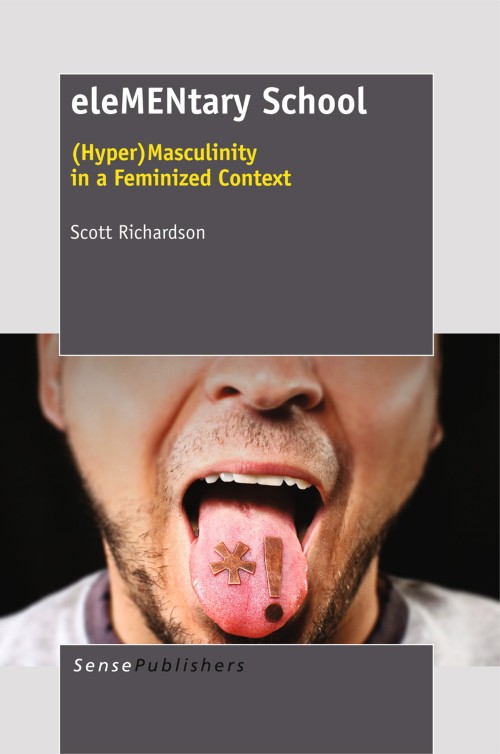
eleMENtary School:(Hyper) Masculinity in a Feminized Context [electronic resource] / by Scott Richardson.
Erişim Adresi
ISBN
9789462090019
Dil Kodu
İngilizce
Yer Numarası
DK/13793
Yazar
Basım Bildirimi
1st ed. 2012.
Yayın Bilgisi
Rotterdam : SensePublishers : Imprint: SensePublishers, 2012.
Fiziksel Niteleme
XII, 166 p. online resource.
Özet, vb.
Scott Richardson gives us a finely detailed experiential account of how gender and teaching are woven together in public schools. Through his own memories and the narrativized experiences of his research subjects, Richardson demonstrates both the institutional benefits associated with being male and the fragility of masculinity. Membership in the “Boys’ Club” of hypermasculinity requires constant checking, surveillance, and choices that fit within the narrow range of dominant masculinity (so well detailed by R. W. Connell). Richardson’s causal style parallels the ease with which men in leadership and teaching positions articulate their allegiance to gender norms and one another, and in effect, set critique of such gender norms above comment: it’s just the way things are done. - Cris Mayo, Associate Professor of Education Policy, Organization and Leadership & Gender and Women’s Studies, University of Illinois at Urbana-Champaign; Faculty Director of the Odyssey Project; author of Disputing the Subject of Sex: Sexuality and Public School Controversies. Scott Richardson has written a provocative work that lifts the veil and explores a secret space hiding in plain sight in every school in America. The taboo is gender, and for teachers who often feel bound and gagged, unseen and unheard, Richardson’s efforts offer a life-altering experience that will change the way we understand classrooms. eleMENtary School: (hyper)masculinity in a Feminized Context is both forbidden fruit and a small masterpiece. - William Ayers, Distinguished Professor of Education and Senior University Scholar, University of Illinois at Chicago (retired); founder of the Center for Youth and Society; author of To Teach: The Journey of a Teacher, and co-author-editor of The Handbook of Social Justice in Education with T. Quinn & D. Stovall. eleMENtary School tells the important and untold story of teachers’ enactments of normative masculinity. Through vivid and compellingaccounts of male teachers like Dru, Alex and Owen we learn about how contemporary definitions of masculinity prevent teachers from fulfilling their potential as educators, as colleagues and as role models. Only by reading carefully a documented analysis like these can we begin to critically examine the way in which we can encourage male teachers to develop what Scott Richardson calls an “ethic of care,” that supports gender equality, rather than allowing them to continue to engage in damaging practices of normative masculinity. - CJ Pascoe, Assistant Professor of Sociology; author of Dude You’re a Fag: Masculinity and Sexuality in High School and Anas, Mias and Wannas: Identity and Community in a Pro-ana Subculture. Scott Richardson's eleMENtary School: (hyper)masculinity in a Feminized Context is a remarkable innovative contribution to teacher lore, narrative inquiry, and gender studies. Readers cannot experience this book without pondering, questioning, rethinking, and reconstructing their perspective on education and its socio-sexual and political milieu. Surely, that is one of the most laudable consequences of a scholarly contribution in education. I urge educators at all levels to let this book have impact on their outlooks. - William H. Schubert, Professor Emeritus, Dept. of Curriculum & Instruction, University of Illinois at Chicago; former Director the Teacher Lore Project; co-author-editor of Teacher Lore: Learning from Our Own Experience with W. Ayers, and author of Love, Justice and Education. Scott Richardson is an Assistant Professor of Educational Foundations, Women’s Studies faculty member, and co-founder of the Sexuality & Gender Institute at Millersville University.
Konu
Education.
Education.
Education.
Kurum Adı
Eseri Alıntıla
Referansları kullanmadan önce gözden geçirmeniz ve varsa gerekli düzeltmeleri yapmanız önerilir.
Dijital Kaynak
MARC Görünümü
LEADER 05799nam a22004215i 4500
001 812544
003 TR_AnAIT
005 20260130234140
007 cr nn 008mamaa
008 121026s2012 ne | s |||| 0|eng d
020 |a9789462090019|9978-94-6209-001-9
024 7 |a10.1007/978-94-6209-001-9|2doi
041 |aeng
049 |aTürk Tarih Kurumu Kütüphanesi
050 4|aL1-991
072 7|aJN|2bicssc
072 7|aEDU000000|2bisacsh
072 7|aJN|2thema
082 04|a370|223
090 |aDK/13793
100 1 |aRichardson, Scott.|eauthor.|4aut|4http://id.loc.gov/vocabulary/relators/aut
245 10|aeleMENtary School:(Hyper) Masculinity in a Feminized Context|h[electronic resource] /|cby Scott Richardson.
250 |a1st ed. 2012.
264 1|aRotterdam :|bSensePublishers :|bImprint: SensePublishers,|c2012.
300 |aXII, 166 p.|bonline resource.
336 |atext|btxt|2rdacontent
337 |acomputer|bc|2rdamedia
338 |aonline resource|bcr|2rdacarrier
347 |atext file|bPDF|2rda
520 |aScott Richardson gives us a finely detailed experiential account of how gender and teaching are woven together in public schools. Through his own memories and the narrativized experiences of his research subjects, Richardson demonstrates both the institutional benefits associated with being male and the fragility of masculinity. Membership in the “Boys’ Club” of hypermasculinity requires constant checking, surveillance, and choices that fit within the narrow range of dominant masculinity (so well detailed by R. W. Connell). Richardson’s causal style parallels the ease with which men in leadership and teaching positions articulate their allegiance to gender norms and one another, and in effect, set critique of such gender norms above comment: it’s just the way things are done. - Cris Mayo, Associate Professor of Education Policy, Organization and Leadership & Gender and Women’s Studies, University of Illinois at Urbana-Champaign; Faculty Director of the Odyssey Project; author of Disputing the Subject of Sex: Sexuality and Public School Controversies. Scott Richardson has written a provocative work that lifts the veil and explores a secret space hiding in plain sight in every school in America. The taboo is gender, and for teachers who often feel bound and gagged, unseen and unheard, Richardson’s efforts offer a life-altering experience that will change the way we understand classrooms. eleMENtary School: (hyper)masculinity in a Feminized Context is both forbidden fruit and a small masterpiece. - William Ayers, Distinguished Professor of Education and Senior University Scholar, University of Illinois at Chicago (retired); founder of the Center for Youth and Society; author of To Teach: The Journey of a Teacher, and co-author-editor of The Handbook of Social Justice in Education with T. Quinn & D. Stovall. eleMENtary School tells the important and untold story of teachers’ enactments of normative masculinity. Through vivid and compellingaccounts of male teachers like Dru, Alex and Owen we learn about how contemporary definitions of masculinity prevent teachers from fulfilling their potential as educators, as colleagues and as role models. Only by reading carefully a documented analysis like these can we begin to critically examine the way in which we can encourage male teachers to develop what Scott Richardson calls an “ethic of care,” that supports gender equality, rather than allowing them to continue to engage in damaging practices of normative masculinity. - CJ Pascoe, Assistant Professor of Sociology; author of Dude You’re a Fag: Masculinity and Sexuality in High School and Anas, Mias and Wannas: Identity and Community in a Pro-ana Subculture. Scott Richardson's eleMENtary School: (hyper)masculinity in a Feminized Context is a remarkable innovative contribution to teacher lore, narrative inquiry, and gender studies. Readers cannot experience this book without pondering, questioning, rethinking, and reconstructing their perspective on education and its socio-sexual and political milieu. Surely, that is one of the most laudable consequences of a scholarly contribution in education. I urge educators at all levels to let this book have impact on their outlooks. - William H. Schubert, Professor Emeritus, Dept. of Curriculum & Instruction, University of Illinois at Chicago; former Director the Teacher Lore Project; co-author-editor of Teacher Lore: Learning from Our Own Experience with W. Ayers, and author of Love, Justice and Education. Scott Richardson is an Assistant Professor of Educational Foundations, Women’s Studies faculty member, and co-founder of the Sexuality & Gender Institute at Millersville University.
532 8 |aAccessibility summary: This PDF eBook is produced by a third-party. We have requested that the file be made accessible and compliant with the European Accessibility Act (EAA). However, we have not been able to fully verify its compliance with recognized accessibility standards (such as PDF/UA or WCAG). For detailed accessibility information, please refer to the original publisher’s website. If you require an accessible version of this content, please contact accessibilitysupport@springernature.com. We are committed to improving accessibility and will work with the publisher to meet your needs wherever possible.
532 8 |aPublisher contact for further accessibility information: accessibilitysupport@springernature.com
650 0|aEducation.
650 14|aEducation.
710 2 |aSpringerLink (Online service)
773 0 |tSpringer Nature eBook
856 40|uhttps://doi.org/10.1007/978-94-6209-001-9
912 |aZDB-2-SHU
912 |aZDB-2-SXED
950 |aHumanities, Social Sciences and Law (SpringerNature-11648)
950 |aEducation (R0) (SpringerNature-43721)
001 812544
003 TR_AnAIT
005 20260130234140
007 cr nn 008mamaa
008 121026s2012 ne | s |||| 0|eng d
020 |a9789462090019|9978-94-6209-001-9
024 7 |a10.1007/978-94-6209-001-9|2doi
041 |aeng
049 |aTürk Tarih Kurumu Kütüphanesi
050 4|aL1-991
072 7|aJN|2bicssc
072 7|aEDU000000|2bisacsh
072 7|aJN|2thema
082 04|a370|223
090 |aDK/13793
100 1 |aRichardson, Scott.|eauthor.|4aut|4http://id.loc.gov/vocabulary/relators/aut
245 10|aeleMENtary School:(Hyper) Masculinity in a Feminized Context|h[electronic resource] /|cby Scott Richardson.
250 |a1st ed. 2012.
264 1|aRotterdam :|bSensePublishers :|bImprint: SensePublishers,|c2012.
300 |aXII, 166 p.|bonline resource.
336 |atext|btxt|2rdacontent
337 |acomputer|bc|2rdamedia
338 |aonline resource|bcr|2rdacarrier
347 |atext file|bPDF|2rda
520 |aScott Richardson gives us a finely detailed experiential account of how gender and teaching are woven together in public schools. Through his own memories and the narrativized experiences of his research subjects, Richardson demonstrates both the institutional benefits associated with being male and the fragility of masculinity. Membership in the “Boys’ Club” of hypermasculinity requires constant checking, surveillance, and choices that fit within the narrow range of dominant masculinity (so well detailed by R. W. Connell). Richardson’s causal style parallels the ease with which men in leadership and teaching positions articulate their allegiance to gender norms and one another, and in effect, set critique of such gender norms above comment: it’s just the way things are done. - Cris Mayo, Associate Professor of Education Policy, Organization and Leadership & Gender and Women’s Studies, University of Illinois at Urbana-Champaign; Faculty Director of the Odyssey Project; author of Disputing the Subject of Sex: Sexuality and Public School Controversies. Scott Richardson has written a provocative work that lifts the veil and explores a secret space hiding in plain sight in every school in America. The taboo is gender, and for teachers who often feel bound and gagged, unseen and unheard, Richardson’s efforts offer a life-altering experience that will change the way we understand classrooms. eleMENtary School: (hyper)masculinity in a Feminized Context is both forbidden fruit and a small masterpiece. - William Ayers, Distinguished Professor of Education and Senior University Scholar, University of Illinois at Chicago (retired); founder of the Center for Youth and Society; author of To Teach: The Journey of a Teacher, and co-author-editor of The Handbook of Social Justice in Education with T. Quinn & D. Stovall. eleMENtary School tells the important and untold story of teachers’ enactments of normative masculinity. Through vivid and compellingaccounts of male teachers like Dru, Alex and Owen we learn about how contemporary definitions of masculinity prevent teachers from fulfilling their potential as educators, as colleagues and as role models. Only by reading carefully a documented analysis like these can we begin to critically examine the way in which we can encourage male teachers to develop what Scott Richardson calls an “ethic of care,” that supports gender equality, rather than allowing them to continue to engage in damaging practices of normative masculinity. - CJ Pascoe, Assistant Professor of Sociology; author of Dude You’re a Fag: Masculinity and Sexuality in High School and Anas, Mias and Wannas: Identity and Community in a Pro-ana Subculture. Scott Richardson's eleMENtary School: (hyper)masculinity in a Feminized Context is a remarkable innovative contribution to teacher lore, narrative inquiry, and gender studies. Readers cannot experience this book without pondering, questioning, rethinking, and reconstructing their perspective on education and its socio-sexual and political milieu. Surely, that is one of the most laudable consequences of a scholarly contribution in education. I urge educators at all levels to let this book have impact on their outlooks. - William H. Schubert, Professor Emeritus, Dept. of Curriculum & Instruction, University of Illinois at Chicago; former Director the Teacher Lore Project; co-author-editor of Teacher Lore: Learning from Our Own Experience with W. Ayers, and author of Love, Justice and Education. Scott Richardson is an Assistant Professor of Educational Foundations, Women’s Studies faculty member, and co-founder of the Sexuality & Gender Institute at Millersville University.
532 8 |aAccessibility summary: This PDF eBook is produced by a third-party. We have requested that the file be made accessible and compliant with the European Accessibility Act (EAA). However, we have not been able to fully verify its compliance with recognized accessibility standards (such as PDF/UA or WCAG). For detailed accessibility information, please refer to the original publisher’s website. If you require an accessible version of this content, please contact accessibilitysupport@springernature.com. We are committed to improving accessibility and will work with the publisher to meet your needs wherever possible.
532 8 |aPublisher contact for further accessibility information: accessibilitysupport@springernature.com
650 0|aEducation.
650 14|aEducation.
710 2 |aSpringerLink (Online service)
773 0 |tSpringer Nature eBook
856 40|uhttps://doi.org/10.1007/978-94-6209-001-9
912 |aZDB-2-SHU
912 |aZDB-2-SXED
950 |aHumanities, Social Sciences and Law (SpringerNature-11648)
950 |aEducation (R0) (SpringerNature-43721)
Materyaller
Depodan talep edilen materyal sadece kütüphane içerisinde kullanılmaktadır.
Materyal dışarıya ödünç verilmemektedir.
Materyal dışarıya ödünç verilmemektedir.
