LEADER 03993nam a22005655i 4500
001 812555
003 TR_AnAIT
005 20260130234052
007 cr nn 008mamaa
008 121227s2002 xxu| s |||| 0|eng d
020 |a9781461505778|9978-1-4615-0577-8
024 7 |a10.1007/978-1-4615-0577-8|2doi
041 |aeng
049 |aTürk Tarih Kurumu Kütüphanesi
050 4|aM1-5000
072 7|aAV|2bicssc
072 7|aMUS000000|2bisacsh
072 7|aAV|2thema
082 04|a780|223
090 |aDK/13804
100 1 |aMoravcsik, Michael J.|eauthor.|4aut|4http://id.loc.gov/vocabulary/relators/aut
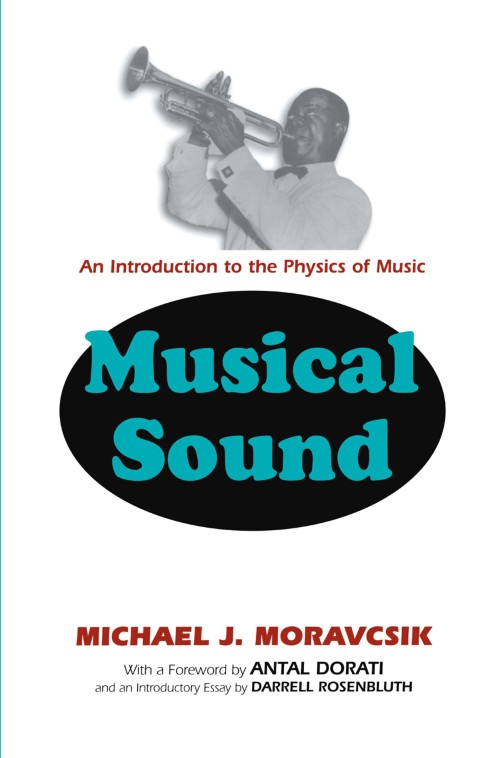
245 10|aMusical Sound|h[electronic resource] :|bAn Introduction to the Physics of Music /|cby Michael J. Moravcsik.
250 |a1st ed. 2002.
264 1|aNew York, NY :|bSpringer US :|bImprint: Springer,|c2002.
300 |aXXVI, 316 p.|bonline resource.
336 |atext|btxt|2rdacontent
337 |acomputer|bc|2rdamedia
338 |aonline resource|bcr|2rdacarrier
347 |atext file|bPDF|2rda
505 0 |aWhy and How—An Explanation for the Reader -- I The Concepts of Motion, Vibration and Waves -- Prologue -- 1 About Motion -- 2 Periodic Motion: Vibration and Oscillation -- 3 Waves -- II The Sound Getting to you -- 4 Propagation of Sound Waves -- 5 Perception of Sound -- III Specifics of Musical Sound -- 6 Musical Sound -- 7 Pitch and Musical Scales -- IV Making Music -- 8 Musical Instruments -- 9 Wind Instruments -- 10 String Instruments -- 11 Percussion Instruments -- 12 The Human Voice -- V Consuming Music -- 13 The Environment for Listening -- 14 The Transmission and Storage of Sound -- Epilogue -- Appendix a Mathematics -- Arithmetic with Integers -- Arithmetic with Fractions -- Proportional and Inversely Proportional -- Powers -- Appendix B Formulas -- Symbols Used -- 1 -- 2 -- 3 -- 4 -- 5 -- 9 -- 10 -- 13 -- Appendix C Annotated Bibliography -- Exercise problems -- 1 -- 2 -- 3 -- 4 -- 5 -- 6 -- 7 -- 9 -- 10 -- 11 -- 12 -- 13 -- 14 -- Solutions to Exercise Problems -- 1 -- 2 -- 3 -- 4 -- 5 -- 6 -- 7 -- 9 -- 10 -- 11 -- 12 -- 13 -- 14.
520 |aThis text has been out of print since 1990; it was originally published by Solomon Press in 1987. Several experts in the field have verified that the information in the book remains constant; nothing has, or will, change in the basic science of musical sound. It explains the science of musical sound without the encumbrance of detailed mathematics. It will appeal to music lovers as well as students of music and students of physics. It can easily be promoted with our physics program.
532 8 |aAccessibility summary: This PDF is not accessible. It is based on scanned pages and does not support features such as screen reader compatibility or described non-text content (images, graphs etc). However, it likely supports searchable and selectable text based on OCR (Optical Character Recognition). Users with accessibility needs may not be able to use this content effectively. Please contact us at accessibilitysupport@springernature.com if you require assistance or an alternative format.
532 8 |aInaccessible, or known limited accessibility
532 8 |aNo reading system accessibility options actively disabled
532 8 |aPublisher contact for further accessibility information: accessibilitysupport@springernature.com
650 0|aMusic.
650 0|aPhysics.
650 0|aAstronomy.
650 0|aHistory.
650 14|aMusic.
650 24|aPhysics and Astronomy.
650 24|aHistory.
710 2 |aSpringerLink (Online service)
773 0 |tSpringer Nature eBook
776 08|iPrinted edition:|z9780306467103
776 08|iPrinted edition:|z9781461505785
776 08|iPrinted edition:|z9781461351405
856 40|uhttps://doi.org/10.1007/978-1-4615-0577-8
912 |aZDB-2-SHU
912 |aZDB-2-SXL
912 |aZDB-2-BAE
950 |aHumanities, Social Sciences and Law (SpringerNature-11648)
950 |aLiterature, Cultural and Media Studies (R0) (SpringerNature-43723)