

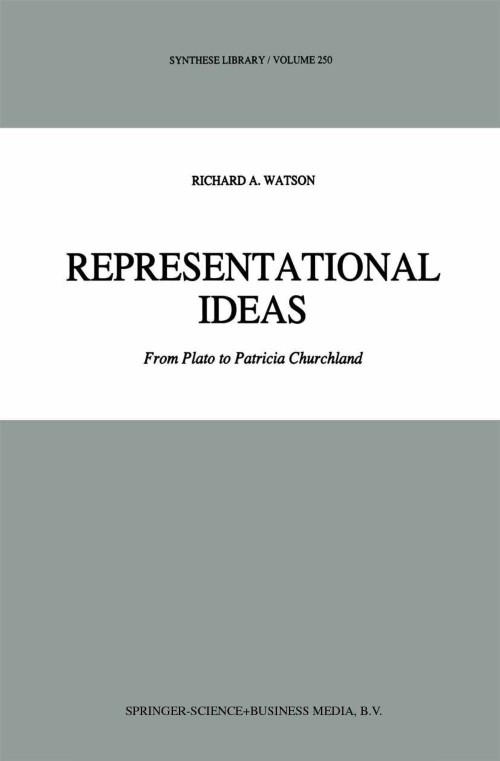
Representational Ideas [electronic resource] : From Plato to Patricia Churchland / by R. A. Watson.
Erişim Adresi
ISBN
9789401100755
Dil Kodu
İngilizce
Yer Numarası
DK/13840
Yazar
Basım Bildirimi
1st ed. 1995.
Yayın Bilgisi
Dordrecht : Springer Netherlands : Imprint: Springer, 1995.
Fiziksel Niteleme
XIII, 184 p. online resource.
Dizi
Synthese Library, Studies in Epistemology, Logic, Methodology, and Philosophy of Science, 2542-8292 ; 250
İçindekiler Notu
1. Introduction -- 1. Appearance and Reality -- 2. Representational Ideas -- 3. Platonic Ideas -- 4. Aristotelean Forms -- 5. Like Knows Like -- 6. Ideas as Effects and Things as Causes -- 7. Resemblance -- 8. Ontological Models -- 2. Descartes -- 1. Image and Concept -- 2. Imagination and Understanding -- 3. Sensations and Images -- 4. Non-Resembling Ideas -- 5. The Priority of Ontology -- 6. What is an Idea? -- 7. What in an Idea Makes it be of its object? -- 8. Summary Conclusion -- 3. Malebranche and Arnauld -- 1. Faculties, Capacities, and Dispositions -- 2. Act, Content, and Object -- 3. Ideas as Independent Objects -- 4. Ideas as Acts of Mind -- 5. Ideas as Transparent, as Searchlights, and as Grapples -- 4. Locke, Berkeley, and Hume -- 1. Primary and Secondary Ideas -- 2. Non-Representational Ideas -- 3. Particular Ideas -- 5. The Picture Theory -- 1. Wittgenstein -- 2. Carnap -- 3. Goodman -- 6. Neurophilosophy -- 1. Patricia Churchland -- 2. Ruth Millikan -- 3. Robert Cummins -- 4. Mark Rollins -- 7. Having Ideas -- 8. Conclusion -- Notes -- Name Index.
Özet, vb.
In Representational Ideas: From Plato to Patricia Churchland Watson argues that all intelligible theories of representation by ideas are based on likeness between representations and objects. He concludes that 17th century materialist criticisms of `having' mental representations in the mind apply to contemporary material representations in the brain, as proposed by neurophilosophers. The argument begins with Plato, with particular stress on Descartes, Malebranche, and Arnauld. He then proceeds with an examination of the picture theory developed by Wittgenstein, Carnap, and Goodman, and concludes with an examination of Patricia Churchland, Ruth Millikan, Robert Cummins, and Mark Rollins. The use of the historical development of representationalism to pose a central problem in contemporary cognitive science is unique. For students, scholars and researchers in neuroscience, cognitive science, philosophy of mind, and modern philosophy.
Konu
Philosophy of mind.
Ontology.
Philosophy, Modern.
Philosophy of Mind.
Ontology.
Early Modern Philosophy.
Ontology.
Philosophy, Modern.
Philosophy of Mind.
Ontology.
Early Modern Philosophy.
Kurum Adı
Eseri Alıntıla
Referansları kullanmadan önce gözden geçirmeniz ve varsa gerekli düzeltmeleri yapmanız önerilir.
Dijital Kaynak
MARC Görünümü
LEADER 04726nam a22005775i 4500
001 812591
003 TR_AnAIT
005 20260130233909
007 cr nn 008mamaa
008 121227s1995 ne | s |||| 0|eng d
020 |a9789401100755|9978-94-011-0075-5
024 7 |a10.1007/978-94-011-0075-5|2doi
041 |aeng
049 |aTürk Tarih Kurumu Kütüphanesi
050 4|aBD418-418.84
072 7|aHPM|2bicssc
072 7|aPHI015000|2bisacsh
072 7|aQDTM|2thema
082 04|a128.2|223
090 |aDK/13840
100 1 |aWatson, R. A.|eauthor.|4aut|4http://id.loc.gov/vocabulary/relators/aut
245 10|aRepresentational Ideas|h[electronic resource] :|bFrom Plato to Patricia Churchland /|cby R. A. Watson.
250 |a1st ed. 1995.
264 1|aDordrecht :|bSpringer Netherlands :|bImprint: Springer,|c1995.
300 |aXIII, 184 p.|bonline resource.
336 |atext|btxt|2rdacontent
337 |acomputer|bc|2rdamedia
338 |aonline resource|bcr|2rdacarrier
347 |atext file|bPDF|2rda
490 1 |aSynthese Library, Studies in Epistemology, Logic, Methodology, and Philosophy of Science,|x2542-8292 ;|v250
505 0 |a1. Introduction -- 1. Appearance and Reality -- 2. Representational Ideas -- 3. Platonic Ideas -- 4. Aristotelean Forms -- 5. Like Knows Like -- 6. Ideas as Effects and Things as Causes -- 7. Resemblance -- 8. Ontological Models -- 2. Descartes -- 1. Image and Concept -- 2. Imagination and Understanding -- 3. Sensations and Images -- 4. Non-Resembling Ideas -- 5. The Priority of Ontology -- 6. What is an Idea? -- 7. What in an Idea Makes it be of its object? -- 8. Summary Conclusion -- 3. Malebranche and Arnauld -- 1. Faculties, Capacities, and Dispositions -- 2. Act, Content, and Object -- 3. Ideas as Independent Objects -- 4. Ideas as Acts of Mind -- 5. Ideas as Transparent, as Searchlights, and as Grapples -- 4. Locke, Berkeley, and Hume -- 1. Primary and Secondary Ideas -- 2. Non-Representational Ideas -- 3. Particular Ideas -- 5. The Picture Theory -- 1. Wittgenstein -- 2. Carnap -- 3. Goodman -- 6. Neurophilosophy -- 1. Patricia Churchland -- 2. Ruth Millikan -- 3. Robert Cummins -- 4. Mark Rollins -- 7. Having Ideas -- 8. Conclusion -- Notes -- Name Index.
520 |aIn Representational Ideas: From Plato to Patricia Churchland Watson argues that all intelligible theories of representation by ideas are based on likeness between representations and objects. He concludes that 17th century materialist criticisms of `having' mental representations in the mind apply to contemporary material representations in the brain, as proposed by neurophilosophers. The argument begins with Plato, with particular stress on Descartes, Malebranche, and Arnauld. He then proceeds with an examination of the picture theory developed by Wittgenstein, Carnap, and Goodman, and concludes with an examination of Patricia Churchland, Ruth Millikan, Robert Cummins, and Mark Rollins. The use of the historical development of representationalism to pose a central problem in contemporary cognitive science is unique. For students, scholars and researchers in neuroscience, cognitive science, philosophy of mind, and modern philosophy.
532 8 |aAccessibility summary: This PDF is not accessible. It is based on scanned pages and does not support features such as screen reader compatibility or described non-text content (images, graphs etc). However, it likely supports searchable and selectable text based on OCR (Optical Character Recognition). Users with accessibility needs may not be able to use this content effectively. Please contact us at accessibilitysupport@springernature.com if you require assistance or an alternative format.
532 8 |aInaccessible, or known limited accessibility
532 8 |aNo reading system accessibility options actively disabled
532 8 |aPublisher contact for further accessibility information: accessibilitysupport@springernature.com
650 0|aPhilosophy of mind.
650 0|aOntology.
650 0|aPhilosophy, Modern.
650 14|aPhilosophy of Mind.
650 24|aOntology.
650 24|aEarly Modern Philosophy.
710 2 |aSpringerLink (Online service)
773 0 |tSpringer Nature eBook
776 08|iPrinted edition:|z9780792334538
776 08|iPrinted edition:|z9789401100762
776 08|iPrinted edition:|z9789401040372
830 0|aSynthese Library, Studies in Epistemology, Logic, Methodology, and Philosophy of Science,|x2542-8292 ;|v250
856 40|uhttps://doi.org/10.1007/978-94-011-0075-5
912 |aZDB-2-SHU
912 |aZDB-2-SXPR
912 |aZDB-2-BAE
950 |aHumanities, Social Sciences and Law (SpringerNature-11648)
950 |aPhilosophy and Religion (R0) (SpringerNature-43725)
001 812591
003 TR_AnAIT
005 20260130233909
007 cr nn 008mamaa
008 121227s1995 ne | s |||| 0|eng d
020 |a9789401100755|9978-94-011-0075-5
024 7 |a10.1007/978-94-011-0075-5|2doi
041 |aeng
049 |aTürk Tarih Kurumu Kütüphanesi
050 4|aBD418-418.84
072 7|aHPM|2bicssc
072 7|aPHI015000|2bisacsh
072 7|aQDTM|2thema
082 04|a128.2|223
090 |aDK/13840
100 1 |aWatson, R. A.|eauthor.|4aut|4http://id.loc.gov/vocabulary/relators/aut
245 10|aRepresentational Ideas|h[electronic resource] :|bFrom Plato to Patricia Churchland /|cby R. A. Watson.
250 |a1st ed. 1995.
264 1|aDordrecht :|bSpringer Netherlands :|bImprint: Springer,|c1995.
300 |aXIII, 184 p.|bonline resource.
336 |atext|btxt|2rdacontent
337 |acomputer|bc|2rdamedia
338 |aonline resource|bcr|2rdacarrier
347 |atext file|bPDF|2rda
490 1 |aSynthese Library, Studies in Epistemology, Logic, Methodology, and Philosophy of Science,|x2542-8292 ;|v250
505 0 |a1. Introduction -- 1. Appearance and Reality -- 2. Representational Ideas -- 3. Platonic Ideas -- 4. Aristotelean Forms -- 5. Like Knows Like -- 6. Ideas as Effects and Things as Causes -- 7. Resemblance -- 8. Ontological Models -- 2. Descartes -- 1. Image and Concept -- 2. Imagination and Understanding -- 3. Sensations and Images -- 4. Non-Resembling Ideas -- 5. The Priority of Ontology -- 6. What is an Idea? -- 7. What in an Idea Makes it be of its object? -- 8. Summary Conclusion -- 3. Malebranche and Arnauld -- 1. Faculties, Capacities, and Dispositions -- 2. Act, Content, and Object -- 3. Ideas as Independent Objects -- 4. Ideas as Acts of Mind -- 5. Ideas as Transparent, as Searchlights, and as Grapples -- 4. Locke, Berkeley, and Hume -- 1. Primary and Secondary Ideas -- 2. Non-Representational Ideas -- 3. Particular Ideas -- 5. The Picture Theory -- 1. Wittgenstein -- 2. Carnap -- 3. Goodman -- 6. Neurophilosophy -- 1. Patricia Churchland -- 2. Ruth Millikan -- 3. Robert Cummins -- 4. Mark Rollins -- 7. Having Ideas -- 8. Conclusion -- Notes -- Name Index.
520 |aIn Representational Ideas: From Plato to Patricia Churchland Watson argues that all intelligible theories of representation by ideas are based on likeness between representations and objects. He concludes that 17th century materialist criticisms of `having' mental representations in the mind apply to contemporary material representations in the brain, as proposed by neurophilosophers. The argument begins with Plato, with particular stress on Descartes, Malebranche, and Arnauld. He then proceeds with an examination of the picture theory developed by Wittgenstein, Carnap, and Goodman, and concludes with an examination of Patricia Churchland, Ruth Millikan, Robert Cummins, and Mark Rollins. The use of the historical development of representationalism to pose a central problem in contemporary cognitive science is unique. For students, scholars and researchers in neuroscience, cognitive science, philosophy of mind, and modern philosophy.
532 8 |aAccessibility summary: This PDF is not accessible. It is based on scanned pages and does not support features such as screen reader compatibility or described non-text content (images, graphs etc). However, it likely supports searchable and selectable text based on OCR (Optical Character Recognition). Users with accessibility needs may not be able to use this content effectively. Please contact us at accessibilitysupport@springernature.com if you require assistance or an alternative format.
532 8 |aInaccessible, or known limited accessibility
532 8 |aNo reading system accessibility options actively disabled
532 8 |aPublisher contact for further accessibility information: accessibilitysupport@springernature.com
650 0|aPhilosophy of mind.
650 0|aOntology.
650 0|aPhilosophy, Modern.
650 14|aPhilosophy of Mind.
650 24|aOntology.
650 24|aEarly Modern Philosophy.
710 2 |aSpringerLink (Online service)
773 0 |tSpringer Nature eBook
776 08|iPrinted edition:|z9780792334538
776 08|iPrinted edition:|z9789401100762
776 08|iPrinted edition:|z9789401040372
830 0|aSynthese Library, Studies in Epistemology, Logic, Methodology, and Philosophy of Science,|x2542-8292 ;|v250
856 40|uhttps://doi.org/10.1007/978-94-011-0075-5
912 |aZDB-2-SHU
912 |aZDB-2-SXPR
912 |aZDB-2-BAE
950 |aHumanities, Social Sciences and Law (SpringerNature-11648)
950 |aPhilosophy and Religion (R0) (SpringerNature-43725)
Materyaller
Depodan talep edilen materyal sadece kütüphane içerisinde kullanılmaktadır.
Materyal dışarıya ödünç verilmemektedir.
Materyal dışarıya ödünç verilmemektedir.
