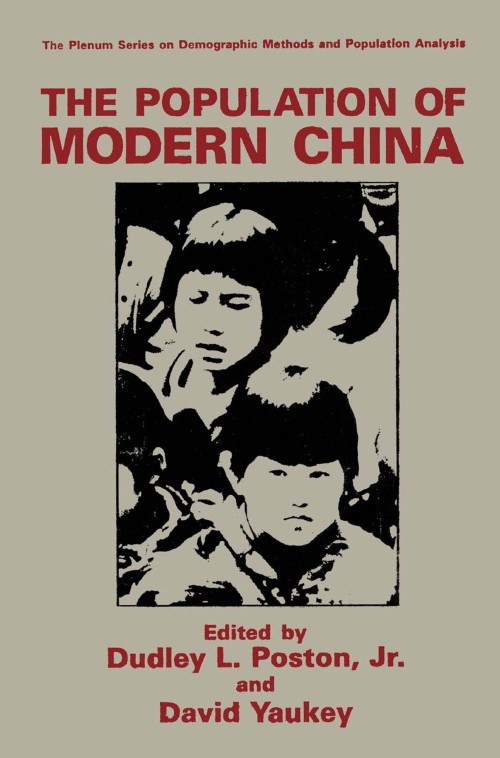
The Population of Modern China [electronic resource] / edited by Dudley L. Poston Jr., David Yaukey.
Erişim Adresi
ISBN
9781489912312
Dil Kodu
İngilizce
Yer Numarası
DK/13877
Basım Bildirimi
1st ed. 1992.
Yayın Bilgisi
New York, NY : Springer US : Imprint: Springer, 1992.
Fiziksel Niteleme
XIV, 760 p. online resource.
Dizi
The Springer Series on Demographic Methods and Population Analysis, 2215-1990
İçindekiler Notu
I Introduction: Population and Population Studies in China -- New China’s Population -- Population Studies in China: Privileged Past, Anxious Future -- II Size, Growth and Distribution -- A Brief History of China’s Population -- Population Dynamics and Policy in China -- Distribution of Chinese Population -- III International Migration -- The Distribution of the Overseas Chinese -- The Old Chinatown Ghettos -- IV Mortality -- China’s Changing Mortality -- Famine in China, 1958–61 -- V Fertility, Abortion and Contraceptive Trends -- Fertility Trends in China -- Abortion in China: Incidence and Implications -- Patterns of Contraceptive Use in China -- VI Fertility Differentials -- Local Area Variations in Reproductive Behavior in China, 1973–1982 -- Socioeconomic Development, Family Planning and Fertility in China: A Subregional Analysis -- VII Fertility Policy -- Fertility Policy in China: Future Options -- Second Thoughts on the Second Child: A Talk with Peng Peiyun -- Effects of the One-Child Policy on the Children of China -- VIII Age and Sex Structure -- The Age-Sex Structure of Modern China: A Graphic Description and Explanation -- Implications of the Aging of China’s Population -- Sex Preference, Fertility and Family Planning in China -- IX Marriage and Family -- Marriage in China Since 1950 -- Changes in Family Structure in China -- X Ethnic Composition -- Ethnic Diversity and Distribution -- The Demographic and Socioeconomic Composition of China’s Ethnic Minorities -- Ethnic Identification in China -- XI Internal Migration and Urbanization -- Migration in China: Methodological and Policy Challenges -- Urbanization in China: New Insights from the 1982 Census -- Provincial Population Size and Interprovincial Migration -- XII Epilogue: China in 1990 -- Glossary: David Yaukey -- Author Index.
Özet, vb.
Student~ interested in world populations and demography inevitably need to know China. As the most populous country of the world, China occupies a unique position in the world population system. How its population is shaped by the intricate interplays among factors such as its political ideology and institutions, economic reality, government policies, sociocultural traditions, and ethnic divergence represents at once a fascinating and challenging arena for investigatIon and analysis. Yet, for much of the 20th century, while population studies have developed into a mature science, precise information and sophisticated analysis about the Chinese population had largely remained either lacking or inaccessible, first because of the absence of systematic databases due to almost uninterrupted strife and wars, and later because the society was closed to the outside observers for about three decades since 1949. Since the end of the Cultural Revolution, things have dramatically changed. China has embarked on an ambitious reform program where modernization became the utmost goal of societal mobilization. China could no longer afford to rely on imprecise census or survey information for population-related studies and policy planning, nor to remaining closed to the outside world. Both the gathering of more precise information and access to such information have dramatically increased in the 1980s. Systematic observations, analyses and reporting about the Chinese population have surfaced in the population literature around the globe.
Konu
Demography.
Population.
Population __ Economic aspects.
Sociology.
Population and Demography.
Population Economics.
Sociology.
Population.
Population __ Economic aspects.
Sociology.
Population and Demography.
Population Economics.
Sociology.
Diğer Yazarlar
Kurum Adı

Eseri Alıntıla
Referansları kullanmadan önce gözden geçirmeniz ve varsa gerekli düzeltmeleri yapmanız önerilir.
Dijital Kaynak
MARC Görünümü
LEADER 06143nam a22006015i 4500
001 812631
003 TR_AnAIT
005 20260130233714
007 cr nn 008mamaa
008 130708s1992 xxu| s |||| 0|eng d
020 |a9781489912312|9978-1-4899-1231-2
024 7 |a10.1007/978-1-4899-1231-2|2doi
041 |aeng
049 |aTürk Tarih Kurumu Kütüphanesi
050 4|aHB848-3697
072 7|aJHBD|2bicssc
072 7|aSOC006000|2bisacsh
072 7|aJHBD|2thema
082 04|a304.6|223
090 |aDK/13877
245 14|aThe Population of Modern China|h[electronic resource] /|cedited by Dudley L. Poston Jr., David Yaukey.
250 |a1st ed. 1992.
264 1|aNew York, NY :|bSpringer US :|bImprint: Springer,|c1992.
300 |aXIV, 760 p.|bonline resource.
336 |atext|btxt|2rdacontent
337 |acomputer|bc|2rdamedia
338 |aonline resource|bcr|2rdacarrier
347 |atext file|bPDF|2rda
490 1 |aThe Springer Series on Demographic Methods and Population Analysis,|x2215-1990
505 0 |aI Introduction: Population and Population Studies in China -- New China’s Population -- Population Studies in China: Privileged Past, Anxious Future -- II Size, Growth and Distribution -- A Brief History of China’s Population -- Population Dynamics and Policy in China -- Distribution of Chinese Population -- III International Migration -- The Distribution of the Overseas Chinese -- The Old Chinatown Ghettos -- IV Mortality -- China’s Changing Mortality -- Famine in China, 1958–61 -- V Fertility, Abortion and Contraceptive Trends -- Fertility Trends in China -- Abortion in China: Incidence and Implications -- Patterns of Contraceptive Use in China -- VI Fertility Differentials -- Local Area Variations in Reproductive Behavior in China, 1973–1982 -- Socioeconomic Development, Family Planning and Fertility in China: A Subregional Analysis -- VII Fertility Policy -- Fertility Policy in China: Future Options -- Second Thoughts on the Second Child: A Talk with Peng Peiyun -- Effects of the One-Child Policy on the Children of China -- VIII Age and Sex Structure -- The Age-Sex Structure of Modern China: A Graphic Description and Explanation -- Implications of the Aging of China’s Population -- Sex Preference, Fertility and Family Planning in China -- IX Marriage and Family -- Marriage in China Since 1950 -- Changes in Family Structure in China -- X Ethnic Composition -- Ethnic Diversity and Distribution -- The Demographic and Socioeconomic Composition of China’s Ethnic Minorities -- Ethnic Identification in China -- XI Internal Migration and Urbanization -- Migration in China: Methodological and Policy Challenges -- Urbanization in China: New Insights from the 1982 Census -- Provincial Population Size and Interprovincial Migration -- XII Epilogue: China in 1990 -- Glossary: David Yaukey -- Author Index.
520 |aStudent~ interested in world populations and demography inevitably need to know China. As the most populous country of the world, China occupies a unique position in the world population system. How its population is shaped by the intricate interplays among factors such as its political ideology and institutions, economic reality, government policies, sociocultural traditions, and ethnic divergence represents at once a fascinating and challenging arena for investigatIon and analysis. Yet, for much of the 20th century, while population studies have developed into a mature science, precise information and sophisticated analysis about the Chinese population had largely remained either lacking or inaccessible, first because of the absence of systematic databases due to almost uninterrupted strife and wars, and later because the society was closed to the outside observers for about three decades since 1949. Since the end of the Cultural Revolution, things have dramatically changed. China has embarked on an ambitious reform program where modernization became the utmost goal of societal mobilization. China could no longer afford to rely on imprecise census or survey information for population-related studies and policy planning, nor to remaining closed to the outside world. Both the gathering of more precise information and access to such information have dramatically increased in the 1980s. Systematic observations, analyses and reporting about the Chinese population have surfaced in the population literature around the globe.
532 8 |aAccessibility summary: This PDF is not accessible. It is based on scanned pages and does not support features such as screen reader compatibility or described non-text content (images, graphs etc). However, it likely supports searchable and selectable text based on OCR (Optical Character Recognition). Users with accessibility needs may not be able to use this content effectively. Please contact us at accessibilitysupport@springernature.com if you require assistance or an alternative format.
532 8 |aInaccessible, or known limited accessibility
532 8 |aNo reading system accessibility options actively disabled
532 8 |aPublisher contact for further accessibility information: accessibilitysupport@springernature.com
650 0|aDemography.
650 0|aPopulation.
650 0|aPopulation|xEconomic aspects.
650 0|aSociology.
650 14|aPopulation and Demography.
650 24|aPopulation Economics.
650 24|aSociology.
700 1 |aPoston Jr., Dudley L.|eeditor.|4edt|4http://id.loc.gov/vocabulary/relators/edt
700 1 |aYaukey, David.|eeditor.|4edt|4http://id.loc.gov/vocabulary/relators/edt
710 2 |aSpringerLink (Online service)
773 0 |tSpringer Nature eBook
776 08|iPrinted edition:|z9780306442353
776 08|iPrinted edition:|z9780306441387
776 08|iPrinted edition:|z9781489912329
830 0|aThe Springer Series on Demographic Methods and Population Analysis,|x2215-1990
856 40|uhttps://doi.org/10.1007/978-1-4899-1231-2
912 |aZDB-2-SHU
912 |aZDB-2-SXS
912 |aZDB-2-BAE
950 |aHumanities, Social Sciences and Law (SpringerNature-11648)
950 |aSocial Sciences (R0) (SpringerNature-43726)
001 812631
003 TR_AnAIT
005 20260130233714
007 cr nn 008mamaa
008 130708s1992 xxu| s |||| 0|eng d
020 |a9781489912312|9978-1-4899-1231-2
024 7 |a10.1007/978-1-4899-1231-2|2doi
041 |aeng
049 |aTürk Tarih Kurumu Kütüphanesi
050 4|aHB848-3697
072 7|aJHBD|2bicssc
072 7|aSOC006000|2bisacsh
072 7|aJHBD|2thema
082 04|a304.6|223
090 |aDK/13877
245 14|aThe Population of Modern China|h[electronic resource] /|cedited by Dudley L. Poston Jr., David Yaukey.
250 |a1st ed. 1992.
264 1|aNew York, NY :|bSpringer US :|bImprint: Springer,|c1992.
300 |aXIV, 760 p.|bonline resource.
336 |atext|btxt|2rdacontent
337 |acomputer|bc|2rdamedia
338 |aonline resource|bcr|2rdacarrier
347 |atext file|bPDF|2rda
490 1 |aThe Springer Series on Demographic Methods and Population Analysis,|x2215-1990
505 0 |aI Introduction: Population and Population Studies in China -- New China’s Population -- Population Studies in China: Privileged Past, Anxious Future -- II Size, Growth and Distribution -- A Brief History of China’s Population -- Population Dynamics and Policy in China -- Distribution of Chinese Population -- III International Migration -- The Distribution of the Overseas Chinese -- The Old Chinatown Ghettos -- IV Mortality -- China’s Changing Mortality -- Famine in China, 1958–61 -- V Fertility, Abortion and Contraceptive Trends -- Fertility Trends in China -- Abortion in China: Incidence and Implications -- Patterns of Contraceptive Use in China -- VI Fertility Differentials -- Local Area Variations in Reproductive Behavior in China, 1973–1982 -- Socioeconomic Development, Family Planning and Fertility in China: A Subregional Analysis -- VII Fertility Policy -- Fertility Policy in China: Future Options -- Second Thoughts on the Second Child: A Talk with Peng Peiyun -- Effects of the One-Child Policy on the Children of China -- VIII Age and Sex Structure -- The Age-Sex Structure of Modern China: A Graphic Description and Explanation -- Implications of the Aging of China’s Population -- Sex Preference, Fertility and Family Planning in China -- IX Marriage and Family -- Marriage in China Since 1950 -- Changes in Family Structure in China -- X Ethnic Composition -- Ethnic Diversity and Distribution -- The Demographic and Socioeconomic Composition of China’s Ethnic Minorities -- Ethnic Identification in China -- XI Internal Migration and Urbanization -- Migration in China: Methodological and Policy Challenges -- Urbanization in China: New Insights from the 1982 Census -- Provincial Population Size and Interprovincial Migration -- XII Epilogue: China in 1990 -- Glossary: David Yaukey -- Author Index.
520 |aStudent~ interested in world populations and demography inevitably need to know China. As the most populous country of the world, China occupies a unique position in the world population system. How its population is shaped by the intricate interplays among factors such as its political ideology and institutions, economic reality, government policies, sociocultural traditions, and ethnic divergence represents at once a fascinating and challenging arena for investigatIon and analysis. Yet, for much of the 20th century, while population studies have developed into a mature science, precise information and sophisticated analysis about the Chinese population had largely remained either lacking or inaccessible, first because of the absence of systematic databases due to almost uninterrupted strife and wars, and later because the society was closed to the outside observers for about three decades since 1949. Since the end of the Cultural Revolution, things have dramatically changed. China has embarked on an ambitious reform program where modernization became the utmost goal of societal mobilization. China could no longer afford to rely on imprecise census or survey information for population-related studies and policy planning, nor to remaining closed to the outside world. Both the gathering of more precise information and access to such information have dramatically increased in the 1980s. Systematic observations, analyses and reporting about the Chinese population have surfaced in the population literature around the globe.
532 8 |aAccessibility summary: This PDF is not accessible. It is based on scanned pages and does not support features such as screen reader compatibility or described non-text content (images, graphs etc). However, it likely supports searchable and selectable text based on OCR (Optical Character Recognition). Users with accessibility needs may not be able to use this content effectively. Please contact us at accessibilitysupport@springernature.com if you require assistance or an alternative format.
532 8 |aInaccessible, or known limited accessibility
532 8 |aNo reading system accessibility options actively disabled
532 8 |aPublisher contact for further accessibility information: accessibilitysupport@springernature.com
650 0|aDemography.
650 0|aPopulation.
650 0|aPopulation|xEconomic aspects.
650 0|aSociology.
650 14|aPopulation and Demography.
650 24|aPopulation Economics.
650 24|aSociology.
700 1 |aPoston Jr., Dudley L.|eeditor.|4edt|4http://id.loc.gov/vocabulary/relators/edt
700 1 |aYaukey, David.|eeditor.|4edt|4http://id.loc.gov/vocabulary/relators/edt
710 2 |aSpringerLink (Online service)
773 0 |tSpringer Nature eBook
776 08|iPrinted edition:|z9780306442353
776 08|iPrinted edition:|z9780306441387
776 08|iPrinted edition:|z9781489912329
830 0|aThe Springer Series on Demographic Methods and Population Analysis,|x2215-1990
856 40|uhttps://doi.org/10.1007/978-1-4899-1231-2
912 |aZDB-2-SHU
912 |aZDB-2-SXS
912 |aZDB-2-BAE
950 |aHumanities, Social Sciences and Law (SpringerNature-11648)
950 |aSocial Sciences (R0) (SpringerNature-43726)
Materyaller
Depodan talep edilen materyal sadece kütüphane içerisinde kullanılmaktadır.
Materyal dışarıya ödünç verilmemektedir.
