LEADER 03970nam a22005535i 4500
001 812684
003 TR_AnAIT
005 20260130233348
007 cr nn 008mamaa
008 121227s2001 ne | s |||| 0|eng d
020 |a9789401006385|9978-94-010-0638-5
024 7 |a10.1007/978-94-010-0638-5|2doi
041 |aeng
049 |aTürk Tarih Kurumu Kütüphanesi
050 4|aLB1028.3
072 7|aJNV|2bicssc
072 7|aEDU000000|2bisacsh
072 7|aJNV|2thema
082 04|a371.33|223
090 |aDK/13930
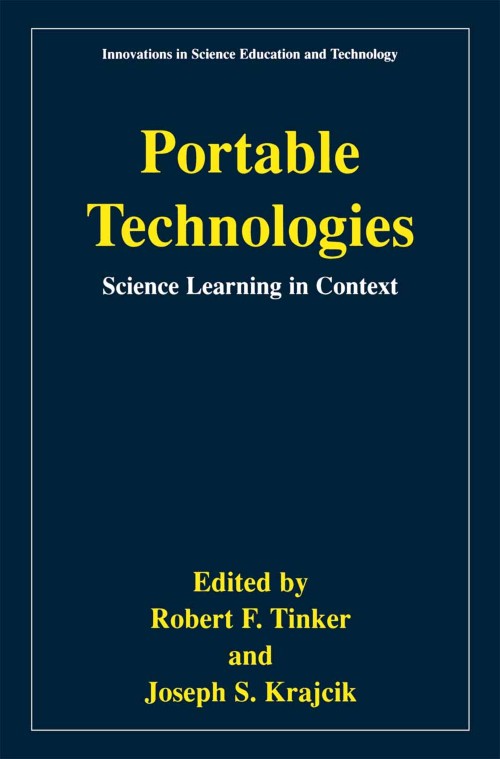
245 10|aPortable Technologies|h[electronic resource] :|bScience Learning in Context /|cedited by Robert Tinker, Joseph Krajcik.
250 |a1st ed. 2001.
264 1|aDordrecht :|bSpringer Netherlands :|bImprint: Springer,|c2001.
300 |a198 p. 16 illus.|bonline resource.
336 |atext|btxt|2rdacontent
337 |acomputer|bc|2rdamedia
338 |aonline resource|bcr|2rdacarrier
347 |atext file|bPDF|2rda
490 1 |aInnovations in Science Education and Technology,|x2213-2236 ;|v13
505 0 |a1: Supporting Science Learning in Context: Project-Based Learning -- 2: Incorporating Portable Technology to Enhance an Inquiry, Project-Based Middle School Science Classroom -- 3: Case Study at Mount Baker High School -- 4: Curriculum Design Principles for Using Probeware in a Project-Based Learning Setting: Learning Science in Context -- 5: Learning Science Content in a Project-based Environment -- 6: Educational Innovations in Portable Technologies -- Conclusion -- Appendix A: Chapter 2 -- Appendix B: Chapter 4 -- Appendix C: Chapter 5.
520 |aEducation has traditionally studied the world by bringing it into the classroom. This can result in situated learning that appears to students to have no relevance outside the classroom. Students acquire inert, decontextualized knowledge that they cannot apply to real problems. The obvious solution to this shortcoming is to reverse the situation and bring the classroom to the phenomena: to learn in a rich, real-world context. The problem with the real world is that it is complex and filled with interactions that are hard to sort out. The editors and authors believe that the right tools might help students with this sorting process and result in learning in rich contexts. This book is an account of a series of experiments designed to explore the validity of this insight.
532 8 |aAccessibility summary: This PDF is not accessible. It is based on scanned pages and does not support features such as screen reader compatibility or described non-text content (images, graphs etc). However, it likely supports searchable and selectable text based on OCR (Optical Character Recognition). Users with accessibility needs may not be able to use this content effectively. Please contact us at accessibilitysupport@springernature.com if you require assistance or an alternative format.
532 8 |aInaccessible, or known limited accessibility
532 8 |aNo reading system accessibility options actively disabled
532 8 |aPublisher contact for further accessibility information: accessibilitysupport@springernature.com
650 0|aEducational technology.
650 0|aScience|xStudy and teaching.
650 14|aDigital Education and Educational Technology.
650 24|aScience Education.
700 1 |aTinker, Robert.|eeditor.|4edt|4http://id.loc.gov/vocabulary/relators/edt
700 1 |aKrajcik, Joseph.|eeditor.|4edt|4http://id.loc.gov/vocabulary/relators/edt
710 2 |aSpringerLink (Online service)
773 0 |tSpringer Nature eBook
776 08|iPrinted edition:|z9780306466434
776 08|iPrinted edition:|z9789401006392
830 0|aInnovations in Science Education and Technology,|x2213-2236 ;|v13
856 40|uhttps://doi.org/10.1007/978-94-010-0638-5
912 |aZDB-2-SHU
912 |aZDB-2-SXED
912 |aZDB-2-BAE
950 |aHumanities, Social Sciences and Law (SpringerNature-11648)
950 |aEducation (R0) (SpringerNature-43721)