

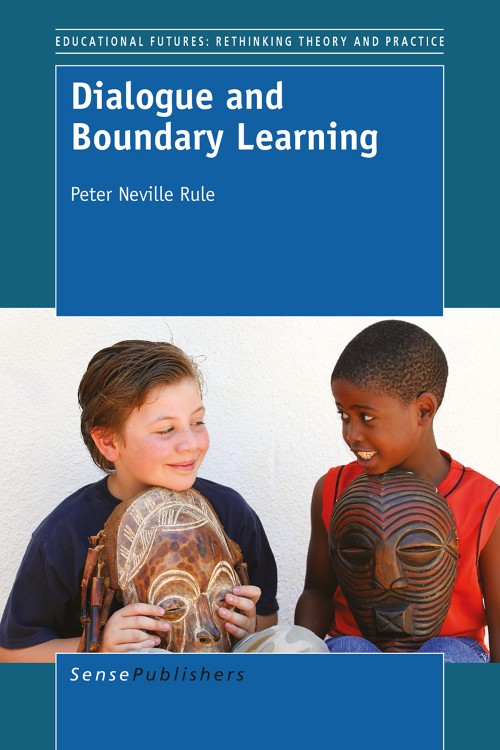
Dialogue and Boundary Learning [electronic resource] / by Peter Neville Rule.
Erişim Adresi
ISBN
9789463001601
Dil Kodu
İngilizce
Yer Numarası
DK/14194
Yazar
Yayın Bilgisi
Rotterdam : SensePublishers : Imprint: SensePublishers, 2015.
Fiziksel Niteleme
XXIV, 178 p. online resource.
Dizi
Educational Futures, Rethinking Theory and Practice, 2214-9864
İçindekiler Notu
Foreword: Learning through Dialogue -- Acknowledgements -- List of Tables and Figures -- Introduction -- Part 1: Dialogue: A Genealogy for Education -- Socrates and Dialogue as Vocation -- Introduction -- The Historical Socrates -- Socrates in Dialogue and the Dialogic Socrates -- Dialogue and Dialectic -- Socrates and the Questions of Learning -- Socrates as Educator -- Socrates and Contemporary Education -- Conclusion -- Martin Buber and the Life of Dialogue -- Introduction -- Outline of a Life -- Buber and Dialogue -- Buber the Educator -- Buber’s Dialogic Approach to Education -- Buber’s Continuing Dialogue in Education -- Conclusion -- Mikhail Bakhtin and Ideological Becoming -- Introduction -- Living in Tumultuous Times -- The Question of Bakhtin and Education -- Dialogue, Teaching and Learning -- Authorship and Internally Persuasive Discourse -- Conclusion -- Paulo Freire and Emancipatory Education -- Introduction -- Life -- Key Ideas: Dialogue, Conscientisation, Praxis -- Teaching, Learning and Knowing -- Freire’s Continuing Influence on Education -- Conclusion -- Part 2: Dialogue and Lifelong Education -- Adult Education Projects and Dialogic Space -- Introduction -- Dialogue and Emancipatory Education -- Critiques of a Pedagogy of Dialogue -- Defining Dialogue in Relation to Educational Transformation -- Adult Education Projects as Dialogic Spaces -- The Context of the Tuition Project -- The Case of the Tuition Project -- Apartheid as Anti-Dialogue -- Conditions for Dialogue -- Dialogue, Movement and Common Ground -- Dialogue and ‘Responsibility’ -- Conclusion -- Bakhtin and the Poetics of Pedagogy -- Introduction -- Mikhail Bakhtin: Background and Key Ideas -- Dialogue and Student Development -- Language Types and Pedagogy -- Speech Genres and Dialogic Learning -- A Boundary Pedagogy of Dialogue and Access: Constraints and Challenges -- Conclusion -- Early Childhood Development and Relational Pedagogy -- Introduction -- Context of Research -- Purpose of the Project -- Theoretical Framing -- Methodology -- Findings -- Conclusion -- Bakhtin and Freire: Dialogue, Dialectic and Bound.
Özet, vb.
In an increasingly monologic world of war, exploitation and fear of “the other”, dialogue within and between humans, and with the world around us, is critical to a humane future. This book explores dialogue and learning in theory, practice and praxis across a spectrum of lifelong education contexts. It develops a philosophical basis by examining the lives, works and dialogic traditions of four key thinkers: Socrates, Martin Buber, Mikhail Bakhtin and Paulo Freire. It then examines dialogue and learning in contexts ranging from early childhood development to adult, community and higher education. In doing so, it develops and illustrates the innovative concepts of dialogic space, boundary learning and diacognition. It has a specific focus on learners and learning in contexts of oppression and marginality, and with a view to personal and social emancipation. It is located in an African context, specifically South Africa, although its resonance is both local and global. The book marks an innovative contribution to our understanding of dialogue and learning, framed by the great dialogic traditions of the past, and is a dialogical provocation to the ongoing generation of praxis. “This book is valuable for grounding lifelong learning experiences within an African context. It underlines the complexities involved in carrying out ‘authentic’ dialogue at different stages of education in Africa throughout the lifespan, exploring cases of border crossing and boundary maintenance.” – Peter Mayo, University of Malta and Series Editor of the International Issues in Adult Education Series.
Konu
Education.
Education.
Education, general.
Education.
Education, general.
Kurum Adı
Eseri Alıntıla
Referansları kullanmadan önce gözden geçirmeniz ve varsa gerekli düzeltmeleri yapmanız önerilir.
Dijital Kaynak
MARC Görünümü
LEADER 05089nam a22003975i 4500
001 812949
003 TR_AnAIT
005 20260130232401
007 cr nn 008mamaa
008 151201s2015 ne | s |||| 0|eng d
020 |a9789463001601|9978-94-6300-160-1
024 7 |a10.1007/978-94-6300-160-1|2doi
041 |aeng
049 |aTürk Tarih Kurumu Kütüphanesi
050 4|aL1-991
072 7|aJN|2bicssc
072 7|aEDU000000|2bisacsh
082 04|a370|223
090 |aDK/14194
100 1 |aRule, Peter Neville.|eauthor.
245 10|aDialogue and Boundary Learning|h[electronic resource] /|cby Peter Neville Rule.
264 1|aRotterdam :|bSensePublishers :|bImprint: SensePublishers,|c2015.
300 |aXXIV, 178 p.|bonline resource.
336 |atext|btxt|2rdacontent
337 |acomputer|bc|2rdamedia
338 |aonline resource|bcr|2rdacarrier
347 |atext file|bPDF|2rda
490 1 |aEducational Futures, Rethinking Theory and Practice,|x2214-9864
505 0 |aForeword: Learning through Dialogue -- Acknowledgements -- List of Tables and Figures -- Introduction -- Part 1: Dialogue: A Genealogy for Education -- Socrates and Dialogue as Vocation -- Introduction -- The Historical Socrates -- Socrates in Dialogue and the Dialogic Socrates -- Dialogue and Dialectic -- Socrates and the Questions of Learning -- Socrates as Educator -- Socrates and Contemporary Education -- Conclusion -- Martin Buber and the Life of Dialogue -- Introduction -- Outline of a Life -- Buber and Dialogue -- Buber the Educator -- Buber’s Dialogic Approach to Education -- Buber’s Continuing Dialogue in Education -- Conclusion -- Mikhail Bakhtin and Ideological Becoming -- Introduction -- Living in Tumultuous Times -- The Question of Bakhtin and Education -- Dialogue, Teaching and Learning -- Authorship and Internally Persuasive Discourse -- Conclusion -- Paulo Freire and Emancipatory Education -- Introduction -- Life -- Key Ideas: Dialogue, Conscientisation, Praxis -- Teaching, Learning and Knowing -- Freire’s Continuing Influence on Education -- Conclusion -- Part 2: Dialogue and Lifelong Education -- Adult Education Projects and Dialogic Space -- Introduction -- Dialogue and Emancipatory Education -- Critiques of a Pedagogy of Dialogue -- Defining Dialogue in Relation to Educational Transformation -- Adult Education Projects as Dialogic Spaces -- The Context of the Tuition Project -- The Case of the Tuition Project -- Apartheid as Anti-Dialogue -- Conditions for Dialogue -- Dialogue, Movement and Common Ground -- Dialogue and ‘Responsibility’ -- Conclusion -- Bakhtin and the Poetics of Pedagogy -- Introduction -- Mikhail Bakhtin: Background and Key Ideas -- Dialogue and Student Development -- Language Types and Pedagogy -- Speech Genres and Dialogic Learning -- A Boundary Pedagogy of Dialogue and Access: Constraints and Challenges -- Conclusion -- Early Childhood Development and Relational Pedagogy -- Introduction -- Context of Research -- Purpose of the Project -- Theoretical Framing -- Methodology -- Findings -- Conclusion -- Bakhtin and Freire: Dialogue, Dialectic and Bound.
520 |aIn an increasingly monologic world of war, exploitation and fear of “the other”, dialogue within and between humans, and with the world around us, is critical to a humane future. This book explores dialogue and learning in theory, practice and praxis across a spectrum of lifelong education contexts. It develops a philosophical basis by examining the lives, works and dialogic traditions of four key thinkers: Socrates, Martin Buber, Mikhail Bakhtin and Paulo Freire. It then examines dialogue and learning in contexts ranging from early childhood development to adult, community and higher education. In doing so, it develops and illustrates the innovative concepts of dialogic space, boundary learning and diacognition. It has a specific focus on learners and learning in contexts of oppression and marginality, and with a view to personal and social emancipation. It is located in an African context, specifically South Africa, although its resonance is both local and global. The book marks an innovative contribution to our understanding of dialogue and learning, framed by the great dialogic traditions of the past, and is a dialogical provocation to the ongoing generation of praxis. “This book is valuable for grounding lifelong learning experiences within an African context. It underlines the complexities involved in carrying out ‘authentic’ dialogue at different stages of education in Africa throughout the lifespan, exploring cases of border crossing and boundary maintenance.” – Peter Mayo, University of Malta and Series Editor of the International Issues in Adult Education Series.
650 0|aEducation.
650 14|aEducation.
650 24|aEducation, general.
710 2 |aSpringerLink (Online service)
773 0 |tSpringer eBooks
830 0|aEducational Futures, Rethinking Theory and Practice,|x2214-9864
856 40|uhttp://dx.doi.org/10.1007/978-94-6300-160-1
912 |aZDB-2-SHU
950 |aHumanities, Social Sciences and Law (Springer-11648)
001 812949
003 TR_AnAIT
005 20260130232401
007 cr nn 008mamaa
008 151201s2015 ne | s |||| 0|eng d
020 |a9789463001601|9978-94-6300-160-1
024 7 |a10.1007/978-94-6300-160-1|2doi
041 |aeng
049 |aTürk Tarih Kurumu Kütüphanesi
050 4|aL1-991
072 7|aJN|2bicssc
072 7|aEDU000000|2bisacsh
082 04|a370|223
090 |aDK/14194
100 1 |aRule, Peter Neville.|eauthor.
245 10|aDialogue and Boundary Learning|h[electronic resource] /|cby Peter Neville Rule.
264 1|aRotterdam :|bSensePublishers :|bImprint: SensePublishers,|c2015.
300 |aXXIV, 178 p.|bonline resource.
336 |atext|btxt|2rdacontent
337 |acomputer|bc|2rdamedia
338 |aonline resource|bcr|2rdacarrier
347 |atext file|bPDF|2rda
490 1 |aEducational Futures, Rethinking Theory and Practice,|x2214-9864
505 0 |aForeword: Learning through Dialogue -- Acknowledgements -- List of Tables and Figures -- Introduction -- Part 1: Dialogue: A Genealogy for Education -- Socrates and Dialogue as Vocation -- Introduction -- The Historical Socrates -- Socrates in Dialogue and the Dialogic Socrates -- Dialogue and Dialectic -- Socrates and the Questions of Learning -- Socrates as Educator -- Socrates and Contemporary Education -- Conclusion -- Martin Buber and the Life of Dialogue -- Introduction -- Outline of a Life -- Buber and Dialogue -- Buber the Educator -- Buber’s Dialogic Approach to Education -- Buber’s Continuing Dialogue in Education -- Conclusion -- Mikhail Bakhtin and Ideological Becoming -- Introduction -- Living in Tumultuous Times -- The Question of Bakhtin and Education -- Dialogue, Teaching and Learning -- Authorship and Internally Persuasive Discourse -- Conclusion -- Paulo Freire and Emancipatory Education -- Introduction -- Life -- Key Ideas: Dialogue, Conscientisation, Praxis -- Teaching, Learning and Knowing -- Freire’s Continuing Influence on Education -- Conclusion -- Part 2: Dialogue and Lifelong Education -- Adult Education Projects and Dialogic Space -- Introduction -- Dialogue and Emancipatory Education -- Critiques of a Pedagogy of Dialogue -- Defining Dialogue in Relation to Educational Transformation -- Adult Education Projects as Dialogic Spaces -- The Context of the Tuition Project -- The Case of the Tuition Project -- Apartheid as Anti-Dialogue -- Conditions for Dialogue -- Dialogue, Movement and Common Ground -- Dialogue and ‘Responsibility’ -- Conclusion -- Bakhtin and the Poetics of Pedagogy -- Introduction -- Mikhail Bakhtin: Background and Key Ideas -- Dialogue and Student Development -- Language Types and Pedagogy -- Speech Genres and Dialogic Learning -- A Boundary Pedagogy of Dialogue and Access: Constraints and Challenges -- Conclusion -- Early Childhood Development and Relational Pedagogy -- Introduction -- Context of Research -- Purpose of the Project -- Theoretical Framing -- Methodology -- Findings -- Conclusion -- Bakhtin and Freire: Dialogue, Dialectic and Bound.
520 |aIn an increasingly monologic world of war, exploitation and fear of “the other”, dialogue within and between humans, and with the world around us, is critical to a humane future. This book explores dialogue and learning in theory, practice and praxis across a spectrum of lifelong education contexts. It develops a philosophical basis by examining the lives, works and dialogic traditions of four key thinkers: Socrates, Martin Buber, Mikhail Bakhtin and Paulo Freire. It then examines dialogue and learning in contexts ranging from early childhood development to adult, community and higher education. In doing so, it develops and illustrates the innovative concepts of dialogic space, boundary learning and diacognition. It has a specific focus on learners and learning in contexts of oppression and marginality, and with a view to personal and social emancipation. It is located in an African context, specifically South Africa, although its resonance is both local and global. The book marks an innovative contribution to our understanding of dialogue and learning, framed by the great dialogic traditions of the past, and is a dialogical provocation to the ongoing generation of praxis. “This book is valuable for grounding lifelong learning experiences within an African context. It underlines the complexities involved in carrying out ‘authentic’ dialogue at different stages of education in Africa throughout the lifespan, exploring cases of border crossing and boundary maintenance.” – Peter Mayo, University of Malta and Series Editor of the International Issues in Adult Education Series.
650 0|aEducation.
650 14|aEducation.
650 24|aEducation, general.
710 2 |aSpringerLink (Online service)
773 0 |tSpringer eBooks
830 0|aEducational Futures, Rethinking Theory and Practice,|x2214-9864
856 40|uhttp://dx.doi.org/10.1007/978-94-6300-160-1
912 |aZDB-2-SHU
950 |aHumanities, Social Sciences and Law (Springer-11648)
Materyaller
Depodan talep edilen materyal sadece kütüphane içerisinde kullanılmaktadır.
Materyal dışarıya ödünç verilmemektedir.
Materyal dışarıya ödünç verilmemektedir.
