

Uncommon Sense [electronic resource] / by J. Robert Oppenheimer.
Erişim Adresi
ISBN
9781468467352
Dil Kodu
İngilizce
Yer Numarası
DK/14238
Yazar
Basım Bildirimi
1st ed. 1984.
Yayın Bilgisi
Boston, MA : Birkhäuser Boston : Imprint: Birkhäuser, 1984.
Fiziksel Niteleme
X, 196 p. 17 illus. online resource.
İçindekiler Notu
1 Travelling to a Land We Cannot See -- 2 The Open Mind -- 3 Science in Being, Research and the Liberal University -- 4 The Consequences of Action -- 5 I. Uncommon Sense -- II. An Open House -- 6 Prospects in the Arts and Sciences -- 7 An Inward Look -- 8 Tradition and Discovery -- 9 Progress in Freedom -- 10 On Science and Culture -- 11 The Power to Act The Scientific Revolution and its Effects on Democratic Institutions -- 12 A World Without War -- 13 L’Intime et le Comun—the Intimate and the Open -- 14 To Live with Ourselves -- 15 Physics and Man’s Understanding, For the Smithsonian Institution Bicentennial -- 16 A Time in Need -- Acknowledgements and Bibliography.
Özet, vb.
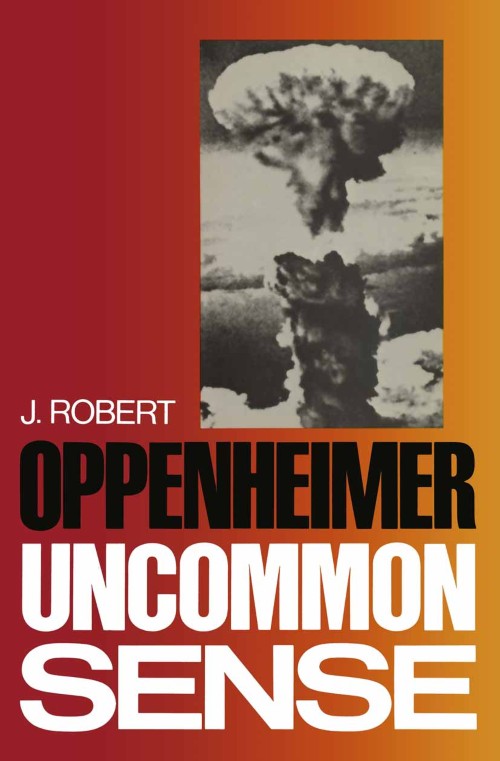
"I think that we will not be very successful in discouraging other power from this course [of a nuclear military program] unless we show, by our own example and conviction, that we regard nuclear armament as a transitory, dangerous, and degrading phase of the world’s history…" These words could have been said today; that they were said more than twenty years ago, by one of the "fathers" of the atom bomb, gives them even greater impact. J. Robert Oppenheimer, a leading physicist in the Manhattan Project, recognized that scientific inquiry and discovery could no longer be separated from their effect on political decision-making, social responsibility, and human endeavor in general. He openly addressed issues of common concern and as a scientist accepted the responsibility brought about by nuclear physics. This collection of essays and speeches, only a few of which have been previously published, presents an extraordinary thinker and scientist as well as a compassionatehuman being. No issue is too small or too large if it is in some way connected to the emergence of a weapon as terrible and powerful as the atom bomb. Oppenheimer discusses the shift in scientific awareness and its impact on education, the question of openness in a society forced to keep secrets, the conflict between individual concerns and public and political necessity, the future of science and its effects on future politics---in short, the common and uncommon sense we find in our modern day reality. Uncommon Sense presents a responsible scientist and a concerned man who foresaw the problems the discovery of fission would create. And we should no neglect to read between the lines: The peak of Oppenheimer’s career coincided with the McCarthy era, the repercussions of which strongly affected his personal and professional life. The themes of openness and freedom becomes, therefore, recurring concerns in this collection of essays and speeches.
Konu
Technology __ Philosophy.
Science __ Philosophy.
Physics __ Philosophy.
Nuclear physics.
Engineering.
Life sciences.
Philosophy of Technology.
Philosophy of Science.
Philosophical Foundations of Physics and Astronomy.
Nuclear Physics.
Technology and Engineering.
Life Sciences.
Science __ Philosophy.
Physics __ Philosophy.
Nuclear physics.
Engineering.
Life sciences.
Philosophy of Technology.
Philosophy of Science.
Philosophical Foundations of Physics and Astronomy.
Nuclear Physics.
Technology and Engineering.
Life Sciences.
Kurum Adı
Eseri Alıntıla
Referansları kullanmadan önce gözden geçirmeniz ve varsa gerekli düzeltmeleri yapmanız önerilir.
Dijital Kaynak
MARC Görünümü
LEADER 05363nam a22006495i 4500
001 812993
003 TR_AnAIT
005 20260130232226
007 cr nn 008mamaa
008 120229s1984 xxu| s |||| 0|eng d
020 |a9781468467352|9978-1-4684-6735-2
024 7 |a10.1007/978-1-4684-6735-2|2doi
041 |aeng
049 |aTürk Tarih Kurumu Kütüphanesi
050 4|aT14
072 7|aHP|2bicssc
072 7|aTB|2bicssc
072 7|aSCI075000|2bisacsh
072 7|aQD|2thema
072 7|aTB|2thema
082 04|a601|223
090 |aDK/14238
100 1 |aOppenheimer, J. Robert.|eauthor.|4aut|4http://id.loc.gov/vocabulary/relators/aut
245 10|aUncommon Sense|h[electronic resource] /|cby J. Robert Oppenheimer.
250 |a1st ed. 1984.
264 1|aBoston, MA :|bBirkhäuser Boston :|bImprint: Birkhäuser,|c1984.
300 |aX, 196 p. 17 illus.|bonline resource.
336 |atext|btxt|2rdacontent
337 |acomputer|bc|2rdamedia
338 |aonline resource|bcr|2rdacarrier
347 |atext file|bPDF|2rda
505 0 |a1 Travelling to a Land We Cannot See -- 2 The Open Mind -- 3 Science in Being, Research and the Liberal University -- 4 The Consequences of Action -- 5 I. Uncommon Sense -- II. An Open House -- 6 Prospects in the Arts and Sciences -- 7 An Inward Look -- 8 Tradition and Discovery -- 9 Progress in Freedom -- 10 On Science and Culture -- 11 The Power to Act The Scientific Revolution and its Effects on Democratic Institutions -- 12 A World Without War -- 13 L’Intime et le Comun—the Intimate and the Open -- 14 To Live with Ourselves -- 15 Physics and Man’s Understanding, For the Smithsonian Institution Bicentennial -- 16 A Time in Need -- Acknowledgements and Bibliography.
520 |a"I think that we will not be very successful in discouraging other power from this course [of a nuclear military program] unless we show, by our own example and conviction, that we regard nuclear armament as a transitory, dangerous, and degrading phase of the world’s history…" These words could have been said today; that they were said more than twenty years ago, by one of the "fathers" of the atom bomb, gives them even greater impact. J. Robert Oppenheimer, a leading physicist in the Manhattan Project, recognized that scientific inquiry and discovery could no longer be separated from their effect on political decision-making, social responsibility, and human endeavor in general. He openly addressed issues of common concern and as a scientist accepted the responsibility brought about by nuclear physics. This collection of essays and speeches, only a few of which have been previously published, presents an extraordinary thinker and scientist as well as a compassionatehuman being. No issue is too small or too large if it is in some way connected to the emergence of a weapon as terrible and powerful as the atom bomb. Oppenheimer discusses the shift in scientific awareness and its impact on education, the question of openness in a society forced to keep secrets, the conflict between individual concerns and public and political necessity, the future of science and its effects on future politics---in short, the common and uncommon sense we find in our modern day reality. Uncommon Sense presents a responsible scientist and a concerned man who foresaw the problems the discovery of fission would create. And we should no neglect to read between the lines: The peak of Oppenheimer’s career coincided with the McCarthy era, the repercussions of which strongly affected his personal and professional life. The themes of openness and freedom becomes, therefore, recurring concerns in this collection of essays and speeches.
532 8 |aAccessibility summary: This PDF is not accessible. It is based on scanned pages and does not support features such as screen reader compatibility or described non-text content (images, graphs etc). However, it likely supports searchable and selectable text based on OCR (Optical Character Recognition). Users with accessibility needs may not be able to use this content effectively. Please contact us at accessibilitysupport@springernature.com if you require assistance or an alternative format.
532 8 |aInaccessible, or known limited accessibility
532 8 |aNo reading system accessibility options actively disabled
532 8 |aPublisher contact for further accessibility information: accessibilitysupport@springernature.com
650 0|aTechnology|xPhilosophy.
650 0|aScience|xPhilosophy.
650 0|aPhysics|xPhilosophy.
650 0|aNuclear physics.
650 0|aEngineering.
650 0|aLife sciences.
650 14|aPhilosophy of Technology.
650 24|aPhilosophy of Science.
650 24|aPhilosophical Foundations of Physics and Astronomy.
650 24|aNuclear Physics.
650 24|aTechnology and Engineering.
650 24|aLife Sciences.
710 2 |aSpringerLink (Online service)
773 0 |tSpringer Nature eBook
776 08|iPrinted edition:|z9780817631659
776 08|iPrinted edition:|z9781468467369
776 08|iPrinted edition:|z9781468467376
856 40|uhttps://doi.org/10.1007/978-1-4684-6735-2
912 |aZDB-2-SHU
912 |aZDB-2-SXPR
912 |aZDB-2-BAE
950 |aHumanities, Social Sciences and Law (SpringerNature-11648)
950 |aPhilosophy and Religion (R0) (SpringerNature-43725)
001 812993
003 TR_AnAIT
005 20260130232226
007 cr nn 008mamaa
008 120229s1984 xxu| s |||| 0|eng d
020 |a9781468467352|9978-1-4684-6735-2
024 7 |a10.1007/978-1-4684-6735-2|2doi
041 |aeng
049 |aTürk Tarih Kurumu Kütüphanesi
050 4|aT14
072 7|aHP|2bicssc
072 7|aTB|2bicssc
072 7|aSCI075000|2bisacsh
072 7|aQD|2thema
072 7|aTB|2thema
082 04|a601|223
090 |aDK/14238
100 1 |aOppenheimer, J. Robert.|eauthor.|4aut|4http://id.loc.gov/vocabulary/relators/aut
245 10|aUncommon Sense|h[electronic resource] /|cby J. Robert Oppenheimer.
250 |a1st ed. 1984.
264 1|aBoston, MA :|bBirkhäuser Boston :|bImprint: Birkhäuser,|c1984.
300 |aX, 196 p. 17 illus.|bonline resource.
336 |atext|btxt|2rdacontent
337 |acomputer|bc|2rdamedia
338 |aonline resource|bcr|2rdacarrier
347 |atext file|bPDF|2rda
505 0 |a1 Travelling to a Land We Cannot See -- 2 The Open Mind -- 3 Science in Being, Research and the Liberal University -- 4 The Consequences of Action -- 5 I. Uncommon Sense -- II. An Open House -- 6 Prospects in the Arts and Sciences -- 7 An Inward Look -- 8 Tradition and Discovery -- 9 Progress in Freedom -- 10 On Science and Culture -- 11 The Power to Act The Scientific Revolution and its Effects on Democratic Institutions -- 12 A World Without War -- 13 L’Intime et le Comun—the Intimate and the Open -- 14 To Live with Ourselves -- 15 Physics and Man’s Understanding, For the Smithsonian Institution Bicentennial -- 16 A Time in Need -- Acknowledgements and Bibliography.
520 |a"I think that we will not be very successful in discouraging other power from this course [of a nuclear military program] unless we show, by our own example and conviction, that we regard nuclear armament as a transitory, dangerous, and degrading phase of the world’s history…" These words could have been said today; that they were said more than twenty years ago, by one of the "fathers" of the atom bomb, gives them even greater impact. J. Robert Oppenheimer, a leading physicist in the Manhattan Project, recognized that scientific inquiry and discovery could no longer be separated from their effect on political decision-making, social responsibility, and human endeavor in general. He openly addressed issues of common concern and as a scientist accepted the responsibility brought about by nuclear physics. This collection of essays and speeches, only a few of which have been previously published, presents an extraordinary thinker and scientist as well as a compassionatehuman being. No issue is too small or too large if it is in some way connected to the emergence of a weapon as terrible and powerful as the atom bomb. Oppenheimer discusses the shift in scientific awareness and its impact on education, the question of openness in a society forced to keep secrets, the conflict between individual concerns and public and political necessity, the future of science and its effects on future politics---in short, the common and uncommon sense we find in our modern day reality. Uncommon Sense presents a responsible scientist and a concerned man who foresaw the problems the discovery of fission would create. And we should no neglect to read between the lines: The peak of Oppenheimer’s career coincided with the McCarthy era, the repercussions of which strongly affected his personal and professional life. The themes of openness and freedom becomes, therefore, recurring concerns in this collection of essays and speeches.
532 8 |aAccessibility summary: This PDF is not accessible. It is based on scanned pages and does not support features such as screen reader compatibility or described non-text content (images, graphs etc). However, it likely supports searchable and selectable text based on OCR (Optical Character Recognition). Users with accessibility needs may not be able to use this content effectively. Please contact us at accessibilitysupport@springernature.com if you require assistance or an alternative format.
532 8 |aInaccessible, or known limited accessibility
532 8 |aNo reading system accessibility options actively disabled
532 8 |aPublisher contact for further accessibility information: accessibilitysupport@springernature.com
650 0|aTechnology|xPhilosophy.
650 0|aScience|xPhilosophy.
650 0|aPhysics|xPhilosophy.
650 0|aNuclear physics.
650 0|aEngineering.
650 0|aLife sciences.
650 14|aPhilosophy of Technology.
650 24|aPhilosophy of Science.
650 24|aPhilosophical Foundations of Physics and Astronomy.
650 24|aNuclear Physics.
650 24|aTechnology and Engineering.
650 24|aLife Sciences.
710 2 |aSpringerLink (Online service)
773 0 |tSpringer Nature eBook
776 08|iPrinted edition:|z9780817631659
776 08|iPrinted edition:|z9781468467369
776 08|iPrinted edition:|z9781468467376
856 40|uhttps://doi.org/10.1007/978-1-4684-6735-2
912 |aZDB-2-SHU
912 |aZDB-2-SXPR
912 |aZDB-2-BAE
950 |aHumanities, Social Sciences and Law (SpringerNature-11648)
950 |aPhilosophy and Religion (R0) (SpringerNature-43725)
Materyaller
Depodan talep edilen materyal sadece kütüphane içerisinde kullanılmaktadır.
Materyal dışarıya ödünç verilmemektedir.
Materyal dışarıya ödünç verilmemektedir.
