LEADER 03977nam a22004575i 4500
001 813018
003 TR_AnAIT
005 20260130232146
007 cr nn 008mamaa
008 151030s2015 ne | s |||| 0|eng d
020 |a9789463002684|9978-94-6300-268-4
024 7 |a10.1007/978-94-6300-268-4|2doi
041 |aeng
049 |aTürk Tarih Kurumu Kütüphanesi
050 4|aL1-991
072 7|aJN|2bicssc
072 7|aEDU000000|2bisacsh
072 7|aJN|2thema
082 04|a370|223
090 |aDK/14263
100 1 |aSharpe, Hillary.|eauthor.|4aut|4http://id.loc.gov/vocabulary/relators/aut
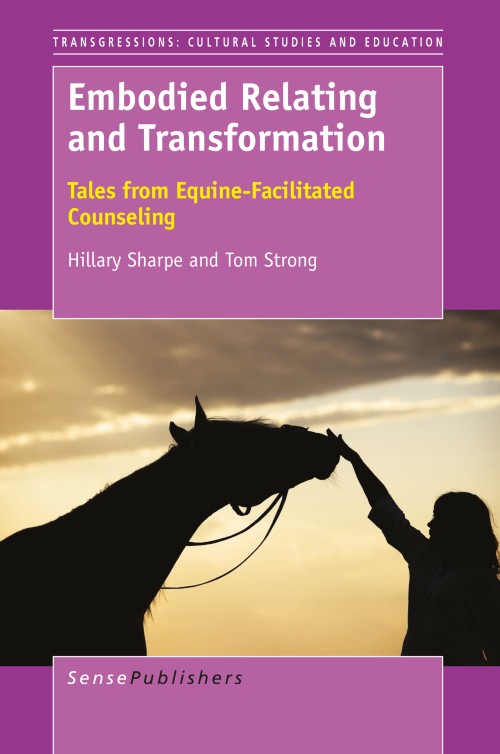
245 10|aEmbodied Relating and Transformation|h[electronic resource] :|bTales from Equine-Facilitated Counseling /|cby Hillary Sharpe, Tom Strong.
250 |a1st ed. 2015.
264 1|aRotterdam :|bSensePublishers :|bImprint: SensePublishers,|c2015.
300 |aVIII, 136 p.|bonline resource.
336 |atext|btxt|2rdacontent
337 |acomputer|bc|2rdamedia
338 |aonline resource|bcr|2rdacarrier
347 |atext file|bPDF|2rda
490 1 |aTransgressions, Cultural Studies and Education ,|x2214-9740 ;|v94
520 |a"What kinds of embodied and relational learning can come from developing a responsive relationship with a horse? What insights might such ways of learning offer counselors and educators? In this book, the authors explore how women challenged by disordered eating develop transformative relational and embodied experiences through Equine-Facilitated Counseling (EFC). Embodiment refers to how we engage with others and the world in often habitual and taken for granted ways that shape who we are and the relationships we have. These habitual ways of being provide us with a sense of stability, but they can sometimes become constraining and problematic (as in the case of eating disorders). Our corporeal engagement with the world structures such habits, but it can also afford us opportunities to experiment, modify, and challenge problematic patterns, and in some instances, create new and preferred ones. The horses that participate in EFC present a vastly different sort of other who can help clients interrupt their sedimented ways of being and foster moments of responsivity that hold the power to become transformative. This theoretical context presents a different way of thinking about and practicing counseling – one that adds to a growing language of embodiment across a variety of disciplines. Chapters set forth a theoretical context for understanding the following: relationally embodied processes of stability and change, EFC, client stories from our research associated with riding horses in EFC, and implications we see for practice across different healing and learning contexts. ".
532 8 |aAccessibility summary: This PDF eBook is produced by a third-party. We have requested that the file be made accessible and compliant with the European Accessibility Act (EAA). However, we have not been able to fully verify its compliance with recognized accessibility standards (such as PDF/UA or WCAG). For detailed accessibility information, please refer to the original publisher’s website. If you require an accessible version of this content, please contact accessibilitysupport@springernature.com. We are committed to improving accessibility and will work with the publisher to meet your needs wherever possible.
532 8 |aPublisher contact for further accessibility information: accessibilitysupport@springernature.com
650 0|aEducation.
650 14|aEducation.
700 1 |aStrong, Tom.|eauthor.|4aut|4http://id.loc.gov/vocabulary/relators/aut
710 2 |aSpringerLink (Online service)
773 0 |tSpringer Nature eBook
830 0|aTransgressions, Cultural Studies and Education ,|x2214-9740 ;|v94
856 40|uhttps://doi.org/10.1007/978-94-6300-268-4
912 |aZDB-2-SHU
912 |aZDB-2-SXED
950 |aHumanities, Social Sciences and Law (SpringerNature-11648)
950 |aEducation (R0) (SpringerNature-43721)