LEADER 04209nam a22006015i 4500
001 813057
003 TR_AnAIT
005 20260130232024
007 cr nn 008mamaa
008 130824s1986 xxu| s |||| 0|eng d
020 |a9781489935298|9978-1-4899-3529-8
024 7 |a10.1007/978-1-4899-3529-8|2doi
041 |aeng
049 |aTürk Tarih Kurumu Kütüphanesi
050 4|aT1-995
072 7|aTBC|2bicssc
072 7|aTEC000000|2bisacsh
072 7|aTBC|2thema
082 04|a620|223
090 |aDK/14302
100 1 |aKLOTZ.|eauthor.|4aut|4http://id.loc.gov/vocabulary/relators/aut
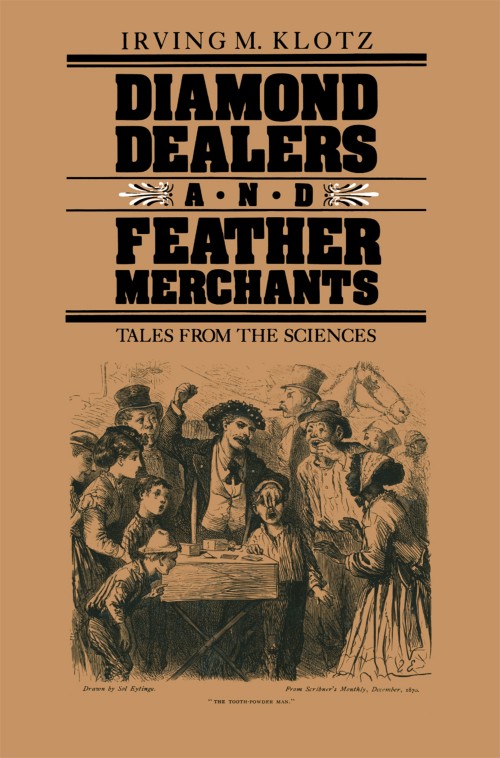
245 10|aDiamond Dealers and Feather Merchants|h[electronic resource] :|bTales from the Sciences /|cby KLOTZ.
250 |a1st ed. 1986.
264 1|aBoston, MA :|bBirkhäuser Boston :|bImprint: Birkhäuser,|c1986.
300 |aX, 120 p. 42 illus.|bonline resource.
336 |atext|btxt|2rdacontent
337 |acomputer|bc|2rdamedia
338 |aonline resource|bcr|2rdacarrier
347 |atext file|bPDF|2rda
505 0 |aBending Perception to Wish: The Future as Froth and Fantasy -- The Clouded Crystal Ball: Creases of the Mind -- Great Discoveries Not Mentioned in Textbooks: N Rays -- Grand Illusions: Russian Water -- People Yearn to Believe: Dr. Fox Experiments -- Epilogue.
520 |aTo paraphrase Saul Bellow, it is extremely difficult to escape from the conceptual bottles into which we have been processed, or even to become aware that we are confined within them. Anthro pocentrism, an ancient tradition, is an intellectual constraint that has continually impeded objective probing of the universe around and within us. We are probably born with that constriction, perhaps as a result of evolutionary selection or because each of us has been created in the image of the Deity. But it is only the core of our mental "gestalt. " Around it we find additional shells of intellectual obstruc tions deposited by accretion from our family, our teachers, our experi ences and the society in which we are immersed. It is very hazardous to embrace novel scientific ideas. Personal and social experiences show that the vast majority turn out to be failures. What standards can one use to make judgments? There is a universal tendency to rely on "common sense;" but as Einstein pointed out, this is a collection of views, sensible or not, imprinted in us before the age of sixteen. I have found it a challenge to convince young students that much of what they are certain about and, in fact, correct about, is actually contrary to common sense. For example, on any bright day, anyone who is not blind or an idiot can see the sun literally moving around the earth, from east to west.
532 8 |aAccessibility summary: This PDF is not accessible. It is based on scanned pages and does not support features such as screen reader compatibility or described non-text content (images, graphs etc). However, it likely supports searchable and selectable text based on OCR (Optical Character Recognition). Users with accessibility needs may not be able to use this content effectively. Please contact us at accessibilitysupport@springernature.com if you require assistance or an alternative format.
532 8 |aInaccessible, or known limited accessibility
532 8 |aNo reading system accessibility options actively disabled
532 8 |aPublisher contact for further accessibility information: accessibilitysupport@springernature.com
650 0|aEngineering.
650 0|aLife sciences.
650 0|aSocial sciences.
650 0|aHumanities.
650 0|aScience.
650 0|aMathematics.
650 14|aTechnology and Engineering.
650 24|aLife Sciences.
650 24|aHumanities and Social Sciences.
650 24|aPhysical Sciences.
650 24|aMathematics and Computing.
710 2 |aSpringerLink (Online service)
773 0 |tSpringer Nature eBook
776 08|iPrinted edition:|z9780817633035
776 08|iPrinted edition:|z9781489935304
856 40|uhttps://doi.org/10.1007/978-1-4899-3529-8
912 |aZDB-2-SHU
912 |aZDB-2-SXH
912 |aZDB-2-BAE
950 |aHumanities, Social Sciences and Law (SpringerNature-11648)
950 |aHistory (R0) (SpringerNature-43722)