LEADER 04087nam a22005415i 4500
001 813235
003 TR_AnAIT
005 20260130230824
007 cr nn 008mamaa
008 121227s1973 ne | s |||| 0|eng d
020 |a9789401026192|9978-94-010-2619-2
024 7 |a10.1007/978-94-010-2619-2|2doi
041 |aeng
049 |aTürk Tarih Kurumu Kütüphanesi
050 4|aD1-2027
072 7|aHB|2bicssc
072 7|aHBAH|2bicssc
072 7|aHIS000000|2bisacsh
072 7|aNH|2thema
072 7|aNHAH|2thema
082 04|a900|223
090 |aDK/14480
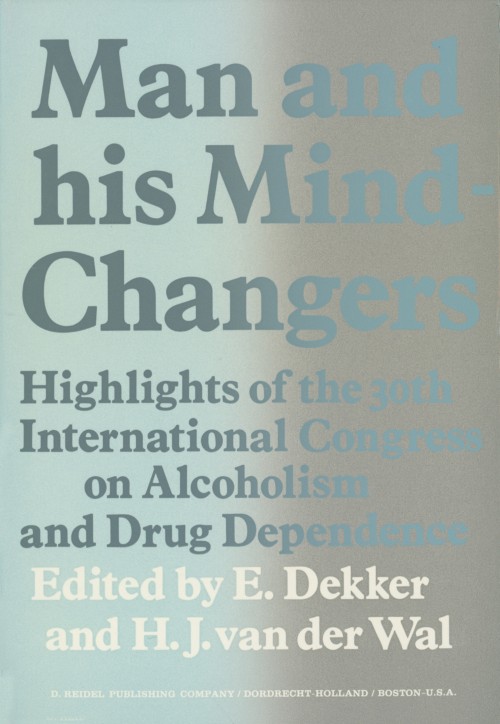
245 10|aMan and His Mind-Changers|h[electronic resource] :|bHighlights of the 30th International Congress on Alcoholism and Drug Dependence, Amsterdam, September 4–9, 1972 /|cedited by E. Dekker, H.J. van der Wal.
250 |a1st ed. 1973.
264 1|aDordrecht :|bSpringer Netherlands :|bImprint: Springer,|c1973.
300 |a102 p.|bonline resource.
336 |atext|btxt|2rdacontent
337 |acomputer|bc|2rdamedia
338 |aonline resource|bcr|2rdacarrier
347 |atext file|bPDF|2rda
505 0 |aOpening Address -- Where are We, What is Permitted, What is the Impact? -- The Cannabis Discussion -- The Social Policy Panel -- Evaluation of the Congress.
520 |a"We ourselves are part of the problem, not ofits solution". This pronouncement, made by psychologist R. S. B. Wiener during the panel on social policy, provided a leading Dutch weekly with an excellent headline for an article on the 30th International Congress on Alcoholism and Drug Dependence. With it Wiener touched one of the central, if not the central issue of the alcohol and drug problem. Why do we fix our attention so emphatically on 'the other people', on the consumers, abusers and addicts? Has not the time come that, also at scientific and learned congresses, we should start occupying ourselves with the shortcomings of society and with its legislation and policy as factors promoting this abuse and addiction? The question is so obvious that no one will dare give a neg ative answer. For this reason it is even more striking that it is given so little serious thought. We still try to change the consumer instead of the social structure. In his opening address, the Minister of Public Health and Environmental Hygiene of the Netherlands, Dr 1. B. J. Stuyt, gave some attention to this social structure. He pointed out that a social structure which is characterized by poverty and deprivation promotes the abuse of alcohol. Dekker/van der Wal (eds. ). Man and His Mind-Changers. 1-9. All Rights Reserved. Copyright © 1973 by D. Reidel Publishing Company. Dordrecht-Holland 2 E. DEKKER AND H. J.
532 8 |aAccessibility summary: This PDF is not accessible. It is based on scanned pages and does not support features such as screen reader compatibility or described non-text content (images, graphs etc). However, it likely supports searchable and selectable text based on OCR (Optical Character Recognition). Users with accessibility needs may not be able to use this content effectively. Please contact us at accessibilitysupport@springernature.com if you require assistance or an alternative format.
532 8 |aInaccessible, or known limited accessibility
532 8 |aNo reading system accessibility options actively disabled
532 8 |aPublisher contact for further accessibility information: accessibilitysupport@springernature.com
650 0|aHistory.
650 14|aHistory.
700 1 |aDekker, E.|eeditor.|4edt|4http://id.loc.gov/vocabulary/relators/edt
700 1 |avan der Wal, H.J.|eeditor.|4edt|4http://id.loc.gov/vocabulary/relators/edt
710 2 |aSpringerLink (Online service)
773 0 |tSpringer Nature eBook
776 08|iPrinted edition:|z9789027703569
776 08|iPrinted edition:|z9789401026208
776 08|iPrinted edition:|z9789401026215
856 40|uhttps://doi.org/10.1007/978-94-010-2619-2
912 |aZDB-2-SHU
912 |aZDB-2-SXH
912 |aZDB-2-BAE
950 |aHumanities, Social Sciences and Law (SpringerNature-11648)
950 |aHistory (R0) (SpringerNature-43722)