LEADER 04099nam a22005655i 4500
001 813460
003 TR_AnAIT
005 20260130225333
007 cr nn 008mamaa
008 121227s1990 ne | s |||| 0|eng d
020 |a9789400907539|9978-94-009-0753-9
024 7 |a10.1007/978-94-009-0753-9|2doi
041 |aeng
049 |aTürk Tarih Kurumu Kütüphanesi
050 4|aH1-99
050 4|aAZ19.2-999
072 7|aGT|2bicssc
072 7|aNON000000|2bisacsh
072 7|aGT|2thema
082 04|a300|223
082 04|a001.3|223
090 |aDK/14702
100 1 |aHudson, B. J.|eauthor.|4aut|4http://id.loc.gov/vocabulary/relators/aut
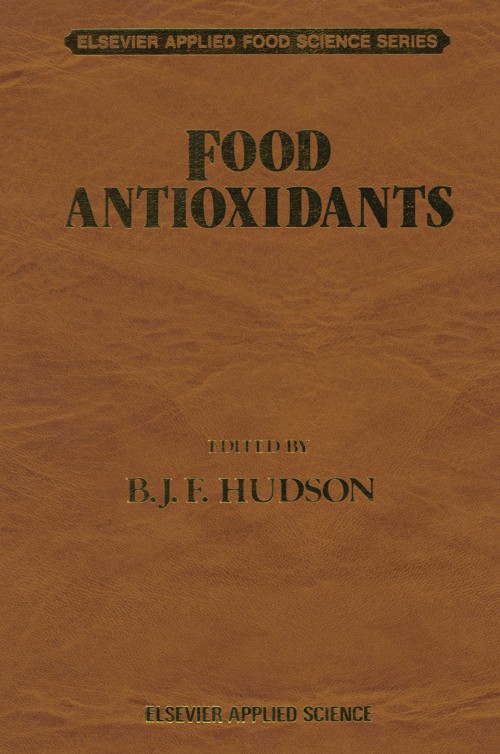
245 10|aFood Antioxidants|h[electronic resource] /|cby B. J. Hudson.
250 |a1st ed. 1990.
264 1|aDordrecht :|bSpringer Netherlands :|bImprint: Springer,|c1990.
300 |aXII, 317 p.|bonline resource.
336 |atext|btxt|2rdacontent
337 |acomputer|bc|2rdamedia
338 |aonline resource|bcr|2rdacarrier
347 |atext file|bPDF|2rda
490 1 |aElsevier Applied Food Science Series
505 0 |a1. The Mechanism of Antioxidant Action in vitro -- 2. Detection, Estimation and Evaluation of Antioxidants in Food Systems -- 3. Chemistry and Implications of Degradation of Phenolic Antioxidants -- 4. Natural Antioxidants Exploited Commercially -- 5. Natural Antioxidants not Exploited Commercially -- 6. Biological Effects of Food Antioxidants -- 7. Toxicological Aspects of Antioxidants Used as Food Additives.
520 |aAntioxidants are present naturally in virtually all food commodities, providing them with a valuable degree of protection against oxidative attack. When food commodities are subjected to processing, such natural antioxidants are often depleted, whether physically, from the nature of the process itself, or by chemical degradation. In conse quence, processed food products usually keep less well than do the commodities from which they originated. Ideally, food producers would like them to keep better. This objective can often be achieved by blending natural products rich in antioxidants with processed foods, or by using well recognised antioxidants as food additives. In order to understand their action, and hence to apply antioxidants intelligently in food product formulation, some knowledge of the mechanisms by which they function is necessary. This is complex and of antioxidative may rely on one or more of several alternative forms intervention. Accordingly, the various mechanisms that may be relevant are discussed in Chapter 1, in each case including the 'intervention' mechanism. When present in, or added to, foods antioxidants are functional in very small quantities, typically, perhaps, at levels of 0·01 % or less.
532 8 |aAccessibility summary: This PDF is not accessible. It is based on scanned pages and does not support features such as screen reader compatibility or described non-text content (images, graphs etc). However, it likely supports searchable and selectable text based on OCR (Optical Character Recognition). Users with accessibility needs may not be able to use this content effectively. Please contact us at accessibilitysupport@springernature.com if you require assistance or an alternative format.
532 8 |aInaccessible, or known limited accessibility
532 8 |aNo reading system accessibility options actively disabled
532 8 |aPublisher contact for further accessibility information: accessibilitysupport@springernature.com
650 0|aSocial sciences.
650 0|aHumanities.
650 14|aHumanities and Social Sciences.
710 2 |aSpringerLink (Online service)
773 0 |tSpringer Nature eBook
776 08|iPrinted edition:|z9781851664405
776 08|iPrinted edition:|z9789400907546
776 08|iPrinted edition:|z9789401068246
830 0|aElsevier Applied Food Science Series
856 40|uhttps://doi.org/10.1007/978-94-009-0753-9
912 |aZDB-2-SHU
912 |aZDB-2-SXH
912 |aZDB-2-BAE
950 |aHumanities, Social Sciences and Law (SpringerNature-11648)
950 |aHistory (R0) (SpringerNature-43722)