

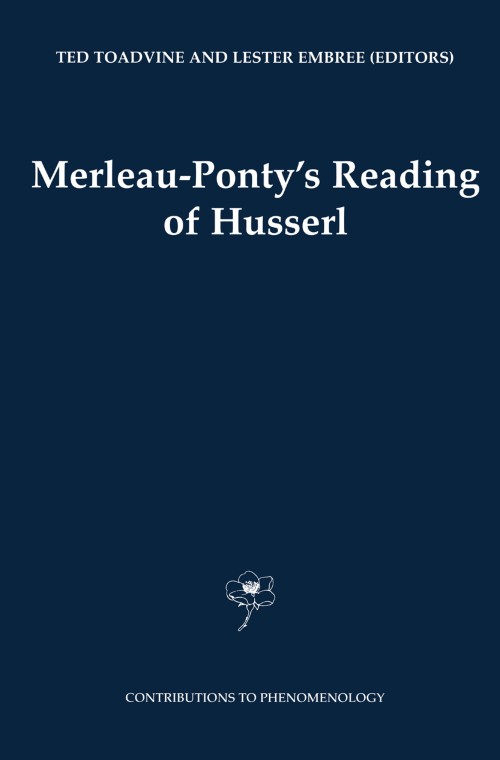
Merleau-Ponty's Reading of Husserl [electronic resource] / edited by Ted Toadvine, Lester Embree.
Erişim Adresi
ISBN
9789401599443
Dil Kodu
İngilizce
Yer Numarası
DK/14855
Basım Bildirimi
1st ed. 2002.
Yayın Bilgisi
Dordrecht : Springer Netherlands : Imprint: Springer, 2002.
Fiziksel Niteleme
XXVI, 301 p. online resource.
Dizi
Contributions to Phenomenology, In Cooperation with The Center for Advanced Research in Phenomenology, 2215-1915 ; 45
İçindekiler Notu
I. Merleau-Ponty as a Reader of Husserl -- 1. Merleau-Ponty on Husserl: A Reappraisal -- 2. Merleau-Ponty’s Ontological Reading of Constitution in Phénoménologie de la perception -- 3. The Phenomenological Movement: A Tradition without Method? Merleau-Ponty and Husserl -- II. Phenomenology and Method in Merleau-Ponty -- 4: Leaving Husserl’s Cave? The Philosopher’s Shadow Revisited -- 5. From Dialectic to Reversibility: A Critical Change of Subject-Object Relation in Merleau-Ponty’s Thought -- 6. What about the praxis of Reduction? Between Husserl and Merleau-Ponty -- 7. From Decisions to Passions: Merleau-Ponty’s Interpretation of Husserl’s Reduction -- III. Legacy and Tradition -- 8. The Time of Half-Sleep: Merleau-Ponty between Husserl and Proust -- 9. Eugen Fink and Maurice Merleau-Ponty: The Philosophical Lineage in Phenomenology -- 10. The Legacy of Husserl’ s “Ursprung der Geometrie”: The Limits of Phenomenology in Merleau-Ponty and Derrida -- 11. Merleau-Ponty’s Reading of Husserl: A Chronological Overview -- Notes on Contributors.
Özet, vb.
Merleau-Ponty's Reading of Husserl explores the relationship between two of the greatest thinkers of the twentieth century: Edmund Husserl, the father of modern phenomenology, and Maurice Merleau-Ponty, considered by many to be his greatest philosophical heir. While Merleau-Ponty's influence on the dissemination and reception of Husserl's thought is indisputable, unresolved questions remain concerning the philosophical projects of these two thinkers: Does phenomenology first reach its true potential in Merleau-Ponty's hands, guided by his appreciation of the tacit goals underlying Husserl's philosophical project? Or is Merleau-Ponty's phenomenology a creative but ultimately misdirected appropriation of Husserl's work? In this volume, the first devoted to a comparison of the work of these two philosophers, ten leading scholars draw on the latest research and newly available manuscripts to offer novel insights into Merleau-Ponty's reading of Husserl - with implications for our understanding of phenomenology's significance, its method, and the future of philosophy.
Konu
Phenomenology .
Philosophy, Modern.
Philosophy __ History.
Phenomenology.
Early Modern Philosophy.
History of Philosophy.
Philosophy, Modern.
Philosophy __ History.
Phenomenology.
Early Modern Philosophy.
History of Philosophy.
Diğer Yazarlar
Kurum Adı
Eseri Alıntıla
Referansları kullanmadan önce gözden geçirmeniz ve varsa gerekli düzeltmeleri yapmanız önerilir.
Dijital Kaynak
MARC Görünümü
LEADER 04983nam a22005895i 4500
001 813613
003 TR_AnAIT
005 20260130224301
007 cr nn 008mamaa
008 121230s2002 ne | s |||| 0|eng d
020 |a9789401599443|9978-94-015-9944-3
024 7 |a10.1007/978-94-015-9944-3|2doi
041 |aeng
049 |aTürk Tarih Kurumu Kütüphanesi
050 4|aB829.5.A-Z
072 7|aHPCF3|2bicssc
072 7|aPHI018000|2bisacsh
072 7|aQDHR5|2thema
082 04|a142.7|223
090 |aDK/14855
245 10|aMerleau-Ponty's Reading of Husserl|h[electronic resource] /|cedited by Ted Toadvine, Lester Embree.
250 |a1st ed. 2002.
264 1|aDordrecht :|bSpringer Netherlands :|bImprint: Springer,|c2002.
300 |aXXVI, 301 p.|bonline resource.
336 |atext|btxt|2rdacontent
337 |acomputer|bc|2rdamedia
338 |aonline resource|bcr|2rdacarrier
347 |atext file|bPDF|2rda
490 1 |aContributions to Phenomenology, In Cooperation with The Center for Advanced Research in Phenomenology,|x2215-1915 ;|v45
505 0 |aI. Merleau-Ponty as a Reader of Husserl -- 1. Merleau-Ponty on Husserl: A Reappraisal -- 2. Merleau-Ponty’s Ontological Reading of Constitution in Phénoménologie de la perception -- 3. The Phenomenological Movement: A Tradition without Method? Merleau-Ponty and Husserl -- II. Phenomenology and Method in Merleau-Ponty -- 4: Leaving Husserl’s Cave? The Philosopher’s Shadow Revisited -- 5. From Dialectic to Reversibility: A Critical Change of Subject-Object Relation in Merleau-Ponty’s Thought -- 6. What about the praxis of Reduction? Between Husserl and Merleau-Ponty -- 7. From Decisions to Passions: Merleau-Ponty’s Interpretation of Husserl’s Reduction -- III. Legacy and Tradition -- 8. The Time of Half-Sleep: Merleau-Ponty between Husserl and Proust -- 9. Eugen Fink and Maurice Merleau-Ponty: The Philosophical Lineage in Phenomenology -- 10. The Legacy of Husserl’ s “Ursprung der Geometrie”: The Limits of Phenomenology in Merleau-Ponty and Derrida -- 11. Merleau-Ponty’s Reading of Husserl: A Chronological Overview -- Notes on Contributors.
520 |aMerleau-Ponty's Reading of Husserl explores the relationship between two of the greatest thinkers of the twentieth century: Edmund Husserl, the father of modern phenomenology, and Maurice Merleau-Ponty, considered by many to be his greatest philosophical heir. While Merleau-Ponty's influence on the dissemination and reception of Husserl's thought is indisputable, unresolved questions remain concerning the philosophical projects of these two thinkers: Does phenomenology first reach its true potential in Merleau-Ponty's hands, guided by his appreciation of the tacit goals underlying Husserl's philosophical project? Or is Merleau-Ponty's phenomenology a creative but ultimately misdirected appropriation of Husserl's work? In this volume, the first devoted to a comparison of the work of these two philosophers, ten leading scholars draw on the latest research and newly available manuscripts to offer novel insights into Merleau-Ponty's reading of Husserl - with implications for our understanding of phenomenology's significance, its method, and the future of philosophy.
532 8 |aAccessibility summary: This PDF is not accessible. It is based on scanned pages and does not support features such as screen reader compatibility or described non-text content (images, graphs etc). However, it likely supports searchable and selectable text based on OCR (Optical Character Recognition). Users with accessibility needs may not be able to use this content effectively. Please contact us at accessibilitysupport@springernature.com if you require assistance or an alternative format.
532 8 |aInaccessible, or known limited accessibility
532 8 |aNo reading system accessibility options actively disabled
532 8 |aPublisher contact for further accessibility information: accessibilitysupport@springernature.com
650 0|aPhenomenology .
650 0|aPhilosophy, Modern.
650 0|aPhilosophy|xHistory.
650 14|aPhenomenology.
650 24|aEarly Modern Philosophy.
650 24|aHistory of Philosophy.
700 1 |aToadvine, Ted.|eeditor.|4edt|4http://id.loc.gov/vocabulary/relators/edt
700 1 |aEmbree, Lester.|eeditor.|4edt|4http://id.loc.gov/vocabulary/relators/edt
710 2 |aSpringerLink (Online service)
773 0 |tSpringer Nature eBook
776 08|iPrinted edition:|z9781402004698
776 08|iPrinted edition:|z9789048159536
776 08|iPrinted edition:|z9789401599450
830 0|aContributions to Phenomenology, In Cooperation with The Center for Advanced Research in Phenomenology,|x2215-1915 ;|v45
856 40|uhttps://doi.org/10.1007/978-94-015-9944-3
912 |aZDB-2-SHU
912 |aZDB-2-SXPR
912 |aZDB-2-BAE
950 |aHumanities, Social Sciences and Law (SpringerNature-11648)
950 |aPhilosophy and Religion (R0) (SpringerNature-43725)
001 813613
003 TR_AnAIT
005 20260130224301
007 cr nn 008mamaa
008 121230s2002 ne | s |||| 0|eng d
020 |a9789401599443|9978-94-015-9944-3
024 7 |a10.1007/978-94-015-9944-3|2doi
041 |aeng
049 |aTürk Tarih Kurumu Kütüphanesi
050 4|aB829.5.A-Z
072 7|aHPCF3|2bicssc
072 7|aPHI018000|2bisacsh
072 7|aQDHR5|2thema
082 04|a142.7|223
090 |aDK/14855
245 10|aMerleau-Ponty's Reading of Husserl|h[electronic resource] /|cedited by Ted Toadvine, Lester Embree.
250 |a1st ed. 2002.
264 1|aDordrecht :|bSpringer Netherlands :|bImprint: Springer,|c2002.
300 |aXXVI, 301 p.|bonline resource.
336 |atext|btxt|2rdacontent
337 |acomputer|bc|2rdamedia
338 |aonline resource|bcr|2rdacarrier
347 |atext file|bPDF|2rda
490 1 |aContributions to Phenomenology, In Cooperation with The Center for Advanced Research in Phenomenology,|x2215-1915 ;|v45
505 0 |aI. Merleau-Ponty as a Reader of Husserl -- 1. Merleau-Ponty on Husserl: A Reappraisal -- 2. Merleau-Ponty’s Ontological Reading of Constitution in Phénoménologie de la perception -- 3. The Phenomenological Movement: A Tradition without Method? Merleau-Ponty and Husserl -- II. Phenomenology and Method in Merleau-Ponty -- 4: Leaving Husserl’s Cave? The Philosopher’s Shadow Revisited -- 5. From Dialectic to Reversibility: A Critical Change of Subject-Object Relation in Merleau-Ponty’s Thought -- 6. What about the praxis of Reduction? Between Husserl and Merleau-Ponty -- 7. From Decisions to Passions: Merleau-Ponty’s Interpretation of Husserl’s Reduction -- III. Legacy and Tradition -- 8. The Time of Half-Sleep: Merleau-Ponty between Husserl and Proust -- 9. Eugen Fink and Maurice Merleau-Ponty: The Philosophical Lineage in Phenomenology -- 10. The Legacy of Husserl’ s “Ursprung der Geometrie”: The Limits of Phenomenology in Merleau-Ponty and Derrida -- 11. Merleau-Ponty’s Reading of Husserl: A Chronological Overview -- Notes on Contributors.
520 |aMerleau-Ponty's Reading of Husserl explores the relationship between two of the greatest thinkers of the twentieth century: Edmund Husserl, the father of modern phenomenology, and Maurice Merleau-Ponty, considered by many to be his greatest philosophical heir. While Merleau-Ponty's influence on the dissemination and reception of Husserl's thought is indisputable, unresolved questions remain concerning the philosophical projects of these two thinkers: Does phenomenology first reach its true potential in Merleau-Ponty's hands, guided by his appreciation of the tacit goals underlying Husserl's philosophical project? Or is Merleau-Ponty's phenomenology a creative but ultimately misdirected appropriation of Husserl's work? In this volume, the first devoted to a comparison of the work of these two philosophers, ten leading scholars draw on the latest research and newly available manuscripts to offer novel insights into Merleau-Ponty's reading of Husserl - with implications for our understanding of phenomenology's significance, its method, and the future of philosophy.
532 8 |aAccessibility summary: This PDF is not accessible. It is based on scanned pages and does not support features such as screen reader compatibility or described non-text content (images, graphs etc). However, it likely supports searchable and selectable text based on OCR (Optical Character Recognition). Users with accessibility needs may not be able to use this content effectively. Please contact us at accessibilitysupport@springernature.com if you require assistance or an alternative format.
532 8 |aInaccessible, or known limited accessibility
532 8 |aNo reading system accessibility options actively disabled
532 8 |aPublisher contact for further accessibility information: accessibilitysupport@springernature.com
650 0|aPhenomenology .
650 0|aPhilosophy, Modern.
650 0|aPhilosophy|xHistory.
650 14|aPhenomenology.
650 24|aEarly Modern Philosophy.
650 24|aHistory of Philosophy.
700 1 |aToadvine, Ted.|eeditor.|4edt|4http://id.loc.gov/vocabulary/relators/edt
700 1 |aEmbree, Lester.|eeditor.|4edt|4http://id.loc.gov/vocabulary/relators/edt
710 2 |aSpringerLink (Online service)
773 0 |tSpringer Nature eBook
776 08|iPrinted edition:|z9781402004698
776 08|iPrinted edition:|z9789048159536
776 08|iPrinted edition:|z9789401599450
830 0|aContributions to Phenomenology, In Cooperation with The Center for Advanced Research in Phenomenology,|x2215-1915 ;|v45
856 40|uhttps://doi.org/10.1007/978-94-015-9944-3
912 |aZDB-2-SHU
912 |aZDB-2-SXPR
912 |aZDB-2-BAE
950 |aHumanities, Social Sciences and Law (SpringerNature-11648)
950 |aPhilosophy and Religion (R0) (SpringerNature-43725)
Materyaller
Depodan talep edilen materyal sadece kütüphane içerisinde kullanılmaktadır.
Materyal dışarıya ödünç verilmemektedir.
Materyal dışarıya ödünç verilmemektedir.
