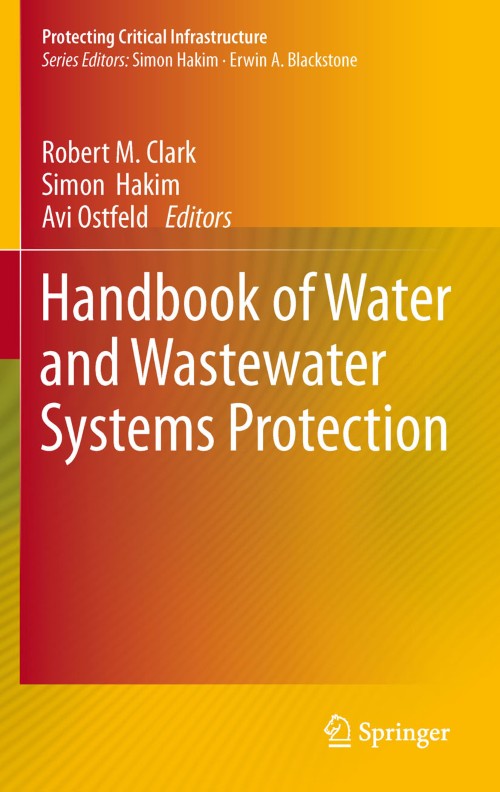
Handbook of Water and Wastewater Systems Protection [electronic resource] / edited by Robert M. Clark, Simon Hakim, Avi Ostfeld.
Erişim Adresi
ISBN
9781461401896
Dil Kodu
İngilizce
Yer Numarası
DK/14871
Basım Bildirimi
1st ed. 2011.
Yayın Bilgisi
New York, NY : Springer New York : Imprint: Springer, 2011.
Fiziksel Niteleme
XVI, 528 p. online resource.
Dizi
Protecting Critical Infrastructure, 2512-1804
Özet, vb.
Following the events of 9/11, the Administrator of the US Environmental Protection Agency created the Water Protection Task Force (WPTF), which identified water and wastewater systems as a major area of vulnerability to deliberate attack. The WPTF suggested that there are steps that can be taken to reduce these vulnerabilities and to make it as difficult as possible for potential saboteurs to succeed. The WPTF recommended that be scrutinized with renewed vigor to secure water and wastewater systems against these possible threats. It also recommended that water and wastewater systems have a response plan in place in the event an act of terrorism occurs. The WPTF identified water distribution networks as an area of special vulnerability and highlighted the need for rapid on-line detection methods that are accurate and have a wide detection range. As a result of these recommendations novel technologies from various fields of science and engineering are now addressing water security issues and water and wastewater utilities are looking for innovative solutions. Once such technologies are available, there will be a rapid implementation process that will present many business opportunities for the private sector. However, in addition to terrorist threats water and wastewater systems are inherently vulnerable to natural disasters such as earthquakes and floods. This volume will address the problems associated with both intended terrorist attacks and natural disasters affecting water or wastewater systems. The book is divided into parts based on the kinds of threats facing water and wastewater systems: (1) a direct attack on water and wastewater infrastructure storage reservoirs, and distribution and collection networks; (2) a cyber attack disabling the functionality of the water and wastewater systems or taking over control of key components which might result in system failures; and (3) a deliberate chemical or biological contaminant injection at one of the waterdistribution system’s nodes. It will examine unique plans, technological and managerial innovations for protecting such systems, and includes descriptions of projects that were implemented to respond to natural disasters. Case studies are presented that discuss existing projects and evaluate their performance, with an emphasis on providing guidelines and techniques that can be implemented by water and wastewater planners and managers to deal with natural and manmade disasters should they occur.
Konu
Political science.
Water.
Hydrology.
Geology.
Management.
Political Science.
Water.
Geology.
Management.
Water.
Hydrology.
Geology.
Management.
Political Science.
Water.
Geology.
Management.
Diğer Yazarlar
Kurum Adı

Eseri Alıntıla
Referansları kullanmadan önce gözden geçirmeniz ve varsa gerekli düzeltmeleri yapmanız önerilir.
Dijital Kaynak
MARC Görünümü
LEADER 04531nam a22005655i 4500
001 813630
003 TR_AnAIT
005 20260130224132
007 cr nn 008mamaa
008 110831s2011 xxu| s |||| 0|eng d
020 |a9781461401896|9978-1-4614-0189-6
024 7 |a10.1007/978-1-4614-0189-6|2doi
041 |aeng
049 |aTürk Tarih Kurumu Kütüphanesi
050 4|aJA1-92
072 7|aJPA|2bicssc
072 7|aPOL000000|2bisacsh
072 7|aJPA|2thema
082 04|a320|223
090 |aDK/14871
245 10|aHandbook of Water and Wastewater Systems Protection|h[electronic resource] /|cedited by Robert M. Clark, Simon Hakim, Avi Ostfeld.
250 |a1st ed. 2011.
264 1|aNew York, NY :|bSpringer New York :|bImprint: Springer,|c2011.
300 |aXVI, 528 p.|bonline resource.
336 |atext|btxt|2rdacontent
337 |acomputer|bc|2rdamedia
338 |aonline resource|bcr|2rdacarrier
347 |atext file|bPDF|2rda
490 1 |aProtecting Critical Infrastructure,|x2512-1804
520 |aFollowing the events of 9/11, the Administrator of the US Environmental Protection Agency created the Water Protection Task Force (WPTF), which identified water and wastewater systems as a major area of vulnerability to deliberate attack. The WPTF suggested that there are steps that can be taken to reduce these vulnerabilities and to make it as difficult as possible for potential saboteurs to succeed. The WPTF recommended that be scrutinized with renewed vigor to secure water and wastewater systems against these possible threats. It also recommended that water and wastewater systems have a response plan in place in the event an act of terrorism occurs. The WPTF identified water distribution networks as an area of special vulnerability and highlighted the need for rapid on-line detection methods that are accurate and have a wide detection range. As a result of these recommendations novel technologies from various fields of science and engineering are now addressing water security issues and water and wastewater utilities are looking for innovative solutions. Once such technologies are available, there will be a rapid implementation process that will present many business opportunities for the private sector. However, in addition to terrorist threats water and wastewater systems are inherently vulnerable to natural disasters such as earthquakes and floods. This volume will address the problems associated with both intended terrorist attacks and natural disasters affecting water or wastewater systems. The book is divided into parts based on the kinds of threats facing water and wastewater systems: (1) a direct attack on water and wastewater infrastructure storage reservoirs, and distribution and collection networks; (2) a cyber attack disabling the functionality of the water and wastewater systems or taking over control of key components which might result in system failures; and (3) a deliberate chemical or biological contaminant injection at one of the waterdistribution system’s nodes. It will examine unique plans, technological and managerial innovations for protecting such systems, and includes descriptions of projects that were implemented to respond to natural disasters. Case studies are presented that discuss existing projects and evaluate their performance, with an emphasis on providing guidelines and techniques that can be implemented by water and wastewater planners and managers to deal with natural and manmade disasters should they occur.
650 0|aPolitical science.
650 0|aWater.
650 0|aHydrology.
650 0|aGeology.
650 0|aManagement.
650 14|aPolitical Science.
650 24|aWater.
650 24|aGeology.
650 24|aManagement.
700 1 |aClark, Robert M.|eeditor.|4edt|4http://id.loc.gov/vocabulary/relators/edt
700 1 |aHakim, Simon.|eeditor.|4edt|4http://id.loc.gov/vocabulary/relators/edt
700 1 |aOstfeld, Avi.|eeditor.|4edt|4http://id.loc.gov/vocabulary/relators/edt
710 2 |aSpringerLink (Online service)
773 0 |tSpringer Nature eBook
776 08|iPrinted edition:|z9781461401889
776 08|iPrinted edition:|z9781461401902
776 08|iPrinted edition:|z9781461429845
830 0|aProtecting Critical Infrastructure,|x2512-1804
856 40|uhttps://doi.org/10.1007/978-1-4614-0189-6
912 |aZDB-2-SHU
912 |aZDB-2-SXPI
950 |aHumanities, Social Sciences and Law (SpringerNature-11648)
950 |aPolitical Science and International Studies (R0) (SpringerNature-43724)
001 813630
003 TR_AnAIT
005 20260130224132
007 cr nn 008mamaa
008 110831s2011 xxu| s |||| 0|eng d
020 |a9781461401896|9978-1-4614-0189-6
024 7 |a10.1007/978-1-4614-0189-6|2doi
041 |aeng
049 |aTürk Tarih Kurumu Kütüphanesi
050 4|aJA1-92
072 7|aJPA|2bicssc
072 7|aPOL000000|2bisacsh
072 7|aJPA|2thema
082 04|a320|223
090 |aDK/14871
245 10|aHandbook of Water and Wastewater Systems Protection|h[electronic resource] /|cedited by Robert M. Clark, Simon Hakim, Avi Ostfeld.
250 |a1st ed. 2011.
264 1|aNew York, NY :|bSpringer New York :|bImprint: Springer,|c2011.
300 |aXVI, 528 p.|bonline resource.
336 |atext|btxt|2rdacontent
337 |acomputer|bc|2rdamedia
338 |aonline resource|bcr|2rdacarrier
347 |atext file|bPDF|2rda
490 1 |aProtecting Critical Infrastructure,|x2512-1804
520 |aFollowing the events of 9/11, the Administrator of the US Environmental Protection Agency created the Water Protection Task Force (WPTF), which identified water and wastewater systems as a major area of vulnerability to deliberate attack. The WPTF suggested that there are steps that can be taken to reduce these vulnerabilities and to make it as difficult as possible for potential saboteurs to succeed. The WPTF recommended that be scrutinized with renewed vigor to secure water and wastewater systems against these possible threats. It also recommended that water and wastewater systems have a response plan in place in the event an act of terrorism occurs. The WPTF identified water distribution networks as an area of special vulnerability and highlighted the need for rapid on-line detection methods that are accurate and have a wide detection range. As a result of these recommendations novel technologies from various fields of science and engineering are now addressing water security issues and water and wastewater utilities are looking for innovative solutions. Once such technologies are available, there will be a rapid implementation process that will present many business opportunities for the private sector. However, in addition to terrorist threats water and wastewater systems are inherently vulnerable to natural disasters such as earthquakes and floods. This volume will address the problems associated with both intended terrorist attacks and natural disasters affecting water or wastewater systems. The book is divided into parts based on the kinds of threats facing water and wastewater systems: (1) a direct attack on water and wastewater infrastructure storage reservoirs, and distribution and collection networks; (2) a cyber attack disabling the functionality of the water and wastewater systems or taking over control of key components which might result in system failures; and (3) a deliberate chemical or biological contaminant injection at one of the waterdistribution system’s nodes. It will examine unique plans, technological and managerial innovations for protecting such systems, and includes descriptions of projects that were implemented to respond to natural disasters. Case studies are presented that discuss existing projects and evaluate their performance, with an emphasis on providing guidelines and techniques that can be implemented by water and wastewater planners and managers to deal with natural and manmade disasters should they occur.
650 0|aPolitical science.
650 0|aWater.
650 0|aHydrology.
650 0|aGeology.
650 0|aManagement.
650 14|aPolitical Science.
650 24|aWater.
650 24|aGeology.
650 24|aManagement.
700 1 |aClark, Robert M.|eeditor.|4edt|4http://id.loc.gov/vocabulary/relators/edt
700 1 |aHakim, Simon.|eeditor.|4edt|4http://id.loc.gov/vocabulary/relators/edt
700 1 |aOstfeld, Avi.|eeditor.|4edt|4http://id.loc.gov/vocabulary/relators/edt
710 2 |aSpringerLink (Online service)
773 0 |tSpringer Nature eBook
776 08|iPrinted edition:|z9781461401889
776 08|iPrinted edition:|z9781461401902
776 08|iPrinted edition:|z9781461429845
830 0|aProtecting Critical Infrastructure,|x2512-1804
856 40|uhttps://doi.org/10.1007/978-1-4614-0189-6
912 |aZDB-2-SHU
912 |aZDB-2-SXPI
950 |aHumanities, Social Sciences and Law (SpringerNature-11648)
950 |aPolitical Science and International Studies (R0) (SpringerNature-43724)
Materyaller
Depodan talep edilen materyal sadece kütüphane içerisinde kullanılmaktadır.
Materyal dışarıya ödünç verilmemektedir.
