

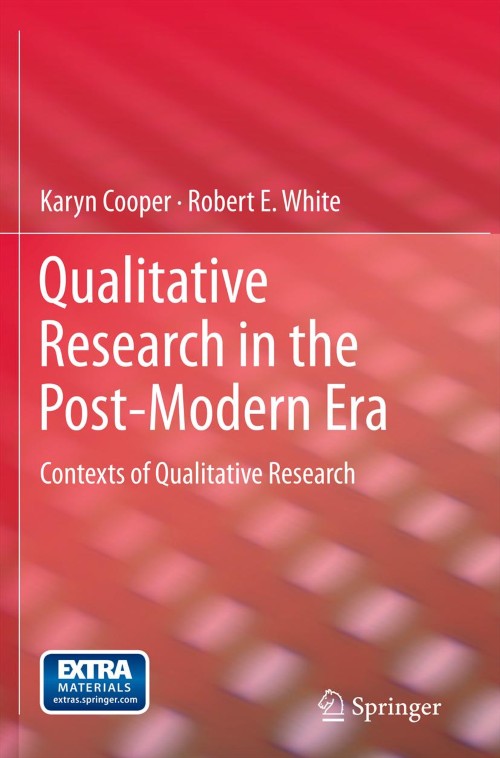
Qualitative Research in the Post-Modern Era [electronic resource] : Contexts of Qualitative Research / by Karyn Cooper, Robert E. White.
Erişim Adresi
ISBN
9789400723399
Dil Kodu
İngilizce
Yer Numarası
DK/14911
Yazar
Basım Bildirimi
1st ed. 2012.
Yayın Bilgisi
Dordrecht : Springer Netherlands : Imprint: Springer, 2012.
Fiziksel Niteleme
XXI, 159 p. 12 illus. online resource.
İçindekiler Notu
Foreword -- Preface -- Acknowledgements.- 1. Towards Understanding Research -- 2. The Qualitative (R)Evolution? -- 3. The Autobiographical Context -- 4. The Historical Context -- 5. The Political Context -- 6. The Postmodern Context.- 7. The Philosophical Context -- 8. The Art and Practice of Research in the Postmodern Era -- Appendices -- Index.
Özet, vb.
Qualitative Research is changing as a result of postmodern influences which have changed the way research is interpreted and understood. This has prompted questions which have been knocking at the door of qualitative research for some time now: Who is the researcher in this research account? How does the researcher relate to his/her research? How can the researcher who reads qualitative research relate to and understand the nuances and complexities in qualitative research? How can this volume help us to, not only describe, effect and manage change, but help us to understand, imagine and affect policies, practices and procedures related to research? What can we learn from researchers at the top of their stride who have struggled in order to develop qualitative research? This book includes illustrative interviews with world famous scholars. William Pinar, Norman Denzin, Henry Giroux, Zygmunt Bauman and Maxine Greene invite the student to engage reflectively and to figure out the rudiments and connections of research methodology and methods for theses . This may be a set of volumes for which the field has been waiting. Gathered in one two-volume set are the voices and words of many of the giants in the field of qualitative research and/or critical perspectives.. If there is such a text anywhere else—with commentary, summary, author autobiographies, interviewee bibliographies, and accompanying video clips, I am unaware of it…. Equally useful, for students, researchers and teachers alike, are the authors’ “five contexts” for grasping this complex and dynamic history.. These five contexts represent a major contribution to ways of thinking about research methods and their more overarching paradigms. We are incredibly fortunate to be the recipients of this work, simply because it provides us with a fresh set of intellectual and mental constructs with which we can teach and doresearch. Yvonna S. Lincoln, Texas A&M University .
Konu
Social sciences.
Society.
Society.
Diğer Yazarlar
Kurum Adı
Eseri Alıntıla
Referansları kullanmadan önce gözden geçirmeniz ve varsa gerekli düzeltmeleri yapmanız önerilir.
Dijital Kaynak
MARC Görünümü
LEADER 04397nam a22004695i 4500
001 813670
003 TR_AnAIT
005 20260130223922
007 cr nn 008mamaa
008 111115s2012 ne | s |||| 0|eng d
020 |a9789400723399|9978-94-007-2339-9
024 7 |a10.1007/978-94-007-2339-9|2doi
041 |aeng
049 |aTürk Tarih Kurumu Kütüphanesi
050 4|aH1-970.9
072 7|aJ|2bicssc
072 7|aJHB|2bicssc
072 7|aSOC000000|2bisacsh
072 7|aJ|2thema
072 7|aJHB|2thema
082 04|a300|223
090 |aDK/14911
100 1 |aCooper, Karyn.|eauthor.|4aut|4http://id.loc.gov/vocabulary/relators/aut
245 10|aQualitative Research in the Post-Modern Era|h[electronic resource] :|bContexts of Qualitative Research /|cby Karyn Cooper, Robert E. White.
250 |a1st ed. 2012.
264 1|aDordrecht :|bSpringer Netherlands :|bImprint: Springer,|c2012.
300 |aXXI, 159 p. 12 illus.|bonline resource.
336 |atext|btxt|2rdacontent
337 |acomputer|bc|2rdamedia
338 |aonline resource|bcr|2rdacarrier
347 |atext file|bPDF|2rda
505 0 |aForeword -- Preface -- Acknowledgements.- 1. Towards Understanding Research -- 2. The Qualitative (R)Evolution? -- 3. The Autobiographical Context -- 4. The Historical Context -- 5. The Political Context -- 6. The Postmodern Context.- 7. The Philosophical Context -- 8. The Art and Practice of Research in the Postmodern Era -- Appendices -- Index.
520 |aQualitative Research is changing as a result of postmodern influences which have changed the way research is interpreted and understood. This has prompted questions which have been knocking at the door of qualitative research for some time now: Who is the researcher in this research account? How does the researcher relate to his/her research? How can the researcher who reads qualitative research relate to and understand the nuances and complexities in qualitative research? How can this volume help us to, not only describe, effect and manage change, but help us to understand, imagine and affect policies, practices and procedures related to research? What can we learn from researchers at the top of their stride who have struggled in order to develop qualitative research? This book includes illustrative interviews with world famous scholars. William Pinar, Norman Denzin, Henry Giroux, Zygmunt Bauman and Maxine Greene invite the student to engage reflectively and to figure out the rudiments and connections of research methodology and methods for theses . This may be a set of volumes for which the field has been waiting. Gathered in one two-volume set are the voices and words of many of the giants in the field of qualitative research and/or critical perspectives.. If there is such a text anywhere else—with commentary, summary, author autobiographies, interviewee bibliographies, and accompanying video clips, I am unaware of it…. Equally useful, for students, researchers and teachers alike, are the authors’ “five contexts” for grasping this complex and dynamic history.. These five contexts represent a major contribution to ways of thinking about research methods and their more overarching paradigms. We are incredibly fortunate to be the recipients of this work, simply because it provides us with a fresh set of intellectual and mental constructs with which we can teach and doresearch. Yvonna S. Lincoln, Texas A&M University .
650 0|aSocial sciences.
650 14|aSociety.
700 1 |aWhite, Robert E.|eauthor.|4aut|4http://id.loc.gov/vocabulary/relators/aut
710 2 |aSpringerLink (Online service)
773 0 |tSpringer Nature eBook
776 08|iPrinted edition:|z9789400723382
776 08|iPrinted edition:|z9789400723405
856 40|uhttps://doi.org/10.1007/978-94-007-2339-9
912 |aZDB-2-SHU
912 |aZDB-2-SXS
950 |aHumanities, Social Sciences and Law (SpringerNature-11648)
950 |aSocial Sciences (R0) (SpringerNature-43726)
001 813670
003 TR_AnAIT
005 20260130223922
007 cr nn 008mamaa
008 111115s2012 ne | s |||| 0|eng d
020 |a9789400723399|9978-94-007-2339-9
024 7 |a10.1007/978-94-007-2339-9|2doi
041 |aeng
049 |aTürk Tarih Kurumu Kütüphanesi
050 4|aH1-970.9
072 7|aJ|2bicssc
072 7|aJHB|2bicssc
072 7|aSOC000000|2bisacsh
072 7|aJ|2thema
072 7|aJHB|2thema
082 04|a300|223
090 |aDK/14911
100 1 |aCooper, Karyn.|eauthor.|4aut|4http://id.loc.gov/vocabulary/relators/aut
245 10|aQualitative Research in the Post-Modern Era|h[electronic resource] :|bContexts of Qualitative Research /|cby Karyn Cooper, Robert E. White.
250 |a1st ed. 2012.
264 1|aDordrecht :|bSpringer Netherlands :|bImprint: Springer,|c2012.
300 |aXXI, 159 p. 12 illus.|bonline resource.
336 |atext|btxt|2rdacontent
337 |acomputer|bc|2rdamedia
338 |aonline resource|bcr|2rdacarrier
347 |atext file|bPDF|2rda
505 0 |aForeword -- Preface -- Acknowledgements.- 1. Towards Understanding Research -- 2. The Qualitative (R)Evolution? -- 3. The Autobiographical Context -- 4. The Historical Context -- 5. The Political Context -- 6. The Postmodern Context.- 7. The Philosophical Context -- 8. The Art and Practice of Research in the Postmodern Era -- Appendices -- Index.
520 |aQualitative Research is changing as a result of postmodern influences which have changed the way research is interpreted and understood. This has prompted questions which have been knocking at the door of qualitative research for some time now: Who is the researcher in this research account? How does the researcher relate to his/her research? How can the researcher who reads qualitative research relate to and understand the nuances and complexities in qualitative research? How can this volume help us to, not only describe, effect and manage change, but help us to understand, imagine and affect policies, practices and procedures related to research? What can we learn from researchers at the top of their stride who have struggled in order to develop qualitative research? This book includes illustrative interviews with world famous scholars. William Pinar, Norman Denzin, Henry Giroux, Zygmunt Bauman and Maxine Greene invite the student to engage reflectively and to figure out the rudiments and connections of research methodology and methods for theses . This may be a set of volumes for which the field has been waiting. Gathered in one two-volume set are the voices and words of many of the giants in the field of qualitative research and/or critical perspectives.. If there is such a text anywhere else—with commentary, summary, author autobiographies, interviewee bibliographies, and accompanying video clips, I am unaware of it…. Equally useful, for students, researchers and teachers alike, are the authors’ “five contexts” for grasping this complex and dynamic history.. These five contexts represent a major contribution to ways of thinking about research methods and their more overarching paradigms. We are incredibly fortunate to be the recipients of this work, simply because it provides us with a fresh set of intellectual and mental constructs with which we can teach and doresearch. Yvonna S. Lincoln, Texas A&M University .
650 0|aSocial sciences.
650 14|aSociety.
700 1 |aWhite, Robert E.|eauthor.|4aut|4http://id.loc.gov/vocabulary/relators/aut
710 2 |aSpringerLink (Online service)
773 0 |tSpringer Nature eBook
776 08|iPrinted edition:|z9789400723382
776 08|iPrinted edition:|z9789400723405
856 40|uhttps://doi.org/10.1007/978-94-007-2339-9
912 |aZDB-2-SHU
912 |aZDB-2-SXS
950 |aHumanities, Social Sciences and Law (SpringerNature-11648)
950 |aSocial Sciences (R0) (SpringerNature-43726)
Materyaller
Depodan talep edilen materyal sadece kütüphane içerisinde kullanılmaktadır.
Materyal dışarıya ödünç verilmemektedir.
Materyal dışarıya ödünç verilmemektedir.
