

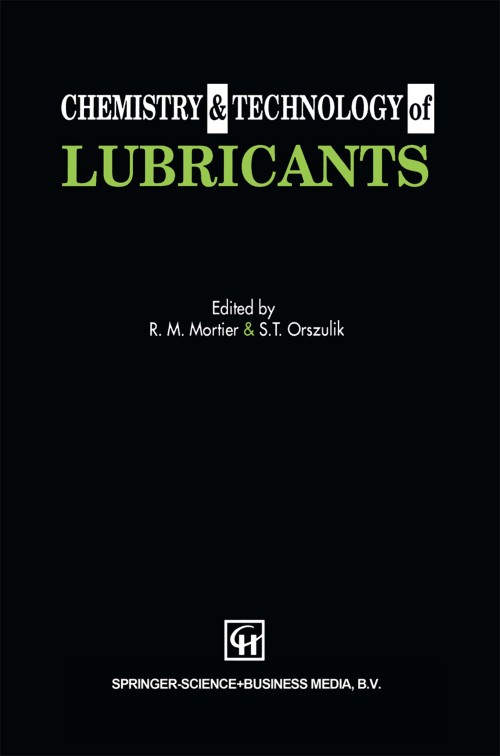
Chemistry and Technology of Lubricants [electronic resource] / by R. M. Mortier, S. T. Orszulik.
Erişim Adresi
ISBN
9781461535546
Dil Kodu
İngilizce
Yer Numarası
DK/14960
Yazar
Basım Bildirimi
1st ed. 1994.
Yayın Bilgisi
New York, NY : Springer US : Imprint: Springer, 1994.
Fiziksel Niteleme
XVII, 302 p. online resource.
İçindekiler Notu
1 Base oils from petroleum -- 1.1 Introduction -- 1.2 Base oil composition -- 1.3 Products and specifications -- 1.4 Conventional base oil manufacturing methods -- 1.5 Modern catalytic processes -- 1.6 Future developments -- References -- 2 Synthetic base fluids -- 2.1 Introduction -- 2.2 Polyalphaolefins -- 2.3 Alkylated aromatics -- 2.4 Polybutenes -- 2.5 Synthetic esters -- 2.6 Polyalkylene glycols -- 2.7 Phosphate esters -- References -- 3 Detergents/dispersants -- 3.1 Introduction -- 3.2 Detergents -- 3.3 Dispersants -- 3.4 Other lubricants -- 3.5 Performance evaluation -- References -- Further reading -- 4 Oxidative degradation and stabilisation of mineral oil based lubricants -- 4.1 Introduction -- 4.2 Autoxidation of hydrocarbons -- 4.3 Oxidation stability of base oils -- 4.4 Inhibition of oxidative degradation of lubricants -- 4.5 Application of antioxidants -- 4.6 Future antioxidant technology -- Acknowledgements -- References -- 5 Viscosity index improvers and thickeners -- 5.1 Introduction -- 5.2 Overview of VI improver chemistry -- 5.3 Chemistry and manufacture of commercial VI improvers -- 5.4 Function and properties -- 5.5 Performance -- 5.6 Prognosis for future developments -- References -- 6 Miscellaneous additives -- 6.1 Friction modifiers -- 6.2 Pour point depressants -- 6.3 Demulsifiers and antifoams -- 6.4 Corrosion inhibitors -- Reference -- 7 The formulation of automotive lubricants -- 7.1 Introduction -- 7.2 What type of lubricant is wanted? -- 7.3 Why there are so many types oflubricant -- 7.4 Multifunctional lubricants -- 7.5 Definition oflubricant performance -- 7.6 Lubricant formulation—the physical phase -- 8 Industrial lubricants -- 8.1 Introduction -- 8.2 Bearing lubricants -- 8.3 Compressor lubricants -- 8.4 Hydraulic lubricants (fluids) -- 8.5 Industrial gear lubricants -- 8.6 Turbinelubricants -- 8.7 Metalworking lubricants -- 8.8 Specialities -- References -- 9 Aviation lubricants -- 9.1 Introduction -- 9.2 Lubrication of rotary engines -- 9.3 Lubrication of conventional aircraft piston engines -- 9.4 Lubrication of aircraft turbine engines -- 9.5 Aircraft hydraulic fluids -- 9.6 Helicopter gearboxes -- 9.7 Undercarriage lubrication -- 9.8 Airframe lubrication -- 9.9 Safety aspects of aircraft lubrication -- 9.10 Space lubrication -- References -- 10 Marine lubricants -- 10.1 Introduction -- 10.2 Marine diesel engines -- 10.3 Fuel oil -- 10.4 Base oils -- 10.5 Additives -- 10.6 Properties and formulation of marine lubricants -- 10.7 System oils -- 10.8 Cylinder oils -- 10.9 Trunk piston engine oils -- 10.10 Used oil analysis -- References -- 11 Lubricating grease -- 11.1 Introduction -- 11.2 Structure and properties -- 11.3 Chemistry -- 11.4 Applications -- 11.5 Future developments -- 11.6 Conclusions -- References -- 12 Extreme-pressure and anti-wear additives -- 12.1 Introduction -- 12.2 Anti-wear additives -- 12.3 Extreme-pressure additives -- 12.4 Mechanisms of action of anti-wear and EP additives -- 12.5 Application of different classes of additive -- 12.6 Future developments -- References -- 13 Lubricants and their environmental impact -- 13.1 Introduction -- 13.2 Collection of waste lubricant -- 13.3 Treatment of collected lubricant -- 13.4 Re-refined base oil quality -- 13.5 Health and safety aspects of re-refined oil -- 13.6 Environmental considerations of waste lubricant -- 13.7 Environmental impact of ‘consumed’ lubricant -- 13.8 Biodegradation tests for oils -- 13.9 Future trends -- References -- Further reading.
Özet, vb.
The use oflubricants began in ancient times and has developed into a major international business through the need to lubricate machines of increasing complexity. The impetus for lubricant development has arisen from need, so lubricatingpractice has precededan understandingofthescientificprinciples. This is not surprising as the scientific basis of the technology is, by nature, highly complex and interdisciplinary. However, we believe that the under standing of lubricant phenomena will continue to be developed at a mol ecular level to meet future challenges. These challenges will include the control of emissions from internal combustion engines, the reduction of friction and wear in machinery, and continuing improvements to lubricant performanceand life-time. More recently, there has been an increased understanding ofthe chemical aspects of lubrication, which has complemented the knowledge and under standing gained through studies dealing with physics and engineering. This book aims to bring together this chemical information and present it in a practical way. It is written by chemists who are authorities in the various specialisations within the lubricating industry, and is intended to be of interest to chemists who may already be working in the lubricating industry or in academia, and who are seeking a chemist's view of lubrication. It will also be of benefit to engineers and technologists familiar with the industry who requirea more fundamental understanding oflubricants.
Konu
Social sciences.
Humanities.
Humanities and Social Sciences.
Humanities.
Humanities and Social Sciences.
Diğer Yazarlar
Kurum Adı
Eseri Alıntıla
Referansları kullanmadan önce gözden geçirmeniz ve varsa gerekli düzeltmeleri yapmanız önerilir.
Dijital Kaynak
MARC Görünümü
LEADER 07499nam a22005535i 4500
001 813719
003 TR_AnAIT
005 20260130223612
007 cr nn 008mamaa
008 121227s1994 xxu| s |||| 0|eng d
020 |a9781461535546|9978-1-4615-3554-6
024 7 |a10.1007/978-1-4615-3554-6|2doi
041 |aeng
049 |aTürk Tarih Kurumu Kütüphanesi
050 4|aH1-99
050 4|aAZ19.2-999
072 7|aGT|2bicssc
072 7|aNON000000|2bisacsh
072 7|aGT|2thema
082 04|a300|223
082 04|a001.3|223
090 |aDK/14960
100 1 |aMortier, R. M.|eauthor.|4aut|4http://id.loc.gov/vocabulary/relators/aut
245 10|aChemistry and Technology of Lubricants|h[electronic resource] /|cby R. M. Mortier, S. T. Orszulik.
250 |a1st ed. 1994.
264 1|aNew York, NY :|bSpringer US :|bImprint: Springer,|c1994.
300 |aXVII, 302 p.|bonline resource.
336 |atext|btxt|2rdacontent
337 |acomputer|bc|2rdamedia
338 |aonline resource|bcr|2rdacarrier
347 |atext file|bPDF|2rda
505 0 |a1 Base oils from petroleum -- 1.1 Introduction -- 1.2 Base oil composition -- 1.3 Products and specifications -- 1.4 Conventional base oil manufacturing methods -- 1.5 Modern catalytic processes -- 1.6 Future developments -- References -- 2 Synthetic base fluids -- 2.1 Introduction -- 2.2 Polyalphaolefins -- 2.3 Alkylated aromatics -- 2.4 Polybutenes -- 2.5 Synthetic esters -- 2.6 Polyalkylene glycols -- 2.7 Phosphate esters -- References -- 3 Detergents/dispersants -- 3.1 Introduction -- 3.2 Detergents -- 3.3 Dispersants -- 3.4 Other lubricants -- 3.5 Performance evaluation -- References -- Further reading -- 4 Oxidative degradation and stabilisation of mineral oil based lubricants -- 4.1 Introduction -- 4.2 Autoxidation of hydrocarbons -- 4.3 Oxidation stability of base oils -- 4.4 Inhibition of oxidative degradation of lubricants -- 4.5 Application of antioxidants -- 4.6 Future antioxidant technology -- Acknowledgements -- References -- 5 Viscosity index improvers and thickeners -- 5.1 Introduction -- 5.2 Overview of VI improver chemistry -- 5.3 Chemistry and manufacture of commercial VI improvers -- 5.4 Function and properties -- 5.5 Performance -- 5.6 Prognosis for future developments -- References -- 6 Miscellaneous additives -- 6.1 Friction modifiers -- 6.2 Pour point depressants -- 6.3 Demulsifiers and antifoams -- 6.4 Corrosion inhibitors -- Reference -- 7 The formulation of automotive lubricants -- 7.1 Introduction -- 7.2 What type of lubricant is wanted? -- 7.3 Why there are so many types oflubricant -- 7.4 Multifunctional lubricants -- 7.5 Definition oflubricant performance -- 7.6 Lubricant formulation—the physical phase -- 8 Industrial lubricants -- 8.1 Introduction -- 8.2 Bearing lubricants -- 8.3 Compressor lubricants -- 8.4 Hydraulic lubricants (fluids) -- 8.5 Industrial gear lubricants -- 8.6 Turbinelubricants -- 8.7 Metalworking lubricants -- 8.8 Specialities -- References -- 9 Aviation lubricants -- 9.1 Introduction -- 9.2 Lubrication of rotary engines -- 9.3 Lubrication of conventional aircraft piston engines -- 9.4 Lubrication of aircraft turbine engines -- 9.5 Aircraft hydraulic fluids -- 9.6 Helicopter gearboxes -- 9.7 Undercarriage lubrication -- 9.8 Airframe lubrication -- 9.9 Safety aspects of aircraft lubrication -- 9.10 Space lubrication -- References -- 10 Marine lubricants -- 10.1 Introduction -- 10.2 Marine diesel engines -- 10.3 Fuel oil -- 10.4 Base oils -- 10.5 Additives -- 10.6 Properties and formulation of marine lubricants -- 10.7 System oils -- 10.8 Cylinder oils -- 10.9 Trunk piston engine oils -- 10.10 Used oil analysis -- References -- 11 Lubricating grease -- 11.1 Introduction -- 11.2 Structure and properties -- 11.3 Chemistry -- 11.4 Applications -- 11.5 Future developments -- 11.6 Conclusions -- References -- 12 Extreme-pressure and anti-wear additives -- 12.1 Introduction -- 12.2 Anti-wear additives -- 12.3 Extreme-pressure additives -- 12.4 Mechanisms of action of anti-wear and EP additives -- 12.5 Application of different classes of additive -- 12.6 Future developments -- References -- 13 Lubricants and their environmental impact -- 13.1 Introduction -- 13.2 Collection of waste lubricant -- 13.3 Treatment of collected lubricant -- 13.4 Re-refined base oil quality -- 13.5 Health and safety aspects of re-refined oil -- 13.6 Environmental considerations of waste lubricant -- 13.7 Environmental impact of ‘consumed’ lubricant -- 13.8 Biodegradation tests for oils -- 13.9 Future trends -- References -- Further reading.
520 |aThe use oflubricants began in ancient times and has developed into a major international business through the need to lubricate machines of increasing complexity. The impetus for lubricant development has arisen from need, so lubricatingpractice has precededan understandingofthescientificprinciples. This is not surprising as the scientific basis of the technology is, by nature, highly complex and interdisciplinary. However, we believe that the under standing of lubricant phenomena will continue to be developed at a mol ecular level to meet future challenges. These challenges will include the control of emissions from internal combustion engines, the reduction of friction and wear in machinery, and continuing improvements to lubricant performanceand life-time. More recently, there has been an increased understanding ofthe chemical aspects of lubrication, which has complemented the knowledge and under standing gained through studies dealing with physics and engineering. This book aims to bring together this chemical information and present it in a practical way. It is written by chemists who are authorities in the various specialisations within the lubricating industry, and is intended to be of interest to chemists who may already be working in the lubricating industry or in academia, and who are seeking a chemist's view of lubrication. It will also be of benefit to engineers and technologists familiar with the industry who requirea more fundamental understanding oflubricants.
532 8 |aAccessibility summary: This PDF is not accessible. It is based on scanned pages and does not support features such as screen reader compatibility or described non-text content (images, graphs etc). However, it likely supports searchable and selectable text based on OCR (Optical Character Recognition). Users with accessibility needs may not be able to use this content effectively. Please contact us at accessibilitysupport@springernature.com if you require assistance or an alternative format.
532 8 |aInaccessible, or known limited accessibility
532 8 |aNo reading system accessibility options actively disabled
532 8 |aPublisher contact for further accessibility information: accessibilitysupport@springernature.com
650 0|aSocial sciences.
650 0|aHumanities.
650 14|aHumanities and Social Sciences.
700 1 |aOrszulik, S. T.|eauthor.|4aut|4http://id.loc.gov/vocabulary/relators/aut
710 2 |aSpringerLink (Online service)
773 0 |tSpringer Nature eBook
776 08|iPrinted edition:|z9780751401172
776 08|iPrinted edition:|z9781461535553
776 08|iPrinted edition:|z9781461365785
856 40|uhttps://doi.org/10.1007/978-1-4615-3554-6
912 |aZDB-2-SHU
912 |aZDB-2-SXH
912 |aZDB-2-BAE
950 |aHumanities, Social Sciences and Law (SpringerNature-11648)
950 |aHistory (R0) (SpringerNature-43722)
001 813719
003 TR_AnAIT
005 20260130223612
007 cr nn 008mamaa
008 121227s1994 xxu| s |||| 0|eng d
020 |a9781461535546|9978-1-4615-3554-6
024 7 |a10.1007/978-1-4615-3554-6|2doi
041 |aeng
049 |aTürk Tarih Kurumu Kütüphanesi
050 4|aH1-99
050 4|aAZ19.2-999
072 7|aGT|2bicssc
072 7|aNON000000|2bisacsh
072 7|aGT|2thema
082 04|a300|223
082 04|a001.3|223
090 |aDK/14960
100 1 |aMortier, R. M.|eauthor.|4aut|4http://id.loc.gov/vocabulary/relators/aut
245 10|aChemistry and Technology of Lubricants|h[electronic resource] /|cby R. M. Mortier, S. T. Orszulik.
250 |a1st ed. 1994.
264 1|aNew York, NY :|bSpringer US :|bImprint: Springer,|c1994.
300 |aXVII, 302 p.|bonline resource.
336 |atext|btxt|2rdacontent
337 |acomputer|bc|2rdamedia
338 |aonline resource|bcr|2rdacarrier
347 |atext file|bPDF|2rda
505 0 |a1 Base oils from petroleum -- 1.1 Introduction -- 1.2 Base oil composition -- 1.3 Products and specifications -- 1.4 Conventional base oil manufacturing methods -- 1.5 Modern catalytic processes -- 1.6 Future developments -- References -- 2 Synthetic base fluids -- 2.1 Introduction -- 2.2 Polyalphaolefins -- 2.3 Alkylated aromatics -- 2.4 Polybutenes -- 2.5 Synthetic esters -- 2.6 Polyalkylene glycols -- 2.7 Phosphate esters -- References -- 3 Detergents/dispersants -- 3.1 Introduction -- 3.2 Detergents -- 3.3 Dispersants -- 3.4 Other lubricants -- 3.5 Performance evaluation -- References -- Further reading -- 4 Oxidative degradation and stabilisation of mineral oil based lubricants -- 4.1 Introduction -- 4.2 Autoxidation of hydrocarbons -- 4.3 Oxidation stability of base oils -- 4.4 Inhibition of oxidative degradation of lubricants -- 4.5 Application of antioxidants -- 4.6 Future antioxidant technology -- Acknowledgements -- References -- 5 Viscosity index improvers and thickeners -- 5.1 Introduction -- 5.2 Overview of VI improver chemistry -- 5.3 Chemistry and manufacture of commercial VI improvers -- 5.4 Function and properties -- 5.5 Performance -- 5.6 Prognosis for future developments -- References -- 6 Miscellaneous additives -- 6.1 Friction modifiers -- 6.2 Pour point depressants -- 6.3 Demulsifiers and antifoams -- 6.4 Corrosion inhibitors -- Reference -- 7 The formulation of automotive lubricants -- 7.1 Introduction -- 7.2 What type of lubricant is wanted? -- 7.3 Why there are so many types oflubricant -- 7.4 Multifunctional lubricants -- 7.5 Definition oflubricant performance -- 7.6 Lubricant formulation—the physical phase -- 8 Industrial lubricants -- 8.1 Introduction -- 8.2 Bearing lubricants -- 8.3 Compressor lubricants -- 8.4 Hydraulic lubricants (fluids) -- 8.5 Industrial gear lubricants -- 8.6 Turbinelubricants -- 8.7 Metalworking lubricants -- 8.8 Specialities -- References -- 9 Aviation lubricants -- 9.1 Introduction -- 9.2 Lubrication of rotary engines -- 9.3 Lubrication of conventional aircraft piston engines -- 9.4 Lubrication of aircraft turbine engines -- 9.5 Aircraft hydraulic fluids -- 9.6 Helicopter gearboxes -- 9.7 Undercarriage lubrication -- 9.8 Airframe lubrication -- 9.9 Safety aspects of aircraft lubrication -- 9.10 Space lubrication -- References -- 10 Marine lubricants -- 10.1 Introduction -- 10.2 Marine diesel engines -- 10.3 Fuel oil -- 10.4 Base oils -- 10.5 Additives -- 10.6 Properties and formulation of marine lubricants -- 10.7 System oils -- 10.8 Cylinder oils -- 10.9 Trunk piston engine oils -- 10.10 Used oil analysis -- References -- 11 Lubricating grease -- 11.1 Introduction -- 11.2 Structure and properties -- 11.3 Chemistry -- 11.4 Applications -- 11.5 Future developments -- 11.6 Conclusions -- References -- 12 Extreme-pressure and anti-wear additives -- 12.1 Introduction -- 12.2 Anti-wear additives -- 12.3 Extreme-pressure additives -- 12.4 Mechanisms of action of anti-wear and EP additives -- 12.5 Application of different classes of additive -- 12.6 Future developments -- References -- 13 Lubricants and their environmental impact -- 13.1 Introduction -- 13.2 Collection of waste lubricant -- 13.3 Treatment of collected lubricant -- 13.4 Re-refined base oil quality -- 13.5 Health and safety aspects of re-refined oil -- 13.6 Environmental considerations of waste lubricant -- 13.7 Environmental impact of ‘consumed’ lubricant -- 13.8 Biodegradation tests for oils -- 13.9 Future trends -- References -- Further reading.
520 |aThe use oflubricants began in ancient times and has developed into a major international business through the need to lubricate machines of increasing complexity. The impetus for lubricant development has arisen from need, so lubricatingpractice has precededan understandingofthescientificprinciples. This is not surprising as the scientific basis of the technology is, by nature, highly complex and interdisciplinary. However, we believe that the under standing of lubricant phenomena will continue to be developed at a mol ecular level to meet future challenges. These challenges will include the control of emissions from internal combustion engines, the reduction of friction and wear in machinery, and continuing improvements to lubricant performanceand life-time. More recently, there has been an increased understanding ofthe chemical aspects of lubrication, which has complemented the knowledge and under standing gained through studies dealing with physics and engineering. This book aims to bring together this chemical information and present it in a practical way. It is written by chemists who are authorities in the various specialisations within the lubricating industry, and is intended to be of interest to chemists who may already be working in the lubricating industry or in academia, and who are seeking a chemist's view of lubrication. It will also be of benefit to engineers and technologists familiar with the industry who requirea more fundamental understanding oflubricants.
532 8 |aAccessibility summary: This PDF is not accessible. It is based on scanned pages and does not support features such as screen reader compatibility or described non-text content (images, graphs etc). However, it likely supports searchable and selectable text based on OCR (Optical Character Recognition). Users with accessibility needs may not be able to use this content effectively. Please contact us at accessibilitysupport@springernature.com if you require assistance or an alternative format.
532 8 |aInaccessible, or known limited accessibility
532 8 |aNo reading system accessibility options actively disabled
532 8 |aPublisher contact for further accessibility information: accessibilitysupport@springernature.com
650 0|aSocial sciences.
650 0|aHumanities.
650 14|aHumanities and Social Sciences.
700 1 |aOrszulik, S. T.|eauthor.|4aut|4http://id.loc.gov/vocabulary/relators/aut
710 2 |aSpringerLink (Online service)
773 0 |tSpringer Nature eBook
776 08|iPrinted edition:|z9780751401172
776 08|iPrinted edition:|z9781461535553
776 08|iPrinted edition:|z9781461365785
856 40|uhttps://doi.org/10.1007/978-1-4615-3554-6
912 |aZDB-2-SHU
912 |aZDB-2-SXH
912 |aZDB-2-BAE
950 |aHumanities, Social Sciences and Law (SpringerNature-11648)
950 |aHistory (R0) (SpringerNature-43722)
Materyaller
Depodan talep edilen materyal sadece kütüphane içerisinde kullanılmaktadır.
Materyal dışarıya ödünç verilmemektedir.
Materyal dışarıya ödünç verilmemektedir.
