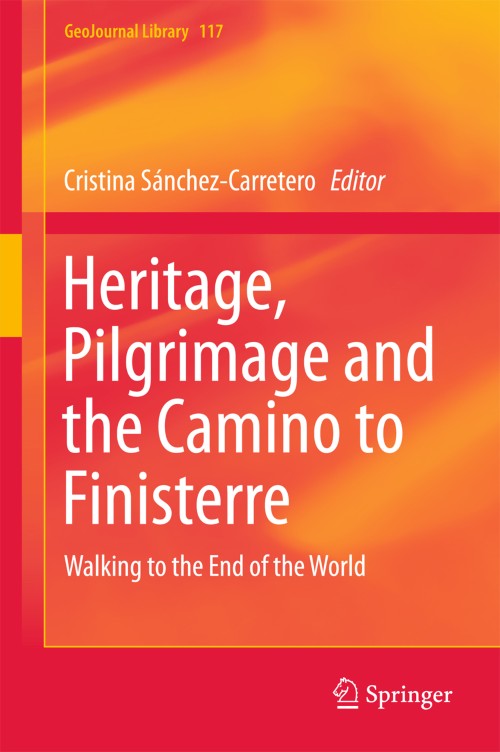
Heritage, Pilgrimage and the Camino to Finisterre [electronic resource] : Walking to the End of the World / edited by Cristina Sánchez-Carretero.
Erişim Adresi
ISBN
9783319202129
Dil Kodu
İngilizce
Yer Numarası
DK/15034
Basım Bildirimi
1st ed. 2015.
Yayın Bilgisi
Cham : Springer International Publishing : Imprint: Springer, 2015.
Fiziksel Niteleme
XVI, 211 p. 53 illus. online resource.
Dizi
GeoJournal Library, 2215-0072 ; 117
İçindekiler Notu
Chapter 1: Introduction: Finisterre, Heritage and Pilgrimage; Cristina Sánchez-Carretero -- PART I: HISTORY, MYTHS AND LEGENDS OF THE END OF THE WORLD -- Chapter 2: Imagining an End of the World: Histories and Mythologies of the Santiago - Finisterre Connection; Peter Jan Margry -- Chapter 3: Analyzing the Camino: From Vindicating Local Elements to the Success of Xacobeo; Manuel Vilar Álvarez -- PART II: LOCAL IMPACTS OF THE PILGRIMAGE TO FINISTERRE -- Chapter 4: Heritagization of the Camino to Finisterre; Cristina Sánchez-Carretero -- Chapter 5: Socio-economic Impacts of the Camino to Finisterre; Eva Parga-Dans -- Chapter 5: Processes of Change in Olveiroa, a Village-hostel; Paula Ballesteros-Arias.- Chapter 6: Archaeological Heritage Management along the Camino to Finisterre; Carlos Otero-Vilariño -- PART III: SPIRITUALITY, MOTIVES AND THE END OF THE WORLD -- Chapter 7: To be or not to be,… a Pilgrim? Spiritual Pluralism on the Finisterre Trail; Peter Jan Margry -- Notes on the Contributors -- List of Illustrations -- Index.
Özet, vb.
This book presents research concerning the effects of the Camino to Finisterre on the daily lives of the populations who live along the route, and the heritagization processes that exploitation of the Camino for tourism purposes involves. Rather than focusing on the route to Santiago de Compostela and the pilgrimage itself, it instead examines a peculiar part of the route, the Camino to Finisterre, employing multiple perspectives that consider the processes of heritagization, the effects of the pilgrimage on local communities, and the motivations of the pilgrims. The book is based on a three-year research project and is the result of a multidisciplinary collaboration between anthropologists, sociologists, historians and archaeologists. Instead of ending in Santiago, as the rest of the Caminos do, this route continues to the cape of Finisterre on the Galician Atlantic coast. This part of the Camino de Santiago is not officially recognized by the Catholic Church and doesnot count as part of reaching Compostela, the recognition granted by the Catholic Church to those pilgrims who have walked at least 100 km. For this reason, as well as its relationship with the sun cult, many pilgrims call this route “the Camino of the atheists.” In fact, the Catholic Church is a strong force for the heritagization of the rest of the Caminos, and maintains a clear ignoratio strategy concerning the Finisterre route: Officially, the church neither opposes nor recognizes this route.
Konu
Human geography.
Ethnology.
Culture.
Anthropology.
Human Geography.
Regional Cultural Studies.
Anthropology.
Ethnology.
Culture.
Anthropology.
Human Geography.
Regional Cultural Studies.
Anthropology.
Diğer Yazarlar
Kurum Adı

Eseri Alıntıla
Referansları kullanmadan önce gözden geçirmeniz ve varsa gerekli düzeltmeleri yapmanız önerilir.
Dijital Kaynak
MARC Görünümü
LEADER 04395nam a22005295i 4500
001 813794
003 TR_AnAIT
005 20260130223232
007 cr nn 008mamaa
008 150702s2015 sz | s |||| 0|eng d
020 |a9783319202129|9978-3-319-20212-9
024 7 |a10.1007/978-3-319-20212-9|2doi
041 |aeng
049 |aTürk Tarih Kurumu Kütüphanesi
050 4|aGF
072 7|aRGC|2bicssc
072 7|aSOC015000|2bisacsh
072 7|aRGC|2thema
082 04|a304.2|223
090 |aDK/15034
245 10|aHeritage, Pilgrimage and the Camino to Finisterre|h[electronic resource] :|bWalking to the End of the World /|cedited by Cristina Sánchez-Carretero.
250 |a1st ed. 2015.
264 1|aCham :|bSpringer International Publishing :|bImprint: Springer,|c2015.
300 |aXVI, 211 p. 53 illus.|bonline resource.
336 |atext|btxt|2rdacontent
337 |acomputer|bc|2rdamedia
338 |aonline resource|bcr|2rdacarrier
347 |atext file|bPDF|2rda
490 1 |aGeoJournal Library,|x2215-0072 ;|v117
505 0 |aChapter 1: Introduction: Finisterre, Heritage and Pilgrimage; Cristina Sánchez-Carretero -- PART I: HISTORY, MYTHS AND LEGENDS OF THE END OF THE WORLD -- Chapter 2: Imagining an End of the World: Histories and Mythologies of the Santiago - Finisterre Connection; Peter Jan Margry -- Chapter 3: Analyzing the Camino: From Vindicating Local Elements to the Success of Xacobeo; Manuel Vilar Álvarez -- PART II: LOCAL IMPACTS OF THE PILGRIMAGE TO FINISTERRE -- Chapter 4: Heritagization of the Camino to Finisterre; Cristina Sánchez-Carretero -- Chapter 5: Socio-economic Impacts of the Camino to Finisterre; Eva Parga-Dans -- Chapter 5: Processes of Change in Olveiroa, a Village-hostel; Paula Ballesteros-Arias.- Chapter 6: Archaeological Heritage Management along the Camino to Finisterre; Carlos Otero-Vilariño -- PART III: SPIRITUALITY, MOTIVES AND THE END OF THE WORLD -- Chapter 7: To be or not to be,… a Pilgrim? Spiritual Pluralism on the Finisterre Trail; Peter Jan Margry -- Notes on the Contributors -- List of Illustrations -- Index.
520 |aThis book presents research concerning the effects of the Camino to Finisterre on the daily lives of the populations who live along the route, and the heritagization processes that exploitation of the Camino for tourism purposes involves. Rather than focusing on the route to Santiago de Compostela and the pilgrimage itself, it instead examines a peculiar part of the route, the Camino to Finisterre, employing multiple perspectives that consider the processes of heritagization, the effects of the pilgrimage on local communities, and the motivations of the pilgrims. The book is based on a three-year research project and is the result of a multidisciplinary collaboration between anthropologists, sociologists, historians and archaeologists. Instead of ending in Santiago, as the rest of the Caminos do, this route continues to the cape of Finisterre on the Galician Atlantic coast. This part of the Camino de Santiago is not officially recognized by the Catholic Church and doesnot count as part of reaching Compostela, the recognition granted by the Catholic Church to those pilgrims who have walked at least 100 km. For this reason, as well as its relationship with the sun cult, many pilgrims call this route “the Camino of the atheists.” In fact, the Catholic Church is a strong force for the heritagization of the rest of the Caminos, and maintains a clear ignoratio strategy concerning the Finisterre route: Officially, the church neither opposes nor recognizes this route.
650 0|aHuman geography.
650 0|aEthnology.
650 0|aCulture.
650 0|aAnthropology.
650 14|aHuman Geography.
650 24|aRegional Cultural Studies.
650 24|aAnthropology.
700 1 |aSánchez-Carretero, Cristina.|eeditor.|4edt|4http://id.loc.gov/vocabulary/relators/edt
710 2 |aSpringerLink (Online service)
773 0 |tSpringer Nature eBook
776 08|iPrinted edition:|z9783319202112
776 08|iPrinted edition:|z9783319202136
776 08|iPrinted edition:|z9783319385068
830 0|aGeoJournal Library,|x2215-0072 ;|v117
856 40|uhttps://doi.org/10.1007/978-3-319-20212-9
912 |aZDB-2-SHU
912 |aZDB-2-SXS
950 |aHumanities, Social Sciences and Law (SpringerNature-11648)
950 |aSocial Sciences (R0) (SpringerNature-43726)
001 813794
003 TR_AnAIT
005 20260130223232
007 cr nn 008mamaa
008 150702s2015 sz | s |||| 0|eng d
020 |a9783319202129|9978-3-319-20212-9
024 7 |a10.1007/978-3-319-20212-9|2doi
041 |aeng
049 |aTürk Tarih Kurumu Kütüphanesi
050 4|aGF
072 7|aRGC|2bicssc
072 7|aSOC015000|2bisacsh
072 7|aRGC|2thema
082 04|a304.2|223
090 |aDK/15034
245 10|aHeritage, Pilgrimage and the Camino to Finisterre|h[electronic resource] :|bWalking to the End of the World /|cedited by Cristina Sánchez-Carretero.
250 |a1st ed. 2015.
264 1|aCham :|bSpringer International Publishing :|bImprint: Springer,|c2015.
300 |aXVI, 211 p. 53 illus.|bonline resource.
336 |atext|btxt|2rdacontent
337 |acomputer|bc|2rdamedia
338 |aonline resource|bcr|2rdacarrier
347 |atext file|bPDF|2rda
490 1 |aGeoJournal Library,|x2215-0072 ;|v117
505 0 |aChapter 1: Introduction: Finisterre, Heritage and Pilgrimage; Cristina Sánchez-Carretero -- PART I: HISTORY, MYTHS AND LEGENDS OF THE END OF THE WORLD -- Chapter 2: Imagining an End of the World: Histories and Mythologies of the Santiago - Finisterre Connection; Peter Jan Margry -- Chapter 3: Analyzing the Camino: From Vindicating Local Elements to the Success of Xacobeo; Manuel Vilar Álvarez -- PART II: LOCAL IMPACTS OF THE PILGRIMAGE TO FINISTERRE -- Chapter 4: Heritagization of the Camino to Finisterre; Cristina Sánchez-Carretero -- Chapter 5: Socio-economic Impacts of the Camino to Finisterre; Eva Parga-Dans -- Chapter 5: Processes of Change in Olveiroa, a Village-hostel; Paula Ballesteros-Arias.- Chapter 6: Archaeological Heritage Management along the Camino to Finisterre; Carlos Otero-Vilariño -- PART III: SPIRITUALITY, MOTIVES AND THE END OF THE WORLD -- Chapter 7: To be or not to be,… a Pilgrim? Spiritual Pluralism on the Finisterre Trail; Peter Jan Margry -- Notes on the Contributors -- List of Illustrations -- Index.
520 |aThis book presents research concerning the effects of the Camino to Finisterre on the daily lives of the populations who live along the route, and the heritagization processes that exploitation of the Camino for tourism purposes involves. Rather than focusing on the route to Santiago de Compostela and the pilgrimage itself, it instead examines a peculiar part of the route, the Camino to Finisterre, employing multiple perspectives that consider the processes of heritagization, the effects of the pilgrimage on local communities, and the motivations of the pilgrims. The book is based on a three-year research project and is the result of a multidisciplinary collaboration between anthropologists, sociologists, historians and archaeologists. Instead of ending in Santiago, as the rest of the Caminos do, this route continues to the cape of Finisterre on the Galician Atlantic coast. This part of the Camino de Santiago is not officially recognized by the Catholic Church and doesnot count as part of reaching Compostela, the recognition granted by the Catholic Church to those pilgrims who have walked at least 100 km. For this reason, as well as its relationship with the sun cult, many pilgrims call this route “the Camino of the atheists.” In fact, the Catholic Church is a strong force for the heritagization of the rest of the Caminos, and maintains a clear ignoratio strategy concerning the Finisterre route: Officially, the church neither opposes nor recognizes this route.
650 0|aHuman geography.
650 0|aEthnology.
650 0|aCulture.
650 0|aAnthropology.
650 14|aHuman Geography.
650 24|aRegional Cultural Studies.
650 24|aAnthropology.
700 1 |aSánchez-Carretero, Cristina.|eeditor.|4edt|4http://id.loc.gov/vocabulary/relators/edt
710 2 |aSpringerLink (Online service)
773 0 |tSpringer Nature eBook
776 08|iPrinted edition:|z9783319202112
776 08|iPrinted edition:|z9783319202136
776 08|iPrinted edition:|z9783319385068
830 0|aGeoJournal Library,|x2215-0072 ;|v117
856 40|uhttps://doi.org/10.1007/978-3-319-20212-9
912 |aZDB-2-SHU
912 |aZDB-2-SXS
950 |aHumanities, Social Sciences and Law (SpringerNature-11648)
950 |aSocial Sciences (R0) (SpringerNature-43726)
Materyaller
Depodan talep edilen materyal sadece kütüphane içerisinde kullanılmaktadır.
Materyal dışarıya ödünç verilmemektedir.
