LEADER 03398nam a22004215i 4500
001 814000
003 TR_AnAIT
005 20260130222151
007 cr nn 008mamaa
008 120911s2012 ne | s |||| 0|eng d
020 |a9789460918735|9978-94-6091-873-5
024 7 |a10.1007/978-94-6091-873-5|2doi
041 |aeng
049 |aTürk Tarih Kurumu Kütüphanesi
050 4|aL1-991
072 7|aJN|2bicssc
072 7|aEDU000000|2bisacsh
072 7|aJN|2thema
082 04|a370|223
090 |aDK/15239
100 1 |aPreston, John.|eauthor.|4aut|4http://id.loc.gov/vocabulary/relators/aut
245 10|aDisaster Education|h[electronic resource] :|b‘Race’, Equity and Pedagogy /|cby John Preston.
250 |a1st ed. 2012.
264 1|aRotterdam :|bSensePublishers :|bImprint: SensePublishers,|c2012.
300 |aVII, 121 p.|bonline resource.
336 |atext|btxt|2rdacontent
337 |acomputer|bc|2rdamedia
338 |aonline resource|bcr|2rdacarrier
347 |atext file|bPDF|2rda
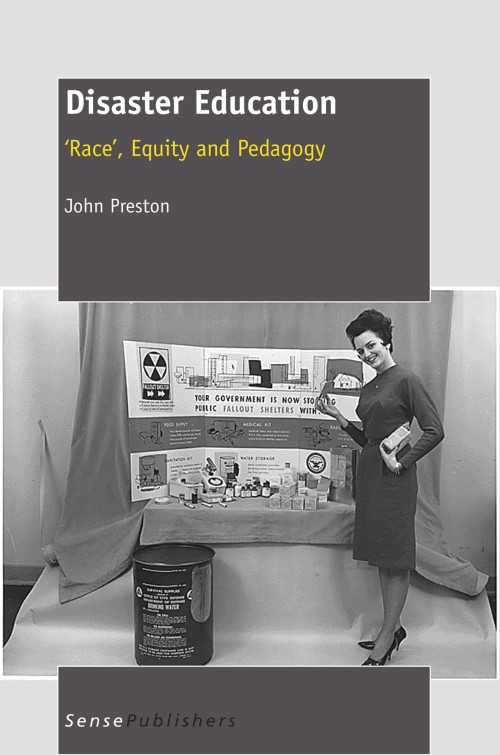
520 |aFrom ‘Duck and Cover’ in the 1950s, when American schoolchildren were instructed to hide beneath their desks in the event of nuclear attack to contemporary campaigns against pandemic flu, education campaigns have been used to prepare the general public for apocalyptic events. Governments have made use of various media from films, leaflets and television to the internet to inform, inspire and scare populations. Forms of disaster education also permeate popular culture with films and television programmes illustrating survival techniques from dealing with terrorist attacks in ‘24’ to thwarting zombie apocalypse in ‘The Walking Dead’ and ’28 Days Later’ . Using critical race theory and whiteness studies the book argues that information about disasters has always, tacitly or overtly, prioritised the survival of certain groups of citizens above others. Drawing on examples from the UK and the US, from past and contemporary disaster education and popular culture, it considers that rather than being kitsch, naïve and ephemeral, such campaigns are central to the way in which states define survival, life and death. The book will be of interest to educationalists, historians, sociologists and cultural theorists as well as those working in emergency planning, public health and communications.
532 8 |aAccessibility summary: This PDF eBook is produced by a third-party. We have requested that the file be made accessible and compliant with the European Accessibility Act (EAA). However, we have not been able to fully verify its compliance with recognized accessibility standards (such as PDF/UA or WCAG). For detailed accessibility information, please refer to the original publisher’s website. If you require an accessible version of this content, please contact accessibilitysupport@springernature.com. We are committed to improving accessibility and will work with the publisher to meet your needs wherever possible.
532 8 |aPublisher contact for further accessibility information: accessibilitysupport@springernature.com
650 0|aEducation.
650 14|aEducation.
710 2 |aSpringerLink (Online service)
773 0 |tSpringer Nature eBook
856 40|uhttps://doi.org/10.1007/978-94-6091-873-5
912 |aZDB-2-SHU
912 |aZDB-2-SXED
950 |aHumanities, Social Sciences and Law (SpringerNature-11648)
950 |aEducation (R0) (SpringerNature-43721)