

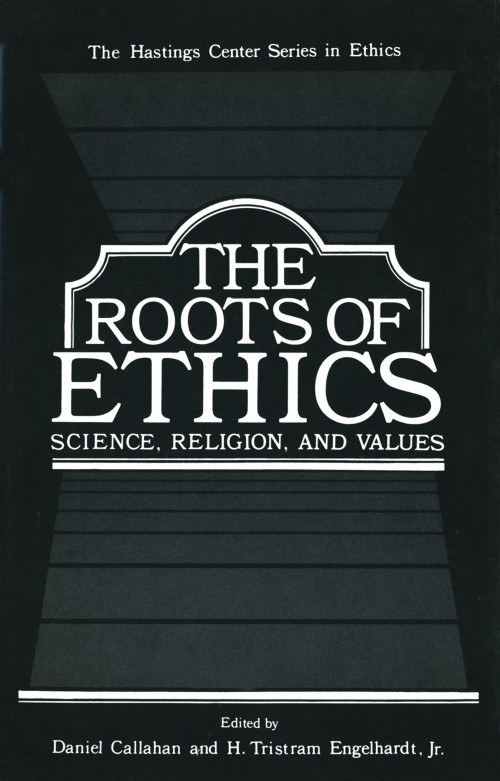
The Roots of Ethics [electronic resource] : Science, Religion, and Values / edited by Daniel Callahan.
Erişim Adresi
ISBN
9781461333036
Dil Kodu
İngilizce
Yer Numarası
DK/15285
Basım Bildirimi
1st ed. 1981.
Yayın Bilgisi
New York, NY : Springer US : Imprint: Springer, 1981.
Fiziksel Niteleme
XIII, 450 p. online resource.
Dizi
The Hastings Center Series in Ethics
İçindekiler Notu
1 A Crisis in Moral Philosophy: Why Is the Search for the Foundations of Ethics So Frustrating? -- Ethics, Foundations, and Science: Response to Alasdair MacIntyre -- 2 Moral Autonomy -- 3 The Concept of Responsibility: An Inquiry into the Foundations of an Ethics for Our Age -- 4 From System to Story: An Alternative Pattern for Rationality in Ethics -- 5 Can Medicine Dispense with a Theological Perspective on Human Nature? -- Kant’s Moral Theology or a Religious Ethics? -- A Rejoinder to a Rejoinder -- 6 Theology and Ethics: An Interpretation of the Agenda -- Response to James M. Gustafson -- Rejoinder to Hans Jonas -- 7 The Moral Psychology of Science -- 8 The Poverty of Scientism and the Promise of Structuralist Ethics -- 9 Natural Selection and Societal Laws -- 10 Evolution, Social Behavior, and Ethics -- 11 Attitudes toward Eugenics in Germany and Soviet Russia in the 1920’s: An Examination of Science and Values -- 12 Are Science and Ethics Compatible? -- 13 How Can We Reconnect the Sciences with the Foundations of Ethics? -- The Multiple Connections between Science and Ethics: Response to Stephen Toulmin.
Özet, vb.
OUR AGE IS CHARACTERIZED by an uncertainty about the na ture of moral obligations, about what one can hope for in an afterlife, and about the limits of human knowledge. These uncertainties were captured by Immanuel Kant in his Critique of Pure Reason, where he noted three basic human questions: what can we know, what ought we to do, and what can we hope for. Those questions and the uncer tainties about their answers still in great part define our cultural per spective. In particular, we are not clear about the foundations of ethics, or about their relationship to religion and to science. This volume brings together previously published essays that focus on these inter relationships and their uncertainties. It offers an attempt to sketch the interrelationship among three major intellectual efforts: determining moral obligations, the ultimate purpose and goals of man and the cosmos, and the nature of empirical reality. Though imperfect, it is an effort to frame the unity of the human condition, which is captured in part by ethics, in part by religion, and in part by the sciences. Put another way, this collection of essays springs from an attempt to see the unity of humans who engage in the diverse roles of valuers, be lievers, and knowers, while still remaining single, individual humans.
Konu
Ethics.
Moral Philosophy and Applied Ethics.
Moral Philosophy and Applied Ethics.
Diğer Yazarlar
Kurum Adı
Eseri Alıntıla
Referansları kullanmadan önce gözden geçirmeniz ve varsa gerekli düzeltmeleri yapmanız önerilir.
Dijital Kaynak
MARC Görünümü
LEADER 04878nam a22005295i 4500
001 814046
003 TR_AnAIT
005 20260130221917
007 cr nn 008mamaa
008 130218s1981 xxu| s |||| 0|eng d
020 |a9781461333036|9978-1-4613-3303-6
024 7 |a10.1007/978-1-4613-3303-6|2doi
041 |aeng
049 |aTürk Tarih Kurumu Kütüphanesi
050 4|aBJ1-1725
072 7|aHPQ|2bicssc
072 7|aPHI005000|2bisacsh
072 7|aQDTQ|2thema
082 04|a170|223
090 |aDK/15285
245 14|aThe Roots of Ethics|h[electronic resource] :|bScience, Religion, and Values /|cedited by Daniel Callahan.
250 |a1st ed. 1981.
264 1|aNew York, NY :|bSpringer US :|bImprint: Springer,|c1981.
300 |aXIII, 450 p.|bonline resource.
336 |atext|btxt|2rdacontent
337 |acomputer|bc|2rdamedia
338 |aonline resource|bcr|2rdacarrier
347 |atext file|bPDF|2rda
490 1 |aThe Hastings Center Series in Ethics
505 0 |a1 A Crisis in Moral Philosophy: Why Is the Search for the Foundations of Ethics So Frustrating? -- Ethics, Foundations, and Science: Response to Alasdair MacIntyre -- 2 Moral Autonomy -- 3 The Concept of Responsibility: An Inquiry into the Foundations of an Ethics for Our Age -- 4 From System to Story: An Alternative Pattern for Rationality in Ethics -- 5 Can Medicine Dispense with a Theological Perspective on Human Nature? -- Kant’s Moral Theology or a Religious Ethics? -- A Rejoinder to a Rejoinder -- 6 Theology and Ethics: An Interpretation of the Agenda -- Response to James M. Gustafson -- Rejoinder to Hans Jonas -- 7 The Moral Psychology of Science -- 8 The Poverty of Scientism and the Promise of Structuralist Ethics -- 9 Natural Selection and Societal Laws -- 10 Evolution, Social Behavior, and Ethics -- 11 Attitudes toward Eugenics in Germany and Soviet Russia in the 1920’s: An Examination of Science and Values -- 12 Are Science and Ethics Compatible? -- 13 How Can We Reconnect the Sciences with the Foundations of Ethics? -- The Multiple Connections between Science and Ethics: Response to Stephen Toulmin.
520 |aOUR AGE IS CHARACTERIZED by an uncertainty about the na ture of moral obligations, about what one can hope for in an afterlife, and about the limits of human knowledge. These uncertainties were captured by Immanuel Kant in his Critique of Pure Reason, where he noted three basic human questions: what can we know, what ought we to do, and what can we hope for. Those questions and the uncer tainties about their answers still in great part define our cultural per spective. In particular, we are not clear about the foundations of ethics, or about their relationship to religion and to science. This volume brings together previously published essays that focus on these inter relationships and their uncertainties. It offers an attempt to sketch the interrelationship among three major intellectual efforts: determining moral obligations, the ultimate purpose and goals of man and the cosmos, and the nature of empirical reality. Though imperfect, it is an effort to frame the unity of the human condition, which is captured in part by ethics, in part by religion, and in part by the sciences. Put another way, this collection of essays springs from an attempt to see the unity of humans who engage in the diverse roles of valuers, be lievers, and knowers, while still remaining single, individual humans.
532 8 |aAccessibility summary: This PDF is not accessible. It is based on scanned pages and does not support features such as screen reader compatibility or described non-text content (images, graphs etc). However, it likely supports searchable and selectable text based on OCR (Optical Character Recognition). Users with accessibility needs may not be able to use this content effectively. Please contact us at accessibilitysupport@springernature.com if you require assistance or an alternative format.
532 8 |aInaccessible, or known limited accessibility
532 8 |aNo reading system accessibility options actively disabled
532 8 |aPublisher contact for further accessibility information: accessibilitysupport@springernature.com
650 0|aEthics.
650 14|aMoral Philosophy and Applied Ethics.
700 1 |aCallahan, Daniel.|eeditor.|4edt|4http://id.loc.gov/vocabulary/relators/edt
710 2 |aSpringerLink (Online service)
773 0 |tSpringer Nature eBook
776 08|iPrinted edition:|z9780306407963
776 08|iPrinted edition:|z9781461333043
776 08|iPrinted edition:|z9781461333050
830 0|aThe Hastings Center Series in Ethics
856 40|uhttps://doi.org/10.1007/978-1-4613-3303-6
912 |aZDB-2-SHU
912 |aZDB-2-SXPR
912 |aZDB-2-BAE
950 |aHumanities, Social Sciences and Law (SpringerNature-11648)
950 |aPhilosophy and Religion (R0) (SpringerNature-43725)
001 814046
003 TR_AnAIT
005 20260130221917
007 cr nn 008mamaa
008 130218s1981 xxu| s |||| 0|eng d
020 |a9781461333036|9978-1-4613-3303-6
024 7 |a10.1007/978-1-4613-3303-6|2doi
041 |aeng
049 |aTürk Tarih Kurumu Kütüphanesi
050 4|aBJ1-1725
072 7|aHPQ|2bicssc
072 7|aPHI005000|2bisacsh
072 7|aQDTQ|2thema
082 04|a170|223
090 |aDK/15285
245 14|aThe Roots of Ethics|h[electronic resource] :|bScience, Religion, and Values /|cedited by Daniel Callahan.
250 |a1st ed. 1981.
264 1|aNew York, NY :|bSpringer US :|bImprint: Springer,|c1981.
300 |aXIII, 450 p.|bonline resource.
336 |atext|btxt|2rdacontent
337 |acomputer|bc|2rdamedia
338 |aonline resource|bcr|2rdacarrier
347 |atext file|bPDF|2rda
490 1 |aThe Hastings Center Series in Ethics
505 0 |a1 A Crisis in Moral Philosophy: Why Is the Search for the Foundations of Ethics So Frustrating? -- Ethics, Foundations, and Science: Response to Alasdair MacIntyre -- 2 Moral Autonomy -- 3 The Concept of Responsibility: An Inquiry into the Foundations of an Ethics for Our Age -- 4 From System to Story: An Alternative Pattern for Rationality in Ethics -- 5 Can Medicine Dispense with a Theological Perspective on Human Nature? -- Kant’s Moral Theology or a Religious Ethics? -- A Rejoinder to a Rejoinder -- 6 Theology and Ethics: An Interpretation of the Agenda -- Response to James M. Gustafson -- Rejoinder to Hans Jonas -- 7 The Moral Psychology of Science -- 8 The Poverty of Scientism and the Promise of Structuralist Ethics -- 9 Natural Selection and Societal Laws -- 10 Evolution, Social Behavior, and Ethics -- 11 Attitudes toward Eugenics in Germany and Soviet Russia in the 1920’s: An Examination of Science and Values -- 12 Are Science and Ethics Compatible? -- 13 How Can We Reconnect the Sciences with the Foundations of Ethics? -- The Multiple Connections between Science and Ethics: Response to Stephen Toulmin.
520 |aOUR AGE IS CHARACTERIZED by an uncertainty about the na ture of moral obligations, about what one can hope for in an afterlife, and about the limits of human knowledge. These uncertainties were captured by Immanuel Kant in his Critique of Pure Reason, where he noted three basic human questions: what can we know, what ought we to do, and what can we hope for. Those questions and the uncer tainties about their answers still in great part define our cultural per spective. In particular, we are not clear about the foundations of ethics, or about their relationship to religion and to science. This volume brings together previously published essays that focus on these inter relationships and their uncertainties. It offers an attempt to sketch the interrelationship among three major intellectual efforts: determining moral obligations, the ultimate purpose and goals of man and the cosmos, and the nature of empirical reality. Though imperfect, it is an effort to frame the unity of the human condition, which is captured in part by ethics, in part by religion, and in part by the sciences. Put another way, this collection of essays springs from an attempt to see the unity of humans who engage in the diverse roles of valuers, be lievers, and knowers, while still remaining single, individual humans.
532 8 |aAccessibility summary: This PDF is not accessible. It is based on scanned pages and does not support features such as screen reader compatibility or described non-text content (images, graphs etc). However, it likely supports searchable and selectable text based on OCR (Optical Character Recognition). Users with accessibility needs may not be able to use this content effectively. Please contact us at accessibilitysupport@springernature.com if you require assistance or an alternative format.
532 8 |aInaccessible, or known limited accessibility
532 8 |aNo reading system accessibility options actively disabled
532 8 |aPublisher contact for further accessibility information: accessibilitysupport@springernature.com
650 0|aEthics.
650 14|aMoral Philosophy and Applied Ethics.
700 1 |aCallahan, Daniel.|eeditor.|4edt|4http://id.loc.gov/vocabulary/relators/edt
710 2 |aSpringerLink (Online service)
773 0 |tSpringer Nature eBook
776 08|iPrinted edition:|z9780306407963
776 08|iPrinted edition:|z9781461333043
776 08|iPrinted edition:|z9781461333050
830 0|aThe Hastings Center Series in Ethics
856 40|uhttps://doi.org/10.1007/978-1-4613-3303-6
912 |aZDB-2-SHU
912 |aZDB-2-SXPR
912 |aZDB-2-BAE
950 |aHumanities, Social Sciences and Law (SpringerNature-11648)
950 |aPhilosophy and Religion (R0) (SpringerNature-43725)
Materyaller
Depodan talep edilen materyal sadece kütüphane içerisinde kullanılmaktadır.
Materyal dışarıya ödünç verilmemektedir.
Materyal dışarıya ödünç verilmemektedir.
