

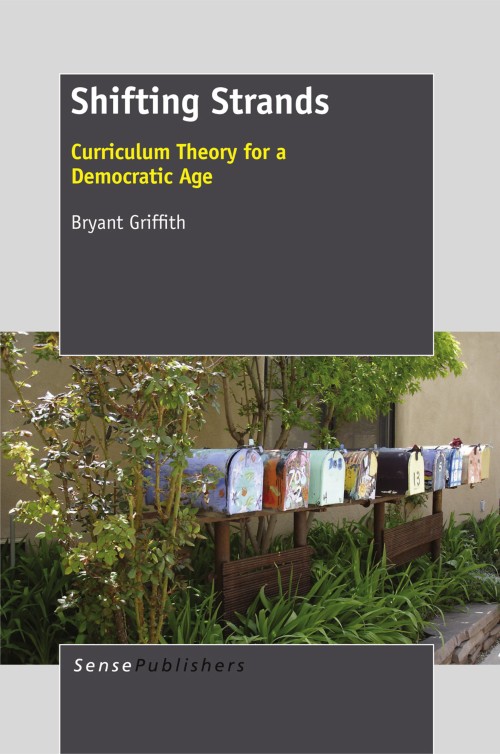
Shifting Strands [electronic resource] : Curriculum Theory for a Democratic Age / by Bryant Griffith.
Erişim Adresi
ISBN
9789462090897
Dil Kodu
İngilizce
Yer Numarası
DK/15306
Yazar
Basım Bildirimi
1st ed. 2012.
Yayın Bilgisi
Rotterdam : SensePublishers : Imprint: SensePublishers, 2012.
Fiziksel Niteleme
VIII, 86 p. online resource.
Özet, vb.
In this the sixth book of a series of exploratory and cautionary tales, Griffith revisits the sites of reflective knowledge and practical experiences that have been our historical presuppositions, and which are now in the process of flux and change. As in his previous books, historical discourse, what we know and can know about the past, is used as the baseline for understanding. This is an ongoing process, where ideas are considered, used to interact with other ideas, and then, among communities of learners, are incorporated, supplanted, or rejected. This is more than a dialectical process because it is based in human action. In education, broadly speaking, we have taught and have learned that this was a linear, rational path that could be mapped, but in today's fragmented, decentered world of difference we can no longer be certain that our presuppositions hold or apply. Using the analogy of shifting strands, this book provides a way of coming to understand, rather than a way of knowing. It suggests that our emerging paradigm will be grounded in presuppositions that are relative to person, place, and time and that certainty may be illusive. The role of introducing ideas like these in a mass capitalist democracy such as ours is a staggering challenge, and it is one that has fallen to educators whether they wish it or not. Shifting Strands challenges both teachers and learners to take up the torch and run with it. This can be accomplished by thinking in a way that is both historical and philosophical; one that understands that learning occurs when we understand where our learners are situated in terms of place and thought. Thinking and knowing about the world is relative to who you are and your ability to thinking in a critical and reflexive way. This is only the first part of the challenge. The second, and no less important, task is for you to realize the power of our polymodal world. Increasingly, we rely on social networks in our decision-making and retreat fromthe more difficult process of negotiation and interaction, but it is this process that schooling must explore and practice. Our world is paradoxical. There are few, if any, certainties and the trip to understanding our reasons for believing and acting as we do is one with many different routes. It is an exciting time, full of possibility and open to the maverick in you, and open to your creative spirit. Come along for the ride.
Konu
Education.
Education.
Education.
Kurum Adı
Eseri Alıntıla
Referansları kullanmadan önce gözden geçirmeniz ve varsa gerekli düzeltmeleri yapmanız önerilir.
Dijital Kaynak
MARC Görünümü
LEADER 04520nam a22004215i 4500
001 814067
003 TR_AnAIT
005 20260130221809
007 cr nn 008mamaa
008 121227s2012 ne | s |||| 0|eng d
020 |a9789462090897|9978-94-6209-089-7
024 7 |a10.1007/978-94-6209-089-7|2doi
041 |aeng
049 |aTürk Tarih Kurumu Kütüphanesi
050 4|aL1-991
072 7|aJN|2bicssc
072 7|aEDU000000|2bisacsh
072 7|aJN|2thema
082 04|a370|223
090 |aDK/15306
100 1 |aGriffith, Bryant.|eauthor.|4aut|4http://id.loc.gov/vocabulary/relators/aut
245 10|aShifting Strands|h[electronic resource] :|bCurriculum Theory for a Democratic Age /|cby Bryant Griffith.
250 |a1st ed. 2012.
264 1|aRotterdam :|bSensePublishers :|bImprint: SensePublishers,|c2012.
300 |aVIII, 86 p.|bonline resource.
336 |atext|btxt|2rdacontent
337 |acomputer|bc|2rdamedia
338 |aonline resource|bcr|2rdacarrier
347 |atext file|bPDF|2rda
520 |aIn this the sixth book of a series of exploratory and cautionary tales, Griffith revisits the sites of reflective knowledge and practical experiences that have been our historical presuppositions, and which are now in the process of flux and change. As in his previous books, historical discourse, what we know and can know about the past, is used as the baseline for understanding. This is an ongoing process, where ideas are considered, used to interact with other ideas, and then, among communities of learners, are incorporated, supplanted, or rejected. This is more than a dialectical process because it is based in human action. In education, broadly speaking, we have taught and have learned that this was a linear, rational path that could be mapped, but in today's fragmented, decentered world of difference we can no longer be certain that our presuppositions hold or apply. Using the analogy of shifting strands, this book provides a way of coming to understand, rather than a way of knowing. It suggests that our emerging paradigm will be grounded in presuppositions that are relative to person, place, and time and that certainty may be illusive. The role of introducing ideas like these in a mass capitalist democracy such as ours is a staggering challenge, and it is one that has fallen to educators whether they wish it or not. Shifting Strands challenges both teachers and learners to take up the torch and run with it. This can be accomplished by thinking in a way that is both historical and philosophical; one that understands that learning occurs when we understand where our learners are situated in terms of place and thought. Thinking and knowing about the world is relative to who you are and your ability to thinking in a critical and reflexive way. This is only the first part of the challenge. The second, and no less important, task is for you to realize the power of our polymodal world. Increasingly, we rely on social networks in our decision-making and retreat fromthe more difficult process of negotiation and interaction, but it is this process that schooling must explore and practice. Our world is paradoxical. There are few, if any, certainties and the trip to understanding our reasons for believing and acting as we do is one with many different routes. It is an exciting time, full of possibility and open to the maverick in you, and open to your creative spirit. Come along for the ride.
532 8 |aAccessibility summary: This PDF eBook is produced by a third-party. We have requested that the file be made accessible and compliant with the European Accessibility Act (EAA). However, we have not been able to fully verify its compliance with recognized accessibility standards (such as PDF/UA or WCAG). For detailed accessibility information, please refer to the original publisher’s website. If you require an accessible version of this content, please contact accessibilitysupport@springernature.com. We are committed to improving accessibility and will work with the publisher to meet your needs wherever possible.
532 8 |aPublisher contact for further accessibility information: accessibilitysupport@springernature.com
650 0|aEducation.
650 14|aEducation.
710 2 |aSpringerLink (Online service)
773 0 |tSpringer Nature eBook
856 40|uhttps://doi.org/10.1007/978-94-6209-089-7
912 |aZDB-2-SHU
912 |aZDB-2-SXED
950 |aHumanities, Social Sciences and Law (SpringerNature-11648)
950 |aEducation (R0) (SpringerNature-43721)
001 814067
003 TR_AnAIT
005 20260130221809
007 cr nn 008mamaa
008 121227s2012 ne | s |||| 0|eng d
020 |a9789462090897|9978-94-6209-089-7
024 7 |a10.1007/978-94-6209-089-7|2doi
041 |aeng
049 |aTürk Tarih Kurumu Kütüphanesi
050 4|aL1-991
072 7|aJN|2bicssc
072 7|aEDU000000|2bisacsh
072 7|aJN|2thema
082 04|a370|223
090 |aDK/15306
100 1 |aGriffith, Bryant.|eauthor.|4aut|4http://id.loc.gov/vocabulary/relators/aut
245 10|aShifting Strands|h[electronic resource] :|bCurriculum Theory for a Democratic Age /|cby Bryant Griffith.
250 |a1st ed. 2012.
264 1|aRotterdam :|bSensePublishers :|bImprint: SensePublishers,|c2012.
300 |aVIII, 86 p.|bonline resource.
336 |atext|btxt|2rdacontent
337 |acomputer|bc|2rdamedia
338 |aonline resource|bcr|2rdacarrier
347 |atext file|bPDF|2rda
520 |aIn this the sixth book of a series of exploratory and cautionary tales, Griffith revisits the sites of reflective knowledge and practical experiences that have been our historical presuppositions, and which are now in the process of flux and change. As in his previous books, historical discourse, what we know and can know about the past, is used as the baseline for understanding. This is an ongoing process, where ideas are considered, used to interact with other ideas, and then, among communities of learners, are incorporated, supplanted, or rejected. This is more than a dialectical process because it is based in human action. In education, broadly speaking, we have taught and have learned that this was a linear, rational path that could be mapped, but in today's fragmented, decentered world of difference we can no longer be certain that our presuppositions hold or apply. Using the analogy of shifting strands, this book provides a way of coming to understand, rather than a way of knowing. It suggests that our emerging paradigm will be grounded in presuppositions that are relative to person, place, and time and that certainty may be illusive. The role of introducing ideas like these in a mass capitalist democracy such as ours is a staggering challenge, and it is one that has fallen to educators whether they wish it or not. Shifting Strands challenges both teachers and learners to take up the torch and run with it. This can be accomplished by thinking in a way that is both historical and philosophical; one that understands that learning occurs when we understand where our learners are situated in terms of place and thought. Thinking and knowing about the world is relative to who you are and your ability to thinking in a critical and reflexive way. This is only the first part of the challenge. The second, and no less important, task is for you to realize the power of our polymodal world. Increasingly, we rely on social networks in our decision-making and retreat fromthe more difficult process of negotiation and interaction, but it is this process that schooling must explore and practice. Our world is paradoxical. There are few, if any, certainties and the trip to understanding our reasons for believing and acting as we do is one with many different routes. It is an exciting time, full of possibility and open to the maverick in you, and open to your creative spirit. Come along for the ride.
532 8 |aAccessibility summary: This PDF eBook is produced by a third-party. We have requested that the file be made accessible and compliant with the European Accessibility Act (EAA). However, we have not been able to fully verify its compliance with recognized accessibility standards (such as PDF/UA or WCAG). For detailed accessibility information, please refer to the original publisher’s website. If you require an accessible version of this content, please contact accessibilitysupport@springernature.com. We are committed to improving accessibility and will work with the publisher to meet your needs wherever possible.
532 8 |aPublisher contact for further accessibility information: accessibilitysupport@springernature.com
650 0|aEducation.
650 14|aEducation.
710 2 |aSpringerLink (Online service)
773 0 |tSpringer Nature eBook
856 40|uhttps://doi.org/10.1007/978-94-6209-089-7
912 |aZDB-2-SHU
912 |aZDB-2-SXED
950 |aHumanities, Social Sciences and Law (SpringerNature-11648)
950 |aEducation (R0) (SpringerNature-43721)
Materyaller
Depodan talep edilen materyal sadece kütüphane içerisinde kullanılmaktadır.
Materyal dışarıya ödünç verilmemektedir.
Materyal dışarıya ödünç verilmemektedir.
