

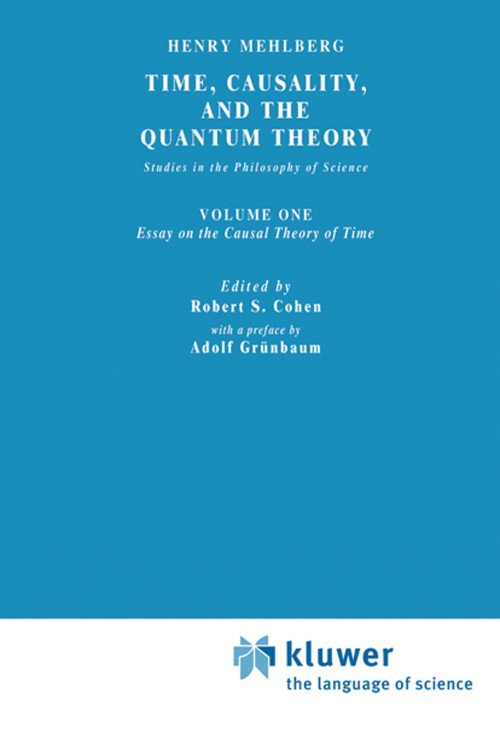
Time, Causality, and the Quantum Theory [electronic resource] : Studies in the Philosophy of Science. Vol. 1: Essay on the Causal Theory of Time / by S. Mehlberg ; edited by Carolyn R. Fawcett, Robert S. Cohen.
Erişim Adresi
ISBN
9789400989351
Dil Kodu
İngilizce
Yer Numarası
DK/15441
Yazar
Basım Bildirimi
1st ed. 1980.
Yayın Bilgisi
Dordrecht : Springer Netherlands : Imprint: Springer, 1980.
Fiziksel Niteleme
XX, 308 p. online resource.
Dizi
Boston Studies in the Philosophy and History of Science, 2214-7942 ; 19-1
İçindekiler Notu
to Volumes I and II -- I: The Causal Theory of Time in the Works of Its Principal Representatives -- I. Leibniz and the Beginnings of the Causal Theory of Time -- II. Kant’s Phenomenalist Interpretation of the Causal Theory of Time -- III. Lechalas’ Adaptation of the Causal Theory of Time to the Laws of pre-Einsteinian Physics -- IV. The Relativistic Phase of the Causal Theory of Time: The Axiomatic Systems of Robb and Carnap -- V. The Relativistic Phase of the Causal Theory of Time: The Work of Reichenbach -- VI. Russell’s Causal Explanation of Duration -- VII. Alternative Approaches to Time’s Arrow -- II: Duration and Causality -- VIII. The Intuitive Foundations of the Knowledge of Time -- IX. Physical Time -- X. Non-Physical Time -- Supplement -- 1. The Present Empirical Status of Psychophysical Parallelism -- 2. Conceptual Analysis of Psychophysical Parallelism -- Notes -- Index of Names.
Özet, vb.
An intermittent but mentally quite disabling illness prevented Henry Mehlberg from becoming recognized more widely as the formidable scholar he was, when at his best. During World War II, he had lived in hiding under the false identity of an egg farmer, when the Nazis occupied his native Poland. After relatively short academic appointments at the University of Toronto and at Princeton University, he taught at the University of Chicago until reaching the age of normal retirement. But partly at the initiative of his Chicago colleague Charles Morris, who had preceded him to a 'post-retirement' profes sorship at the University of Florida in Gainesville, and with the support of Eugene Wigner, he then received an appointment at that University, where he remained until his death in 1979. In Chicago, he organized a discussion group of scholars from that area as a kind of small scale model of the Vienna Circle, which met at his apart ment, where he lived with his first wife Janina, a mathematician. It was during this Chicago period that the functional disturbances from his illness were pronounced and not infrequent. The very unfortunate result was that colleagues who had no prior knowledge of the caliber of his writings in Polish and French or of his very considerable intellectual powers, had little incentive to read his published work, which he had begun to write in English.
Konu
Science __ Philosophy.
Philosophy of Science.
Philosophy of Science.
Diğer Yazarlar
Kurum Adı
Eseri Alıntıla
Referansları kullanmadan önce gözden geçirmeniz ve varsa gerekli düzeltmeleri yapmanız önerilir.
Dijital Kaynak
MARC Görünümü
LEADER 05124nam a22005655i 4500
001 814202
003 TR_AnAIT
005 20260130220939
007 cr nn 008mamaa
008 121227s1980 ne | s |||| 0|eng d
020 |a9789400989351|9978-94-009-8935-1
024 7 |a10.1007/978-94-009-8935-1|2doi
041 |aeng
049 |aTürk Tarih Kurumu Kütüphanesi
050 4|aQ174-175.3
050 4|aB67
072 7|aPDA|2bicssc
072 7|aSCI075000|2bisacsh
072 7|aPDA|2thema
082 04|a501|223
090 |aDK/15441
100 1 |aMehlberg, S.|eauthor.|4aut|4http://id.loc.gov/vocabulary/relators/aut
245 10|aTime, Causality, and the Quantum Theory|h[electronic resource] :|bStudies in the Philosophy of Science. Vol. 1: Essay on the Causal Theory of Time /|cby S. Mehlberg ; edited by Carolyn R. Fawcett, Robert S. Cohen.
250 |a1st ed. 1980.
264 1|aDordrecht :|bSpringer Netherlands :|bImprint: Springer,|c1980.
300 |aXX, 308 p.|bonline resource.
336 |atext|btxt|2rdacontent
337 |acomputer|bc|2rdamedia
338 |aonline resource|bcr|2rdacarrier
347 |atext file|bPDF|2rda
490 1 |aBoston Studies in the Philosophy and History of Science,|x2214-7942 ;|v19-1
505 0 |ato Volumes I and II -- I: The Causal Theory of Time in the Works of Its Principal Representatives -- I. Leibniz and the Beginnings of the Causal Theory of Time -- II. Kant’s Phenomenalist Interpretation of the Causal Theory of Time -- III. Lechalas’ Adaptation of the Causal Theory of Time to the Laws of pre-Einsteinian Physics -- IV. The Relativistic Phase of the Causal Theory of Time: The Axiomatic Systems of Robb and Carnap -- V. The Relativistic Phase of the Causal Theory of Time: The Work of Reichenbach -- VI. Russell’s Causal Explanation of Duration -- VII. Alternative Approaches to Time’s Arrow -- II: Duration and Causality -- VIII. The Intuitive Foundations of the Knowledge of Time -- IX. Physical Time -- X. Non-Physical Time -- Supplement -- 1. The Present Empirical Status of Psychophysical Parallelism -- 2. Conceptual Analysis of Psychophysical Parallelism -- Notes -- Index of Names.
520 |aAn intermittent but mentally quite disabling illness prevented Henry Mehlberg from becoming recognized more widely as the formidable scholar he was, when at his best. During World War II, he had lived in hiding under the false identity of an egg farmer, when the Nazis occupied his native Poland. After relatively short academic appointments at the University of Toronto and at Princeton University, he taught at the University of Chicago until reaching the age of normal retirement. But partly at the initiative of his Chicago colleague Charles Morris, who had preceded him to a 'post-retirement' profes sorship at the University of Florida in Gainesville, and with the support of Eugene Wigner, he then received an appointment at that University, where he remained until his death in 1979. In Chicago, he organized a discussion group of scholars from that area as a kind of small scale model of the Vienna Circle, which met at his apart ment, where he lived with his first wife Janina, a mathematician. It was during this Chicago period that the functional disturbances from his illness were pronounced and not infrequent. The very unfortunate result was that colleagues who had no prior knowledge of the caliber of his writings in Polish and French or of his very considerable intellectual powers, had little incentive to read his published work, which he had begun to write in English.
532 8 |aAccessibility summary: This PDF is not accessible. It is based on scanned pages and does not support features such as screen reader compatibility or described non-text content (images, graphs etc). However, it likely supports searchable and selectable text based on OCR (Optical Character Recognition). Users with accessibility needs may not be able to use this content effectively. Please contact us at accessibilitysupport@springernature.com if you require assistance or an alternative format.
532 8 |aInaccessible, or known limited accessibility
532 8 |aNo reading system accessibility options actively disabled
532 8 |aPublisher contact for further accessibility information: accessibilitysupport@springernature.com
650 0|aScience|xPhilosophy.
650 14|aPhilosophy of Science.
700 1 |aFawcett, Carolyn R.|eeditor.|4edt|4http://id.loc.gov/vocabulary/relators/edt
700 1 |aCohen, Robert S.|eeditor.|4edt|4http://id.loc.gov/vocabulary/relators/edt
710 2 |aSpringerLink (Online service)
773 0 |tSpringer Nature eBook
776 08|iPrinted edition:|z9789027707215
776 08|iPrinted edition:|z9789027710741
776 08|iPrinted edition:|z9789400989368
830 0|aBoston Studies in the Philosophy and History of Science,|x2214-7942 ;|v19-1
856 40|uhttps://doi.org/10.1007/978-94-009-8935-1
912 |aZDB-2-SHU
912 |aZDB-2-SXPR
912 |aZDB-2-BAE
950 |aHumanities, Social Sciences and Law (SpringerNature-11648)
950 |aPhilosophy and Religion (R0) (SpringerNature-43725)
001 814202
003 TR_AnAIT
005 20260130220939
007 cr nn 008mamaa
008 121227s1980 ne | s |||| 0|eng d
020 |a9789400989351|9978-94-009-8935-1
024 7 |a10.1007/978-94-009-8935-1|2doi
041 |aeng
049 |aTürk Tarih Kurumu Kütüphanesi
050 4|aQ174-175.3
050 4|aB67
072 7|aPDA|2bicssc
072 7|aSCI075000|2bisacsh
072 7|aPDA|2thema
082 04|a501|223
090 |aDK/15441
100 1 |aMehlberg, S.|eauthor.|4aut|4http://id.loc.gov/vocabulary/relators/aut
245 10|aTime, Causality, and the Quantum Theory|h[electronic resource] :|bStudies in the Philosophy of Science. Vol. 1: Essay on the Causal Theory of Time /|cby S. Mehlberg ; edited by Carolyn R. Fawcett, Robert S. Cohen.
250 |a1st ed. 1980.
264 1|aDordrecht :|bSpringer Netherlands :|bImprint: Springer,|c1980.
300 |aXX, 308 p.|bonline resource.
336 |atext|btxt|2rdacontent
337 |acomputer|bc|2rdamedia
338 |aonline resource|bcr|2rdacarrier
347 |atext file|bPDF|2rda
490 1 |aBoston Studies in the Philosophy and History of Science,|x2214-7942 ;|v19-1
505 0 |ato Volumes I and II -- I: The Causal Theory of Time in the Works of Its Principal Representatives -- I. Leibniz and the Beginnings of the Causal Theory of Time -- II. Kant’s Phenomenalist Interpretation of the Causal Theory of Time -- III. Lechalas’ Adaptation of the Causal Theory of Time to the Laws of pre-Einsteinian Physics -- IV. The Relativistic Phase of the Causal Theory of Time: The Axiomatic Systems of Robb and Carnap -- V. The Relativistic Phase of the Causal Theory of Time: The Work of Reichenbach -- VI. Russell’s Causal Explanation of Duration -- VII. Alternative Approaches to Time’s Arrow -- II: Duration and Causality -- VIII. The Intuitive Foundations of the Knowledge of Time -- IX. Physical Time -- X. Non-Physical Time -- Supplement -- 1. The Present Empirical Status of Psychophysical Parallelism -- 2. Conceptual Analysis of Psychophysical Parallelism -- Notes -- Index of Names.
520 |aAn intermittent but mentally quite disabling illness prevented Henry Mehlberg from becoming recognized more widely as the formidable scholar he was, when at his best. During World War II, he had lived in hiding under the false identity of an egg farmer, when the Nazis occupied his native Poland. After relatively short academic appointments at the University of Toronto and at Princeton University, he taught at the University of Chicago until reaching the age of normal retirement. But partly at the initiative of his Chicago colleague Charles Morris, who had preceded him to a 'post-retirement' profes sorship at the University of Florida in Gainesville, and with the support of Eugene Wigner, he then received an appointment at that University, where he remained until his death in 1979. In Chicago, he organized a discussion group of scholars from that area as a kind of small scale model of the Vienna Circle, which met at his apart ment, where he lived with his first wife Janina, a mathematician. It was during this Chicago period that the functional disturbances from his illness were pronounced and not infrequent. The very unfortunate result was that colleagues who had no prior knowledge of the caliber of his writings in Polish and French or of his very considerable intellectual powers, had little incentive to read his published work, which he had begun to write in English.
532 8 |aAccessibility summary: This PDF is not accessible. It is based on scanned pages and does not support features such as screen reader compatibility or described non-text content (images, graphs etc). However, it likely supports searchable and selectable text based on OCR (Optical Character Recognition). Users with accessibility needs may not be able to use this content effectively. Please contact us at accessibilitysupport@springernature.com if you require assistance or an alternative format.
532 8 |aInaccessible, or known limited accessibility
532 8 |aNo reading system accessibility options actively disabled
532 8 |aPublisher contact for further accessibility information: accessibilitysupport@springernature.com
650 0|aScience|xPhilosophy.
650 14|aPhilosophy of Science.
700 1 |aFawcett, Carolyn R.|eeditor.|4edt|4http://id.loc.gov/vocabulary/relators/edt
700 1 |aCohen, Robert S.|eeditor.|4edt|4http://id.loc.gov/vocabulary/relators/edt
710 2 |aSpringerLink (Online service)
773 0 |tSpringer Nature eBook
776 08|iPrinted edition:|z9789027707215
776 08|iPrinted edition:|z9789027710741
776 08|iPrinted edition:|z9789400989368
830 0|aBoston Studies in the Philosophy and History of Science,|x2214-7942 ;|v19-1
856 40|uhttps://doi.org/10.1007/978-94-009-8935-1
912 |aZDB-2-SHU
912 |aZDB-2-SXPR
912 |aZDB-2-BAE
950 |aHumanities, Social Sciences and Law (SpringerNature-11648)
950 |aPhilosophy and Religion (R0) (SpringerNature-43725)
Materyaller
Depodan talep edilen materyal sadece kütüphane içerisinde kullanılmaktadır.
Materyal dışarıya ödünç verilmemektedir.
Materyal dışarıya ödünç verilmemektedir.
