

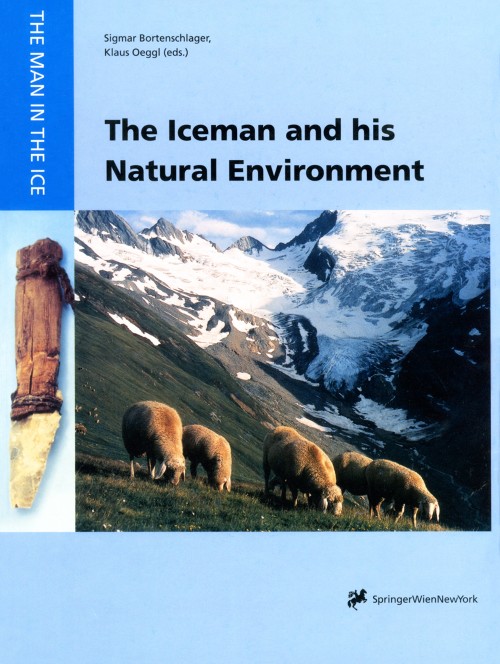
The Iceman and his Natural Environment [electronic resource] : Palaeobotanical Results / edited by Sigmar Bortenschlager, Klaus Oeggl.
Erişim Adresi
ISBN
9783709167588
Dil Kodu
İngilizce
Yer Numarası
DK/15491
Basım Bildirimi
1st ed. 2000.
Yayın Bilgisi
Vienna : Springer Vienna : Imprint: Springer, 2000.
Fiziksel Niteleme
X, 246 p. online resource.
Dizi
The Man in the Ice ; 4
İçindekiler Notu
Radiocarbon dating of equipment from the Iceman -- The Iceman’s environment -- The amount of CO2 in the air breathed by the Iceman -- Dendrological analyses of artefacts and other remains -- The bow of thelyrolean Iceman: A dendrological investigation by computed tomography -- Analysis of the bast used by the Iceman as binding material -- Bryology and the Iceman: Chorology, Ecology and Ethnobotany of the Mosses Neckera complanata Hedw. and N. crispa Hedw. -- The diet of the Iceman -- Diatoms from the colon of the Iceman. -- Parasitological examination of the Iceman -- Vivianite from the Iceman of the Tisenjoch (Tyrol, Austria): Mineralogical-chemical data -- Ethnomycological remarks on the Iceman’s fungi -- Contribution to insect remains from the accompanying equipment of the Iceman -- Compilation of DNA sequences from the Iceman’s grass clothing -- Epilogue: The search for explanations and future Developments.
Özet, vb.
Before the discovery of the "Man in the Ice" in temporal context. On the other hand the reconstruc tion of the Iceman's life-style as derived from data September 1991, little was known about the Neolithic obtained from the site has to be correlated with inde period in the Central Alps. Suddenly and without precedent, here was the very well preserved corpse of pendent data sets. For that purpose pollen analysis was a man who had lived more than 5,000 years ago with his performed on peat-bogs in the vicinity of the find and clothing and equipment almost intact. The discovery further afield to obtain precise data on the vegetation was not just deservedly a world-wide sensation but a cover and climate in the Neolithic. Pollen analysis was unique opportunity for the scientific community to in performed for a vertical transect extending from the vestigate the life and death of a human from such very timber line almost up to the nival zone. The results of ancient times. It opened up wholly new horizons in the analyses reveal changes to the vegetation patterns prehistoric research, and with the help of a full range caused by pastoral farming long before the time of the of modern research techniques an attempt was made Iceman.
Konu
Anthropology.
Botany.
Microbiology.
Zoology.
Ecology .
Agriculture.
Anthropology.
Plant Science.
Microbiology.
Zoology.
Ecology.
Agriculture.
Botany.
Microbiology.
Zoology.
Ecology .
Agriculture.
Anthropology.
Plant Science.
Microbiology.
Zoology.
Ecology.
Agriculture.
Diğer Yazarlar
Kurum Adı
Eseri Alıntıla
Referansları kullanmadan önce gözden geçirmeniz ve varsa gerekli düzeltmeleri yapmanız önerilir.
Dijital Kaynak
MARC Görünümü
LEADER 04939nam a22006615i 4500
001 814252
003 TR_AnAIT
005 20260130220648
007 cr nn 008mamaa
008 121227s2000 au | s |||| 0|eng d
020 |a9783709167588|9978-3-7091-6758-8
024 7 |a10.1007/978-3-7091-6758-8|2doi
041 |aeng
049 |aTürk Tarih Kurumu Kütüphanesi
050 4|aGN
072 7|aJHM|2bicssc
072 7|aSOC002000|2bisacsh
072 7|aJHM|2thema
082 04|a301|223
090 |aDK/15491
245 14|aThe Iceman and his Natural Environment|h[electronic resource] :|bPalaeobotanical Results /|cedited by Sigmar Bortenschlager, Klaus Oeggl.
250 |a1st ed. 2000.
264 1|aVienna :|bSpringer Vienna :|bImprint: Springer,|c2000.
300 |aX, 246 p.|bonline resource.
336 |atext|btxt|2rdacontent
337 |acomputer|bc|2rdamedia
338 |aonline resource|bcr|2rdacarrier
347 |atext file|bPDF|2rda
490 1 |aThe Man in the Ice ;|v4
505 0 |aRadiocarbon dating of equipment from the Iceman -- The Iceman’s environment -- The amount of CO2 in the air breathed by the Iceman -- Dendrological analyses of artefacts and other remains -- The bow of thelyrolean Iceman: A dendrological investigation by computed tomography -- Analysis of the bast used by the Iceman as binding material -- Bryology and the Iceman: Chorology, Ecology and Ethnobotany of the Mosses Neckera complanata Hedw. and N. crispa Hedw. -- The diet of the Iceman -- Diatoms from the colon of the Iceman. -- Parasitological examination of the Iceman -- Vivianite from the Iceman of the Tisenjoch (Tyrol, Austria): Mineralogical-chemical data -- Ethnomycological remarks on the Iceman’s fungi -- Contribution to insect remains from the accompanying equipment of the Iceman -- Compilation of DNA sequences from the Iceman’s grass clothing -- Epilogue: The search for explanations and future Developments.
520 |aBefore the discovery of the "Man in the Ice" in temporal context. On the other hand the reconstruc tion of the Iceman's life-style as derived from data September 1991, little was known about the Neolithic obtained from the site has to be correlated with inde period in the Central Alps. Suddenly and without precedent, here was the very well preserved corpse of pendent data sets. For that purpose pollen analysis was a man who had lived more than 5,000 years ago with his performed on peat-bogs in the vicinity of the find and clothing and equipment almost intact. The discovery further afield to obtain precise data on the vegetation was not just deservedly a world-wide sensation but a cover and climate in the Neolithic. Pollen analysis was unique opportunity for the scientific community to in performed for a vertical transect extending from the vestigate the life and death of a human from such very timber line almost up to the nival zone. The results of ancient times. It opened up wholly new horizons in the analyses reveal changes to the vegetation patterns prehistoric research, and with the help of a full range caused by pastoral farming long before the time of the of modern research techniques an attempt was made Iceman.
532 8 |aAccessibility summary: This PDF is not accessible. It is based on scanned pages and does not support features such as screen reader compatibility or described non-text content (images, graphs etc). However, it likely supports searchable and selectable text based on OCR (Optical Character Recognition). Users with accessibility needs may not be able to use this content effectively. Please contact us at accessibilitysupport@springernature.com if you require assistance or an alternative format.
532 8 |aInaccessible, or known limited accessibility
532 8 |aNo reading system accessibility options actively disabled
532 8 |aPublisher contact for further accessibility information: accessibilitysupport@springernature.com
650 0|aAnthropology.
650 0|aBotany.
650 0|aMicrobiology.
650 0|aZoology.
650 0|aEcology .
650 0|aAgriculture.
650 14|aAnthropology.
650 24|aPlant Science.
650 24|aMicrobiology.
650 24|aZoology.
650 24|aEcology.
650 24|aAgriculture.
700 1 |aBortenschlager, Sigmar.|eeditor.|4edt|4http://id.loc.gov/vocabulary/relators/edt
700 1 |aOeggl, Klaus.|eeditor.|4edt|4http://id.loc.gov/vocabulary/relators/edt
710 2 |aSpringerLink (Online service)
773 0 |tSpringer Nature eBook
776 08|iPrinted edition:|z9783211826607
776 08|iPrinted edition:|z9783709167595
776 08|iPrinted edition:|z9783709174036
830 0|aThe Man in the Ice ;|v4
856 40|uhttps://doi.org/10.1007/978-3-7091-6758-8
912 |aZDB-2-SHU
912 |aZDB-2-SXS
912 |aZDB-2-BAE
950 |aHumanities, Social Sciences and Law (SpringerNature-11648)
950 |aSocial Sciences (R0) (SpringerNature-43726)
001 814252
003 TR_AnAIT
005 20260130220648
007 cr nn 008mamaa
008 121227s2000 au | s |||| 0|eng d
020 |a9783709167588|9978-3-7091-6758-8
024 7 |a10.1007/978-3-7091-6758-8|2doi
041 |aeng
049 |aTürk Tarih Kurumu Kütüphanesi
050 4|aGN
072 7|aJHM|2bicssc
072 7|aSOC002000|2bisacsh
072 7|aJHM|2thema
082 04|a301|223
090 |aDK/15491
245 14|aThe Iceman and his Natural Environment|h[electronic resource] :|bPalaeobotanical Results /|cedited by Sigmar Bortenschlager, Klaus Oeggl.
250 |a1st ed. 2000.
264 1|aVienna :|bSpringer Vienna :|bImprint: Springer,|c2000.
300 |aX, 246 p.|bonline resource.
336 |atext|btxt|2rdacontent
337 |acomputer|bc|2rdamedia
338 |aonline resource|bcr|2rdacarrier
347 |atext file|bPDF|2rda
490 1 |aThe Man in the Ice ;|v4
505 0 |aRadiocarbon dating of equipment from the Iceman -- The Iceman’s environment -- The amount of CO2 in the air breathed by the Iceman -- Dendrological analyses of artefacts and other remains -- The bow of thelyrolean Iceman: A dendrological investigation by computed tomography -- Analysis of the bast used by the Iceman as binding material -- Bryology and the Iceman: Chorology, Ecology and Ethnobotany of the Mosses Neckera complanata Hedw. and N. crispa Hedw. -- The diet of the Iceman -- Diatoms from the colon of the Iceman. -- Parasitological examination of the Iceman -- Vivianite from the Iceman of the Tisenjoch (Tyrol, Austria): Mineralogical-chemical data -- Ethnomycological remarks on the Iceman’s fungi -- Contribution to insect remains from the accompanying equipment of the Iceman -- Compilation of DNA sequences from the Iceman’s grass clothing -- Epilogue: The search for explanations and future Developments.
520 |aBefore the discovery of the "Man in the Ice" in temporal context. On the other hand the reconstruc tion of the Iceman's life-style as derived from data September 1991, little was known about the Neolithic obtained from the site has to be correlated with inde period in the Central Alps. Suddenly and without precedent, here was the very well preserved corpse of pendent data sets. For that purpose pollen analysis was a man who had lived more than 5,000 years ago with his performed on peat-bogs in the vicinity of the find and clothing and equipment almost intact. The discovery further afield to obtain precise data on the vegetation was not just deservedly a world-wide sensation but a cover and climate in the Neolithic. Pollen analysis was unique opportunity for the scientific community to in performed for a vertical transect extending from the vestigate the life and death of a human from such very timber line almost up to the nival zone. The results of ancient times. It opened up wholly new horizons in the analyses reveal changes to the vegetation patterns prehistoric research, and with the help of a full range caused by pastoral farming long before the time of the of modern research techniques an attempt was made Iceman.
532 8 |aAccessibility summary: This PDF is not accessible. It is based on scanned pages and does not support features such as screen reader compatibility or described non-text content (images, graphs etc). However, it likely supports searchable and selectable text based on OCR (Optical Character Recognition). Users with accessibility needs may not be able to use this content effectively. Please contact us at accessibilitysupport@springernature.com if you require assistance or an alternative format.
532 8 |aInaccessible, or known limited accessibility
532 8 |aNo reading system accessibility options actively disabled
532 8 |aPublisher contact for further accessibility information: accessibilitysupport@springernature.com
650 0|aAnthropology.
650 0|aBotany.
650 0|aMicrobiology.
650 0|aZoology.
650 0|aEcology .
650 0|aAgriculture.
650 14|aAnthropology.
650 24|aPlant Science.
650 24|aMicrobiology.
650 24|aZoology.
650 24|aEcology.
650 24|aAgriculture.
700 1 |aBortenschlager, Sigmar.|eeditor.|4edt|4http://id.loc.gov/vocabulary/relators/edt
700 1 |aOeggl, Klaus.|eeditor.|4edt|4http://id.loc.gov/vocabulary/relators/edt
710 2 |aSpringerLink (Online service)
773 0 |tSpringer Nature eBook
776 08|iPrinted edition:|z9783211826607
776 08|iPrinted edition:|z9783709167595
776 08|iPrinted edition:|z9783709174036
830 0|aThe Man in the Ice ;|v4
856 40|uhttps://doi.org/10.1007/978-3-7091-6758-8
912 |aZDB-2-SHU
912 |aZDB-2-SXS
912 |aZDB-2-BAE
950 |aHumanities, Social Sciences and Law (SpringerNature-11648)
950 |aSocial Sciences (R0) (SpringerNature-43726)
Materyaller
Depodan talep edilen materyal sadece kütüphane içerisinde kullanılmaktadır.
Materyal dışarıya ödünç verilmemektedir.
Materyal dışarıya ödünç verilmemektedir.
