

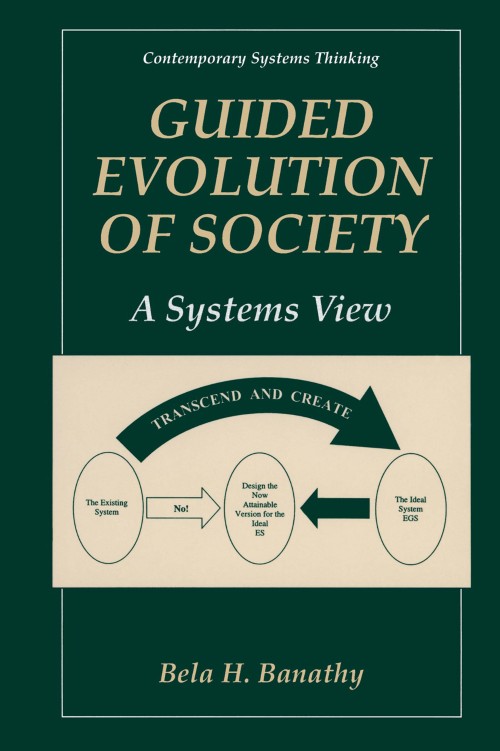
Guided Evolution of Society [electronic resource] : A Systems View / by Bela H. Banathy.
Erişim Adresi
ISBN
9781475731392
Dil Kodu
İngilizce
Yer Numarası
DK/15749
Yazar
Basım Bildirimi
1st ed. 2000.
Yayın Bilgisi
New York, NY : Springer US : Imprint: Springer, 2000.
Fiziksel Niteleme
XIX, 415 p. online resource.
Dizi
Contemporary Systems Thinking
İçindekiler Notu
1. Introduction -- I. The Evolutionary Journey of Humankind -- 2. The Evolution of the Evolutionary Idea -- 3. The Story of Human and Societal Evolution: The Evolutionary Journey of Our Ancestors -- 4. The Story of the Evolution of Homo sapiens sapiens -- II. The Journey from Evolutionary Consciousness to Conscious Evolution -- 5. What Have We Learned from the Evolutionary Story? -- 6. From Evolutionary Consciousness to Conscious Evolution -- 7. Calling for Conscious Evolution -- III. Self-Guided Evolution -- 8. Organizing Perspectives and Conditions of Engaging in Self-Guided Evolution -- 9. Self-Guided Societal Evolution -- 10. An Epistemology of Conscious, Self-Guided Evolution -- 11. The Design of Evolutionary Guidance Systems -- 12. The Agoras of the Twenty-First Century -- 13. A Closing Thought -- References.
Özet, vb.
Based on a comprehensive review of human and societal evolution the book develops an approach to conscious, self-guided evolution. In the course of the evolutionary journey of our species, there have been three seminal events. The first happened some seven million yeas ago, when our humanoid ancestors entered on the evolutionary scene. Their journey toward the second crucial event lasted over six million years when - as the greatest event of our evolutionary history - homo sapiens sapiens, started the revolutionary process of cultural evolution. Today, we have arrived at the threshold of the third major event, `the revolution of conscious evolution,' when it becomes our responsibility to enter into the evolutionary design space and guide the evolutionary journey of our species. The book tells the story of the first six million years of the journey in just enough detail to understand how evolution had worked in times when it was primarily biological, driven by natural selection. With the human revolution some fifty thousand years ago, with the emergence of self-reflective consciousness, the evolutionary process transformed from biological into cultural. From this point on, the book follows the journey with detailed attention, in order to learn how cultural evolution works. The book is organized in three parts. Part One commences with an exposition of a brief history of the evolutionary idea through time with a focus on a review of the science of general evolution and specifically social and societal evolution. Next, the book unfolds the `evolutionary story' of our species from the time when the first humanoids entered the evolutionary scene to our current era. Part Two develops a systems view of evolution, explores the ways and means of how evolution works, characterizes evolutionary consciousness and develops the idea of conscious evolution. Part Three builds upon the knowledge developed in the first two parts and sets forth the key conditions of conscious, self-guided evolution, elaborating the core condition, which is the acquisition of evolutionary competence through evolutionary learning. The focus of this part is on an approach to the design of evolutionary guidance systems that our families, neighborhoods, communities, organizations, social and societal systems can use to design the future they aspire to attain. The work is set aside from other statements in three important ways. It provides: (1) a comprehensive review of how evolution has worked with a focus on socio-cultural evolution, (2) an explanation of evolutionary consciousness and the conditions of engaging in conscious evolution, and (3) most significantly, it develops a detailed approach and a methodology to the design of evolutionary guidance systems.
Konu
Sociology.
Evolution (Biology).
Anthropology.
Philosophy.
Industrial organization.
Sociology.
Evolutionary Biology.
Anthropology.
Philosophy.
Organization.
Evolution (Biology).
Anthropology.
Philosophy.
Industrial organization.
Sociology.
Evolutionary Biology.
Anthropology.
Philosophy.
Organization.
Kurum Adı
Eseri Alıntıla
Referansları kullanmadan önce gözden geçirmeniz ve varsa gerekli düzeltmeleri yapmanız önerilir.
Dijital Kaynak
MARC Görünümü
LEADER 06272nam a22006495i 4500
001 814510
003 TR_AnAIT
005 20260130215309
007 cr nn 008mamaa
008 130107s2000 xxu| s |||| 0|eng d
020 |a9781475731392|9978-1-4757-3139-2
024 7 |a10.1007/978-1-4757-3139-2|2doi
041 |aeng
049 |aTürk Tarih Kurumu Kütüphanesi
050 4|aHM
072 7|aJHB|2bicssc
072 7|aJHB|2bicssc
072 7|aSOC026000|2bisacsh
072 7|aJHB|2thema
072 7|aJHB|2thema
082 04|a301|223
090 |aDK/15749
100 1 |aBanathy, Bela H.|eauthor.|4aut|4http://id.loc.gov/vocabulary/relators/aut
245 10|aGuided Evolution of Society|h[electronic resource] :|bA Systems View /|cby Bela H. Banathy.
250 |a1st ed. 2000.
264 1|aNew York, NY :|bSpringer US :|bImprint: Springer,|c2000.
300 |aXIX, 415 p.|bonline resource.
336 |atext|btxt|2rdacontent
337 |acomputer|bc|2rdamedia
338 |aonline resource|bcr|2rdacarrier
347 |atext file|bPDF|2rda
490 1 |aContemporary Systems Thinking
505 0 |a1. Introduction -- I. The Evolutionary Journey of Humankind -- 2. The Evolution of the Evolutionary Idea -- 3. The Story of Human and Societal Evolution: The Evolutionary Journey of Our Ancestors -- 4. The Story of the Evolution of Homo sapiens sapiens -- II. The Journey from Evolutionary Consciousness to Conscious Evolution -- 5. What Have We Learned from the Evolutionary Story? -- 6. From Evolutionary Consciousness to Conscious Evolution -- 7. Calling for Conscious Evolution -- III. Self-Guided Evolution -- 8. Organizing Perspectives and Conditions of Engaging in Self-Guided Evolution -- 9. Self-Guided Societal Evolution -- 10. An Epistemology of Conscious, Self-Guided Evolution -- 11. The Design of Evolutionary Guidance Systems -- 12. The Agoras of the Twenty-First Century -- 13. A Closing Thought -- References.
520 |aBased on a comprehensive review of human and societal evolution the book develops an approach to conscious, self-guided evolution. In the course of the evolutionary journey of our species, there have been three seminal events. The first happened some seven million yeas ago, when our humanoid ancestors entered on the evolutionary scene. Their journey toward the second crucial event lasted over six million years when - as the greatest event of our evolutionary history - homo sapiens sapiens, started the revolutionary process of cultural evolution. Today, we have arrived at the threshold of the third major event, `the revolution of conscious evolution,' when it becomes our responsibility to enter into the evolutionary design space and guide the evolutionary journey of our species. The book tells the story of the first six million years of the journey in just enough detail to understand how evolution had worked in times when it was primarily biological, driven by natural selection. With the human revolution some fifty thousand years ago, with the emergence of self-reflective consciousness, the evolutionary process transformed from biological into cultural. From this point on, the book follows the journey with detailed attention, in order to learn how cultural evolution works. The book is organized in three parts. Part One commences with an exposition of a brief history of the evolutionary idea through time with a focus on a review of the science of general evolution and specifically social and societal evolution. Next, the book unfolds the `evolutionary story' of our species from the time when the first humanoids entered the evolutionary scene to our current era. Part Two develops a systems view of evolution, explores the ways and means of how evolution works, characterizes evolutionary consciousness and develops the idea of conscious evolution. Part Three builds upon the knowledge developed in the first two parts and sets forth the key conditions of conscious, self-guided evolution, elaborating the core condition, which is the acquisition of evolutionary competence through evolutionary learning. The focus of this part is on an approach to the design of evolutionary guidance systems that our families, neighborhoods, communities, organizations, social and societal systems can use to design the future they aspire to attain. The work is set aside from other statements in three important ways. It provides: (1) a comprehensive review of how evolution has worked with a focus on socio-cultural evolution, (2) an explanation of evolutionary consciousness and the conditions of engaging in conscious evolution, and (3) most significantly, it develops a detailed approach and a methodology to the design of evolutionary guidance systems.
532 8 |aAccessibility summary: This PDF is not accessible. It is based on scanned pages and does not support features such as screen reader compatibility or described non-text content (images, graphs etc). However, it likely supports searchable and selectable text based on OCR (Optical Character Recognition). Users with accessibility needs may not be able to use this content effectively. Please contact us at accessibilitysupport@springernature.com if you require assistance or an alternative format.
532 8 |aInaccessible, or known limited accessibility
532 8 |aNo reading system accessibility options actively disabled
532 8 |aPublisher contact for further accessibility information: accessibilitysupport@springernature.com
650 0|aSociology.
650 0|aEvolution (Biology).
650 0|aAnthropology.
650 0|aPhilosophy.
650 0|aIndustrial organization.
650 14|aSociology.
650 24|aEvolutionary Biology.
650 24|aAnthropology.
650 24|aPhilosophy.
650 24|aOrganization.
710 2 |aSpringerLink (Online service)
773 0 |tSpringer Nature eBook
776 08|iPrinted edition:|z9780306463822
776 08|iPrinted edition:|z9781441933423
776 08|iPrinted edition:|z9781475731408
830 0|aContemporary Systems Thinking
856 40|uhttps://doi.org/10.1007/978-1-4757-3139-2
912 |aZDB-2-SHU
912 |aZDB-2-SXS
912 |aZDB-2-BAE
950 |aHumanities, Social Sciences and Law (SpringerNature-11648)
950 |aSocial Sciences (R0) (SpringerNature-43726)
001 814510
003 TR_AnAIT
005 20260130215309
007 cr nn 008mamaa
008 130107s2000 xxu| s |||| 0|eng d
020 |a9781475731392|9978-1-4757-3139-2
024 7 |a10.1007/978-1-4757-3139-2|2doi
041 |aeng
049 |aTürk Tarih Kurumu Kütüphanesi
050 4|aHM
072 7|aJHB|2bicssc
072 7|aJHB|2bicssc
072 7|aSOC026000|2bisacsh
072 7|aJHB|2thema
072 7|aJHB|2thema
082 04|a301|223
090 |aDK/15749
100 1 |aBanathy, Bela H.|eauthor.|4aut|4http://id.loc.gov/vocabulary/relators/aut
245 10|aGuided Evolution of Society|h[electronic resource] :|bA Systems View /|cby Bela H. Banathy.
250 |a1st ed. 2000.
264 1|aNew York, NY :|bSpringer US :|bImprint: Springer,|c2000.
300 |aXIX, 415 p.|bonline resource.
336 |atext|btxt|2rdacontent
337 |acomputer|bc|2rdamedia
338 |aonline resource|bcr|2rdacarrier
347 |atext file|bPDF|2rda
490 1 |aContemporary Systems Thinking
505 0 |a1. Introduction -- I. The Evolutionary Journey of Humankind -- 2. The Evolution of the Evolutionary Idea -- 3. The Story of Human and Societal Evolution: The Evolutionary Journey of Our Ancestors -- 4. The Story of the Evolution of Homo sapiens sapiens -- II. The Journey from Evolutionary Consciousness to Conscious Evolution -- 5. What Have We Learned from the Evolutionary Story? -- 6. From Evolutionary Consciousness to Conscious Evolution -- 7. Calling for Conscious Evolution -- III. Self-Guided Evolution -- 8. Organizing Perspectives and Conditions of Engaging in Self-Guided Evolution -- 9. Self-Guided Societal Evolution -- 10. An Epistemology of Conscious, Self-Guided Evolution -- 11. The Design of Evolutionary Guidance Systems -- 12. The Agoras of the Twenty-First Century -- 13. A Closing Thought -- References.
520 |aBased on a comprehensive review of human and societal evolution the book develops an approach to conscious, self-guided evolution. In the course of the evolutionary journey of our species, there have been three seminal events. The first happened some seven million yeas ago, when our humanoid ancestors entered on the evolutionary scene. Their journey toward the second crucial event lasted over six million years when - as the greatest event of our evolutionary history - homo sapiens sapiens, started the revolutionary process of cultural evolution. Today, we have arrived at the threshold of the third major event, `the revolution of conscious evolution,' when it becomes our responsibility to enter into the evolutionary design space and guide the evolutionary journey of our species. The book tells the story of the first six million years of the journey in just enough detail to understand how evolution had worked in times when it was primarily biological, driven by natural selection. With the human revolution some fifty thousand years ago, with the emergence of self-reflective consciousness, the evolutionary process transformed from biological into cultural. From this point on, the book follows the journey with detailed attention, in order to learn how cultural evolution works. The book is organized in three parts. Part One commences with an exposition of a brief history of the evolutionary idea through time with a focus on a review of the science of general evolution and specifically social and societal evolution. Next, the book unfolds the `evolutionary story' of our species from the time when the first humanoids entered the evolutionary scene to our current era. Part Two develops a systems view of evolution, explores the ways and means of how evolution works, characterizes evolutionary consciousness and develops the idea of conscious evolution. Part Three builds upon the knowledge developed in the first two parts and sets forth the key conditions of conscious, self-guided evolution, elaborating the core condition, which is the acquisition of evolutionary competence through evolutionary learning. The focus of this part is on an approach to the design of evolutionary guidance systems that our families, neighborhoods, communities, organizations, social and societal systems can use to design the future they aspire to attain. The work is set aside from other statements in three important ways. It provides: (1) a comprehensive review of how evolution has worked with a focus on socio-cultural evolution, (2) an explanation of evolutionary consciousness and the conditions of engaging in conscious evolution, and (3) most significantly, it develops a detailed approach and a methodology to the design of evolutionary guidance systems.
532 8 |aAccessibility summary: This PDF is not accessible. It is based on scanned pages and does not support features such as screen reader compatibility or described non-text content (images, graphs etc). However, it likely supports searchable and selectable text based on OCR (Optical Character Recognition). Users with accessibility needs may not be able to use this content effectively. Please contact us at accessibilitysupport@springernature.com if you require assistance or an alternative format.
532 8 |aInaccessible, or known limited accessibility
532 8 |aNo reading system accessibility options actively disabled
532 8 |aPublisher contact for further accessibility information: accessibilitysupport@springernature.com
650 0|aSociology.
650 0|aEvolution (Biology).
650 0|aAnthropology.
650 0|aPhilosophy.
650 0|aIndustrial organization.
650 14|aSociology.
650 24|aEvolutionary Biology.
650 24|aAnthropology.
650 24|aPhilosophy.
650 24|aOrganization.
710 2 |aSpringerLink (Online service)
773 0 |tSpringer Nature eBook
776 08|iPrinted edition:|z9780306463822
776 08|iPrinted edition:|z9781441933423
776 08|iPrinted edition:|z9781475731408
830 0|aContemporary Systems Thinking
856 40|uhttps://doi.org/10.1007/978-1-4757-3139-2
912 |aZDB-2-SHU
912 |aZDB-2-SXS
912 |aZDB-2-BAE
950 |aHumanities, Social Sciences and Law (SpringerNature-11648)
950 |aSocial Sciences (R0) (SpringerNature-43726)
Materyaller
Depodan talep edilen materyal sadece kütüphane içerisinde kullanılmaktadır.
Materyal dışarıya ödünç verilmemektedir.
Materyal dışarıya ödünç verilmemektedir.
