

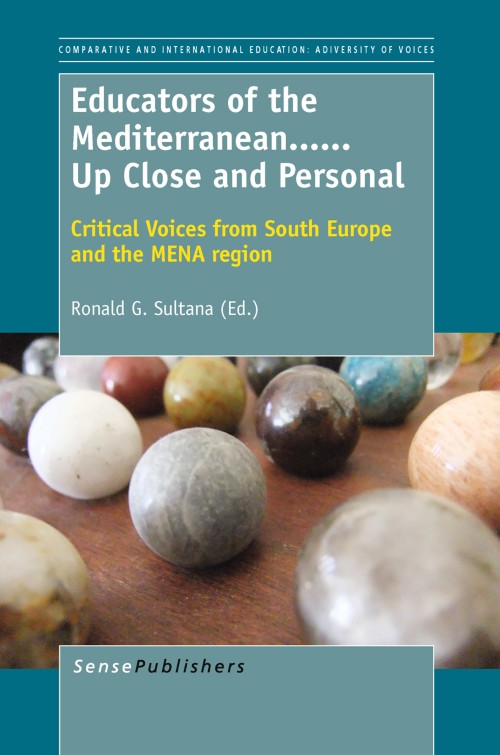
Educators of the Mediterranean… …Up Close and Personal [electronic resource] / edited by Ronald G Sultana.
Erişim Adresi
ISBN
9789460916816
Dil Kodu
İngilizce
Yer Numarası
DK/15843
Basım Bildirimi
1st ed. 2011.
Yayın Bilgisi
Rotterdam : SensePublishers : Imprint: SensePublishers, 2011.
Fiziksel Niteleme
VIII, 244 p. online resource.
Dizi
Comparative and International Education: A Diversity of Voices, A Diversity of Voices, 2214-9899 ; 9
Özet, vb.
“A score of prominent educators from South Europe and the Middle East and North Africa region speak about their upbringing, their educational and professional journeys, their academic achievements, and their struggles in order to enhance democracy, justice and equity in their countries and across the Mediterranean. The interviews in this volume shed light on educational movements, challenges, and aspirations in a region that is attaining increasing importance geo-politically, and in comparative and international studies. These are powerful and critical voices, providing readers with fresh, often unexpected insights about contexts, cultures, and convictions that deserve global attention. The interviews with these men and women inform, intrigue, but above all inspire, calling, as they do, for an earnest commitment to a vision of education as a transformative, democratising force. In contrast to the global, totalising discourse that has increasingly defined education in narrowly economistic terms, here are the beginnings of alternative agendas, inviting citizens to ‘read’ and decode the world around them, and to confront power, wherever it lies. In doing so, the educators in this volume draw upon and put at our disposal a wide array of theoretical lenses, nimbly weaving these within a narrative that speaks about a lifetime lived in the hope of making a difference. These, then, are vivid, engaging, and reflexive accounts, emerging from contexts where democracy has only recently taken root, if at all, and from a region that has come to symbolize the return of the political, and the reclaiming of the public sphere as a site for transformation, contestation, revolt, and hope.”.
Konu
International education .
Comparative education.
International and Comparative Education.
Comparative education.
International and Comparative Education.
Diğer Yazarlar
Kurum Adı
