LEADER 03928nam a22006135i 4500
001 814758
003 TR_AnAIT
005 20260130214332
007 cr nn 008mamaa
008 121227s1996 ne | s |||| 0|eng d
020 |a9789400902930|9978-94-009-0293-0
024 7 |a10.1007/978-94-009-0293-0|2doi
041 |aeng
049 |aTürk Tarih Kurumu Kütüphanesi
050 4|aBC1-199
072 7|aHPL|2bicssc
072 7|aPHI011000|2bisacsh
072 7|aQDTL|2thema
082 04|a160|223
090 |aDK/15995
100 1 |aHugly, Philip.|eauthor.|4aut|4http://id.loc.gov/vocabulary/relators/aut
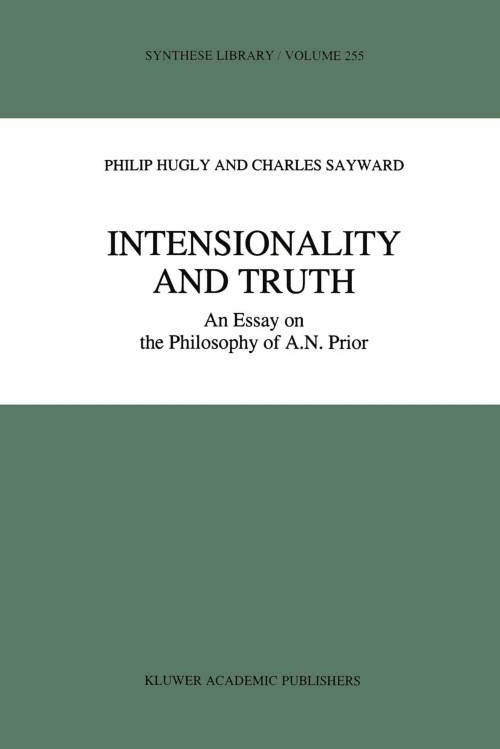
245 10|aIntensionality and Truth|h[electronic resource] :|bAn Essay on the Philosophy of A.N. Prior /|cby Philip Hugly, C. Sayward.
250 |a1st ed. 1996.
264 1|aDordrecht :|bSpringer Netherlands :|bImprint: Springer,|c1996.
300 |aXII, 433 p.|bonline resource.
336 |atext|btxt|2rdacontent
337 |acomputer|bc|2rdamedia
338 |aonline resource|bcr|2rdacarrier
347 |atext file|bPDF|2rda
490 1 |aSynthese Library, Studies in Epistemology, Logic, Methodology, and Philosophy of Science,|x2542-8292 ;|v255
505 0 |aI. Propositions -- Prior’s Core Theory -- Is Prior A Nominalist? -- Prior On Truth - A First Look -- II. Comparisons -- Frege and Prior Onintensional Contexts -- Prior, Frege and Bealer On Types -- Fodor and Prior on Propositional Attitudes -- Davidson and Prior on Indirect Quotation -- Davidson on the Trviality of Truth -- Quine and Prior on Quantification -- III. Quantification and Generalization -- On Understanding Quantification -- A Problem for Prior -- A Possible Solution -- An Alternative Approach -- A Model Theory For Sentential Quantification -- IV. Truth -- Priors Theory Of Truth and Falsehood -- Non-Objective Truth -- Truth Value Gaps and Truth -- Notes -- References -- Name Index.
520 |aPrior's view on intensionality and truth is based on the principle that sentences never name, that what sentences say cannot be otherwise signified, that a sentence says what it says whatever the type of its occurrence, and that sentential quantification is neither eliminable, substitutional, nor referential. The text defends each of these principles.
532 8 |aAccessibility summary: This PDF is not accessible. It is based on scanned pages and does not support features such as screen reader compatibility or described non-text content (images, graphs etc). However, it likely supports searchable and selectable text based on OCR (Optical Character Recognition). Users with accessibility needs may not be able to use this content effectively. Please contact us at accessibilitysupport@springernature.com if you require assistance or an alternative format.
532 8 |aInaccessible, or known limited accessibility
532 8 |aNo reading system accessibility options actively disabled
532 8 |aPublisher contact for further accessibility information: accessibilitysupport@springernature.com
650 0|aLogic.
650 0|aLanguage and languages|xPhilosophy.
650 0|aMetaphysics.
650 0|aPhilosophy, Modern.
650 14|aLogic.
650 24|aPhilosophy of Language.
650 24|aMetaphysics.
650 24|aEarly Modern Philosophy.
700 1 |aSayward, C.|eauthor.|4aut|4http://id.loc.gov/vocabulary/relators/aut
710 2 |aSpringerLink (Online service)
773 0 |tSpringer Nature eBook
776 08|iPrinted edition:|z9780792341192
776 08|iPrinted edition:|z9789400902947
776 08|iPrinted edition:|z9789401066174
830 0|aSynthese Library, Studies in Epistemology, Logic, Methodology, and Philosophy of Science,|x2542-8292 ;|v255
856 40|uhttps://doi.org/10.1007/978-94-009-0293-0
912 |aZDB-2-SHU
912 |aZDB-2-SXPR
912 |aZDB-2-BAE
950 |aHumanities, Social Sciences and Law (SpringerNature-11648)
950 |aPhilosophy and Religion (R0) (SpringerNature-43725)