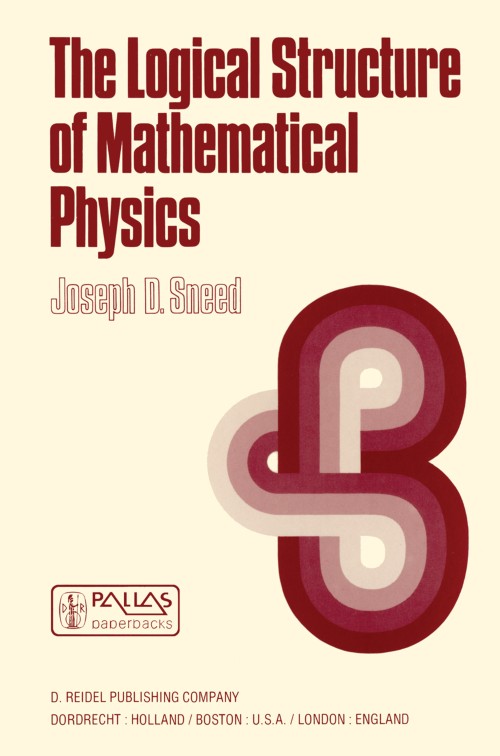
The Logical Structure of Mathematical Physics [electronic resource] / by J.D. Sneed.
Erişim Adresi
ISBN
9789400995222
Dil Kodu
İngilizce
Yer Numarası
DK/16012
Yazar
Basım Bildirimi
2nd ed. 1979.
Yayın Bilgisi
Dordrecht : Springer Netherlands : Imprint: Springer, 1979.
Fiziksel Niteleme
352 p. 3 illus. online resource.
Dizi
Synthese Library, Studies in Epistemology, Logic, Methodology, and Philosophy of Science, 2542-8292 ; 35
İçindekiler Notu
I. Logical Structure and Axiomatization -- II. The Traditional View -- III. The Ramsey View -- IV. The Ramsey View Emended -- V. Theoretical Functions with Special Forms -- VI. Classical Particle Mechanics -- VII. Identity, Equivalence and Reduction -- VIII. The Dynamics of Theories -- Updated Bibliography.
Özet, vb.
This book is about scientific theories of a particular kind - theories of mathematical physics. Examples of such theories are classical and relativis tic particle mechanics, classical electrodynamics, classical thermodynamics, statistical mechanics, hydrodynamics, and quantum mechanics. Roughly, these are theories in which a certain mathematical structure is employed to make statements about some fragment of the world. Most of the book is simply an elaboration of this rough characterization of theories of mathematical physics. It is argued that each theory of mathematical physics has associated with it a certain characteristic mathematical struc ture. This structure may be used in a variety of ways to make empirical claims about putative applications of the theory. Typically - though not necessarily - the way this structure is used in making such claims requires that certain elements in the structure play essentially different roles. Some playa "theoretical" role; others playa "non-theoretical" role. For example, in classical particle mechanics, mass and force playa theoretical role while position plays a non-theoretical role. Some attention is given to showing how this distinction can be drawn and describing precisely the way in which the theoretical and non-theoretical elements function in the claims of the theory. An attempt is made to say, rather precisely, what a theory of mathematical physics is and how you tell one such theory from anothe- what the identity conditions for these theories are.
Konu
Science __ Philosophy.
Logic.
Social sciences.
Humanities.
Philosophy of Science.
Logic.
Humanities and Social Sciences.
Logic.
Social sciences.
Humanities.
Philosophy of Science.
Logic.
Humanities and Social Sciences.
Kurum Adı

Eseri Alıntıla
Referansları kullanmadan önce gözden geçirmeniz ve varsa gerekli düzeltmeleri yapmanız önerilir.
Dijital Kaynak
MARC Görünümü
LEADER 04564nam a22006015i 4500
001 814775
003 TR_AnAIT
005 20260130214215
007 cr nn 008mamaa
008 121227s1979 ne | s |||| 0|eng d
020 |a9789400995222|9978-94-009-9522-2
024 7 |a10.1007/978-94-009-9522-2|2doi
041 |aeng
049 |aTürk Tarih Kurumu Kütüphanesi
050 4|aQ174-175.3
050 4|aB67
072 7|aPDA|2bicssc
072 7|aSCI075000|2bisacsh
072 7|aPDA|2thema
082 04|a501|223
090 |aDK/16012
100 1 |aSneed, J.D.|eauthor.|4aut|4http://id.loc.gov/vocabulary/relators/aut
245 14|aThe Logical Structure of Mathematical Physics|h[electronic resource] /|cby J.D. Sneed.
250 |a2nd ed. 1979.
264 1|aDordrecht :|bSpringer Netherlands :|bImprint: Springer,|c1979.
300 |a352 p. 3 illus.|bonline resource.
336 |atext|btxt|2rdacontent
337 |acomputer|bc|2rdamedia
338 |aonline resource|bcr|2rdacarrier
347 |atext file|bPDF|2rda
490 1 |aSynthese Library, Studies in Epistemology, Logic, Methodology, and Philosophy of Science,|x2542-8292 ;|v35
505 0 |aI. Logical Structure and Axiomatization -- II. The Traditional View -- III. The Ramsey View -- IV. The Ramsey View Emended -- V. Theoretical Functions with Special Forms -- VI. Classical Particle Mechanics -- VII. Identity, Equivalence and Reduction -- VIII. The Dynamics of Theories -- Updated Bibliography.
520 |aThis book is about scientific theories of a particular kind - theories of mathematical physics. Examples of such theories are classical and relativis tic particle mechanics, classical electrodynamics, classical thermodynamics, statistical mechanics, hydrodynamics, and quantum mechanics. Roughly, these are theories in which a certain mathematical structure is employed to make statements about some fragment of the world. Most of the book is simply an elaboration of this rough characterization of theories of mathematical physics. It is argued that each theory of mathematical physics has associated with it a certain characteristic mathematical struc ture. This structure may be used in a variety of ways to make empirical claims about putative applications of the theory. Typically - though not necessarily - the way this structure is used in making such claims requires that certain elements in the structure play essentially different roles. Some playa "theoretical" role; others playa "non-theoretical" role. For example, in classical particle mechanics, mass and force playa theoretical role while position plays a non-theoretical role. Some attention is given to showing how this distinction can be drawn and describing precisely the way in which the theoretical and non-theoretical elements function in the claims of the theory. An attempt is made to say, rather precisely, what a theory of mathematical physics is and how you tell one such theory from anothe- what the identity conditions for these theories are.
532 8 |aAccessibility summary: This PDF is not accessible. It is based on scanned pages and does not support features such as screen reader compatibility or described non-text content (images, graphs etc). However, it likely supports searchable and selectable text based on OCR (Optical Character Recognition). Users with accessibility needs may not be able to use this content effectively. Please contact us at accessibilitysupport@springernature.com if you require assistance or an alternative format.
532 8 |aInaccessible, or known limited accessibility
532 8 |aNo reading system accessibility options actively disabled
532 8 |aPublisher contact for further accessibility information: accessibilitysupport@springernature.com
650 0|aScience|xPhilosophy.
650 0|aLogic.
650 0|aSocial sciences.
650 0|aHumanities.
650 14|aPhilosophy of Science.
650 24|aLogic.
650 24|aHumanities and Social Sciences.
710 2 |aSpringerLink (Online service)
773 0 |tSpringer Nature eBook
776 08|iPrinted edition:|z9789027710567
776 08|iPrinted edition:|z9789027710598
776 08|iPrinted edition:|z9789400995239
830 0|aSynthese Library, Studies in Epistemology, Logic, Methodology, and Philosophy of Science,|x2542-8292 ;|v35
856 40|uhttps://doi.org/10.1007/978-94-009-9522-2
912 |aZDB-2-SHU
912 |aZDB-2-SXPR
912 |aZDB-2-BAE
950 |aHumanities, Social Sciences and Law (SpringerNature-11648)
950 |aPhilosophy and Religion (R0) (SpringerNature-43725)
001 814775
003 TR_AnAIT
005 20260130214215
007 cr nn 008mamaa
008 121227s1979 ne | s |||| 0|eng d
020 |a9789400995222|9978-94-009-9522-2
024 7 |a10.1007/978-94-009-9522-2|2doi
041 |aeng
049 |aTürk Tarih Kurumu Kütüphanesi
050 4|aQ174-175.3
050 4|aB67
072 7|aPDA|2bicssc
072 7|aSCI075000|2bisacsh
072 7|aPDA|2thema
082 04|a501|223
090 |aDK/16012
100 1 |aSneed, J.D.|eauthor.|4aut|4http://id.loc.gov/vocabulary/relators/aut
245 14|aThe Logical Structure of Mathematical Physics|h[electronic resource] /|cby J.D. Sneed.
250 |a2nd ed. 1979.
264 1|aDordrecht :|bSpringer Netherlands :|bImprint: Springer,|c1979.
300 |a352 p. 3 illus.|bonline resource.
336 |atext|btxt|2rdacontent
337 |acomputer|bc|2rdamedia
338 |aonline resource|bcr|2rdacarrier
347 |atext file|bPDF|2rda
490 1 |aSynthese Library, Studies in Epistemology, Logic, Methodology, and Philosophy of Science,|x2542-8292 ;|v35
505 0 |aI. Logical Structure and Axiomatization -- II. The Traditional View -- III. The Ramsey View -- IV. The Ramsey View Emended -- V. Theoretical Functions with Special Forms -- VI. Classical Particle Mechanics -- VII. Identity, Equivalence and Reduction -- VIII. The Dynamics of Theories -- Updated Bibliography.
520 |aThis book is about scientific theories of a particular kind - theories of mathematical physics. Examples of such theories are classical and relativis tic particle mechanics, classical electrodynamics, classical thermodynamics, statistical mechanics, hydrodynamics, and quantum mechanics. Roughly, these are theories in which a certain mathematical structure is employed to make statements about some fragment of the world. Most of the book is simply an elaboration of this rough characterization of theories of mathematical physics. It is argued that each theory of mathematical physics has associated with it a certain characteristic mathematical struc ture. This structure may be used in a variety of ways to make empirical claims about putative applications of the theory. Typically - though not necessarily - the way this structure is used in making such claims requires that certain elements in the structure play essentially different roles. Some playa "theoretical" role; others playa "non-theoretical" role. For example, in classical particle mechanics, mass and force playa theoretical role while position plays a non-theoretical role. Some attention is given to showing how this distinction can be drawn and describing precisely the way in which the theoretical and non-theoretical elements function in the claims of the theory. An attempt is made to say, rather precisely, what a theory of mathematical physics is and how you tell one such theory from anothe- what the identity conditions for these theories are.
532 8 |aAccessibility summary: This PDF is not accessible. It is based on scanned pages and does not support features such as screen reader compatibility or described non-text content (images, graphs etc). However, it likely supports searchable and selectable text based on OCR (Optical Character Recognition). Users with accessibility needs may not be able to use this content effectively. Please contact us at accessibilitysupport@springernature.com if you require assistance or an alternative format.
532 8 |aInaccessible, or known limited accessibility
532 8 |aNo reading system accessibility options actively disabled
532 8 |aPublisher contact for further accessibility information: accessibilitysupport@springernature.com
650 0|aScience|xPhilosophy.
650 0|aLogic.
650 0|aSocial sciences.
650 0|aHumanities.
650 14|aPhilosophy of Science.
650 24|aLogic.
650 24|aHumanities and Social Sciences.
710 2 |aSpringerLink (Online service)
773 0 |tSpringer Nature eBook
776 08|iPrinted edition:|z9789027710567
776 08|iPrinted edition:|z9789027710598
776 08|iPrinted edition:|z9789400995239
830 0|aSynthese Library, Studies in Epistemology, Logic, Methodology, and Philosophy of Science,|x2542-8292 ;|v35
856 40|uhttps://doi.org/10.1007/978-94-009-9522-2
912 |aZDB-2-SHU
912 |aZDB-2-SXPR
912 |aZDB-2-BAE
950 |aHumanities, Social Sciences and Law (SpringerNature-11648)
950 |aPhilosophy and Religion (R0) (SpringerNature-43725)
Materyaller
Depodan talep edilen materyal sadece kütüphane içerisinde kullanılmaktadır.
Materyal dışarıya ödünç verilmemektedir.
