

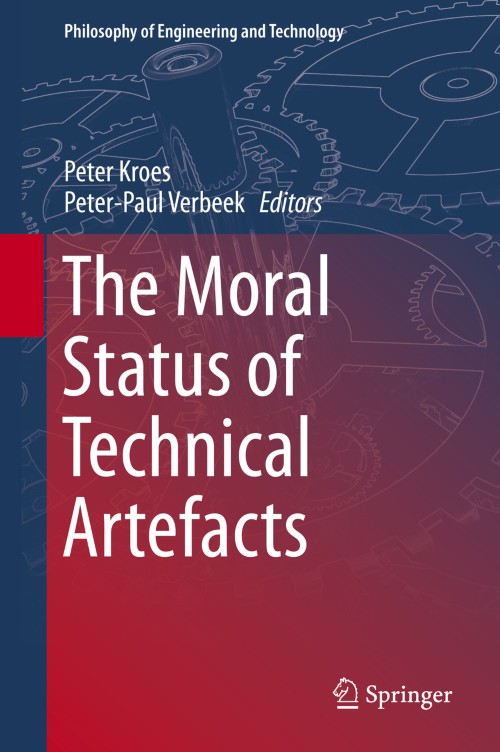
The Moral Status of Technical Artefacts [electronic resource] / edited by Peter Kroes, Peter-Paul Verbeek.
Erişim Adresi
ISBN
9789400779143
Dil Kodu
İngilizce
Yer Numarası
DK/16029
Basım Bildirimi
1st ed. 2014.
Yayın Bilgisi
Dordrecht : Springer Netherlands : Imprint: Springer, 2014.
Fiziksel Niteleme
VI, 248 p. 4 illus. online resource.
Dizi
Philosophy of Engineering and Technology, 1879-7210 ; 17
İçindekiler Notu
Introduction: the moral status of technical artefacts; Peter Kroes and Peter-Paul Verbeek -- Chapter 1. Agency in Humans and in Artifacts: A Contested Discourse; Carl Mitcham -- Chapter 2. Towards a post-human intra-actional account of sociomaterial agency (and Morality); Lucas Introna -- Chapter 3. Which came first, the doer or the deed?; Allan Hanson -- Chapter 4. Some misunderstandings about the moral significance of technology; Peter-Paul Verbeek -- Chapter 5. “Guns don’t kill, people kill”; values in and/or around technologies; Joe Pitt.-Chapter 6. Can technology embody values?; Ibo van de Poel and Peter Kroes -- Chapter 7. From moral agents to moral factors: the structural ethics approach; Philip Brey -- Chapter 8. Artefactual agency and artefactual moral agency; Deborah G. Johnson and Merel Noorman -- Chapter 9. Artefacts, agency, and action schemes; Christian Illies and Anthonie Meijers -- Chapter 10. Artificial agents and their moral nature; Luciano Floridi -- Chapter 11. The good, the bad, the ugly and the poor: instrumental and non- instrumental values of artefacts; Maarten Franssen -- Chapter 12. Values in Chemistry and Engineering; Sven Ove Hansson.
Özet, vb.
This book considers the question: to what extent does it make sense to qualify technical artefacts as moral entities? The authors’ contributions trace recent proposals and topics including instrumental and non-instrumental values of artefacts, agency and artefactual agency, values in and around technologies, and the moral significance of technology. The editors’ introduction explains that as ‘agents’ rather than simply passive instruments, technical artefacts may actively influence their users, changing the way they perceive the world, the way they act in the world and the way they interact with each other. This volume features the work of various experts from around the world, representing a variety of positions on the topic. Contributions explore the contested discourse on agency in humans and artefacts, defend the Value Neutrality Thesis by arguing that technological artefacts do not contain, have or exhibit values, or argue that moral agency involves both human and non-human elements. The book also investigates technological fields that are subject to negative moral valuations due to the harmful effects of some of their products. It includes an analysis of some difficulties arising in Artificial Intelligence and an exploration of values in Chemistry and in Engineering. The Moral Status of Technical Artefacts is an advanced exploration of the various dimensions of the relations between technology and morality.
Konu
Technology __ Philosophy.
Engineering.
Political science __ Philosophy.
Philosophy of Technology.
Technology and Engineering.
Political Philosophy.
Engineering.
Political science __ Philosophy.
Philosophy of Technology.
Technology and Engineering.
Political Philosophy.
Diğer Yazarlar
Kurum Adı
Eseri Alıntıla
Referansları kullanmadan önce gözden geçirmeniz ve varsa gerekli düzeltmeleri yapmanız önerilir.
Dijital Kaynak
MARC Görünümü
LEADER 04632nam a22005535i 4500
001 814792
003 TR_AnAIT
005 20260130214110
007 cr nn 008mamaa
008 140108s2014 ne | s |||| 0|eng d
020 |a9789400779143|9978-94-007-7914-3
024 7 |a10.1007/978-94-007-7914-3|2doi
041 |aeng
049 |aTürk Tarih Kurumu Kütüphanesi
050 4|aT14
072 7|aHP|2bicssc
072 7|aTB|2bicssc
072 7|aSCI075000|2bisacsh
072 7|aQD|2thema
072 7|aTB|2thema
082 04|a601|223
090 |aDK/16029
245 14|aThe Moral Status of Technical Artefacts|h[electronic resource] /|cedited by Peter Kroes, Peter-Paul Verbeek.
250 |a1st ed. 2014.
264 1|aDordrecht :|bSpringer Netherlands :|bImprint: Springer,|c2014.
300 |aVI, 248 p. 4 illus.|bonline resource.
336 |atext|btxt|2rdacontent
337 |acomputer|bc|2rdamedia
338 |aonline resource|bcr|2rdacarrier
347 |atext file|bPDF|2rda
490 1 |aPhilosophy of Engineering and Technology,|x1879-7210 ;|v17
505 0 |aIntroduction: the moral status of technical artefacts; Peter Kroes and Peter-Paul Verbeek -- Chapter 1. Agency in Humans and in Artifacts: A Contested Discourse; Carl Mitcham -- Chapter 2. Towards a post-human intra-actional account of sociomaterial agency (and Morality); Lucas Introna -- Chapter 3. Which came first, the doer or the deed?; Allan Hanson -- Chapter 4. Some misunderstandings about the moral significance of technology; Peter-Paul Verbeek -- Chapter 5. “Guns don’t kill, people kill”; values in and/or around technologies; Joe Pitt.-Chapter 6. Can technology embody values?; Ibo van de Poel and Peter Kroes -- Chapter 7. From moral agents to moral factors: the structural ethics approach; Philip Brey -- Chapter 8. Artefactual agency and artefactual moral agency; Deborah G. Johnson and Merel Noorman -- Chapter 9. Artefacts, agency, and action schemes; Christian Illies and Anthonie Meijers -- Chapter 10. Artificial agents and their moral nature; Luciano Floridi -- Chapter 11. The good, the bad, the ugly and the poor: instrumental and non- instrumental values of artefacts; Maarten Franssen -- Chapter 12. Values in Chemistry and Engineering; Sven Ove Hansson.
520 |aThis book considers the question: to what extent does it make sense to qualify technical artefacts as moral entities? The authors’ contributions trace recent proposals and topics including instrumental and non-instrumental values of artefacts, agency and artefactual agency, values in and around technologies, and the moral significance of technology. The editors’ introduction explains that as ‘agents’ rather than simply passive instruments, technical artefacts may actively influence their users, changing the way they perceive the world, the way they act in the world and the way they interact with each other. This volume features the work of various experts from around the world, representing a variety of positions on the topic. Contributions explore the contested discourse on agency in humans and artefacts, defend the Value Neutrality Thesis by arguing that technological artefacts do not contain, have or exhibit values, or argue that moral agency involves both human and non-human elements. The book also investigates technological fields that are subject to negative moral valuations due to the harmful effects of some of their products. It includes an analysis of some difficulties arising in Artificial Intelligence and an exploration of values in Chemistry and in Engineering. The Moral Status of Technical Artefacts is an advanced exploration of the various dimensions of the relations between technology and morality.
650 0|aTechnology|xPhilosophy.
650 0|aEngineering.
650 0|aPolitical science|xPhilosophy.
650 14|aPhilosophy of Technology.
650 24|aTechnology and Engineering.
650 24|aPolitical Philosophy.
700 1 |aKroes, Peter.|eeditor.|4edt|4http://id.loc.gov/vocabulary/relators/edt
700 1 |aVerbeek, Peter-Paul.|eeditor.|4edt|4http://id.loc.gov/vocabulary/relators/edt
710 2 |aSpringerLink (Online service)
773 0 |tSpringer Nature eBook
776 08|iPrinted edition:|z9789400779136
776 08|iPrinted edition:|z9789400779150
776 08|iPrinted edition:|z9789402405255
830 0|aPhilosophy of Engineering and Technology,|x1879-7210 ;|v17
856 40|uhttps://doi.org/10.1007/978-94-007-7914-3
912 |aZDB-2-SHU
912 |aZDB-2-SXPR
950 |aHumanities, Social Sciences and Law (SpringerNature-11648)
950 |aPhilosophy and Religion (R0) (SpringerNature-43725)
001 814792
003 TR_AnAIT
005 20260130214110
007 cr nn 008mamaa
008 140108s2014 ne | s |||| 0|eng d
020 |a9789400779143|9978-94-007-7914-3
024 7 |a10.1007/978-94-007-7914-3|2doi
041 |aeng
049 |aTürk Tarih Kurumu Kütüphanesi
050 4|aT14
072 7|aHP|2bicssc
072 7|aTB|2bicssc
072 7|aSCI075000|2bisacsh
072 7|aQD|2thema
072 7|aTB|2thema
082 04|a601|223
090 |aDK/16029
245 14|aThe Moral Status of Technical Artefacts|h[electronic resource] /|cedited by Peter Kroes, Peter-Paul Verbeek.
250 |a1st ed. 2014.
264 1|aDordrecht :|bSpringer Netherlands :|bImprint: Springer,|c2014.
300 |aVI, 248 p. 4 illus.|bonline resource.
336 |atext|btxt|2rdacontent
337 |acomputer|bc|2rdamedia
338 |aonline resource|bcr|2rdacarrier
347 |atext file|bPDF|2rda
490 1 |aPhilosophy of Engineering and Technology,|x1879-7210 ;|v17
505 0 |aIntroduction: the moral status of technical artefacts; Peter Kroes and Peter-Paul Verbeek -- Chapter 1. Agency in Humans and in Artifacts: A Contested Discourse; Carl Mitcham -- Chapter 2. Towards a post-human intra-actional account of sociomaterial agency (and Morality); Lucas Introna -- Chapter 3. Which came first, the doer or the deed?; Allan Hanson -- Chapter 4. Some misunderstandings about the moral significance of technology; Peter-Paul Verbeek -- Chapter 5. “Guns don’t kill, people kill”; values in and/or around technologies; Joe Pitt.-Chapter 6. Can technology embody values?; Ibo van de Poel and Peter Kroes -- Chapter 7. From moral agents to moral factors: the structural ethics approach; Philip Brey -- Chapter 8. Artefactual agency and artefactual moral agency; Deborah G. Johnson and Merel Noorman -- Chapter 9. Artefacts, agency, and action schemes; Christian Illies and Anthonie Meijers -- Chapter 10. Artificial agents and their moral nature; Luciano Floridi -- Chapter 11. The good, the bad, the ugly and the poor: instrumental and non- instrumental values of artefacts; Maarten Franssen -- Chapter 12. Values in Chemistry and Engineering; Sven Ove Hansson.
520 |aThis book considers the question: to what extent does it make sense to qualify technical artefacts as moral entities? The authors’ contributions trace recent proposals and topics including instrumental and non-instrumental values of artefacts, agency and artefactual agency, values in and around technologies, and the moral significance of technology. The editors’ introduction explains that as ‘agents’ rather than simply passive instruments, technical artefacts may actively influence their users, changing the way they perceive the world, the way they act in the world and the way they interact with each other. This volume features the work of various experts from around the world, representing a variety of positions on the topic. Contributions explore the contested discourse on agency in humans and artefacts, defend the Value Neutrality Thesis by arguing that technological artefacts do not contain, have or exhibit values, or argue that moral agency involves both human and non-human elements. The book also investigates technological fields that are subject to negative moral valuations due to the harmful effects of some of their products. It includes an analysis of some difficulties arising in Artificial Intelligence and an exploration of values in Chemistry and in Engineering. The Moral Status of Technical Artefacts is an advanced exploration of the various dimensions of the relations between technology and morality.
650 0|aTechnology|xPhilosophy.
650 0|aEngineering.
650 0|aPolitical science|xPhilosophy.
650 14|aPhilosophy of Technology.
650 24|aTechnology and Engineering.
650 24|aPolitical Philosophy.
700 1 |aKroes, Peter.|eeditor.|4edt|4http://id.loc.gov/vocabulary/relators/edt
700 1 |aVerbeek, Peter-Paul.|eeditor.|4edt|4http://id.loc.gov/vocabulary/relators/edt
710 2 |aSpringerLink (Online service)
773 0 |tSpringer Nature eBook
776 08|iPrinted edition:|z9789400779136
776 08|iPrinted edition:|z9789400779150
776 08|iPrinted edition:|z9789402405255
830 0|aPhilosophy of Engineering and Technology,|x1879-7210 ;|v17
856 40|uhttps://doi.org/10.1007/978-94-007-7914-3
912 |aZDB-2-SHU
912 |aZDB-2-SXPR
950 |aHumanities, Social Sciences and Law (SpringerNature-11648)
950 |aPhilosophy and Religion (R0) (SpringerNature-43725)
Materyaller
Depodan talep edilen materyal sadece kütüphane içerisinde kullanılmaktadır.
Materyal dışarıya ödünç verilmemektedir.
Materyal dışarıya ödünç verilmemektedir.
