

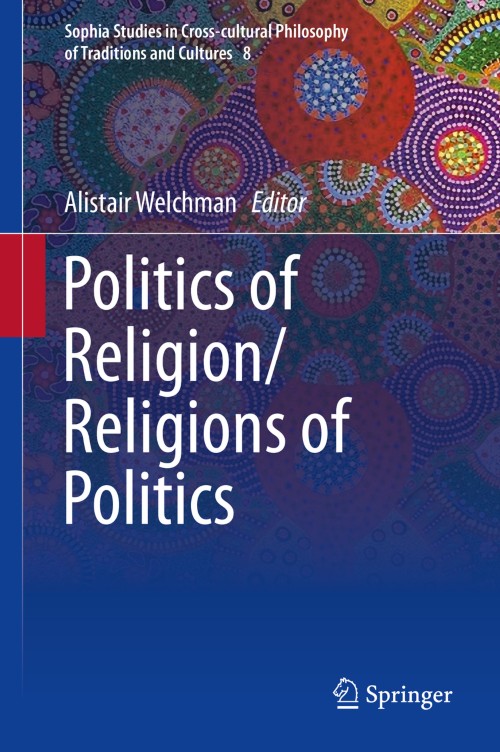
Politics of Religion/Religions of Politics [electronic resource] / edited by Alistair Welchman.
Erişim Adresi
ISBN
9789401794480
Dil Kodu
İngilizce
Yer Numarası
DK/16128
Basım Bildirimi
1st ed. 2015.
Yayın Bilgisi
Dordrecht : Springer Netherlands : Imprint: Springer, 2015.
Fiziksel Niteleme
XIII, 191 p. online resource.
Dizi
Sophia Studies in Cross-cultural Philosophy of Traditions and Cultures, 2211-1115 ; 8
İçindekiler Notu
Introduction, A. Welchman -- An Aphoristic Memoir: On the Advantages and Disadvantages of Philosophy for Life, A-M. Bowery -- Rethinking Disenchantment and Poesis: Interpreting the Resistance to the Political in Critchley’s Call for Re-Enchantment, T. Chante -- How Much Does That Weigh? Lévinas and the Possibility of Human Rights, J. Stauffer -- To Die Laughing: On Irony and Humor in Limit Situations, C. Bradatan -- You are not your own: On the Nature of Faith, S. Critchley -- Simon Critchley’s Problem of Politics and Hannah Arendt’s Idealism for the USA, R. Champagne -- Contested States: Capital, Resistance and Power, P. Lewis -- Exposures and Projections: Simon Critchley’s Ethics of Appearances, D. Panagia -- Cosmology, Anthropology and Politics: Reflections on Rousseau and ‘Mystical Anarchism’, P. Quadrio -- Protest Politics and Para-Ontology, A. Welchman -- The Sewing Circles of Geneva: Mores, Morals and Moralizing in Political Life, A. O’Byrne.
Özet, vb.
The liberal enlightenment as well as the more radical left have both traditionally opposed religion as a reactionary force in politics, a view culminating in an identification of the politics of religion as fundamentalist theocracy. But recently a number of thinkers—Agamben, Badiou, Tabues and in particular Simon Critchley—have begun to explore a more productive engagement of the religious and the political in which religion features as a possible or even necessary form of human emancipation. The papers in this collection, deriving from a workshop held on and with Simon Critchley at the University of Texas at San Antonio in February 2010, take up the ways in which religion’s encounter with politics transforms not only politics but also religion itself, molding it into various religions of politics, including not just heretical religious metaphysics, but also what Critchley describes as non-metaphysical religion, the faith of the faithless. Starting from Critchley’s own genealogy ofPauline faith, the articles in this collection explore and defend some of the religions of politics and their implications. Costica Bradatan teases out the implications of Critchley’s substitution of humor for tragedy as the vehicle for the minimal self-distancing required for any politics. Jill Stauffer compares Critchley’s non-metaphysical religiosity with Charles Taylor’s account of Christianity. Alistair Welchman unpacks the political theology of the border in terms of god’s timeless act of creation. Anne O’Byrne explores the subtle dialectic between mores and morality in Rousseau’s political ethics. Roland Champagne sees a kind non-metaphysical religion in Arendt’s category of the political pariah. Davide Panagia presents Critchley’s ethics of exposure as the basis for a non-metaphysical political bond. Philip Quadrio wonders about the political ramifications of Critchley’s own ‘mystical anarchism’ and Tina Chanter re-reads the primal site in the Western tradition at which the political and the religious intersect, the Antigone story, side-stepping philosophical interpretations of the story (dominated by Hegel’s reading) by means of a series of post-colonial re-imaginings of the play. The collection concludes with an interview with Simon Critchley taking up the themes of the workshop in the light of more recent political events: the Arab Spring and the rise and fall of the Occupy movement.
Konu
Religion __ Philosophy.
Religion.
Philosophy of Religion.
Religion.
Religion.
Philosophy of Religion.
Religion.
Diğer Yazarlar
Kurum Adı
Eseri Alıntıla
Referansları kullanmadan önce gözden geçirmeniz ve varsa gerekli düzeltmeleri yapmanız önerilir.
Dijital Kaynak
MARC Görünümü
LEADER 05219nam a22004935i 4500
001 814891
003 TR_AnAIT
005 20260130213436
007 cr nn 008mamaa
008 141020s2015 ne | s |||| 0|eng d
020 |a9789401794480|9978-94-017-9448-0
024 7 |a10.1007/978-94-017-9448-0|2doi
041 |aeng
049 |aTürk Tarih Kurumu Kütüphanesi
050 4|aBL51
072 7|aHRAB|2bicssc
072 7|aPHI022000|2bisacsh
072 7|aQRAB|2thema
082 04|a210|223
090 |aDK/16128
245 10|aPolitics of Religion/Religions of Politics|h[electronic resource] /|cedited by Alistair Welchman.
250 |a1st ed. 2015.
264 1|aDordrecht :|bSpringer Netherlands :|bImprint: Springer,|c2015.
300 |aXIII, 191 p.|bonline resource.
336 |atext|btxt|2rdacontent
337 |acomputer|bc|2rdamedia
338 |aonline resource|bcr|2rdacarrier
347 |atext file|bPDF|2rda
490 1 |aSophia Studies in Cross-cultural Philosophy of Traditions and Cultures,|x2211-1115 ;|v8
505 0 |aIntroduction, A. Welchman -- An Aphoristic Memoir: On the Advantages and Disadvantages of Philosophy for Life, A-M. Bowery -- Rethinking Disenchantment and Poesis: Interpreting the Resistance to the Political in Critchley’s Call for Re-Enchantment, T. Chante -- How Much Does That Weigh? Lévinas and the Possibility of Human Rights, J. Stauffer -- To Die Laughing: On Irony and Humor in Limit Situations, C. Bradatan -- You are not your own: On the Nature of Faith, S. Critchley -- Simon Critchley’s Problem of Politics and Hannah Arendt’s Idealism for the USA, R. Champagne -- Contested States: Capital, Resistance and Power, P. Lewis -- Exposures and Projections: Simon Critchley’s Ethics of Appearances, D. Panagia -- Cosmology, Anthropology and Politics: Reflections on Rousseau and ‘Mystical Anarchism’, P. Quadrio -- Protest Politics and Para-Ontology, A. Welchman -- The Sewing Circles of Geneva: Mores, Morals and Moralizing in Political Life, A. O’Byrne.
520 |aThe liberal enlightenment as well as the more radical left have both traditionally opposed religion as a reactionary force in politics, a view culminating in an identification of the politics of religion as fundamentalist theocracy. But recently a number of thinkers—Agamben, Badiou, Tabues and in particular Simon Critchley—have begun to explore a more productive engagement of the religious and the political in which religion features as a possible or even necessary form of human emancipation. The papers in this collection, deriving from a workshop held on and with Simon Critchley at the University of Texas at San Antonio in February 2010, take up the ways in which religion’s encounter with politics transforms not only politics but also religion itself, molding it into various religions of politics, including not just heretical religious metaphysics, but also what Critchley describes as non-metaphysical religion, the faith of the faithless. Starting from Critchley’s own genealogy ofPauline faith, the articles in this collection explore and defend some of the religions of politics and their implications. Costica Bradatan teases out the implications of Critchley’s substitution of humor for tragedy as the vehicle for the minimal self-distancing required for any politics. Jill Stauffer compares Critchley’s non-metaphysical religiosity with Charles Taylor’s account of Christianity. Alistair Welchman unpacks the political theology of the border in terms of god’s timeless act of creation. Anne O’Byrne explores the subtle dialectic between mores and morality in Rousseau’s political ethics. Roland Champagne sees a kind non-metaphysical religion in Arendt’s category of the political pariah. Davide Panagia presents Critchley’s ethics of exposure as the basis for a non-metaphysical political bond. Philip Quadrio wonders about the political ramifications of Critchley’s own ‘mystical anarchism’ and Tina Chanter re-reads the primal site in the Western tradition at which the political and the religious intersect, the Antigone story, side-stepping philosophical interpretations of the story (dominated by Hegel’s reading) by means of a series of post-colonial re-imaginings of the play. The collection concludes with an interview with Simon Critchley taking up the themes of the workshop in the light of more recent political events: the Arab Spring and the rise and fall of the Occupy movement.
650 0|aReligion|xPhilosophy.
650 0|aReligion.
650 14|aPhilosophy of Religion.
650 24|aReligion.
700 1 |aWelchman, Alistair.|eeditor.|4edt|4http://id.loc.gov/vocabulary/relators/edt
710 2 |aSpringerLink (Online service)
773 0 |tSpringer Nature eBook
776 08|iPrinted edition:|z9789401794473
776 08|iPrinted edition:|z9789401794497
776 08|iPrinted edition:|z9789402408102
830 0|aSophia Studies in Cross-cultural Philosophy of Traditions and Cultures,|x2211-1115 ;|v8
856 40|uhttps://doi.org/10.1007/978-94-017-9448-0
912 |aZDB-2-SHU
912 |aZDB-2-SXPR
950 |aHumanities, Social Sciences and Law (SpringerNature-11648)
950 |aPhilosophy and Religion (R0) (SpringerNature-43725)
001 814891
003 TR_AnAIT
005 20260130213436
007 cr nn 008mamaa
008 141020s2015 ne | s |||| 0|eng d
020 |a9789401794480|9978-94-017-9448-0
024 7 |a10.1007/978-94-017-9448-0|2doi
041 |aeng
049 |aTürk Tarih Kurumu Kütüphanesi
050 4|aBL51
072 7|aHRAB|2bicssc
072 7|aPHI022000|2bisacsh
072 7|aQRAB|2thema
082 04|a210|223
090 |aDK/16128
245 10|aPolitics of Religion/Religions of Politics|h[electronic resource] /|cedited by Alistair Welchman.
250 |a1st ed. 2015.
264 1|aDordrecht :|bSpringer Netherlands :|bImprint: Springer,|c2015.
300 |aXIII, 191 p.|bonline resource.
336 |atext|btxt|2rdacontent
337 |acomputer|bc|2rdamedia
338 |aonline resource|bcr|2rdacarrier
347 |atext file|bPDF|2rda
490 1 |aSophia Studies in Cross-cultural Philosophy of Traditions and Cultures,|x2211-1115 ;|v8
505 0 |aIntroduction, A. Welchman -- An Aphoristic Memoir: On the Advantages and Disadvantages of Philosophy for Life, A-M. Bowery -- Rethinking Disenchantment and Poesis: Interpreting the Resistance to the Political in Critchley’s Call for Re-Enchantment, T. Chante -- How Much Does That Weigh? Lévinas and the Possibility of Human Rights, J. Stauffer -- To Die Laughing: On Irony and Humor in Limit Situations, C. Bradatan -- You are not your own: On the Nature of Faith, S. Critchley -- Simon Critchley’s Problem of Politics and Hannah Arendt’s Idealism for the USA, R. Champagne -- Contested States: Capital, Resistance and Power, P. Lewis -- Exposures and Projections: Simon Critchley’s Ethics of Appearances, D. Panagia -- Cosmology, Anthropology and Politics: Reflections on Rousseau and ‘Mystical Anarchism’, P. Quadrio -- Protest Politics and Para-Ontology, A. Welchman -- The Sewing Circles of Geneva: Mores, Morals and Moralizing in Political Life, A. O’Byrne.
520 |aThe liberal enlightenment as well as the more radical left have both traditionally opposed religion as a reactionary force in politics, a view culminating in an identification of the politics of religion as fundamentalist theocracy. But recently a number of thinkers—Agamben, Badiou, Tabues and in particular Simon Critchley—have begun to explore a more productive engagement of the religious and the political in which religion features as a possible or even necessary form of human emancipation. The papers in this collection, deriving from a workshop held on and with Simon Critchley at the University of Texas at San Antonio in February 2010, take up the ways in which religion’s encounter with politics transforms not only politics but also religion itself, molding it into various religions of politics, including not just heretical religious metaphysics, but also what Critchley describes as non-metaphysical religion, the faith of the faithless. Starting from Critchley’s own genealogy ofPauline faith, the articles in this collection explore and defend some of the religions of politics and their implications. Costica Bradatan teases out the implications of Critchley’s substitution of humor for tragedy as the vehicle for the minimal self-distancing required for any politics. Jill Stauffer compares Critchley’s non-metaphysical religiosity with Charles Taylor’s account of Christianity. Alistair Welchman unpacks the political theology of the border in terms of god’s timeless act of creation. Anne O’Byrne explores the subtle dialectic between mores and morality in Rousseau’s political ethics. Roland Champagne sees a kind non-metaphysical religion in Arendt’s category of the political pariah. Davide Panagia presents Critchley’s ethics of exposure as the basis for a non-metaphysical political bond. Philip Quadrio wonders about the political ramifications of Critchley’s own ‘mystical anarchism’ and Tina Chanter re-reads the primal site in the Western tradition at which the political and the religious intersect, the Antigone story, side-stepping philosophical interpretations of the story (dominated by Hegel’s reading) by means of a series of post-colonial re-imaginings of the play. The collection concludes with an interview with Simon Critchley taking up the themes of the workshop in the light of more recent political events: the Arab Spring and the rise and fall of the Occupy movement.
650 0|aReligion|xPhilosophy.
650 0|aReligion.
650 14|aPhilosophy of Religion.
650 24|aReligion.
700 1 |aWelchman, Alistair.|eeditor.|4edt|4http://id.loc.gov/vocabulary/relators/edt
710 2 |aSpringerLink (Online service)
773 0 |tSpringer Nature eBook
776 08|iPrinted edition:|z9789401794473
776 08|iPrinted edition:|z9789401794497
776 08|iPrinted edition:|z9789402408102
830 0|aSophia Studies in Cross-cultural Philosophy of Traditions and Cultures,|x2211-1115 ;|v8
856 40|uhttps://doi.org/10.1007/978-94-017-9448-0
912 |aZDB-2-SHU
912 |aZDB-2-SXPR
950 |aHumanities, Social Sciences and Law (SpringerNature-11648)
950 |aPhilosophy and Religion (R0) (SpringerNature-43725)
Materyaller
Depodan talep edilen materyal sadece kütüphane içerisinde kullanılmaktadır.
Materyal dışarıya ödünç verilmemektedir.
Materyal dışarıya ödünç verilmemektedir.
