

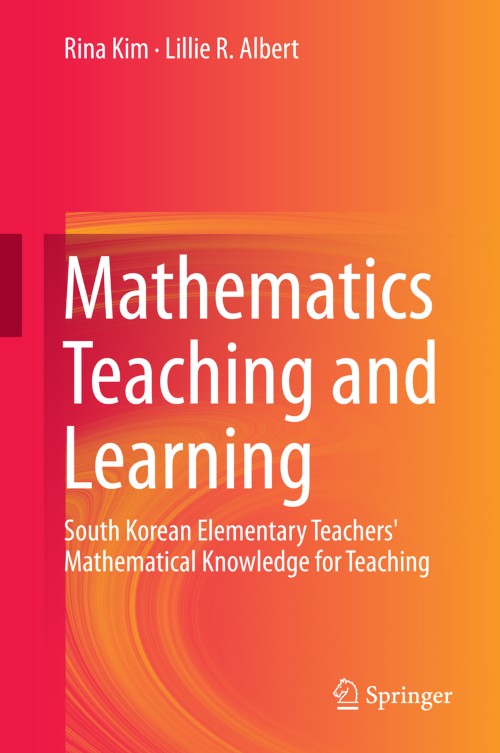
Mathematics Teaching and Learning [electronic resource] : South Korean Elementary Teachers' Mathematical Knowledge for Teaching / by Rina Kim, Lillie R. Albert.
Erişim Adresi
ISBN
9783319135427
Dil Kodu
İngilizce
Yer Numarası
DK/16133
Yazar
Basım Bildirimi
1st ed. 2015.
Yayın Bilgisi
Cham : Springer International Publishing : Imprint: Springer, 2015.
Fiziksel Niteleme
XV, 152 p. 26 illus., 2 illus. in color. online resource.
İçindekiler Notu
CHAPTER 1: Introduction.- 1.1. Why elementary teachers’ knowledge matter.- 1.2. Purpose of the Study and Research Question.- 1.3. Framework.- 1.3.1. Theoretical Orientation.- 1.3.2. Conceptual Framework.- 1.4. Organization of the Book.- References.- CHAPTER 2: A Pedagogical Overview of Related Research.- 2.1. Introduction.- 2.2. Sociocultural Theory.- 2.3. Research on Teachers’ Mathematical Knowledge for Teaching.- 2.3.1. Shulman’s Research on Teachers’ Knowledge for Teaching.- 2.3.2. Fennema and Franke’s Research on Mathematics Teachers’ Knowledge .- 2.3.3. Hill, Ball and Schilling’s Research on Teachers’ Mathematical Knowledge for Teaching.- 2.3.4. Mishra and Koehler’s New Category of Teachers’ Mathematical Knowledge for Teaching.- 2.5. Interpretive Summary and Critical Analysis.-References.- CHAPTER 3: Methodology.- 3.1. Introduction.- 3.2. Research Design.- 3.3. Participants.- 3.4. Settings -- 3.5. Data Collection.-3.6. Data Analysis.- References.- CHAPTER 4: Context of Elementary Mathematics Education in South Korea -- 4.1. Introduction.- 4.2. The National Curriculum in South Korea -- 4.3. The National Curriculum and Education Fever in South Korea -- 4.4. The National Mathematics Curriculum at the Elementary Level in South Korea .- 4.5. Summary.-References.- CHAPTER 5: Mathematics Curriculum Knowledge (MCK).- 5.1. Introduction -- 5.2. Mathematics Curriculum Knowledge in Mathematics Instruction.- 5.2.1. Using MCK When Developing and Instructional Process.- 5.2.2. Using MCK When Teaching the Lesson in a Classroom.- 5.2.3. Using MCK When Assessing Students’ Work.- 5.3. Interpretative Summary.- References.- CHAPTER 6: Mathematics Learner Knowledge (MLK).- 6.1. Introduction.- 6.2. Mathematics Learner Knowledge.- 6.3. Mathematics Learner Knowledge in Mathematics Instruction.- 6.3.1. Using MLK When Developing and Instructional Process.- 6.3.2. Using MCK When Teaching the Lesson in aClassroom.- 6.3.3. Using MLK When Assessing Students’ Work.- 6.4 Interpretative Summary.- References.- CHAPTER 7: Fundamental Mathematics Conceptual Knowledge (FMCK).- 7.1. Introduction.- 7.2. Fundamental Mathematics Conceptual Knowledge.- 7.3. Fundamental Mathematics Conceptual Knowledge in Mathematics Instruction -- 7.3.1. Using FMCK When Developing and Instructional Process -- 7.3.2. Using FMCK When Teaching the Lesson in a Classroom -- 7.3.3. Using FMLK When Assessing Students’ Work.- 7.4. Interpretative Summary.- References.- CHAPTER 8: Mathematics Pedagogical Content Knowledge (MPCK) and Mathematics Pedagogical Procedural Knowledge (MPPK).- 8.1. Introduction.- 8.2. The Nature of Categories of Knowledge for Teaching Mathematics.- 8.3. The Relationship Among Categories of Knowledge for Teaching Mathematics.- 8.4. Mathematics Pedagogical Content Knowledge.- 8.5. Mathematics Pedagogical Procedural Knowledge.- 8.6. The Structure of South Korean Elementary Teachers’ Knowledge for Teaching Mathematics.- 8.7. Interpretative Summary.- References.- CHAPTER 9: Concluding Remarks, Implications and Future Directions.- 9.1. Introduction.- 9.2. Relationship Among the Categories of Mathematical Knowledge.- 9.3. Conclusion and Implications.-9.5. Future Directions.- 9.6. Closing Comments -- References.
Özet, vb.
This analysis of elementary mathematics instruction in South Korea examines local successes while spotlighting global concerns of education professionals. Findings in this research reveal specific domains of mathematics knowledge that best influence students' understanding, retaining, and owning of content. Aspects of teacher knowledge studied go beyond mastery of the subject matter, extending to how educators impart knowledge and how learners develop productive relationships with information. These results suggest possibilities for future directions in teacher training, certification, and career development. Among the topics covered: Models and methods for studying mathematical knowledge for teaching. Teachers' knowledge for teaching mathematics: a history of the research. Five categories of elementary mathematics teachers' knowledge and how they interrelate in teaching. Uses of different types of educational knowledge in lesson planning, classroom teaching, and evaluating student work. The role of pedagogical procedure in establishing pedagogical content knowledge. The social context of South Korea's National Mathematics Curriculum. By emphasizing teacher quality and school accountability, Mathematics Teaching and Learning identifies--and addresses--issues of pressing importance to education researchers, teacher educators, and mathematics educators, and has the potential to inform administrators and policymakers. .
Konu
Educational technology.
Learning, Psychology of.
Digital Education and Educational Technology.
Instructional Psychology.
Learning, Psychology of.
Digital Education and Educational Technology.
Instructional Psychology.
Diğer Yazarlar
Kurum Adı
Eseri Alıntıla
Referansları kullanmadan önce gözden geçirmeniz ve varsa gerekli düzeltmeleri yapmanız önerilir.
Dijital Kaynak
MARC Görünümü
LEADER 06600nam a22004815i 4500
001 814896
003 TR_AnAIT
005 20260130213359
007 cr nn 008mamaa
008 150324s2015 sz | s |||| 0|eng d
020 |a9783319135427|9978-3-319-13542-7
024 7 |a10.1007/978-3-319-13542-7|2doi
041 |aeng
049 |aTürk Tarih Kurumu Kütüphanesi
050 4|aLB1028.3
072 7|aJNV|2bicssc
072 7|aEDU000000|2bisacsh
072 7|aJNV|2thema
082 04|a371.33|223
090 |aDK/16133
100 1 |aKim, Rina.|eauthor.|4aut|4http://id.loc.gov/vocabulary/relators/aut
245 10|aMathematics Teaching and Learning|h[electronic resource] :|bSouth Korean Elementary Teachers' Mathematical Knowledge for Teaching /|cby Rina Kim, Lillie R. Albert.
250 |a1st ed. 2015.
264 1|aCham :|bSpringer International Publishing :|bImprint: Springer,|c2015.
300 |aXV, 152 p. 26 illus., 2 illus. in color.|bonline resource.
336 |atext|btxt|2rdacontent
337 |acomputer|bc|2rdamedia
338 |aonline resource|bcr|2rdacarrier
347 |atext file|bPDF|2rda
505 0 |aCHAPTER 1: Introduction.- 1.1. Why elementary teachers’ knowledge matter.- 1.2. Purpose of the Study and Research Question.- 1.3. Framework.- 1.3.1. Theoretical Orientation.- 1.3.2. Conceptual Framework.- 1.4. Organization of the Book.- References.- CHAPTER 2: A Pedagogical Overview of Related Research.- 2.1. Introduction.- 2.2. Sociocultural Theory.- 2.3. Research on Teachers’ Mathematical Knowledge for Teaching.- 2.3.1. Shulman’s Research on Teachers’ Knowledge for Teaching.- 2.3.2. Fennema and Franke’s Research on Mathematics Teachers’ Knowledge .- 2.3.3. Hill, Ball and Schilling’s Research on Teachers’ Mathematical Knowledge for Teaching.- 2.3.4. Mishra and Koehler’s New Category of Teachers’ Mathematical Knowledge for Teaching.- 2.5. Interpretive Summary and Critical Analysis.-References.- CHAPTER 3: Methodology.- 3.1. Introduction.- 3.2. Research Design.- 3.3. Participants.- 3.4. Settings -- 3.5. Data Collection.-3.6. Data Analysis.- References.- CHAPTER 4: Context of Elementary Mathematics Education in South Korea -- 4.1. Introduction.- 4.2. The National Curriculum in South Korea -- 4.3. The National Curriculum and Education Fever in South Korea -- 4.4. The National Mathematics Curriculum at the Elementary Level in South Korea .- 4.5. Summary.-References.- CHAPTER 5: Mathematics Curriculum Knowledge (MCK).- 5.1. Introduction -- 5.2. Mathematics Curriculum Knowledge in Mathematics Instruction.- 5.2.1. Using MCK When Developing and Instructional Process.- 5.2.2. Using MCK When Teaching the Lesson in a Classroom.- 5.2.3. Using MCK When Assessing Students’ Work.- 5.3. Interpretative Summary.- References.- CHAPTER 6: Mathematics Learner Knowledge (MLK).- 6.1. Introduction.- 6.2. Mathematics Learner Knowledge.- 6.3. Mathematics Learner Knowledge in Mathematics Instruction.- 6.3.1. Using MLK When Developing and Instructional Process.- 6.3.2. Using MCK When Teaching the Lesson in aClassroom.- 6.3.3. Using MLK When Assessing Students’ Work.- 6.4 Interpretative Summary.- References.- CHAPTER 7: Fundamental Mathematics Conceptual Knowledge (FMCK).- 7.1. Introduction.- 7.2. Fundamental Mathematics Conceptual Knowledge.- 7.3. Fundamental Mathematics Conceptual Knowledge in Mathematics Instruction -- 7.3.1. Using FMCK When Developing and Instructional Process -- 7.3.2. Using FMCK When Teaching the Lesson in a Classroom -- 7.3.3. Using FMLK When Assessing Students’ Work.- 7.4. Interpretative Summary.- References.- CHAPTER 8: Mathematics Pedagogical Content Knowledge (MPCK) and Mathematics Pedagogical Procedural Knowledge (MPPK).- 8.1. Introduction.- 8.2. The Nature of Categories of Knowledge for Teaching Mathematics.- 8.3. The Relationship Among Categories of Knowledge for Teaching Mathematics.- 8.4. Mathematics Pedagogical Content Knowledge.- 8.5. Mathematics Pedagogical Procedural Knowledge.- 8.6. The Structure of South Korean Elementary Teachers’ Knowledge for Teaching Mathematics.- 8.7. Interpretative Summary.- References.- CHAPTER 9: Concluding Remarks, Implications and Future Directions.- 9.1. Introduction.- 9.2. Relationship Among the Categories of Mathematical Knowledge.- 9.3. Conclusion and Implications.-9.5. Future Directions.- 9.6. Closing Comments -- References.
520 |aThis analysis of elementary mathematics instruction in South Korea examines local successes while spotlighting global concerns of education professionals. Findings in this research reveal specific domains of mathematics knowledge that best influence students' understanding, retaining, and owning of content. Aspects of teacher knowledge studied go beyond mastery of the subject matter, extending to how educators impart knowledge and how learners develop productive relationships with information. These results suggest possibilities for future directions in teacher training, certification, and career development. Among the topics covered: Models and methods for studying mathematical knowledge for teaching. Teachers' knowledge for teaching mathematics: a history of the research. Five categories of elementary mathematics teachers' knowledge and how they interrelate in teaching. Uses of different types of educational knowledge in lesson planning, classroom teaching, and evaluating student work. The role of pedagogical procedure in establishing pedagogical content knowledge. The social context of South Korea's National Mathematics Curriculum. By emphasizing teacher quality and school accountability, Mathematics Teaching and Learning identifies--and addresses--issues of pressing importance to education researchers, teacher educators, and mathematics educators, and has the potential to inform administrators and policymakers. .
650 0|aEducational technology.
650 0|aLearning, Psychology of.
650 14|aDigital Education and Educational Technology.
650 24|aInstructional Psychology.
700 1 |aAlbert, Lillie R.|eauthor.|4aut|4http://id.loc.gov/vocabulary/relators/aut
710 2 |aSpringerLink (Online service)
773 0 |tSpringer Nature eBook
776 08|iPrinted edition:|z9783319135410
776 08|iPrinted edition:|z9783319135434
776 08|iPrinted edition:|z9783319366159
856 40|uhttps://doi.org/10.1007/978-3-319-13542-7
912 |aZDB-2-SHU
912 |aZDB-2-SXED
950 |aHumanities, Social Sciences and Law (SpringerNature-11648)
950 |aEducation (R0) (SpringerNature-43721)
001 814896
003 TR_AnAIT
005 20260130213359
007 cr nn 008mamaa
008 150324s2015 sz | s |||| 0|eng d
020 |a9783319135427|9978-3-319-13542-7
024 7 |a10.1007/978-3-319-13542-7|2doi
041 |aeng
049 |aTürk Tarih Kurumu Kütüphanesi
050 4|aLB1028.3
072 7|aJNV|2bicssc
072 7|aEDU000000|2bisacsh
072 7|aJNV|2thema
082 04|a371.33|223
090 |aDK/16133
100 1 |aKim, Rina.|eauthor.|4aut|4http://id.loc.gov/vocabulary/relators/aut
245 10|aMathematics Teaching and Learning|h[electronic resource] :|bSouth Korean Elementary Teachers' Mathematical Knowledge for Teaching /|cby Rina Kim, Lillie R. Albert.
250 |a1st ed. 2015.
264 1|aCham :|bSpringer International Publishing :|bImprint: Springer,|c2015.
300 |aXV, 152 p. 26 illus., 2 illus. in color.|bonline resource.
336 |atext|btxt|2rdacontent
337 |acomputer|bc|2rdamedia
338 |aonline resource|bcr|2rdacarrier
347 |atext file|bPDF|2rda
505 0 |aCHAPTER 1: Introduction.- 1.1. Why elementary teachers’ knowledge matter.- 1.2. Purpose of the Study and Research Question.- 1.3. Framework.- 1.3.1. Theoretical Orientation.- 1.3.2. Conceptual Framework.- 1.4. Organization of the Book.- References.- CHAPTER 2: A Pedagogical Overview of Related Research.- 2.1. Introduction.- 2.2. Sociocultural Theory.- 2.3. Research on Teachers’ Mathematical Knowledge for Teaching.- 2.3.1. Shulman’s Research on Teachers’ Knowledge for Teaching.- 2.3.2. Fennema and Franke’s Research on Mathematics Teachers’ Knowledge .- 2.3.3. Hill, Ball and Schilling’s Research on Teachers’ Mathematical Knowledge for Teaching.- 2.3.4. Mishra and Koehler’s New Category of Teachers’ Mathematical Knowledge for Teaching.- 2.5. Interpretive Summary and Critical Analysis.-References.- CHAPTER 3: Methodology.- 3.1. Introduction.- 3.2. Research Design.- 3.3. Participants.- 3.4. Settings -- 3.5. Data Collection.-3.6. Data Analysis.- References.- CHAPTER 4: Context of Elementary Mathematics Education in South Korea -- 4.1. Introduction.- 4.2. The National Curriculum in South Korea -- 4.3. The National Curriculum and Education Fever in South Korea -- 4.4. The National Mathematics Curriculum at the Elementary Level in South Korea .- 4.5. Summary.-References.- CHAPTER 5: Mathematics Curriculum Knowledge (MCK).- 5.1. Introduction -- 5.2. Mathematics Curriculum Knowledge in Mathematics Instruction.- 5.2.1. Using MCK When Developing and Instructional Process.- 5.2.2. Using MCK When Teaching the Lesson in a Classroom.- 5.2.3. Using MCK When Assessing Students’ Work.- 5.3. Interpretative Summary.- References.- CHAPTER 6: Mathematics Learner Knowledge (MLK).- 6.1. Introduction.- 6.2. Mathematics Learner Knowledge.- 6.3. Mathematics Learner Knowledge in Mathematics Instruction.- 6.3.1. Using MLK When Developing and Instructional Process.- 6.3.2. Using MCK When Teaching the Lesson in aClassroom.- 6.3.3. Using MLK When Assessing Students’ Work.- 6.4 Interpretative Summary.- References.- CHAPTER 7: Fundamental Mathematics Conceptual Knowledge (FMCK).- 7.1. Introduction.- 7.2. Fundamental Mathematics Conceptual Knowledge.- 7.3. Fundamental Mathematics Conceptual Knowledge in Mathematics Instruction -- 7.3.1. Using FMCK When Developing and Instructional Process -- 7.3.2. Using FMCK When Teaching the Lesson in a Classroom -- 7.3.3. Using FMLK When Assessing Students’ Work.- 7.4. Interpretative Summary.- References.- CHAPTER 8: Mathematics Pedagogical Content Knowledge (MPCK) and Mathematics Pedagogical Procedural Knowledge (MPPK).- 8.1. Introduction.- 8.2. The Nature of Categories of Knowledge for Teaching Mathematics.- 8.3. The Relationship Among Categories of Knowledge for Teaching Mathematics.- 8.4. Mathematics Pedagogical Content Knowledge.- 8.5. Mathematics Pedagogical Procedural Knowledge.- 8.6. The Structure of South Korean Elementary Teachers’ Knowledge for Teaching Mathematics.- 8.7. Interpretative Summary.- References.- CHAPTER 9: Concluding Remarks, Implications and Future Directions.- 9.1. Introduction.- 9.2. Relationship Among the Categories of Mathematical Knowledge.- 9.3. Conclusion and Implications.-9.5. Future Directions.- 9.6. Closing Comments -- References.
520 |aThis analysis of elementary mathematics instruction in South Korea examines local successes while spotlighting global concerns of education professionals. Findings in this research reveal specific domains of mathematics knowledge that best influence students' understanding, retaining, and owning of content. Aspects of teacher knowledge studied go beyond mastery of the subject matter, extending to how educators impart knowledge and how learners develop productive relationships with information. These results suggest possibilities for future directions in teacher training, certification, and career development. Among the topics covered: Models and methods for studying mathematical knowledge for teaching. Teachers' knowledge for teaching mathematics: a history of the research. Five categories of elementary mathematics teachers' knowledge and how they interrelate in teaching. Uses of different types of educational knowledge in lesson planning, classroom teaching, and evaluating student work. The role of pedagogical procedure in establishing pedagogical content knowledge. The social context of South Korea's National Mathematics Curriculum. By emphasizing teacher quality and school accountability, Mathematics Teaching and Learning identifies--and addresses--issues of pressing importance to education researchers, teacher educators, and mathematics educators, and has the potential to inform administrators and policymakers. .
650 0|aEducational technology.
650 0|aLearning, Psychology of.
650 14|aDigital Education and Educational Technology.
650 24|aInstructional Psychology.
700 1 |aAlbert, Lillie R.|eauthor.|4aut|4http://id.loc.gov/vocabulary/relators/aut
710 2 |aSpringerLink (Online service)
773 0 |tSpringer Nature eBook
776 08|iPrinted edition:|z9783319135410
776 08|iPrinted edition:|z9783319135434
776 08|iPrinted edition:|z9783319366159
856 40|uhttps://doi.org/10.1007/978-3-319-13542-7
912 |aZDB-2-SHU
912 |aZDB-2-SXED
950 |aHumanities, Social Sciences and Law (SpringerNature-11648)
950 |aEducation (R0) (SpringerNature-43721)
Materyaller
Depodan talep edilen materyal sadece kütüphane içerisinde kullanılmaktadır.
Materyal dışarıya ödünç verilmemektedir.
Materyal dışarıya ödünç verilmemektedir.
