LEADER 03413nam a22005295i 4500
001 814930
003 TR_AnAIT
005 20260130213200
007 cr nn 008mamaa
008 140919s2014 sz | s |||| 0|eng d
020 |a9783319080130|9978-3-319-08013-0
024 7 |a10.1007/978-3-319-08013-0|2doi
041 |aeng
049 |aTürk Tarih Kurumu Kütüphanesi
050 4|aBJ1-1725
072 7|aHPQ|2bicssc
072 7|aPHI005000|2bisacsh
072 7|aQDTQ|2thema
082 04|a170|223
090 |aDK/16167
100 1 |aWelch, John R.|eauthor.|4aut|4http://id.loc.gov/vocabulary/relators/aut
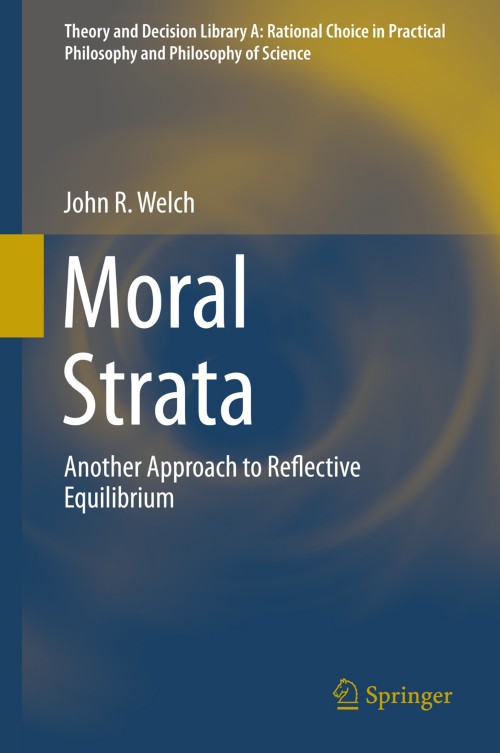
245 10|aMoral Strata|h[electronic resource] :|bAnother Approach to Reflective Equilibrium /|cby John R. Welch.
250 |a1st ed. 2014.
264 1|aCham :|bSpringer International Publishing :|bImprint: Springer,|c2014.
300 |aXI, 202 p. 17 illus.|bonline resource.
336 |atext|btxt|2rdacontent
337 |acomputer|bc|2rdamedia
338 |aonline resource|bcr|2rdacarrier
347 |atext file|bPDF|2rda
490 1 |aTheory and Decision Library A:, Rational Choice in Practical Philosophy and Philosophy of Science,|x2352-2119 ;|v49
505 0 |aPreface -- Chapter 1 Discursive Strata -- Chapter 2 Saving the Moral Phenomena -- Chapter 3 Comparative Decision Theory -- Chapter 4 Working with Moral Means -- Chapter 5 Securing Our Moral Ends -- Chapter 6 Remedies for Reflective Disequilibrium -- Index. .
520 |aThis volume recreates the received notion of reflective equilibrium. It reconfigures reflective equilibrium as both a cognitive ideal and a method for approximating this ideal. The ideal of reflective equilibrium is restructured using the concept of discursive strata, which are formed by sentences and differentiated by function. Sentences that perform the same kind of linguistic function constitute a stratum. The book shows how moral discourse can be analyzed into phenomenal, instrumental, and teleological strata, and the ideal of reflective equilibrium reworked in these terms. In addition, the work strengthens the method of reflective equilibrium by harnessing the resources of decision theory and inductive logic. It launches a comparative version of decision theory and employs this framework as a guide to moral theory choice. It also recruits quantitative inductive logic to inform a standard of inductive cogency. When used in tandem with comparative decision theory, this standard can aid in the effort to turn the undesirable condition of reflective disequilibrium into reflective equilibrium.
650 0|aEthics.
650 0|aOperations research.
650 0|aMathematics.
650 0|aSocial sciences.
650 14|aMoral Philosophy and Applied Ethics.
650 24|aOperations Research and Decision Theory.
650 24|aMathematics in the Humanities and Social Sciences.
710 2 |aSpringerLink (Online service)
773 0 |tSpringer Nature eBook
776 08|iPrinted edition:|z9783319080123
776 08|iPrinted edition:|z9783319080147
776 08|iPrinted edition:|z9783319382913
830 0|aTheory and Decision Library A:, Rational Choice in Practical Philosophy and Philosophy of Science,|x2352-2119 ;|v49
856 40|uhttps://doi.org/10.1007/978-3-319-08013-0
912 |aZDB-2-SHU
912 |aZDB-2-SXPR
950 |aHumanities, Social Sciences and Law (SpringerNature-11648)
950 |aPhilosophy and Religion (R0) (SpringerNature-43725)