

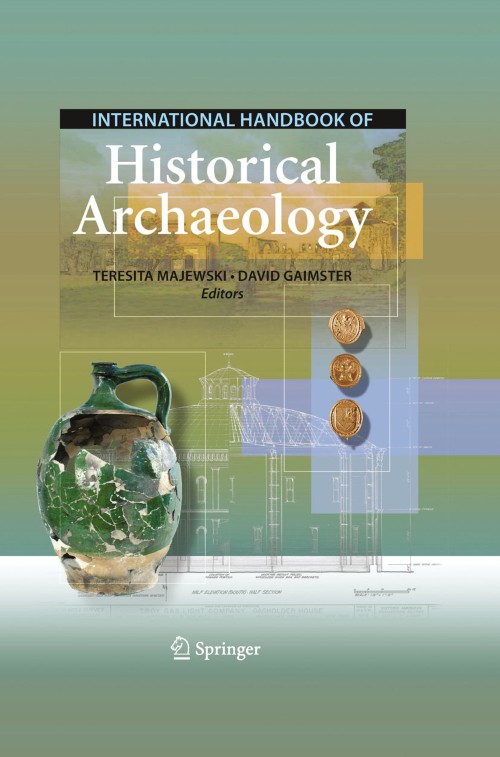
International Handbook of Historical Archaeology [electronic resource] / edited by Teresita Majewski, David Gaimster.
Erişim Adresi
ISBN
9780387720715
Dil Kodu
İngilizce
Yer Numarası
DK/16197
Basım Bildirimi
1st ed. 2009.
Yayın Bilgisi
New York, NY : Springer New York : Imprint: Springer, 2009.
Fiziksel Niteleme
XX, 698 p. 130 illus., 1 illus. in color. online resource.
İçindekiler Notu
Section 1 Themes Issues and Approaches -- A North American Perspective on Race and Class in Historical Archaeology -- Ethical Issues in Historical Archaeology -- Colonies, Colonialism, and Cultural Entanglement: The Archaeology of Postcolumbian Intercultural Relations -- Landscape Approaches in Historical Archaeology: The Archaeology of Places -- Historical Archaeology and the Environment: A North American Perspective -- An Update on Zooarchaeology and Historical Archaeology: Progress and Prospects -- Going, Going, Gone: Underwater Cultural Resources in Decline -- Preparing for an Afterlife on Earth: The Transformation of Mortuary Behavior in Nineteenth-Century North America -- Making Historical Archaeology Postcolonial -- The Current State and Future Prospects of Theory in European Post-Medieval Archaeology -- Beyond Consumption: Toward an Archaeology of Consumerism -- Artifacts and Personal Identity -- Darwinism and Historical Archaeology -- World-Systems Theory, Networks, and Modern-World Archaeology -- Wholes, Halves, and Vacant Quarters: Ethnohistory and the Historical Method -- Industrial Archaeology -- Studying the Archaeology of War: A Model Based on the Investigation of Frontier Military Sites in the American Trans-Mississippi West -- Men–Women and Children: Gender and the Structuring of Historical Archaeology -- Interpretive Historical Archaeologies -- Asian American Studies in Historical Archaeology -- Section 2 Historical Archaeology on a Global Scale -- Family Resemblances: A Brief Overview of History, Anthropology, and Historical Archaeology in the United States -- The Archaeology of La Florida -- Historical Archaeology in South America -- Historical Archaeology in Central and Northern Mesoamerica: Development and Current Status -- Historical Archaeology in Yucatan and CentralAmerica -- Archaeologies of the African Diaspora: Brazil, Cuba, and the United States -- On the Fringes of New Spain: The Northern Borderlands and the Pacific -- Exploration, Exploitation, Expansion, and Settlement: Historical Archaeology in Canada -- An Embarrassment of Riches? Post-Medieval Archaeology in Northern and Central Europe -- The Development of Post-Medieval Archaeology in Britain: A Historical Perspective -- The Practice and Substance of Historical Archaeology in Sub-Saharan Africa -- A Sea of Diversity: Historical Archaeology in the Caribbean -- French Colonial Archaeology -- Natives and Newcomers in the Antipodes: Historical Archaeology in Australia and New Zealand -- Above and Beyond Ancient Mounds: The Archaeology of the Modern Periods in the Middle East and Eastern Mediterranean.
Özet, vb.
In studying the past, archaeologists have focused on the material remains of our predecessors. Prehistorians generally rely almost exclusively on the diverse material record for their understanding of past societies and their behavior. Those involved in studying historically documented cultures not only have extensive material remains but also contemporary texts, images, and a range of investigative methods to enable them to build a broader and more reflexive picture of how past societies, communities, and individuals operated and behaved. Increasingly, historical archaeology refers not to a particular period, place, or a method, but rather to an approach that interrogates the tensions between artifacts and texts irrespective of context. In short, historical archaeology provides direct evidence for how humans have shaped the world we live in today. The 35 essays in the International Handbook of Historical Archaeology have been specially commissioned from leading researchers in their fields, creating a wide-ranging digest of the increasingly global field of historical archaeology that will be an essential addition to any library. Authors include both senior and junior scholars and represent the major sectors where historical archaeologists are employed today—the cultural resource/heritage management industry, universities, government agencies, and museums. The volume is divided into two sections, the first reviewing the key themes, issues, and approaches of historical archaeology today, and the second containing a series of case studies charting the development and current state of historical archaeological practice around the world. The contributions to the handbook include unique topical and regional syntheses not foundin historical archaeological compendia published to date. This key reference work captures the energy and diversity of this global discipline today, and its format and content are particularly suitable for classroom use.
Konu
Archaeology.
Cultural property.
Archaeology.
Cultural Heritage.
Cultural property.
Archaeology.
Cultural Heritage.
Diğer Yazarlar
Kurum Adı
Eseri Alıntıla
Referansları kullanmadan önce gözden geçirmeniz ve varsa gerekli düzeltmeleri yapmanız önerilir.
Dijital Kaynak
MARC Görünümü
LEADER 06588nam a22004935i 4500
001 814960
003 TR_AnAIT
005 20260130213055
007 cr nn 008mamaa
008 110413s2009 xxu| s |||| 0|eng d
020 |a9780387720715|9978-0-387-72071-5
024 7 |a10.1007/978-0-387-72071-5|2doi
041 |aeng
049 |aTürk Tarih Kurumu Kütüphanesi
050 4|aCC1-960
072 7|aHD|2bicssc
072 7|aSOC003000|2bisacsh
072 7|aNK|2thema
082 04|a930.1|223
090 |aDK/16197
245 10|aInternational Handbook of Historical Archaeology|h[electronic resource] /|cedited by Teresita Majewski, David Gaimster.
250 |a1st ed. 2009.
264 1|aNew York, NY :|bSpringer New York :|bImprint: Springer,|c2009.
300 |aXX, 698 p. 130 illus., 1 illus. in color.|bonline resource.
336 |atext|btxt|2rdacontent
337 |acomputer|bc|2rdamedia
338 |aonline resource|bcr|2rdacarrier
347 |atext file|bPDF|2rda
505 0 |aSection 1 Themes Issues and Approaches -- A North American Perspective on Race and Class in Historical Archaeology -- Ethical Issues in Historical Archaeology -- Colonies, Colonialism, and Cultural Entanglement: The Archaeology of Postcolumbian Intercultural Relations -- Landscape Approaches in Historical Archaeology: The Archaeology of Places -- Historical Archaeology and the Environment: A North American Perspective -- An Update on Zooarchaeology and Historical Archaeology: Progress and Prospects -- Going, Going, Gone: Underwater Cultural Resources in Decline -- Preparing for an Afterlife on Earth: The Transformation of Mortuary Behavior in Nineteenth-Century North America -- Making Historical Archaeology Postcolonial -- The Current State and Future Prospects of Theory in European Post-Medieval Archaeology -- Beyond Consumption: Toward an Archaeology of Consumerism -- Artifacts and Personal Identity -- Darwinism and Historical Archaeology -- World-Systems Theory, Networks, and Modern-World Archaeology -- Wholes, Halves, and Vacant Quarters: Ethnohistory and the Historical Method -- Industrial Archaeology -- Studying the Archaeology of War: A Model Based on the Investigation of Frontier Military Sites in the American Trans-Mississippi West -- Men–Women and Children: Gender and the Structuring of Historical Archaeology -- Interpretive Historical Archaeologies -- Asian American Studies in Historical Archaeology -- Section 2 Historical Archaeology on a Global Scale -- Family Resemblances: A Brief Overview of History, Anthropology, and Historical Archaeology in the United States -- The Archaeology of La Florida -- Historical Archaeology in South America -- Historical Archaeology in Central and Northern Mesoamerica: Development and Current Status -- Historical Archaeology in Yucatan and CentralAmerica -- Archaeologies of the African Diaspora: Brazil, Cuba, and the United States -- On the Fringes of New Spain: The Northern Borderlands and the Pacific -- Exploration, Exploitation, Expansion, and Settlement: Historical Archaeology in Canada -- An Embarrassment of Riches? Post-Medieval Archaeology in Northern and Central Europe -- The Development of Post-Medieval Archaeology in Britain: A Historical Perspective -- The Practice and Substance of Historical Archaeology in Sub-Saharan Africa -- A Sea of Diversity: Historical Archaeology in the Caribbean -- French Colonial Archaeology -- Natives and Newcomers in the Antipodes: Historical Archaeology in Australia and New Zealand -- Above and Beyond Ancient Mounds: The Archaeology of the Modern Periods in the Middle East and Eastern Mediterranean.
520 |aIn studying the past, archaeologists have focused on the material remains of our predecessors. Prehistorians generally rely almost exclusively on the diverse material record for their understanding of past societies and their behavior. Those involved in studying historically documented cultures not only have extensive material remains but also contemporary texts, images, and a range of investigative methods to enable them to build a broader and more reflexive picture of how past societies, communities, and individuals operated and behaved. Increasingly, historical archaeology refers not to a particular period, place, or a method, but rather to an approach that interrogates the tensions between artifacts and texts irrespective of context. In short, historical archaeology provides direct evidence for how humans have shaped the world we live in today. The 35 essays in the International Handbook of Historical Archaeology have been specially commissioned from leading researchers in their fields, creating a wide-ranging digest of the increasingly global field of historical archaeology that will be an essential addition to any library. Authors include both senior and junior scholars and represent the major sectors where historical archaeologists are employed today—the cultural resource/heritage management industry, universities, government agencies, and museums. The volume is divided into two sections, the first reviewing the key themes, issues, and approaches of historical archaeology today, and the second containing a series of case studies charting the development and current state of historical archaeological practice around the world. The contributions to the handbook include unique topical and regional syntheses not foundin historical archaeological compendia published to date. This key reference work captures the energy and diversity of this global discipline today, and its format and content are particularly suitable for classroom use.
650 0|aArchaeology.
650 0|aCultural property.
650 14|aArchaeology.
650 24|aCultural Heritage.
700 1 |aMajewski, Teresita.|eeditor.|4edt|4http://id.loc.gov/vocabulary/relators/edt
700 1 |aGaimster, David.|eeditor.|4edt|4http://id.loc.gov/vocabulary/relators/edt
710 2 |aSpringerLink (Online service)
773 0 |tSpringer Nature eBook
776 08|iPrinted edition:|z9780387720685
776 08|iPrinted edition:|z9780387565859
776 08|iPrinted edition:|z9781441999238
776 08|iPrinted edition:|z9781441999221
856 40|uhttps://doi.org/10.1007/978-0-387-72071-5
912 |aZDB-2-SHU
912 |aZDB-2-SXS
950 |aHumanities, Social Sciences and Law (SpringerNature-11648)
950 |aSocial Sciences (R0) (SpringerNature-43726)
001 814960
003 TR_AnAIT
005 20260130213055
007 cr nn 008mamaa
008 110413s2009 xxu| s |||| 0|eng d
020 |a9780387720715|9978-0-387-72071-5
024 7 |a10.1007/978-0-387-72071-5|2doi
041 |aeng
049 |aTürk Tarih Kurumu Kütüphanesi
050 4|aCC1-960
072 7|aHD|2bicssc
072 7|aSOC003000|2bisacsh
072 7|aNK|2thema
082 04|a930.1|223
090 |aDK/16197
245 10|aInternational Handbook of Historical Archaeology|h[electronic resource] /|cedited by Teresita Majewski, David Gaimster.
250 |a1st ed. 2009.
264 1|aNew York, NY :|bSpringer New York :|bImprint: Springer,|c2009.
300 |aXX, 698 p. 130 illus., 1 illus. in color.|bonline resource.
336 |atext|btxt|2rdacontent
337 |acomputer|bc|2rdamedia
338 |aonline resource|bcr|2rdacarrier
347 |atext file|bPDF|2rda
505 0 |aSection 1 Themes Issues and Approaches -- A North American Perspective on Race and Class in Historical Archaeology -- Ethical Issues in Historical Archaeology -- Colonies, Colonialism, and Cultural Entanglement: The Archaeology of Postcolumbian Intercultural Relations -- Landscape Approaches in Historical Archaeology: The Archaeology of Places -- Historical Archaeology and the Environment: A North American Perspective -- An Update on Zooarchaeology and Historical Archaeology: Progress and Prospects -- Going, Going, Gone: Underwater Cultural Resources in Decline -- Preparing for an Afterlife on Earth: The Transformation of Mortuary Behavior in Nineteenth-Century North America -- Making Historical Archaeology Postcolonial -- The Current State and Future Prospects of Theory in European Post-Medieval Archaeology -- Beyond Consumption: Toward an Archaeology of Consumerism -- Artifacts and Personal Identity -- Darwinism and Historical Archaeology -- World-Systems Theory, Networks, and Modern-World Archaeology -- Wholes, Halves, and Vacant Quarters: Ethnohistory and the Historical Method -- Industrial Archaeology -- Studying the Archaeology of War: A Model Based on the Investigation of Frontier Military Sites in the American Trans-Mississippi West -- Men–Women and Children: Gender and the Structuring of Historical Archaeology -- Interpretive Historical Archaeologies -- Asian American Studies in Historical Archaeology -- Section 2 Historical Archaeology on a Global Scale -- Family Resemblances: A Brief Overview of History, Anthropology, and Historical Archaeology in the United States -- The Archaeology of La Florida -- Historical Archaeology in South America -- Historical Archaeology in Central and Northern Mesoamerica: Development and Current Status -- Historical Archaeology in Yucatan and CentralAmerica -- Archaeologies of the African Diaspora: Brazil, Cuba, and the United States -- On the Fringes of New Spain: The Northern Borderlands and the Pacific -- Exploration, Exploitation, Expansion, and Settlement: Historical Archaeology in Canada -- An Embarrassment of Riches? Post-Medieval Archaeology in Northern and Central Europe -- The Development of Post-Medieval Archaeology in Britain: A Historical Perspective -- The Practice and Substance of Historical Archaeology in Sub-Saharan Africa -- A Sea of Diversity: Historical Archaeology in the Caribbean -- French Colonial Archaeology -- Natives and Newcomers in the Antipodes: Historical Archaeology in Australia and New Zealand -- Above and Beyond Ancient Mounds: The Archaeology of the Modern Periods in the Middle East and Eastern Mediterranean.
520 |aIn studying the past, archaeologists have focused on the material remains of our predecessors. Prehistorians generally rely almost exclusively on the diverse material record for their understanding of past societies and their behavior. Those involved in studying historically documented cultures not only have extensive material remains but also contemporary texts, images, and a range of investigative methods to enable them to build a broader and more reflexive picture of how past societies, communities, and individuals operated and behaved. Increasingly, historical archaeology refers not to a particular period, place, or a method, but rather to an approach that interrogates the tensions between artifacts and texts irrespective of context. In short, historical archaeology provides direct evidence for how humans have shaped the world we live in today. The 35 essays in the International Handbook of Historical Archaeology have been specially commissioned from leading researchers in their fields, creating a wide-ranging digest of the increasingly global field of historical archaeology that will be an essential addition to any library. Authors include both senior and junior scholars and represent the major sectors where historical archaeologists are employed today—the cultural resource/heritage management industry, universities, government agencies, and museums. The volume is divided into two sections, the first reviewing the key themes, issues, and approaches of historical archaeology today, and the second containing a series of case studies charting the development and current state of historical archaeological practice around the world. The contributions to the handbook include unique topical and regional syntheses not foundin historical archaeological compendia published to date. This key reference work captures the energy and diversity of this global discipline today, and its format and content are particularly suitable for classroom use.
650 0|aArchaeology.
650 0|aCultural property.
650 14|aArchaeology.
650 24|aCultural Heritage.
700 1 |aMajewski, Teresita.|eeditor.|4edt|4http://id.loc.gov/vocabulary/relators/edt
700 1 |aGaimster, David.|eeditor.|4edt|4http://id.loc.gov/vocabulary/relators/edt
710 2 |aSpringerLink (Online service)
773 0 |tSpringer Nature eBook
776 08|iPrinted edition:|z9780387720685
776 08|iPrinted edition:|z9780387565859
776 08|iPrinted edition:|z9781441999238
776 08|iPrinted edition:|z9781441999221
856 40|uhttps://doi.org/10.1007/978-0-387-72071-5
912 |aZDB-2-SHU
912 |aZDB-2-SXS
950 |aHumanities, Social Sciences and Law (SpringerNature-11648)
950 |aSocial Sciences (R0) (SpringerNature-43726)
Materyaller
Depodan talep edilen materyal sadece kütüphane içerisinde kullanılmaktadır.
Materyal dışarıya ödünç verilmemektedir.
Materyal dışarıya ödünç verilmemektedir.
