

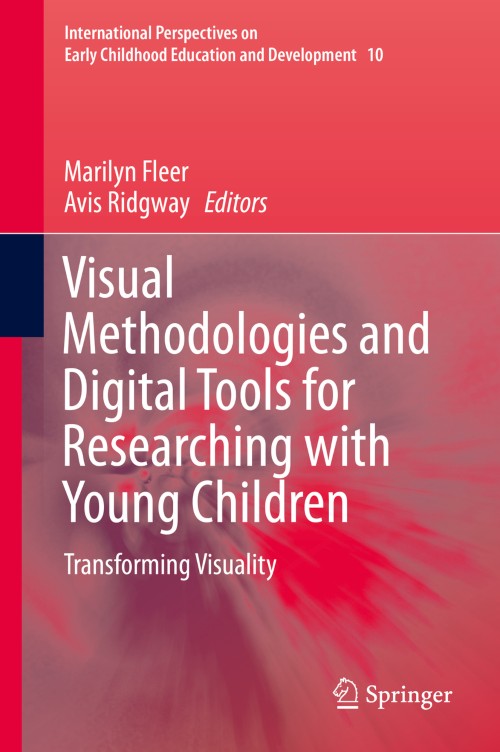
Visual Methodologies and Digital Tools for Researching with Young Children [electronic resource] : Transforming Visuality / edited by Marilyn Fleer, Avis Ridgway.
Erişim Adresi
ISBN
9783319014692
Dil Kodu
İngilizce
Yer Numarası
DK/16214
Basım Bildirimi
1st ed. 2014.
Yayın Bilgisi
Cham : Springer International Publishing : Imprint: Springer, 2014.
Fiziksel Niteleme
VI, 238 p. 53 illus., 47 illus. in color. online resource.
Dizi
International Perspectives on Early Childhood Education and Development, 2468-8754 ; 10
İçindekiler Notu
Section 1: Post-developmental Methodologies for Researching with Young Children -- 1. A Digital Turn: Post-developmental Methodologies for Researching with Young Children; M. Fleer -- Section 2: Cultural-historical Conceptualisations of Digital Visual Tools -- 2. Beyond Developmental Geology- A Cultural-historical Theorization of Digital Visual Technologies for Studying Young Children’s Development; M. Fleer -- 3. A Visual Dialectic Methodology - A Visual Dialectical Methodology: Using a Cultural-historical Analysis to Unearth the Family Strategies in Children’s Bilingual Heritage Language Development; L. Li -- 4. Past-present Dialectic- A New Methodological Tool for Seeing the Historical Dynamic in Cultural-historical Research; A. Ridgway -- 5. Intergenerational Family Dialogues; H. Monk -- 6. A Cultural-historical Framework for ‘Everyday’ Research: Theorising Development through Visual Imagery and Dialogue; S. Pennay -- 7. A Visual and Tactile Path: Affective Positioning of Researcher Using a Cultural-historical Visual Methodology; G. Quinones -- 8. Refocusing the Lens on Development - Towards Genetic Research Methodology; N. Veresov -- Section 3: Ethical and Conceptual Issues when Researching with Children Using Digital Visual Tools -- 9. Beyond Alienation: Unpacking the Methodological Issues in Visual Research with Children; J. Agbenyega -- 10. ‘Baby cam’ and Participatory Research with Infants: Opportunities, Constraints and Dilemmas– J. Sumsion and colleagues -- 11. The Ethics of Researching Young Children’s Play when Using Digital Visual Tools; H. Sorenson -- Section 4: Central Concepts for Researching with Young Children Using Digital Visual Tools -- 12. Method, Methodology, Methodological Thinking; N. Veresov. .
Özet, vb.
This book makes an original contribution to researching child-community development so that those with specific interests in early childhood education have new theoretical tools to guide their research practices. The book explicitly theorises the use of digital visual tools from a cultural-historical perspective. It also draws upon a range of post-structuralist concepts for moving research and scholarship forward. Examples of visual technologies from research in different cultural communities are foregrounded. In particular this book introduces contemporary methodologies for researching child and community development with a focus on visual methodology so the dynamics of development can be captured over time and analysed historically, culturally, socially, ecologically and psychologically through a range of iterative techniques. Visual technology was not freely available in Vygotsky’s time for example, and therefore potentially represents an extension of his genetic experimental approach to researching child development. The book presents a range of methodological arguments about research into child and community development through which new conceptions for research centred on young children have been created. The authors of the chapters also discuss why a more holistic, dynamic and ethical view of research is needed for generating new knowledge about child development in a range of cultural contexts.
Konu
Early childhood education.
Education, Higher.
Sociology.
Social groups.
Early Childhood Education.
Higher Education.
Sociology of Family, Youth and Aging.
Education, Higher.
Sociology.
Social groups.
Early Childhood Education.
Higher Education.
Sociology of Family, Youth and Aging.
Diğer Yazarlar
Kurum Adı
Eseri Alıntıla
Referansları kullanmadan önce gözden geçirmeniz ve varsa gerekli düzeltmeleri yapmanız önerilir.
Dijital Kaynak
MARC Görünümü
LEADER 05455nam a22005415i 4500
001 814977
003 TR_AnAIT
005 20260130212810
007 cr nn 008mamaa
008 131111s2014 sz | s |||| 0|eng d
020 |a9783319014692|9978-3-319-01469-2
024 7 |a10.1007/978-3-319-01469-2|2doi
041 |aeng
049 |aTürk Tarih Kurumu Kütüphanesi
050 4|aLB1139.2-.5
072 7|aJNLA|2bicssc
072 7|aEDU023000|2bisacsh
072 7|aJNG|2thema
082 04|a372.21|223
090 |aDK/16214
245 10|aVisual Methodologies and Digital Tools for Researching with Young Children|h[electronic resource] :|bTransforming Visuality /|cedited by Marilyn Fleer, Avis Ridgway.
250 |a1st ed. 2014.
264 1|aCham :|bSpringer International Publishing :|bImprint: Springer,|c2014.
300 |aVI, 238 p. 53 illus., 47 illus. in color.|bonline resource.
336 |atext|btxt|2rdacontent
337 |acomputer|bc|2rdamedia
338 |aonline resource|bcr|2rdacarrier
347 |atext file|bPDF|2rda
490 1 |aInternational Perspectives on Early Childhood Education and Development,|x2468-8754 ;|v10
505 0 |aSection 1: Post-developmental Methodologies for Researching with Young Children -- 1. A Digital Turn: Post-developmental Methodologies for Researching with Young Children; M. Fleer -- Section 2: Cultural-historical Conceptualisations of Digital Visual Tools -- 2. Beyond Developmental Geology- A Cultural-historical Theorization of Digital Visual Technologies for Studying Young Children’s Development; M. Fleer -- 3. A Visual Dialectic Methodology - A Visual Dialectical Methodology: Using a Cultural-historical Analysis to Unearth the Family Strategies in Children’s Bilingual Heritage Language Development; L. Li -- 4. Past-present Dialectic- A New Methodological Tool for Seeing the Historical Dynamic in Cultural-historical Research; A. Ridgway -- 5. Intergenerational Family Dialogues; H. Monk -- 6. A Cultural-historical Framework for ‘Everyday’ Research: Theorising Development through Visual Imagery and Dialogue; S. Pennay -- 7. A Visual and Tactile Path: Affective Positioning of Researcher Using a Cultural-historical Visual Methodology; G. Quinones -- 8. Refocusing the Lens on Development - Towards Genetic Research Methodology; N. Veresov -- Section 3: Ethical and Conceptual Issues when Researching with Children Using Digital Visual Tools -- 9. Beyond Alienation: Unpacking the Methodological Issues in Visual Research with Children; J. Agbenyega -- 10. ‘Baby cam’ and Participatory Research with Infants: Opportunities, Constraints and Dilemmas– J. Sumsion and colleagues -- 11. The Ethics of Researching Young Children’s Play when Using Digital Visual Tools; H. Sorenson -- Section 4: Central Concepts for Researching with Young Children Using Digital Visual Tools -- 12. Method, Methodology, Methodological Thinking; N. Veresov. .
520 |aThis book makes an original contribution to researching child-community development so that those with specific interests in early childhood education have new theoretical tools to guide their research practices. The book explicitly theorises the use of digital visual tools from a cultural-historical perspective. It also draws upon a range of post-structuralist concepts for moving research and scholarship forward. Examples of visual technologies from research in different cultural communities are foregrounded. In particular this book introduces contemporary methodologies for researching child and community development with a focus on visual methodology so the dynamics of development can be captured over time and analysed historically, culturally, socially, ecologically and psychologically through a range of iterative techniques. Visual technology was not freely available in Vygotsky’s time for example, and therefore potentially represents an extension of his genetic experimental approach to researching child development. The book presents a range of methodological arguments about research into child and community development through which new conceptions for research centred on young children have been created. The authors of the chapters also discuss why a more holistic, dynamic and ethical view of research is needed for generating new knowledge about child development in a range of cultural contexts.
650 0|aEarly childhood education.
650 0|aEducation, Higher.
650 0|aSociology.
650 0|aSocial groups.
650 14|aEarly Childhood Education.
650 24|aHigher Education.
650 24|aSociology of Family, Youth and Aging.
700 1 |aFleer, Marilyn.|eeditor.|0(orcid)0000-0002-1224-5510|1https://orcid.org/0000-0002-1224-5510|4edt|4http://id.loc.gov/vocabulary/relators/edt
700 1 |aRidgway, Avis.|eeditor.|0(orcid)0000-0003-0764-8603|1https://orcid.org/0000-0003-0764-8603|4edt|4http://id.loc.gov/vocabulary/relators/edt
710 2 |aSpringerLink (Online service)
773 0 |tSpringer Nature eBook
776 08|iPrinted edition:|z9783319014685
776 08|iPrinted edition:|z9783319014708
776 08|iPrinted edition:|z9783319343099
830 0|aInternational Perspectives on Early Childhood Education and Development,|x2468-8754 ;|v10
856 40|uhttps://doi.org/10.1007/978-3-319-01469-2
912 |aZDB-2-SHU
912 |aZDB-2-SXED
950 |aHumanities, Social Sciences and Law (SpringerNature-11648)
950 |aEducation (R0) (SpringerNature-43721)
001 814977
003 TR_AnAIT
005 20260130212810
007 cr nn 008mamaa
008 131111s2014 sz | s |||| 0|eng d
020 |a9783319014692|9978-3-319-01469-2
024 7 |a10.1007/978-3-319-01469-2|2doi
041 |aeng
049 |aTürk Tarih Kurumu Kütüphanesi
050 4|aLB1139.2-.5
072 7|aJNLA|2bicssc
072 7|aEDU023000|2bisacsh
072 7|aJNG|2thema
082 04|a372.21|223
090 |aDK/16214
245 10|aVisual Methodologies and Digital Tools for Researching with Young Children|h[electronic resource] :|bTransforming Visuality /|cedited by Marilyn Fleer, Avis Ridgway.
250 |a1st ed. 2014.
264 1|aCham :|bSpringer International Publishing :|bImprint: Springer,|c2014.
300 |aVI, 238 p. 53 illus., 47 illus. in color.|bonline resource.
336 |atext|btxt|2rdacontent
337 |acomputer|bc|2rdamedia
338 |aonline resource|bcr|2rdacarrier
347 |atext file|bPDF|2rda
490 1 |aInternational Perspectives on Early Childhood Education and Development,|x2468-8754 ;|v10
505 0 |aSection 1: Post-developmental Methodologies for Researching with Young Children -- 1. A Digital Turn: Post-developmental Methodologies for Researching with Young Children; M. Fleer -- Section 2: Cultural-historical Conceptualisations of Digital Visual Tools -- 2. Beyond Developmental Geology- A Cultural-historical Theorization of Digital Visual Technologies for Studying Young Children’s Development; M. Fleer -- 3. A Visual Dialectic Methodology - A Visual Dialectical Methodology: Using a Cultural-historical Analysis to Unearth the Family Strategies in Children’s Bilingual Heritage Language Development; L. Li -- 4. Past-present Dialectic- A New Methodological Tool for Seeing the Historical Dynamic in Cultural-historical Research; A. Ridgway -- 5. Intergenerational Family Dialogues; H. Monk -- 6. A Cultural-historical Framework for ‘Everyday’ Research: Theorising Development through Visual Imagery and Dialogue; S. Pennay -- 7. A Visual and Tactile Path: Affective Positioning of Researcher Using a Cultural-historical Visual Methodology; G. Quinones -- 8. Refocusing the Lens on Development - Towards Genetic Research Methodology; N. Veresov -- Section 3: Ethical and Conceptual Issues when Researching with Children Using Digital Visual Tools -- 9. Beyond Alienation: Unpacking the Methodological Issues in Visual Research with Children; J. Agbenyega -- 10. ‘Baby cam’ and Participatory Research with Infants: Opportunities, Constraints and Dilemmas– J. Sumsion and colleagues -- 11. The Ethics of Researching Young Children’s Play when Using Digital Visual Tools; H. Sorenson -- Section 4: Central Concepts for Researching with Young Children Using Digital Visual Tools -- 12. Method, Methodology, Methodological Thinking; N. Veresov. .
520 |aThis book makes an original contribution to researching child-community development so that those with specific interests in early childhood education have new theoretical tools to guide their research practices. The book explicitly theorises the use of digital visual tools from a cultural-historical perspective. It also draws upon a range of post-structuralist concepts for moving research and scholarship forward. Examples of visual technologies from research in different cultural communities are foregrounded. In particular this book introduces contemporary methodologies for researching child and community development with a focus on visual methodology so the dynamics of development can be captured over time and analysed historically, culturally, socially, ecologically and psychologically through a range of iterative techniques. Visual technology was not freely available in Vygotsky’s time for example, and therefore potentially represents an extension of his genetic experimental approach to researching child development. The book presents a range of methodological arguments about research into child and community development through which new conceptions for research centred on young children have been created. The authors of the chapters also discuss why a more holistic, dynamic and ethical view of research is needed for generating new knowledge about child development in a range of cultural contexts.
650 0|aEarly childhood education.
650 0|aEducation, Higher.
650 0|aSociology.
650 0|aSocial groups.
650 14|aEarly Childhood Education.
650 24|aHigher Education.
650 24|aSociology of Family, Youth and Aging.
700 1 |aFleer, Marilyn.|eeditor.|0(orcid)0000-0002-1224-5510|1https://orcid.org/0000-0002-1224-5510|4edt|4http://id.loc.gov/vocabulary/relators/edt
700 1 |aRidgway, Avis.|eeditor.|0(orcid)0000-0003-0764-8603|1https://orcid.org/0000-0003-0764-8603|4edt|4http://id.loc.gov/vocabulary/relators/edt
710 2 |aSpringerLink (Online service)
773 0 |tSpringer Nature eBook
776 08|iPrinted edition:|z9783319014685
776 08|iPrinted edition:|z9783319014708
776 08|iPrinted edition:|z9783319343099
830 0|aInternational Perspectives on Early Childhood Education and Development,|x2468-8754 ;|v10
856 40|uhttps://doi.org/10.1007/978-3-319-01469-2
912 |aZDB-2-SHU
912 |aZDB-2-SXED
950 |aHumanities, Social Sciences and Law (SpringerNature-11648)
950 |aEducation (R0) (SpringerNature-43721)
Materyaller
Depodan talep edilen materyal sadece kütüphane içerisinde kullanılmaktadır.
Materyal dışarıya ödünç verilmemektedir.
Materyal dışarıya ödünç verilmemektedir.
