

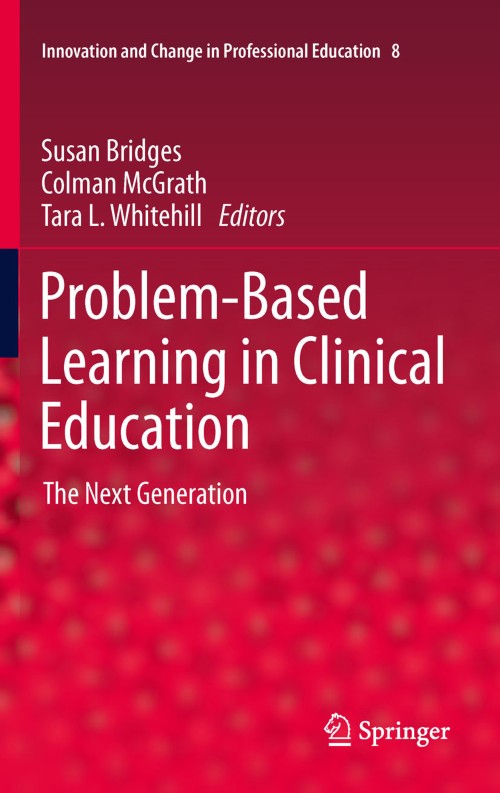
Problem-Based Learning in Clinical Education [electronic resource] : The Next Generation / edited by Susan Bridges, Colman McGrath, Tara L. Whitehill.
Erişim Adresi
ISBN
9789400725157
Dil Kodu
İngilizce
Yer Numarası
DK/16228
Basım Bildirimi
1st ed. 2012.
Yayın Bilgisi
Dordrecht : Springer Netherlands : Imprint: Springer, 2012.
Fiziksel Niteleme
XXVI, 254 p. online resource.
Dizi
Innovation and Change in Professional Education, 2542-9957 ; 8
İçindekiler Notu
Part I Introduction -- 1. Learning Theories and Problem-based Learning -- Part II Investigating the Achievement in Student Learning Outcomes in PBL Programmes -- 2. A Backward Glance, the Forward Gaze: Evaluation in Problem-based Courses -- 3. Comparisons in Basic Science Learning Outcomes between Students in PBL and Traditional Dental Curricula at the Same Dental School -- 4. Experiences from Two Swedish Speech and Language Pathology Education Programmes Using Different Approaches to Problem-based Learning -- 5. The Influence of Two PBL Curricula Contexts on First-year Students’ Understandings of PBL, Approaches to Learning and Outcomes -- 6. Learning Styles and Academic Outcomes: A Longitudinal Study on the Impact of a Problem-based Learning Curriculum -- Part III Researching New Technologies for PBL Curriculum Design -- 7. Multimodality in Problem-based Learning (PBL): An International Ethnography -- 8. The Changing Face of Problem-based Learning: Social networking and Interprofessional Collaboration -- 9. Effects of Video Triggers on the PBL Process -- Part IV Exploring ‘Inside’ the PBL Tutorial Process -- 10. Japanese First-year PBL Students’ Learning Processes: A Classroom Discourse Analysis -- 11. Sounds of Silence: Examining Silence in Problem-based Learning (PBL) in Asia -- 12. Getting on with Each Other: PBL Group Dynamics and Function -- 13. PBL Tutorials in a Hybrid Curriculum: Opportunities and Challenges -- Part V Conclusion -- 14. The Next Generation: Research Directions in PBL -- Appendices -- Index.
Özet, vb.
Developed in the context of health sciences education in the late 1960s, problem-based learning (PBL) is now widely deployed as an education methodology. Its problem-solving, collaborative, student-centred ethos is seen as a more appropriate system of pedagogy than earlier ‘chalk-and-talk’ modes. Focusing on its use in clinical education, this collection of recent scholarship on PBL examines the ways in which PBL is both conceived and implemented in clinical education. The work has a dual emphasis, research-driven on the one hand, while on the other assessing new methodologies to explore how problem-based curricula support the achievement of students’ learning outcomes in the context of clinical education. The chapters draw on studies that explore PBL both theoretically and empirically. The volume’s eclecticism capitalises on the growing body of empirical research into PBL evaluations. It balances this with studies analysing the relatively new area of discourse-based research on PBL-in-action, whose focus has been to interrogate the ‘how’ of student learning in curricula with PBL content.This publication will be of interest to clinical teachers, curriculum designers and those interested in innovations in the scholarship of teaching and learning in PBL curricula.
Konu
Professional education.
Vocational education.
Medical education.
Learning, Psychology of.
Education __ Curricula.
Professional and Vocational Education.
Medical Education.
Instructional Psychology.
Curriculum Studies.
Vocational education.
Medical education.
Learning, Psychology of.
Education __ Curricula.
Professional and Vocational Education.
Medical Education.
Instructional Psychology.
Curriculum Studies.
Diğer Yazarlar
Kurum Adı
Eseri Alıntıla
Referansları kullanmadan önce gözden geçirmeniz ve varsa gerekli düzeltmeleri yapmanız önerilir.
Dijital Kaynak
MARC Görünümü
LEADER 05084nam a22005895i 4500
001 814991
003 TR_AnAIT
005 20260130212721
007 cr nn 008mamaa
008 120103s2012 ne | s |||| 0|eng d
020 |a9789400725157|9978-94-007-2515-7
024 7 |a10.1007/978-94-007-2515-7|2doi
041 |aeng
049 |aTürk Tarih Kurumu Kütüphanesi
050 4|aLC1051-1072
050 4|aLC1041-1048
072 7|aJNRV|2bicssc
072 7|aEDU046000|2bisacsh
072 7|aJNRV|2thema
082 04|a370.113|223
090 |aDK/16228
245 10|aProblem-Based Learning in Clinical Education|h[electronic resource] :|bThe Next Generation /|cedited by Susan Bridges, Colman McGrath, Tara L. Whitehill.
250 |a1st ed. 2012.
264 1|aDordrecht :|bSpringer Netherlands :|bImprint: Springer,|c2012.
300 |aXXVI, 254 p.|bonline resource.
336 |atext|btxt|2rdacontent
337 |acomputer|bc|2rdamedia
338 |aonline resource|bcr|2rdacarrier
347 |atext file|bPDF|2rda
490 1 |aInnovation and Change in Professional Education,|x2542-9957 ;|v8
505 0 |aPart I Introduction -- 1. Learning Theories and Problem-based Learning -- Part II Investigating the Achievement in Student Learning Outcomes in PBL Programmes -- 2. A Backward Glance, the Forward Gaze: Evaluation in Problem-based Courses -- 3. Comparisons in Basic Science Learning Outcomes between Students in PBL and Traditional Dental Curricula at the Same Dental School -- 4. Experiences from Two Swedish Speech and Language Pathology Education Programmes Using Different Approaches to Problem-based Learning -- 5. The Influence of Two PBL Curricula Contexts on First-year Students’ Understandings of PBL, Approaches to Learning and Outcomes -- 6. Learning Styles and Academic Outcomes: A Longitudinal Study on the Impact of a Problem-based Learning Curriculum -- Part III Researching New Technologies for PBL Curriculum Design -- 7. Multimodality in Problem-based Learning (PBL): An International Ethnography -- 8. The Changing Face of Problem-based Learning: Social networking and Interprofessional Collaboration -- 9. Effects of Video Triggers on the PBL Process -- Part IV Exploring ‘Inside’ the PBL Tutorial Process -- 10. Japanese First-year PBL Students’ Learning Processes: A Classroom Discourse Analysis -- 11. Sounds of Silence: Examining Silence in Problem-based Learning (PBL) in Asia -- 12. Getting on with Each Other: PBL Group Dynamics and Function -- 13. PBL Tutorials in a Hybrid Curriculum: Opportunities and Challenges -- Part V Conclusion -- 14. The Next Generation: Research Directions in PBL -- Appendices -- Index.
520 |aDeveloped in the context of health sciences education in the late 1960s, problem-based learning (PBL) is now widely deployed as an education methodology. Its problem-solving, collaborative, student-centred ethos is seen as a more appropriate system of pedagogy than earlier ‘chalk-and-talk’ modes. Focusing on its use in clinical education, this collection of recent scholarship on PBL examines the ways in which PBL is both conceived and implemented in clinical education. The work has a dual emphasis, research-driven on the one hand, while on the other assessing new methodologies to explore how problem-based curricula support the achievement of students’ learning outcomes in the context of clinical education. The chapters draw on studies that explore PBL both theoretically and empirically. The volume’s eclecticism capitalises on the growing body of empirical research into PBL evaluations. It balances this with studies analysing the relatively new area of discourse-based research on PBL-in-action, whose focus has been to interrogate the ‘how’ of student learning in curricula with PBL content.This publication will be of interest to clinical teachers, curriculum designers and those interested in innovations in the scholarship of teaching and learning in PBL curricula.
650 0|aProfessional education.
650 0|aVocational education.
650 0|aMedical education.
650 0|aLearning, Psychology of.
650 0|aEducation|xCurricula.
650 14|aProfessional and Vocational Education.
650 24|aMedical Education.
650 24|aInstructional Psychology.
650 24|aCurriculum Studies.
700 1 |aBridges, Susan.|eeditor.|4edt|4http://id.loc.gov/vocabulary/relators/edt
700 1 |aMcGrath, Colman.|eeditor.|4edt|4http://id.loc.gov/vocabulary/relators/edt
700 1 |aWhitehill, Tara L.|eeditor.|4edt|4http://id.loc.gov/vocabulary/relators/edt
710 2 |aSpringerLink (Online service)
773 0 |tSpringer Nature eBook
776 08|iPrinted edition:|z9789400725140
776 08|iPrinted edition:|z9789400725164
776 08|iPrinted edition:|z9789401784146
830 0|aInnovation and Change in Professional Education,|x2542-9957 ;|v8
856 40|uhttps://doi.org/10.1007/978-94-007-2515-7
912 |aZDB-2-SHU
912 |aZDB-2-SXED
950 |aHumanities, Social Sciences and Law (SpringerNature-11648)
950 |aEducation (R0) (SpringerNature-43721)
001 814991
003 TR_AnAIT
005 20260130212721
007 cr nn 008mamaa
008 120103s2012 ne | s |||| 0|eng d
020 |a9789400725157|9978-94-007-2515-7
024 7 |a10.1007/978-94-007-2515-7|2doi
041 |aeng
049 |aTürk Tarih Kurumu Kütüphanesi
050 4|aLC1051-1072
050 4|aLC1041-1048
072 7|aJNRV|2bicssc
072 7|aEDU046000|2bisacsh
072 7|aJNRV|2thema
082 04|a370.113|223
090 |aDK/16228
245 10|aProblem-Based Learning in Clinical Education|h[electronic resource] :|bThe Next Generation /|cedited by Susan Bridges, Colman McGrath, Tara L. Whitehill.
250 |a1st ed. 2012.
264 1|aDordrecht :|bSpringer Netherlands :|bImprint: Springer,|c2012.
300 |aXXVI, 254 p.|bonline resource.
336 |atext|btxt|2rdacontent
337 |acomputer|bc|2rdamedia
338 |aonline resource|bcr|2rdacarrier
347 |atext file|bPDF|2rda
490 1 |aInnovation and Change in Professional Education,|x2542-9957 ;|v8
505 0 |aPart I Introduction -- 1. Learning Theories and Problem-based Learning -- Part II Investigating the Achievement in Student Learning Outcomes in PBL Programmes -- 2. A Backward Glance, the Forward Gaze: Evaluation in Problem-based Courses -- 3. Comparisons in Basic Science Learning Outcomes between Students in PBL and Traditional Dental Curricula at the Same Dental School -- 4. Experiences from Two Swedish Speech and Language Pathology Education Programmes Using Different Approaches to Problem-based Learning -- 5. The Influence of Two PBL Curricula Contexts on First-year Students’ Understandings of PBL, Approaches to Learning and Outcomes -- 6. Learning Styles and Academic Outcomes: A Longitudinal Study on the Impact of a Problem-based Learning Curriculum -- Part III Researching New Technologies for PBL Curriculum Design -- 7. Multimodality in Problem-based Learning (PBL): An International Ethnography -- 8. The Changing Face of Problem-based Learning: Social networking and Interprofessional Collaboration -- 9. Effects of Video Triggers on the PBL Process -- Part IV Exploring ‘Inside’ the PBL Tutorial Process -- 10. Japanese First-year PBL Students’ Learning Processes: A Classroom Discourse Analysis -- 11. Sounds of Silence: Examining Silence in Problem-based Learning (PBL) in Asia -- 12. Getting on with Each Other: PBL Group Dynamics and Function -- 13. PBL Tutorials in a Hybrid Curriculum: Opportunities and Challenges -- Part V Conclusion -- 14. The Next Generation: Research Directions in PBL -- Appendices -- Index.
520 |aDeveloped in the context of health sciences education in the late 1960s, problem-based learning (PBL) is now widely deployed as an education methodology. Its problem-solving, collaborative, student-centred ethos is seen as a more appropriate system of pedagogy than earlier ‘chalk-and-talk’ modes. Focusing on its use in clinical education, this collection of recent scholarship on PBL examines the ways in which PBL is both conceived and implemented in clinical education. The work has a dual emphasis, research-driven on the one hand, while on the other assessing new methodologies to explore how problem-based curricula support the achievement of students’ learning outcomes in the context of clinical education. The chapters draw on studies that explore PBL both theoretically and empirically. The volume’s eclecticism capitalises on the growing body of empirical research into PBL evaluations. It balances this with studies analysing the relatively new area of discourse-based research on PBL-in-action, whose focus has been to interrogate the ‘how’ of student learning in curricula with PBL content.This publication will be of interest to clinical teachers, curriculum designers and those interested in innovations in the scholarship of teaching and learning in PBL curricula.
650 0|aProfessional education.
650 0|aVocational education.
650 0|aMedical education.
650 0|aLearning, Psychology of.
650 0|aEducation|xCurricula.
650 14|aProfessional and Vocational Education.
650 24|aMedical Education.
650 24|aInstructional Psychology.
650 24|aCurriculum Studies.
700 1 |aBridges, Susan.|eeditor.|4edt|4http://id.loc.gov/vocabulary/relators/edt
700 1 |aMcGrath, Colman.|eeditor.|4edt|4http://id.loc.gov/vocabulary/relators/edt
700 1 |aWhitehill, Tara L.|eeditor.|4edt|4http://id.loc.gov/vocabulary/relators/edt
710 2 |aSpringerLink (Online service)
773 0 |tSpringer Nature eBook
776 08|iPrinted edition:|z9789400725140
776 08|iPrinted edition:|z9789400725164
776 08|iPrinted edition:|z9789401784146
830 0|aInnovation and Change in Professional Education,|x2542-9957 ;|v8
856 40|uhttps://doi.org/10.1007/978-94-007-2515-7
912 |aZDB-2-SHU
912 |aZDB-2-SXED
950 |aHumanities, Social Sciences and Law (SpringerNature-11648)
950 |aEducation (R0) (SpringerNature-43721)
Materyaller
Depodan talep edilen materyal sadece kütüphane içerisinde kullanılmaktadır.
Materyal dışarıya ödünç verilmemektedir.
Materyal dışarıya ödünç verilmemektedir.
