

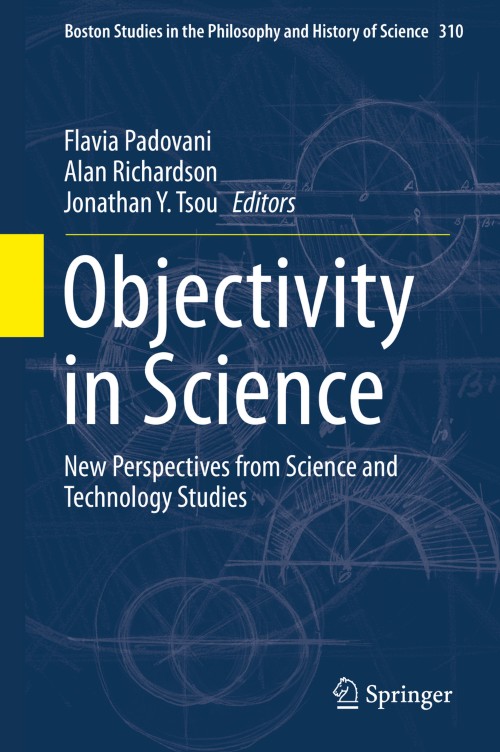
Objectivity in Science [electronic resource] : New Perspectives from Science and Technology Studies / edited by Flavia Padovani, Alan Richardson, Jonathan Y. Tsou.
Erişim Adresi
ISBN
9783319143491
Dil Kodu
İngilizce
Yer Numarası
DK/16365
Basım Bildirimi
1st ed. 2015.
Yayın Bilgisi
Cham : Springer International Publishing : Imprint: Springer, 2015.
Fiziksel Niteleme
VI, 226 p. 11 illus., 1 illus. in color. online resource.
Dizi
Boston Studies in the Philosophy and History of Science, 2214-7942 ; 310
İçindekiler Notu
Introduction; Jonathan Y. Tsou, Alan Richardson and Flavia Padovani -- PART I: POSITIONS ON OBJECTIVITY IN CONTEMPORARY SCIENCE AND TECHNOLOGY STUDIES -- Chapter 1: Let’s Not Talk about Objectivity; Ian Hacking -- Chapter 2: Objectivity for Sciences from Below; Sandra Harding -- Chapter 3: The Journalist, the Scientist, and Objectivity; Peter Galison -- PART II: OBJECTIVITY AS A TOPIC IN HISTORICAL EPISTEMOLOGY -- Chapter 4: The Ethos of Critique in German Idealism; Joan Steigerwald -- Chapter 5: The Physiology of the Sense Organs and Early Neo-Kantian Conceptions of Objectivity: Helmholtz, Lange, Liebmann; Scott Edgar -- Chapter 6: Seeing and Hearing: Charcot, Freud and the Objectivity of Hysteria; Paolo Savoia -- Chapter 7: Objectivities in Print; Alex Csiszar -- PART III: SECURING OBJECTIVITY IN SCIENTIFIC JOURNALS AND COMMUNITIES -- Chapter 8: Objectivity, Intellectual Virtue, and Community; Moira Howes -- Chapter 9: A Plurality of Pluralisms: Collaborative Practice in Archaeology; Alison Wylie -- Chapter 11: The View from Here and There: Objectivity and the Rhetoric of Breast Cancer; Judy Segal.
Özet, vb.
This highly multidisciplinary collection discusses an increasingly important topic among scholars in science and technology studies: objectivity in science. It features eleven essays on scientific objectivity from a variety of perspectives, including philosophy of science, history of science, and feminist philosophy. Topics addressed in the book include the nature and value of scientific objectivity, the history of objectivity, and objectivity in scientific journals and communities. Taken individually, the essays supply new methodological tools for theorizing what is valuable in the pursuit of objective knowledge and for investigating its history. The essays offer many starting points, while suggesting new avenues of research. Taken collectively, the essays exemplify the very virtues of objectivity that they theorize—in reading them together, the reader can sense various anxieties about the dangerously subjective in our age and locate commonalities of concern as well as differences of approach. As a result, the volume offers an expansive vision of a research community seeking a communal understanding of its own methods and its own epistemic anxieties, struggling to enunciate the key problems of knowledge of our time and offer insight into how to overcome them.
Konu
Science __ Philosophy.
Science __ History.
Philosophy of Science.
History of Science.
Science __ History.
Philosophy of Science.
History of Science.
Kurum Adı
Eseri Alıntıla
Referansları kullanmadan önce gözden geçirmeniz ve varsa gerekli düzeltmeleri yapmanız önerilir.
Dijital Kaynak
MARC Görünümü
LEADER 04564nam a22005295i 4500
001 815129
003 TR_AnAIT
005 20260130212115
007 cr nn 008mamaa
008 150323s2015 sz | s |||| 0|eng d
020 |a9783319143491|9978-3-319-14349-1
024 7 |a10.1007/978-3-319-14349-1|2doi
041 |aeng
049 |aTürk Tarih Kurumu Kütüphanesi
050 4|aQ174-175.3
050 4|aB67
072 7|aPDA|2bicssc
072 7|aSCI075000|2bisacsh
072 7|aPDA|2thema
082 04|a501|223
090 |aDK/16365
245 10|aObjectivity in Science|h[electronic resource] :|bNew Perspectives from Science and Technology Studies /|cedited by Flavia Padovani, Alan Richardson, Jonathan Y. Tsou.
250 |a1st ed. 2015.
264 1|aCham :|bSpringer International Publishing :|bImprint: Springer,|c2015.
300 |aVI, 226 p. 11 illus., 1 illus. in color.|bonline resource.
336 |atext|btxt|2rdacontent
337 |acomputer|bc|2rdamedia
338 |aonline resource|bcr|2rdacarrier
347 |atext file|bPDF|2rda
490 1 |aBoston Studies in the Philosophy and History of Science,|x2214-7942 ;|v310
505 0 |aIntroduction; Jonathan Y. Tsou, Alan Richardson and Flavia Padovani -- PART I: POSITIONS ON OBJECTIVITY IN CONTEMPORARY SCIENCE AND TECHNOLOGY STUDIES -- Chapter 1: Let’s Not Talk about Objectivity; Ian Hacking -- Chapter 2: Objectivity for Sciences from Below; Sandra Harding -- Chapter 3: The Journalist, the Scientist, and Objectivity; Peter Galison -- PART II: OBJECTIVITY AS A TOPIC IN HISTORICAL EPISTEMOLOGY -- Chapter 4: The Ethos of Critique in German Idealism; Joan Steigerwald -- Chapter 5: The Physiology of the Sense Organs and Early Neo-Kantian Conceptions of Objectivity: Helmholtz, Lange, Liebmann; Scott Edgar -- Chapter 6: Seeing and Hearing: Charcot, Freud and the Objectivity of Hysteria; Paolo Savoia -- Chapter 7: Objectivities in Print; Alex Csiszar -- PART III: SECURING OBJECTIVITY IN SCIENTIFIC JOURNALS AND COMMUNITIES -- Chapter 8: Objectivity, Intellectual Virtue, and Community; Moira Howes -- Chapter 9: A Plurality of Pluralisms: Collaborative Practice in Archaeology; Alison Wylie -- Chapter 11: The View from Here and There: Objectivity and the Rhetoric of Breast Cancer; Judy Segal.
520 |aThis highly multidisciplinary collection discusses an increasingly important topic among scholars in science and technology studies: objectivity in science. It features eleven essays on scientific objectivity from a variety of perspectives, including philosophy of science, history of science, and feminist philosophy. Topics addressed in the book include the nature and value of scientific objectivity, the history of objectivity, and objectivity in scientific journals and communities. Taken individually, the essays supply new methodological tools for theorizing what is valuable in the pursuit of objective knowledge and for investigating its history. The essays offer many starting points, while suggesting new avenues of research. Taken collectively, the essays exemplify the very virtues of objectivity that they theorize—in reading them together, the reader can sense various anxieties about the dangerously subjective in our age and locate commonalities of concern as well as differences of approach. As a result, the volume offers an expansive vision of a research community seeking a communal understanding of its own methods and its own epistemic anxieties, struggling to enunciate the key problems of knowledge of our time and offer insight into how to overcome them.
650 0|aScience|xPhilosophy.
650 0|aScience|xHistory.
650 14|aPhilosophy of Science.
650 24|aHistory of Science.
700 1 |aPadovani, Flavia.|eeditor.|4edt|4http://id.loc.gov/vocabulary/relators/edt
700 1 |aRichardson, Alan.|eeditor.|4edt|4http://id.loc.gov/vocabulary/relators/edt
700 1 |aTsou, Jonathan Y.|eeditor.|0(orcid)0000-0002-3939-1518|1https://orcid.org/0000-0002-3939-1518|4edt|4http://id.loc.gov/vocabulary/relators/edt
710 2 |aSpringerLink (Online service)
773 0 |tSpringer Nature eBook
776 08|iPrinted edition:|z9783319143484
776 08|iPrinted edition:|z9783319143507
776 08|iPrinted edition:|z9783319382937
830 0|aBoston Studies in the Philosophy and History of Science,|x2214-7942 ;|v310
856 40|uhttps://doi.org/10.1007/978-3-319-14349-1
912 |aZDB-2-SHU
912 |aZDB-2-SXPR
950 |aHumanities, Social Sciences and Law (SpringerNature-11648)
950 |aPhilosophy and Religion (R0) (SpringerNature-43725)
001 815129
003 TR_AnAIT
005 20260130212115
007 cr nn 008mamaa
008 150323s2015 sz | s |||| 0|eng d
020 |a9783319143491|9978-3-319-14349-1
024 7 |a10.1007/978-3-319-14349-1|2doi
041 |aeng
049 |aTürk Tarih Kurumu Kütüphanesi
050 4|aQ174-175.3
050 4|aB67
072 7|aPDA|2bicssc
072 7|aSCI075000|2bisacsh
072 7|aPDA|2thema
082 04|a501|223
090 |aDK/16365
245 10|aObjectivity in Science|h[electronic resource] :|bNew Perspectives from Science and Technology Studies /|cedited by Flavia Padovani, Alan Richardson, Jonathan Y. Tsou.
250 |a1st ed. 2015.
264 1|aCham :|bSpringer International Publishing :|bImprint: Springer,|c2015.
300 |aVI, 226 p. 11 illus., 1 illus. in color.|bonline resource.
336 |atext|btxt|2rdacontent
337 |acomputer|bc|2rdamedia
338 |aonline resource|bcr|2rdacarrier
347 |atext file|bPDF|2rda
490 1 |aBoston Studies in the Philosophy and History of Science,|x2214-7942 ;|v310
505 0 |aIntroduction; Jonathan Y. Tsou, Alan Richardson and Flavia Padovani -- PART I: POSITIONS ON OBJECTIVITY IN CONTEMPORARY SCIENCE AND TECHNOLOGY STUDIES -- Chapter 1: Let’s Not Talk about Objectivity; Ian Hacking -- Chapter 2: Objectivity for Sciences from Below; Sandra Harding -- Chapter 3: The Journalist, the Scientist, and Objectivity; Peter Galison -- PART II: OBJECTIVITY AS A TOPIC IN HISTORICAL EPISTEMOLOGY -- Chapter 4: The Ethos of Critique in German Idealism; Joan Steigerwald -- Chapter 5: The Physiology of the Sense Organs and Early Neo-Kantian Conceptions of Objectivity: Helmholtz, Lange, Liebmann; Scott Edgar -- Chapter 6: Seeing and Hearing: Charcot, Freud and the Objectivity of Hysteria; Paolo Savoia -- Chapter 7: Objectivities in Print; Alex Csiszar -- PART III: SECURING OBJECTIVITY IN SCIENTIFIC JOURNALS AND COMMUNITIES -- Chapter 8: Objectivity, Intellectual Virtue, and Community; Moira Howes -- Chapter 9: A Plurality of Pluralisms: Collaborative Practice in Archaeology; Alison Wylie -- Chapter 11: The View from Here and There: Objectivity and the Rhetoric of Breast Cancer; Judy Segal.
520 |aThis highly multidisciplinary collection discusses an increasingly important topic among scholars in science and technology studies: objectivity in science. It features eleven essays on scientific objectivity from a variety of perspectives, including philosophy of science, history of science, and feminist philosophy. Topics addressed in the book include the nature and value of scientific objectivity, the history of objectivity, and objectivity in scientific journals and communities. Taken individually, the essays supply new methodological tools for theorizing what is valuable in the pursuit of objective knowledge and for investigating its history. The essays offer many starting points, while suggesting new avenues of research. Taken collectively, the essays exemplify the very virtues of objectivity that they theorize—in reading them together, the reader can sense various anxieties about the dangerously subjective in our age and locate commonalities of concern as well as differences of approach. As a result, the volume offers an expansive vision of a research community seeking a communal understanding of its own methods and its own epistemic anxieties, struggling to enunciate the key problems of knowledge of our time and offer insight into how to overcome them.
650 0|aScience|xPhilosophy.
650 0|aScience|xHistory.
650 14|aPhilosophy of Science.
650 24|aHistory of Science.
700 1 |aPadovani, Flavia.|eeditor.|4edt|4http://id.loc.gov/vocabulary/relators/edt
700 1 |aRichardson, Alan.|eeditor.|4edt|4http://id.loc.gov/vocabulary/relators/edt
700 1 |aTsou, Jonathan Y.|eeditor.|0(orcid)0000-0002-3939-1518|1https://orcid.org/0000-0002-3939-1518|4edt|4http://id.loc.gov/vocabulary/relators/edt
710 2 |aSpringerLink (Online service)
773 0 |tSpringer Nature eBook
776 08|iPrinted edition:|z9783319143484
776 08|iPrinted edition:|z9783319143507
776 08|iPrinted edition:|z9783319382937
830 0|aBoston Studies in the Philosophy and History of Science,|x2214-7942 ;|v310
856 40|uhttps://doi.org/10.1007/978-3-319-14349-1
912 |aZDB-2-SHU
912 |aZDB-2-SXPR
950 |aHumanities, Social Sciences and Law (SpringerNature-11648)
950 |aPhilosophy and Religion (R0) (SpringerNature-43725)
Materyaller
Depodan talep edilen materyal sadece kütüphane içerisinde kullanılmaktadır.
Materyal dışarıya ödünç verilmemektedir.
Materyal dışarıya ödünç verilmemektedir.
