LEADER 04109nam a22005415i 4500
001 815143
003 TR_AnAIT
005 20260130212039
007 cr nn 008mamaa
008 150114s2015 sz | s |||| 0|eng d
020 |a9783319137797|9978-3-319-13779-7
024 7 |a10.1007/978-3-319-13779-7|2doi
041 |aeng
049 |aTürk Tarih Kurumu Kütüphanesi
050 4|aRA407-409.5
050 4|aHN25
072 7|aMBNH|2bicssc
072 7|aMED003000|2bisacsh
072 7|aMBNH|2thema
082 04|a610|223
082 04|a306|223
090 |aDK/16379
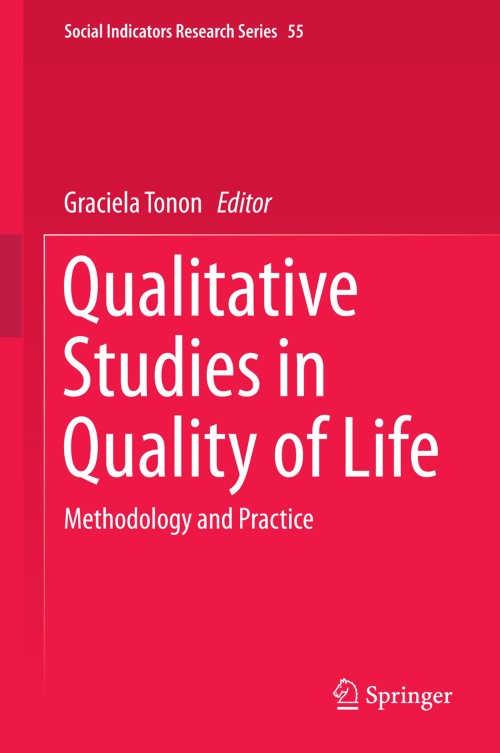
245 10|aQualitative Studies in Quality of Life|h[electronic resource] :|bMethodology and Practice /|cedited by Graciela Tonon.
250 |a1st ed. 2015.
264 1|aCham :|bSpringer International Publishing :|bImprint: Springer,|c2015.
300 |aXIII, 240 p.|bonline resource.
336 |atext|btxt|2rdacontent
337 |acomputer|bc|2rdamedia
338 |aonline resource|bcr|2rdacarrier
347 |atext file|bPDF|2rda
490 1 |aSocial Indicators Research Series,|x2215-0099 ;|v55
505 0 |aChapter 1: The Relevance of the Use of Qualitative Methods for the Study of Quality of Life; Graciela Tonon -- Chapter 2: The Qualitative Researcher in Quality of Life Field; Graciela Tonon -- Chapter 3: The Role of the Context and the Culture in Quality of Life Studies; Lia Rodriguez de la Vega -- Chapter 4: Integration of qualitative and quantitative methods in quality of life studies; Graciela Tonon -- Chapter 5: Qualitative Methodologies in Geography, Contributions to the Study of Quality of Life; Claudia Mikkelsen and Josefina Di Nucci -- Chapter 6: Qualitative Studies in Health Related Quality of Life: the Case of Young People Living with HIV/AIDS; Milton Décima -- Chapter 7: Children’s quality of life in the Caribbean: a qualitative study; Maria Dilia Mieles Barrera – Graciela Tonon -- Chapter 8: Qualitative Studies of Young People’s Quality of Life in Urban and Rural Areas; Lucia Zanabria Ruiz -- Chapter 9: Young people’s rural quality of life in the Colombian Andes: a qualitative study using triangulation; Antonio Lopez Lopez -- Chapter 10: A Qualitative Study about Yoga Practice in Quality of Labor Life; Lia Rodriguez de la Vega.
520 |aThis volume explores the use and relevance of qualitative methods for the study of quality of life. It analyzes the role of qualitative researcher and the role of the context and the culture in quality of life studies. It presents the use of qualitative methods in real projects carried out in specific fields: geography, health, community studies, labor life and yoga. Finally, the book proposes the use of mixed methods that are considered as the third methodological approach in social research. The main purpose of using qualitative methods is to understand what it means for participants to be involved in certain events, situations and actions. Such methods help understand the context in which participants act and the influence of that context on their actions. The decision to use a particular methodology implies a philosophic, theoretical and political decision. Qualitative methodology constitutes an approach that is essential for understanding people’s experiences of well-being and discovering new issues related to quality of life.
650 0|aQuality of life.
650 0|aEthnopsychology.
650 0|aSociology|xMethodology.
650 14|aQuality of Life Research.
650 24|aCross-Cultural Psychology.
650 24|aSociological Methods.
700 1 |aTonon, Graciela.|eeditor.|4edt|4http://id.loc.gov/vocabulary/relators/edt
710 2 |aSpringerLink (Online service)
773 0 |tSpringer Nature eBook
776 08|iPrinted edition:|z9783319137780
776 08|iPrinted edition:|z9783319137803
776 08|iPrinted edition:|z9783319353289
830 0|aSocial Indicators Research Series,|x2215-0099 ;|v55
856 40|uhttps://doi.org/10.1007/978-3-319-13779-7
912 |aZDB-2-SHU
912 |aZDB-2-SXS
950 |aHumanities, Social Sciences and Law (SpringerNature-11648)
950 |aSocial Sciences (R0) (SpringerNature-43726)