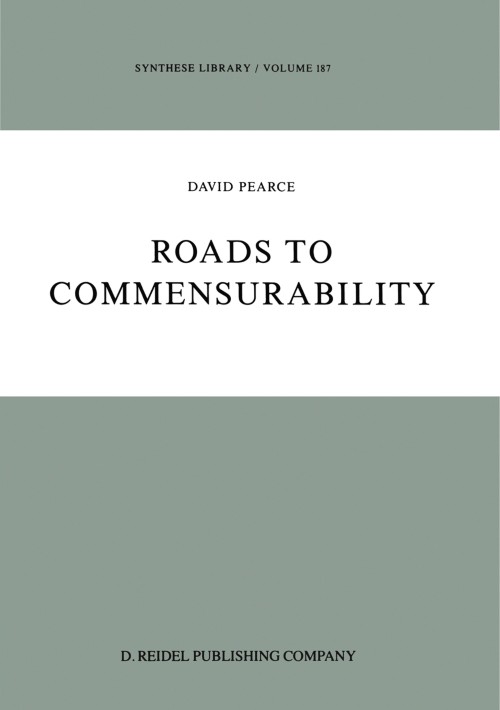
Roads to Commensurability [electronic resource] / by D. Pearce.
Erişim Adresi
ISBN
9789400937772
Dil Kodu
İngilizce
Yer Numarası
DK/16380
Yazar
Basım Bildirimi
1st ed. 1987.
Yayın Bilgisi
Dordrecht : Springer Netherlands : Imprint: Springer, 1987.
Fiziksel Niteleme
XI, 260 p. online resource.
Dizi
Synthese Library, Studies in Epistemology, Logic, Methodology, and Philosophy of Science, 2542-8292 ; 187
İçindekiler Notu
1. Stegmüller on Kuhn and Incommensurability -- 1. The Structuralist View of Theories -- 2. An Analysis of the Structuralist Concept of Reduction -- 3. Further Consequences -- 2. Structuralist Criteria of Commensurability -- 1. Balzer on Incommensurability -- 2. A Response -- 3. Adequacy of Translation and More on Uniform Reduction -- 4. The Structuralist Criteria Rejected -- 3. Research Traditions, Incommensurability and Scientific Progress -- 1. Problem-Solving Models of Science -- 2. Laudan on Incommensurability -- 3. Laudan’s Second Thesis -- 4. Progress and the Problem-Solving Model -- 4. The Logic of Reducibility -- 1. Types of Reduction -- 2. Generalisations -- 3. Reconstructions -- 4. Further Properties -- 5. Criteria of Adequacy: Some Fallacies Exposed -- 5. Theory Dynamics, Continuity and Problem-Solving -- 1. Introduction -- 2. Aspects of Problem-Solving -- 3. Research Traditions and Theory Ensembles -- 4. Theory Change and Relations between Ensembles -- 5. Theory Change and Continuity -- 6. Ensembles and the Problem-Solving Model of Progress -- 6. Meaning Change and Translatability -- 1. Meaning and Conceptual Change -- 2. Stability of Reference -- 3. Indeterminacy of Reference -- 4. Kuhn and Feyerabend against Translation -- 7. Two Routes to Commensurability -- 1. Comparability, Rationality, Translatability -- 2. Ontology and Conceptual Frameworks -- 3. The Translation of CM into RM -- 4. Explanation and Meaning -- 5. Scientific Change and Rationality: Some Tentative Conclusions -- Notes -- Name Index.
Özet, vb.
How many miles to Babylon? Three-score and ten. Can I get there by candle-light? Yes, and back again. If your heels are nimble dnd light, You may get there by candle-light. Any philosopher who takes more than a fleeting interest in the sciences and their development must at some stage confront the issue of incommensurability in one or other of its many manifes tations. For the philosopher of science concerned with problems of conceptual change and the growth of knowledge, matters of incommensurability are of paramount concern. After many years of skating over, skimming through and skirting round this issue in my studies of intertheory relations in science, I decided to take the plunge and make the problem of incommensurability the central and unifying theme of a book. The present volume is the result of that decision. My interest in problems of comparability and commensurability in science was awakened in the formative years of my philosophi cal studies by my teacher, Jerzy Giedymin. From him I have learnt not only to enjoy philosophical problems but also to beware of simpleminded solutions to them. The vibrant seminars of Paul Feyerabend held at Sussex University in 1974 left me in no doubt that incommensurability was, and would remain, a major topic of debate and dispute in the philosophical study of human knowledge.
Konu
Science __ Philosophy.
Philosophy of Science.
Kurum Adı

Eseri Alıntıla
Referansları kullanmadan önce gözden geçirmeniz ve varsa gerekli düzeltmeleri yapmanız önerilir.
Dijital Kaynak
MARC Görünümü
LEADER 05436nam a22005415i 4500
001 815144
003 TR_AnAIT
005 20260130212037
007 cr nn 008mamaa
008 121227s1987 ne | s |||| 0|eng d
020 |a9789400937772|9978-94-009-3777-2
024 7 |a10.1007/978-94-009-3777-2|2doi
041 |aeng
049 |aTürk Tarih Kurumu Kütüphanesi
050 4|aQ174-175.3
050 4|aB67
072 7|aPDA|2bicssc
072 7|aSCI075000|2bisacsh
072 7|aPDA|2thema
082 04|a501|223
090 |aDK/16380
100 1 |aPearce, D.|eauthor.|4aut|4http://id.loc.gov/vocabulary/relators/aut
245 10|aRoads to Commensurability|h[electronic resource] /|cby D. Pearce.
250 |a1st ed. 1987.
264 1|aDordrecht :|bSpringer Netherlands :|bImprint: Springer,|c1987.
300 |aXI, 260 p.|bonline resource.
336 |atext|btxt|2rdacontent
337 |acomputer|bc|2rdamedia
338 |aonline resource|bcr|2rdacarrier
347 |atext file|bPDF|2rda
490 1 |aSynthese Library, Studies in Epistemology, Logic, Methodology, and Philosophy of Science,|x2542-8292 ;|v187
505 0 |a1. Stegmüller on Kuhn and Incommensurability -- 1. The Structuralist View of Theories -- 2. An Analysis of the Structuralist Concept of Reduction -- 3. Further Consequences -- 2. Structuralist Criteria of Commensurability -- 1. Balzer on Incommensurability -- 2. A Response -- 3. Adequacy of Translation and More on Uniform Reduction -- 4. The Structuralist Criteria Rejected -- 3. Research Traditions, Incommensurability and Scientific Progress -- 1. Problem-Solving Models of Science -- 2. Laudan on Incommensurability -- 3. Laudan’s Second Thesis -- 4. Progress and the Problem-Solving Model -- 4. The Logic of Reducibility -- 1. Types of Reduction -- 2. Generalisations -- 3. Reconstructions -- 4. Further Properties -- 5. Criteria of Adequacy: Some Fallacies Exposed -- 5. Theory Dynamics, Continuity and Problem-Solving -- 1. Introduction -- 2. Aspects of Problem-Solving -- 3. Research Traditions and Theory Ensembles -- 4. Theory Change and Relations between Ensembles -- 5. Theory Change and Continuity -- 6. Ensembles and the Problem-Solving Model of Progress -- 6. Meaning Change and Translatability -- 1. Meaning and Conceptual Change -- 2. Stability of Reference -- 3. Indeterminacy of Reference -- 4. Kuhn and Feyerabend against Translation -- 7. Two Routes to Commensurability -- 1. Comparability, Rationality, Translatability -- 2. Ontology and Conceptual Frameworks -- 3. The Translation of CM into RM -- 4. Explanation and Meaning -- 5. Scientific Change and Rationality: Some Tentative Conclusions -- Notes -- Name Index.
520 |aHow many miles to Babylon? Three-score and ten. Can I get there by candle-light? Yes, and back again. If your heels are nimble dnd light, You may get there by candle-light. Any philosopher who takes more than a fleeting interest in the sciences and their development must at some stage confront the issue of incommensurability in one or other of its many manifes tations. For the philosopher of science concerned with problems of conceptual change and the growth of knowledge, matters of incommensurability are of paramount concern. After many years of skating over, skimming through and skirting round this issue in my studies of intertheory relations in science, I decided to take the plunge and make the problem of incommensurability the central and unifying theme of a book. The present volume is the result of that decision. My interest in problems of comparability and commensurability in science was awakened in the formative years of my philosophi cal studies by my teacher, Jerzy Giedymin. From him I have learnt not only to enjoy philosophical problems but also to beware of simpleminded solutions to them. The vibrant seminars of Paul Feyerabend held at Sussex University in 1974 left me in no doubt that incommensurability was, and would remain, a major topic of debate and dispute in the philosophical study of human knowledge.
532 8 |aAccessibility summary: This PDF is not accessible. It is based on scanned pages and does not support features such as screen reader compatibility or described non-text content (images, graphs etc). However, it likely supports searchable and selectable text based on OCR (Optical Character Recognition). Users with accessibility needs may not be able to use this content effectively. Please contact us at accessibilitysupport@springernature.com if you require assistance or an alternative format.
532 8 |aInaccessible, or known limited accessibility
532 8 |aNo reading system accessibility options actively disabled
532 8 |aPublisher contact for further accessibility information: accessibilitysupport@springernature.com
650 0|aScience|xPhilosophy.
650 14|aPhilosophy of Science.
710 2 |aSpringerLink (Online service)
773 0 |tSpringer Nature eBook
776 08|iPrinted edition:|z9789027724144
776 08|iPrinted edition:|z9789400937789
776 08|iPrinted edition:|z9789401081801
830 0|aSynthese Library, Studies in Epistemology, Logic, Methodology, and Philosophy of Science,|x2542-8292 ;|v187
856 40|uhttps://doi.org/10.1007/978-94-009-3777-2
912 |aZDB-2-SHU
912 |aZDB-2-SXPR
912 |aZDB-2-BAE
950 |aHumanities, Social Sciences and Law (SpringerNature-11648)
950 |aPhilosophy and Religion (R0) (SpringerNature-43725)
001 815144
003 TR_AnAIT
005 20260130212037
007 cr nn 008mamaa
008 121227s1987 ne | s |||| 0|eng d
020 |a9789400937772|9978-94-009-3777-2
024 7 |a10.1007/978-94-009-3777-2|2doi
041 |aeng
049 |aTürk Tarih Kurumu Kütüphanesi
050 4|aQ174-175.3
050 4|aB67
072 7|aPDA|2bicssc
072 7|aSCI075000|2bisacsh
072 7|aPDA|2thema
082 04|a501|223
090 |aDK/16380
100 1 |aPearce, D.|eauthor.|4aut|4http://id.loc.gov/vocabulary/relators/aut
245 10|aRoads to Commensurability|h[electronic resource] /|cby D. Pearce.
250 |a1st ed. 1987.
264 1|aDordrecht :|bSpringer Netherlands :|bImprint: Springer,|c1987.
300 |aXI, 260 p.|bonline resource.
336 |atext|btxt|2rdacontent
337 |acomputer|bc|2rdamedia
338 |aonline resource|bcr|2rdacarrier
347 |atext file|bPDF|2rda
490 1 |aSynthese Library, Studies in Epistemology, Logic, Methodology, and Philosophy of Science,|x2542-8292 ;|v187
505 0 |a1. Stegmüller on Kuhn and Incommensurability -- 1. The Structuralist View of Theories -- 2. An Analysis of the Structuralist Concept of Reduction -- 3. Further Consequences -- 2. Structuralist Criteria of Commensurability -- 1. Balzer on Incommensurability -- 2. A Response -- 3. Adequacy of Translation and More on Uniform Reduction -- 4. The Structuralist Criteria Rejected -- 3. Research Traditions, Incommensurability and Scientific Progress -- 1. Problem-Solving Models of Science -- 2. Laudan on Incommensurability -- 3. Laudan’s Second Thesis -- 4. Progress and the Problem-Solving Model -- 4. The Logic of Reducibility -- 1. Types of Reduction -- 2. Generalisations -- 3. Reconstructions -- 4. Further Properties -- 5. Criteria of Adequacy: Some Fallacies Exposed -- 5. Theory Dynamics, Continuity and Problem-Solving -- 1. Introduction -- 2. Aspects of Problem-Solving -- 3. Research Traditions and Theory Ensembles -- 4. Theory Change and Relations between Ensembles -- 5. Theory Change and Continuity -- 6. Ensembles and the Problem-Solving Model of Progress -- 6. Meaning Change and Translatability -- 1. Meaning and Conceptual Change -- 2. Stability of Reference -- 3. Indeterminacy of Reference -- 4. Kuhn and Feyerabend against Translation -- 7. Two Routes to Commensurability -- 1. Comparability, Rationality, Translatability -- 2. Ontology and Conceptual Frameworks -- 3. The Translation of CM into RM -- 4. Explanation and Meaning -- 5. Scientific Change and Rationality: Some Tentative Conclusions -- Notes -- Name Index.
520 |aHow many miles to Babylon? Three-score and ten. Can I get there by candle-light? Yes, and back again. If your heels are nimble dnd light, You may get there by candle-light. Any philosopher who takes more than a fleeting interest in the sciences and their development must at some stage confront the issue of incommensurability in one or other of its many manifes tations. For the philosopher of science concerned with problems of conceptual change and the growth of knowledge, matters of incommensurability are of paramount concern. After many years of skating over, skimming through and skirting round this issue in my studies of intertheory relations in science, I decided to take the plunge and make the problem of incommensurability the central and unifying theme of a book. The present volume is the result of that decision. My interest in problems of comparability and commensurability in science was awakened in the formative years of my philosophi cal studies by my teacher, Jerzy Giedymin. From him I have learnt not only to enjoy philosophical problems but also to beware of simpleminded solutions to them. The vibrant seminars of Paul Feyerabend held at Sussex University in 1974 left me in no doubt that incommensurability was, and would remain, a major topic of debate and dispute in the philosophical study of human knowledge.
532 8 |aAccessibility summary: This PDF is not accessible. It is based on scanned pages and does not support features such as screen reader compatibility or described non-text content (images, graphs etc). However, it likely supports searchable and selectable text based on OCR (Optical Character Recognition). Users with accessibility needs may not be able to use this content effectively. Please contact us at accessibilitysupport@springernature.com if you require assistance or an alternative format.
532 8 |aInaccessible, or known limited accessibility
532 8 |aNo reading system accessibility options actively disabled
532 8 |aPublisher contact for further accessibility information: accessibilitysupport@springernature.com
650 0|aScience|xPhilosophy.
650 14|aPhilosophy of Science.
710 2 |aSpringerLink (Online service)
773 0 |tSpringer Nature eBook
776 08|iPrinted edition:|z9789027724144
776 08|iPrinted edition:|z9789400937789
776 08|iPrinted edition:|z9789401081801
830 0|aSynthese Library, Studies in Epistemology, Logic, Methodology, and Philosophy of Science,|x2542-8292 ;|v187
856 40|uhttps://doi.org/10.1007/978-94-009-3777-2
912 |aZDB-2-SHU
912 |aZDB-2-SXPR
912 |aZDB-2-BAE
950 |aHumanities, Social Sciences and Law (SpringerNature-11648)
950 |aPhilosophy and Religion (R0) (SpringerNature-43725)
Materyaller
Depodan talep edilen materyal sadece kütüphane içerisinde kullanılmaktadır.
Materyal dışarıya ödünç verilmemektedir.
