LEADER 03606nam a22005055i 4500
001 815243
003 TR_AnAIT
005 20260130211557
007 cr nn 008mamaa
008 190121s2019 si | s |||| 0|eng d
020 |a9789811327933|9978-981-13-2793-3
024 7 |a10.1007/978-981-13-2793-3|2doi
041 |aeng
049 |aTürk Tarih Kurumu Kütüphanesi
050 4|aJZ5509.2-6300
072 7|aGTJ|2bicssc
072 7|aPOL034000|2bisacsh
072 7|aGTU|2thema
082 04|a327.1|223
090 |aDK/16470
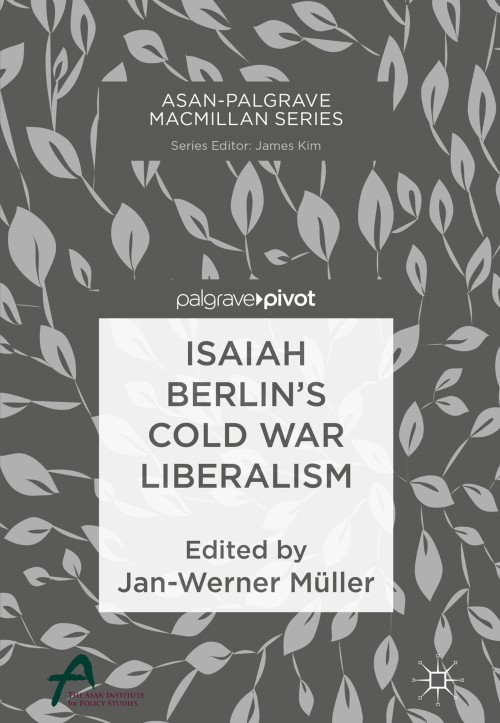
245 10|aIsaiah Berlin’s Cold War Liberalism|h[electronic resource] /|cedited by Jan-Werner Müller.
250 |a1st ed. 2019.
264 1|aSingapore :|bSpringer Nature Singapore :|bImprint: Palgrave Pivot,|c2019.
300 |aVIII, 94 p. 1 illus.|bonline resource.
336 |atext|btxt|2rdacontent
337 |acomputer|bc|2rdamedia
338 |aonline resource|bcr|2rdacarrier
347 |atext file|bPDF|2rda
490 1 |aAsan-Palgrave Macmillan Series,|x3005-0111
505 0 |a1. Introduction: Concepts, Character, and the Specter of New Cold Wars -- 2.Isaiah Berlin and Reinhold Niebuhr: Cold War Liberalism as an Intellectual Ethos -- 3. The Contours of Cold War liberalism (Berlin in General) -- 4. Liberal Pluralism and Common Decency. .
520 |a"Confronting a series of caricatures of Isaiah Berlin, three insightful scholars ponder his relevance for our own time. Was Berlin’s ‘Cold War liberalism’ also an attempt at relentless criticism of liberal complacency? Far from propounding a dogmatic liberalism, did Berlin not acknowledge, alongside a ‘moral minimum,” the necessity of political compromise? Whatever the answers, this book successfully redeems Berlin for continuing engagement in a new era." —Samuel Moyn, Yale University "As we settle into a new century of global conflict, the contours of the one just ended are snapping into focus. This volume casts fresh light on one of that century's most humanist observers: Isaiah Berlin. Through historical and philosophical exploration, the three authors here ask us to consider Berlin and his legacy anew, asking what he meant in his time, and what he might mean for us." —James Chappel, Duke University "A very stimulating volumethat places Berlin’s thought in the post-war context without reducing it to a mere expression of its time. The essays help us to see that it was as much Berlin's “untidy” exploration of political psychology as his principles that expressed the liberalism he cherished." —Mark Lilla, Columbia University This book offers a critical re-examination of Berlin’s Cold War liberalism, at a time when many observers worry about the emergence of new global, partly ideologically driven conflicts. Jan-Werner Müller is a professor of politics at Princeton University.
650 0|aPeace.
650 0|aPolitical science|xPhilosophy.
650 0|aEurope|xPolitics and government.
650 14|aPeace and Conflict Studies.
650 24|aPolitical Philosophy.
650 24|aEuropean Politics.
700 1 |aMüller, Jan-Werner.|eeditor.|4edt|4http://id.loc.gov/vocabulary/relators/edt
710 2 |aSpringerLink (Online service)
773 0 |tSpringer Nature eBook
776 08|iPrinted edition:|z9789811327926
776 08|iPrinted edition:|z9789811327940
830 0|aAsan-Palgrave Macmillan Series,|x3005-0111
856 40|uhttps://doi.org/10.1007/978-981-13-2793-3
912 |aZDB-2-POS
912 |aZDB-2-SXPI
950 |aPolitical Science and International Studies (SpringerNature-41174)
950 |aPolitical Science and International Studies (R0) (SpringerNature-43724)